
Chef Lesia
Arnautka (арнаутка, southern durum-wheat loaf)
Durum wheat makes bread the color of late steppe sun: golden, firm, nutty, and strong enough to hold salo, tomato juice, and green sunflower oil without collapsing.
A cooking platform built around craft, culture, and the stories behind what we eat.
Created by
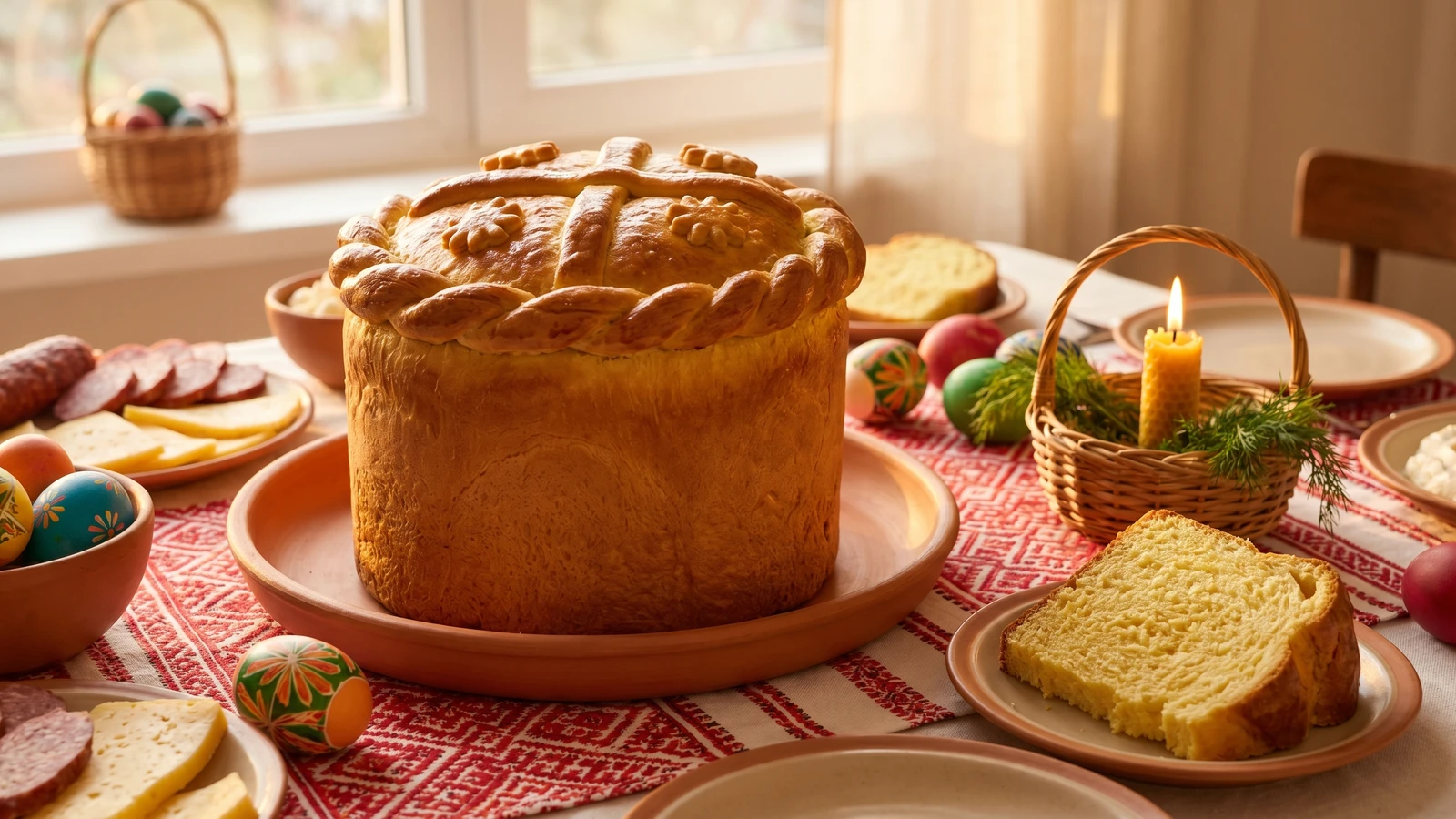
For one spring dawn, bread leaves the house tall, gold, and crossed, tucked into the Easter basket before anyone cuts it. The dough is rich, but the lift must stay brave.
For one spring dawn, bread leaves the house dressed for church. Tall, lacquered with egg, crossed and braided on top, paska sits in the Easter basket with pysanky, salt, butter, cheese, horseradish, and all the things Lent has made you miss. Nobody cuts it early. The first slice belongs to the table after the blessing, when everyone is too tired and too happy to pretend they are patient.
This is not cake pretending to be bread. It is bread carrying eggs, butter, milk, smetana, sugar, citrus, and the whole weight of a feast, and still it must rise tall. The one thing that decides it is when the fat goes in: let the flour and eggs build strength first, then feed in the butter slowly. Fat is generous but bossy. Add it too soon and the dough sulks; add it late and it stretches like satin under your hands.
Aunt Nadia's letter just says, "let it get proud," which is both ridiculous and completely accurate. Watch for that: a dough that swells, trembles softly when you nudge the tin, and smells of milk, yeast, orange peel, and warm sugar. Make two loaves. One is for the basket, and one is for the people circling the cooling rack like they have no manners.
Paska takes its name from Pascha, the Christian Easter feast, but the Ukrainian loaf is not one fixed shape: central and eastern kitchens often bake tall round breads with dough crosses, braids, birds, and solar rosettes, while some western regions distinguish decorated paska from the sweeter, taller babka. The blessed Easter basket, kosyk, gathers paska with pysanky, butter, cheese, salt, horseradish, and cured meats after the Lenten fast. During Soviet pressure on public religious practice, families still baked the bread at home, so the kitchen kept the calendar when public life tried to flatten it.
Quantity
250ml
lukewarm
Quantity
10g instant or 14g active dry
Quantity
1 tablespoon
Quantity
150g
Quantity
600g, plus up to 50g only if needed
Quantity
140g
Quantity
1 1/2 teaspoons
Quantity
4
at room temperature
Quantity
3
at room temperature
Quantity
80g
Quantity
1 tablespoon
Quantity
1 orange
finely grated
Quantity
1 lemon
finely grated
Quantity
140g
very soft
Quantity
2 tablespoons
Quantity
150g
soaked in warm black tea or water and drained
Quantity
120g
Quantity
60ml
Quantity
pinch
Quantity
1 teaspoon
Quantity
1 egg yolk mixed with 1 tablespoon milk
| Ingredient | Quantity |
|---|---|
| whole milklukewarm | 250ml |
| instant yeast or active dry yeast | 10g instant or 14g active dry |
| sugar for the sponge | 1 tablespoon |
| strong white bread flour for the sponge | 150g |
| strong white bread flour | 600g, plus up to 50g only if needed |
| caster sugar | 140g |
| fine sea salt | 1 1/2 teaspoons |
| large eggsat room temperature | 4 |
| large egg yolksat room temperature | 3 |
| smetana or full-fat sour cream | 80g |
| vanilla extract | 1 tablespoon |
| orange zestfinely grated | 1 orange |
| lemon zestfinely grated | 1 lemon |
| unsalted buttervery soft | 140g |
| unrefined sunflower oil | 2 tablespoons |
| raisins (optional)soaked in warm black tea or water and drained | 150g |
| plain flour for decoration dough | 120g |
| water for decoration dough | 60ml |
| fine sea salt for decoration dough | pinch |
| unrefined sunflower oil for decoration dough | 1 teaspoon |
| egg yolk and milk glaze | 1 egg yolk mixed with 1 tablespoon milk |
Stir the lukewarm milk, yeast, tablespoon of sugar, and 150g flour into a thick batter. Cover it and leave it until the surface is foamy, pocked with little craters, and smells sweetly yeasty. If it sits there silent and flat, your yeast is tired; start again now, before the eggs and butter join the party.
Butter or oil two tall 15cm paska tins, coffee tins, or paper panettone molds, then line them with parchment collars that rise a few centimetres above the rim. If using raisins, soak them in warm black tea or water while the sponge wakes, then drain them well and pat them dry. Wet fruit makes streaks and heavy pockets in the dough.
Whisk the eggs, yolks, sugar, salt, smetana, vanilla, orange zest, and lemon zest until the mixture is glossy and golden. Add the sponge and 600g flour, then mix until you have a shaggy, sticky dough with no dry patches. Let it rest for fifteen minutes so the flour drinks before you decide it needs more.
Knead until the dough begins to stretch instead of tear, then add the soft butter a thumbful at a time, waiting for each piece to disappear before the next. Drizzle in the sunflower oil at the end. The dough should turn smooth, elastic, and faintly shiny, clinging to the bowl but pulling away in long strands when lifted.
Fold in the drained raisins if you're using them, gently enough that they don't tear the dough to pieces. Set the dough in a lightly oiled bowl, cover, and leave it until almost doubled, domed, and soft. Press a floured finger into the side: the dent should fill slowly, like it is thinking about it. Your kitchen decides the time.
Turn the dough onto a lightly oiled surface and divide it in two. Pull each piece into a tight round, tucking the edges underneath so the top is smooth and stretched. Set each loaf seam-side down in its tin; the dough should fill about one third to one half of the height, because paska needs room to climb.
Mix the decoration flour, water, salt, and teaspoon of sunflower oil into a firm dough. Roll thin ropes for braids, a cross, and small sun rosettes, keeping the pieces covered so they don't dry out. This lean dough holds its shape better than the rich dough, so your crown stays a crown.
Leave the shaped loaves covered until they rise close to the rim and wobble softly when you nudge the tins. Brush the tops with the egg yolk and milk glaze, lay on the cross, braids, and sun signs without pressing hard, then brush the decoration too. Let it sit on the bread, not sink into it.
Bake at 180C for the first fifteen minutes, then lower to 165C and continue until the loaves are deep golden, the sides feel set, and a skewer pushed into the centre comes out without wet dough. Tap the tin and listen: it should sound right, hollow but not dry. If the top races ahead, cover it loosely with foil.
Rest the loaves in their tins for ten minutes, then ease them out and cool fully on a towel, turning tall loaves gently from side to side if they feel delicate. Aunt Nadia wrote, "lay them like babies," and for once she gave enough instruction. Do not cut while hot; the crumb is still setting, and the Easter basket deserves a whole loaf.
1 serving (about 130g)
Culinary guides, cultural storytelling, and the editorial depth that makes cooking meaningful.
Discover Culinary ExplorerChef Lesia
Durum wheat makes bread the color of late steppe sun: golden, firm, nutty, and strong enough to hold salo, tomato juice, and green sunflower oil without collapsing.

Chef Lesia
A proper hearth loaf announces itself before you cut it: dark crust, hollow knock, flour caught in the blisters, and that deep oven smell that makes people move closer.

Chef Lesia
This is the Easter bread that climbs upward before it spreads out, a golden tower of eggs, butter, braids, flowers and crosses from Bukovyna's western table.

Chef Lesia
The sweetest part of bulochky is not sugar but milk: it makes a dough that pulls apart in pale threads, ready to stay plain or hide a spoon of thick povydlo.