Chef Margarida
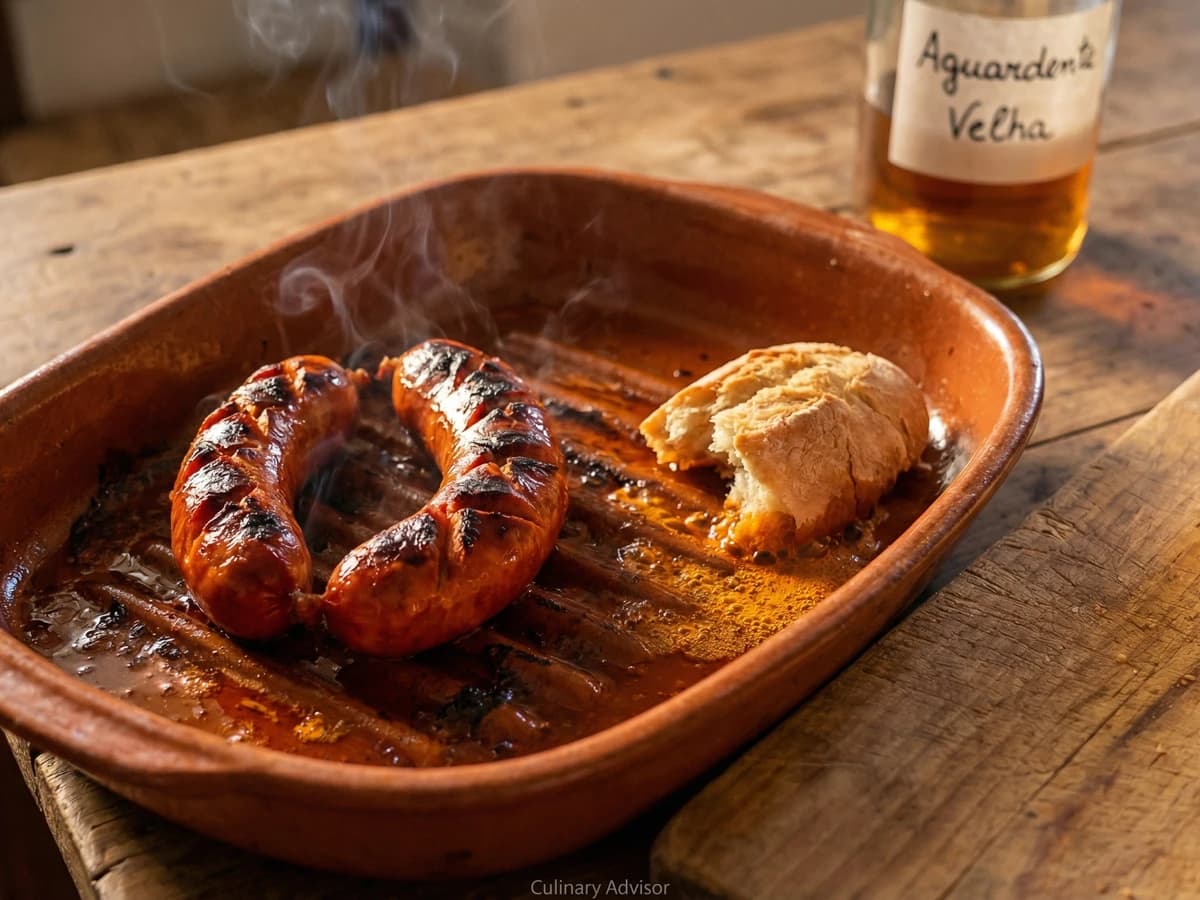
Chouriço Assado na Brasa
Chouriço set ablaze with aguardente, cooked by fire until the casing splits and the paprika-rich fat pools in the dish. Tear the bread. Press it into the fat. This is how we've always done it.
A cooking platform built around craft, culture, and the stories behind what we eat.
Created by
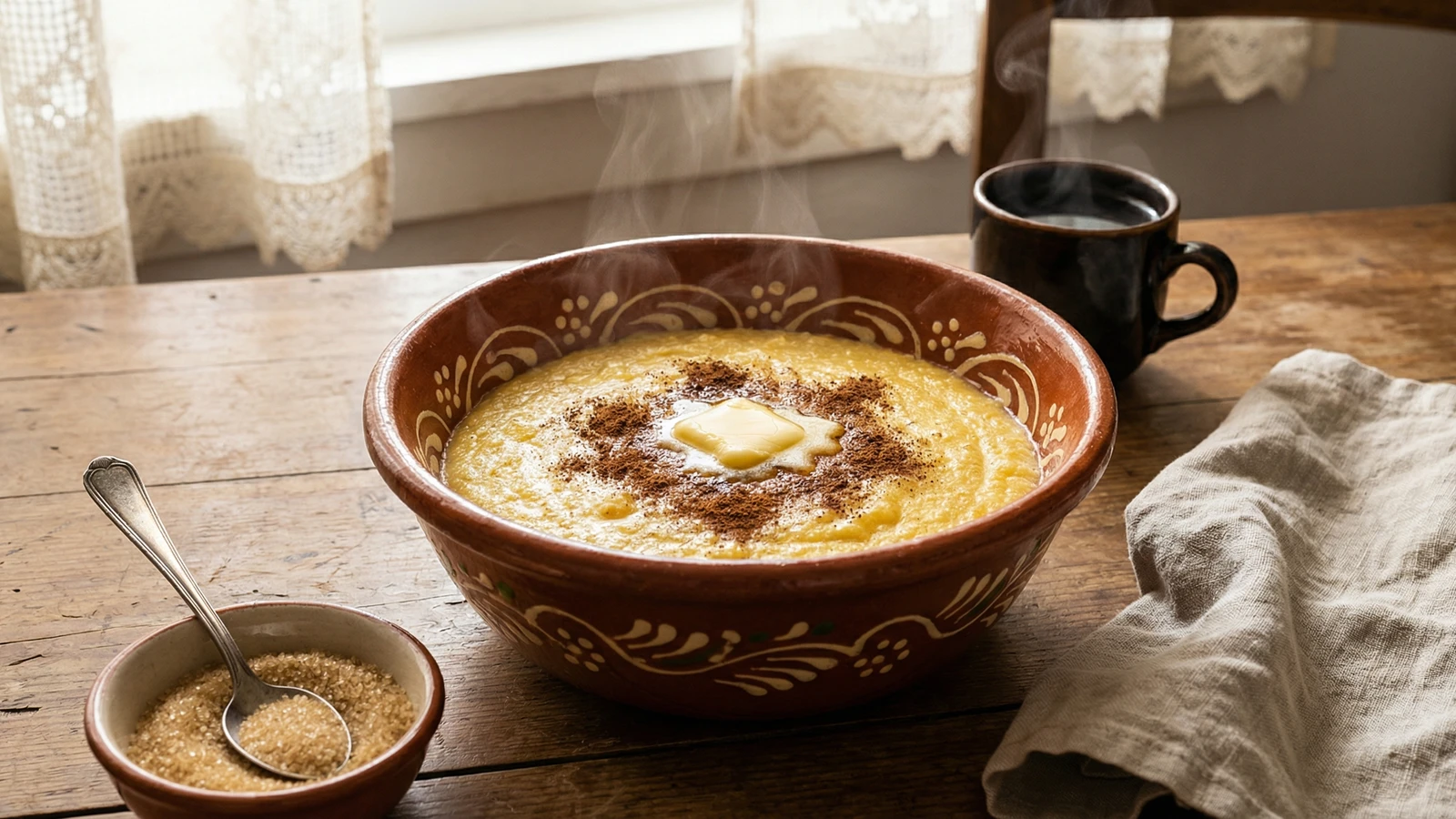
The golden corn porridge that warmed generations of Portuguese mornings, stirred slowly until silky, crowned with cinnamon and sugar. Peasant cooking. Perfect cooking.
Some mornings, Avó Leonor would already be at the stove when I woke up, stirring a pot of papas de milho with that wooden spoon worn smooth by decades of use. The kitchen smelled of warm milk and something almost sweet, that toasted corn scent that meant comfort before I had words for comfort.
This is survival food made beautiful. Milho, corn, came to Portugal from the Americas in the sixteenth century and transformed the north. Where wheat wouldn't grow, corn flourished. What began as necessity became tradition. Peasant families stretched their mornings with this golden porridge, and their grandchildren still crave it.
The technique is simple but demanding. You cannot rush papas de milho. The cornmeal needs time to release its starch, time to transform from grainy suspension to silky cream. Twenty minutes of stirring. Twenty minutes of patience. Your grandmother did this every morning without complaint. You can do it on a Sunday.
At Mesa da Avó, I sometimes serve this for late breakfasts, and I watch people taste it for the first time. They expect something like oatmeal. What they get is something older, earthier, more satisfying. The cinnamon on top is not decoration. It's medicine for the soul.
Corn arrived in Portugal from the New World in the early 16th century and quickly became a staple in the Minho and Douro regions where wheat struggled to grow. Papas de milho, along with broa (corn bread), became the foundation of northern Portuguese peasant cooking. This porridge sustained farmworkers through long mornings in the fields and remains a beloved comfort food, particularly in the provinces north of Lisbon.
Quantity
1 cup
Quantity
3 cups
Quantity
1 cup
Quantity
1/4 teaspoon
Quantity
2 tablespoons
Quantity
for serving
Quantity
for serving
| Ingredient | Quantity |
|---|---|
| fine yellow cornmeal (farinha de milho) | 1 cup |
| whole milk | 3 cups |
| water | 1 cup |
| fine sea salt | 1/4 teaspoon |
| butter | 2 tablespoons |
| ground cinnamon | for serving |
| sugar | for serving |
In a heavy-bottomed pot, combine the milk, water, and salt. Warm over medium heat until you see the first wisps of steam rising from the surface. Don't let it boil. You want it hot but patient, like the morning itself.
Reduce the heat to medium-low. With one hand, let the cornmeal fall into the milk in a thin, steady stream. With the other hand, whisk constantly. This is not optional. If you dump it all at once, you'll spend the next twenty minutes fighting lumps. Avó Leonor used to say the cornmeal should fall like rain, not like hail.
Now comes the part that separates good papas from great ones. Keep the heat low and stir regularly for 20 to 25 minutes. The porridge will thicken gradually, releasing its starch, becoming silky and smooth. It should coat a spoon thickly but still pour slowly. If it gets too thick, add a splash more milk. If it spatters like a volcano, your heat is too high.
When the porridge has thickened to your liking, remove from heat and stir in the butter. It will melt into the warmth, making everything richer, softer. Taste for salt. The salt should be invisible but essential, there to make the corn taste more like itself.
Ladle into warm bowls. Dust generously with cinnamon, making a pattern if you like or scattering it freely. Set the sugar bowl on the table and let everyone sweeten their own. Papas de milho waits for no one. It thickens as it cools. Eat it while steam still rises from the bowl.
1 serving (about 265g)
Culinary guides, cultural storytelling, and the editorial depth that makes cooking meaningful.
Discover Culinary ExplorerChef Margarida
Chouriço set ablaze with aguardente, cooked by fire until the casing splits and the paprika-rich fat pools in the dish. Tear the bread. Press it into the fat. This is how we've always done it.
Chef Margarida
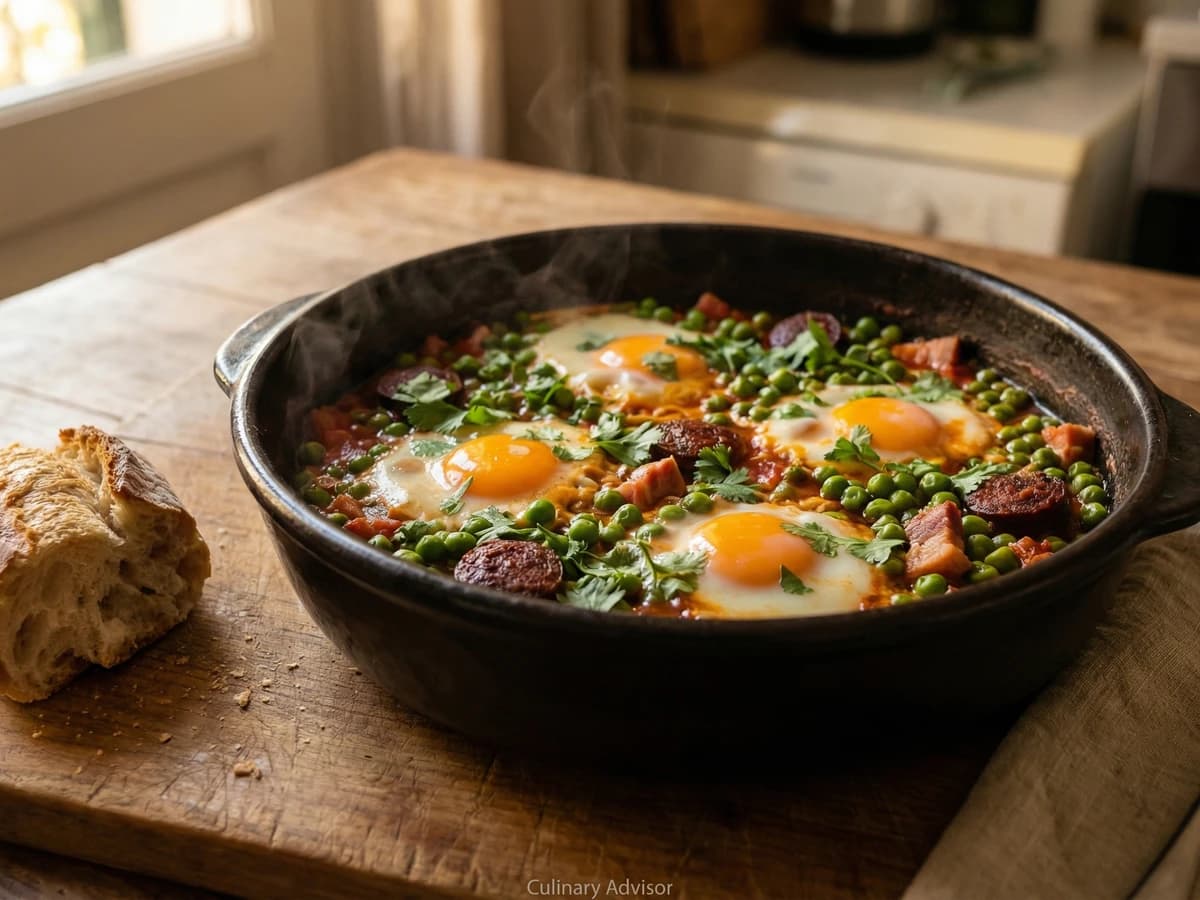
Spring peas braised slowly with chouriço and bacon, eggs nestled on top to poach in the aromatic sauce. One pan, no fuss, pure comfort. This is how Portuguese grandmothers have been feeding families for generations.
Chef Margarida
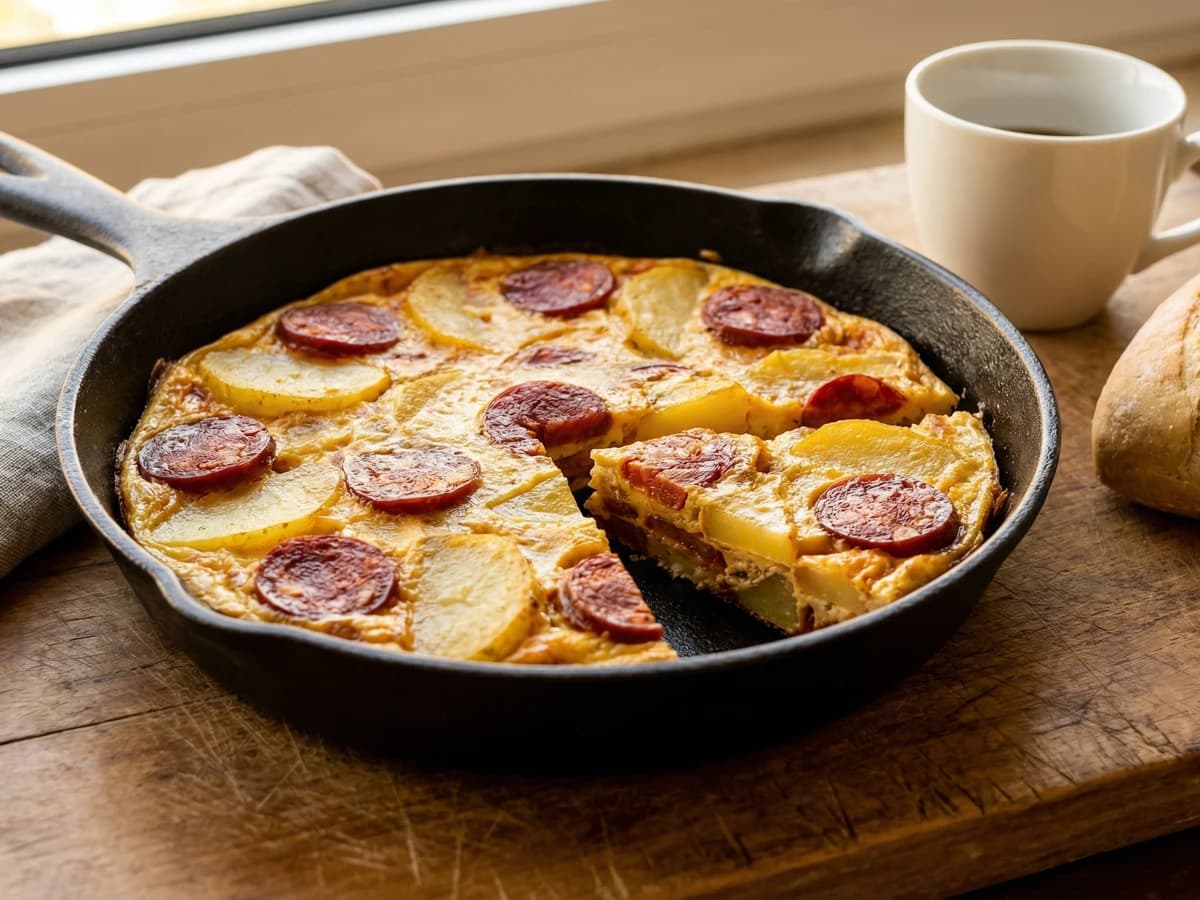
The working-class breakfast that became comfort food, thick with smoky chouriço and golden potato, baked until the eggs set proud and golden. Pack it for the field or slice it at the Sunday table.
Chef Margarida
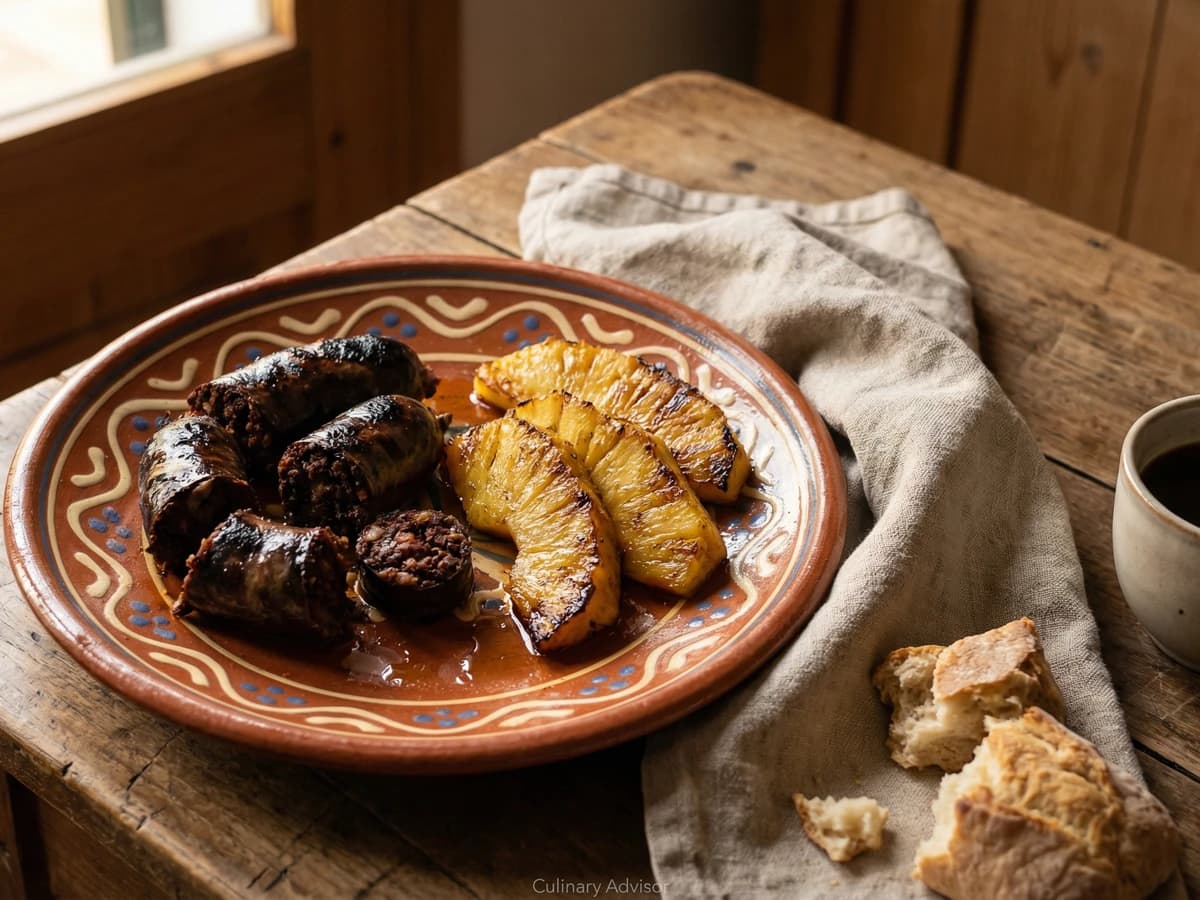
Blood sausage and pineapple from the Azores, where volcanic soil grows the sweetest fruit and tradition pairs it with the richest morcela. Two bites that belong together.