
Chef Lupita
Acitrón de Cidra Conventual
Puebla's convent-style acitrón, made from cidra peel instead of endangered biznaga, built through repeated syrup soakings until the cubes turn firm, translucent, and ready for rosca or chiles en nogada.
A cooking platform built around craft, culture, and the stories behind what we eat.
Created by
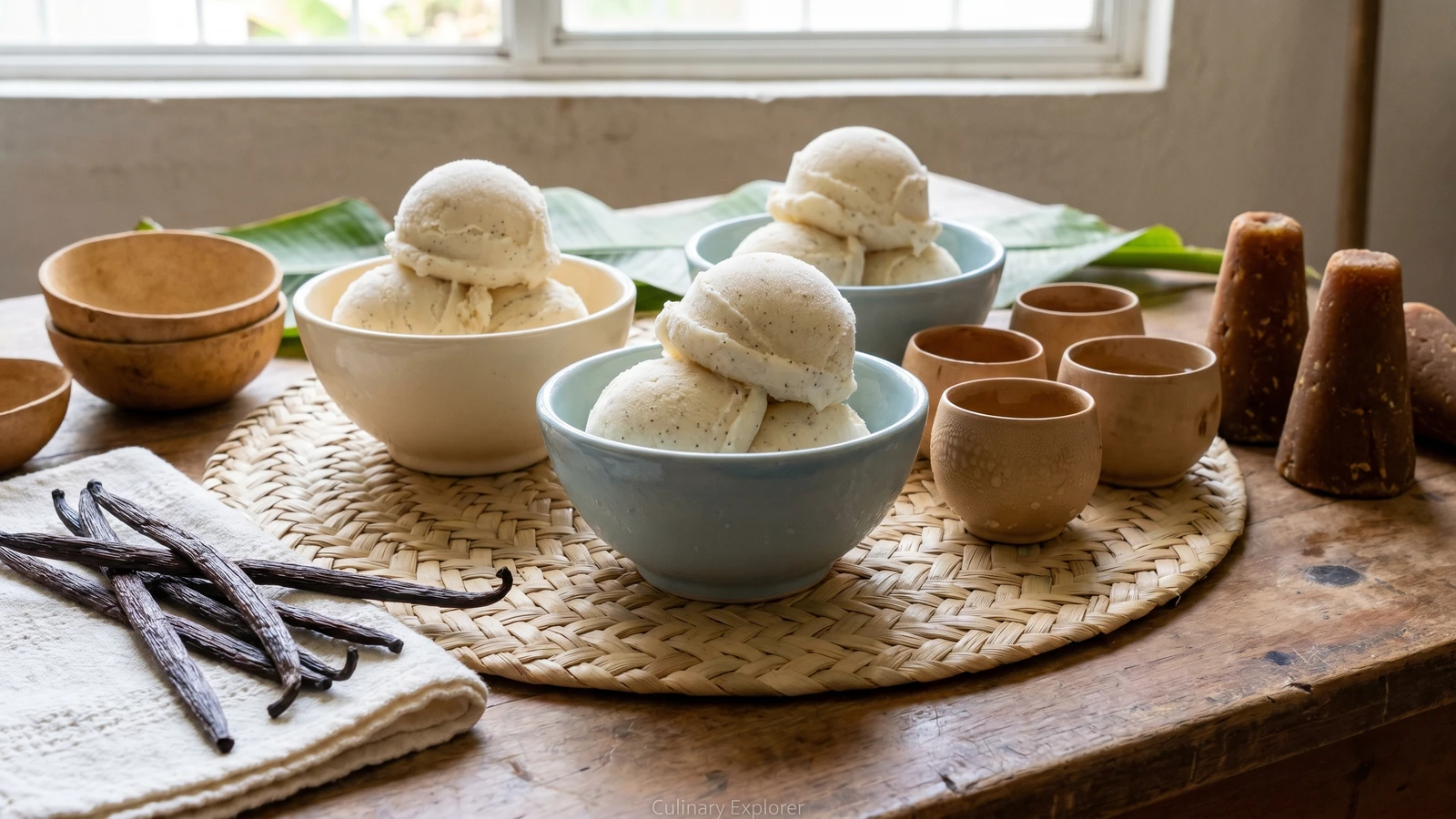
Veracruz's Totonacapan nieve, made with whole vainilla de Papantla pods, piloncillo, milk, and yolks, churned cold until the Gulf's most serious flavor beats fresa and chocolate.
Veracruz, northern Veracruz, Totonacapan. This nieve belongs to Papantla, where vanilla is not a flavoring from a bottle but an orchid, a harvest, a curing process, and a regional identity. Cada estado, su propia cocina.
The pod is the dish. Vainilla de Papantla has a floral, woody perfume that comes from the cured bean, not from extract. You split it, scrape it, steep it in milk, and let the black seeds mark the custard. If you hide that with refined sugar, you didn't listen. Piloncillo belongs here because its cane depth holds the vanilla instead of flattening it.
I learned this version from a woman near the Papantla market who sold nieves from a metal garrafa packed with ice and salt. She turned the crank while talking, never looking down, because her hands already knew the work. The lesson was plain: the cold is the technique. The custard must be chilled hard before it churns, or it freezes coarse. La cocina no es decoración, es trabajo.
This is not the loud dessert on the table. It is quiet, pale, speckled, and exact. One spoonful should taste like milk, cane, egg yolk, and the vanilla fields of Veracruz. Recetas probadas y garantizadas.
Vanilla planifolia is native to Mesoamerica, and the Totonac people of the Papantla region cultivated and cured vanilla long before Europeans carried it across the Atlantic with cacao in the 16th century. Mexico remained the principal source of vanilla until hand pollination was developed outside Mexico in the 19th century, but Papantla kept its reputation because curing the bean well is local knowledge, not just agriculture. The Mexican Denominación de Origen Vainilla de Papantla was declared in 2009, protecting vanilla from parts of Veracruz and Puebla tied to that Totonacapan tradition.
Quantity
2
split lengthwise and scraped
Quantity
3 cups
Quantity
1 cup
Quantity
6
Quantity
6 ounces
finely chopped
Quantity
1/4 cup
Quantity
1/4 teaspoon
| Ingredient | Quantity |
|---|---|
| whole vainilla de Papantla podssplit lengthwise and scraped | 2 |
| whole milk | 3 cups |
| Mexican crema or heavy cream | 1 cup |
| large egg yolks | 6 |
| piloncillofinely chopped | 6 ounces |
| water | 1/4 cup |
| fine sea salt | 1/4 teaspoon |
Split the vainilla de Papantla pods lengthwise with a small knife and scrape out the black seeds. Put the seeds and pods into a saucepan with the milk and crema. Do not use extract. This dish is built around the pod, the perfume, the small black seeds that tell you the vanilla is really there.
Warm the milk mixture over medium-low heat until small bubbles gather at the edge of the pan. Do not boil it. Turn off the heat, cover, and let the vanilla steep for 25 minutes. The milk should smell floral, woody, and deep, not like a bakery candle. That is Papantla doing its work.
In a small saucepan, combine the chopped piloncillo, water, and salt. Cook over medium heat, stirring, until the cone dissolves into a dark amber syrup, 5 to 7 minutes. Piloncillo gives the nieve a cane flavor that refined sugar does not have. A substitution is a compromise, not an upgrade.
Whisk the egg yolks in a bowl until smooth. Slowly pour in the warm piloncillo syrup while whisking constantly. Then add one cup of the warm vanilla milk, little by little. This keeps the yolks from scrambling. Patience here gives you a clean custard instead of sweet eggs.
Return the yolk mixture to the saucepan with the remaining vanilla milk. Cook over low heat, stirring with a wooden spoon, until the custard coats the back of the spoon, 8 to 10 minutes. If you run a finger through the coating, the line should stay clear. Do not let it boil. Boiled custard turns grainy and there is no mercado trick that fixes it.
Strain the custard through a fine-mesh sieve into a bowl, but return the vanilla pods to the custard after straining. Chill over an ice bath, then cover and refrigerate for at least 4 hours, preferably overnight. Cold base churns smoother. The old neveras knew this before anyone owned a thermometer.
Remove the vanilla pods. Churn the cold custard in an ice cream machine until thick and soft, 20 to 25 minutes. If you have a garrafa, pack the outer bucket with ice and rock salt and turn it by hand. That rhythm belongs to the plaza and the malecón. Saber cocinar es saber vivir.
Transfer the nieve to a chilled container and freeze for 2 hours for a scoopable texture. Serve in copitas or jícaras. Let the vanilla speak. No chocolate syrup, no colored sprinkles. No me vengas con atajos.
1 serving (about 185g)
Culinary guides, cultural storytelling, and the editorial depth that makes cooking meaningful.
Discover Culinary ExplorerChef Lupita
Puebla's convent-style acitrón, made from cidra peel instead of endangered biznaga, built through repeated syrup soakings until the cubes turn firm, translucent, and ready for rosca or chiles en nogada.

Chef Lupita
Ciudad de México's Tulyehualco alegría is popped huautli folded into piloncillo honey, pressed with peanuts, pepitas, and raisins, then cut into the rectangular bars that built a pueblo's identity.

Chef Lupita
Oaxaca's pre-Columbian amaranth bar, popped on a hot comal and bound with piloncillo, honey, and the sacred Zapotec grain that the Spanish tried, and failed, to outlaw.

Chef Lupita
Querétaro's mercado candy of popped amaranto pressed with dark piloncillo syrup, pepitas, pecans, and cacahuate, a Bajío sweet that respects the seed before it decorates the table.