
Chef Juliana
Beiju de Mandioca
You don't need yeast, wheat, or courage. Grate sweet cassava, press it dry, sieve the crumbs, and toast them into a flatbread that belongs beside beans, greens, and whatever solves dinner.
A cooking platform built around craft, culture, and the stories behind what we eat.
Created by
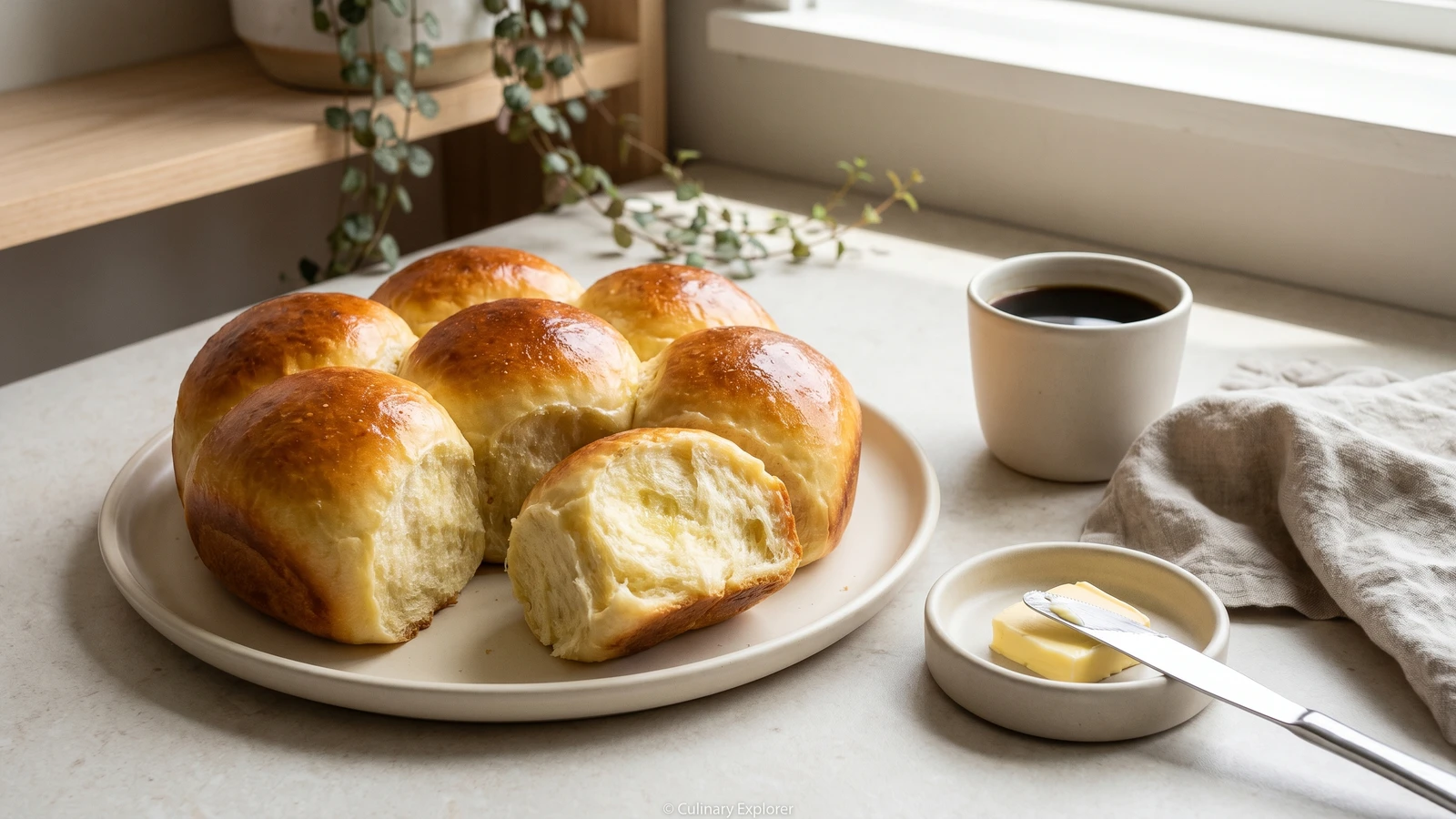
You don't need bakery hands for this. You need a soft dough, two calm rises, and the courage to stop believing pão doce belongs to someone else.
You know that little voice, the one that looks at soft bakery bread and says, isso não é pra mim. I know her. She used to stand in my kitchen too, very dramatic, usually while I was killing yeast with hot milk or making dough so dry it could patch a wall.
Pão doce is not a gift. Cozinhar não é dom, é um aprendizado. This is enriched bread, which means the dough carries milk, eggs, butter, and sugar, so it rises more slowly than plain bread and rewards you for not rushing it. The dough should feel soft and a little tacky, not stiff. If you force too much flour into it, you get a brick with a pretty name.
This is not the pê-efe itself, no. The everyday plate is still rice, beans, a piece of meat or an egg or fish, and something green. But pão doce belongs to the same defense of comida de verdade: a home kitchen using ordinary ingredients to feed people well, for less, without a packet pretending to be breakfast or lanche.
Anota aí: warm milk, not hot. Knead until the dough stretches. Let it rise twice because flavor and softness need time. Brush with egg so it bakes golden. By the end, you'll have a tender, faintly eggy bread that smells like a padaria passed through your own oven.
Sweet enriched breads became a common part of Brazilian bakery culture through Portuguese baking traditions and later immigrant padaria life, especially in cities like São Paulo where neighborhood bakeries shaped daily breakfast and afternoon coffee. The home version keeps the same soft, slightly sweet idea but strips away the industrial loaf: flour, milk, eggs, sugar, butter, yeast, and time. Many families know it as pão doce, pão de leite, or pãozinho doce, with local changes in shape, glaze, coconut, or cream topping.
Quantity
1 cup
warm, not hot
Quantity
2 1/4 teaspoons
Quantity
1/2 cup
Quantity
4 cups, plus 1/4 cup more only if needed
Quantity
1 teaspoon
Quantity
2 large
room temperature
Quantity
4 tablespoons
softened
Quantity
1 tablespoon
for the bowl
Quantity
1
mixed with 1 tablespoon milk for brushing
Quantity
1 tablespoon
for brushing
Quantity
2 tablespoons sugar mixed with 1 tablespoon water
| Ingredient | Quantity |
|---|---|
| whole milkwarm, not hot | 1 cup |
| active dry yeast | 2 1/4 teaspoons |
| sugar | 1/2 cup |
| all-purpose flour | 4 cups, plus 1/4 cup more only if needed |
| salt | 1 teaspoon |
| eggsroom temperature | 2 large |
| unsalted buttersoftened | 4 tablespoons |
| neutral oilfor the bowl | 1 tablespoon |
| egg yolkmixed with 1 tablespoon milk for brushing | 1 |
| milkfor brushing | 1 tablespoon |
| sugar syrup (optional) | 2 tablespoons sugar mixed with 1 tablespoon water |
Put the warm milk in a large bowl and stir in the yeast with 1 tablespoon of the sugar. Let it sit for 5 to 10 minutes, until the surface looks foamy and smells a little like beer. Warm means bath-warm, not hot. Hot milk kills yeast, and then the dough just sits there looking innocent while doing absolutely nothing.
Add the remaining sugar, the eggs, softened butter, salt, and 3 1/2 cups of the flour. Stir until you have a shaggy, sticky dough with no dry flour hiding at the bottom of the bowl. Add the last 1/2 cup flour a little at a time. The dough should be soft and tacky, because enriched bread needs moisture to bake tender.
Turn the dough onto a lightly floured counter and knead for 8 to 10 minutes, pushing it away with the heel of your hand and folding it back over itself. It will start messy, then become smooth, stretchy, and alive under your hands. Add extra flour only by the tablespoon if it truly sticks like glue. Too much flour makes tough bread, and then you'll blame yourself instead of the measuring cup.
Oil a clean bowl, put the dough inside, turn it once so the surface is lightly coated, and cover it. Let it rise in a warm corner until doubled, about 1 to 1 1/2 hours. Look at the dough, not the clock. It should look puffy and keep a dent when you press it gently with one finger. This first rise builds softness and flavor, not just size.
Press the dough down gently to release the big air bubbles. Divide it into 16 pieces for rolls, or 2 pieces for loaves. For rolls, tuck the edges underneath each piece and roll against the counter until the top is smooth and tight. That tight skin helps the bread rise upward instead of spreading sideways like it gave up.
Set the shaped dough on a lined baking tray or into greased loaf pans, leaving space between rolls. Cover and let rise again until puffy and almost doubled, 45 to 60 minutes. This second rise is what gives pão doce its soft crumb. Skip it and the bread bakes dense, which is not drama, it's arithmetic.
Heat the oven to 180°C (350°F). Brush the tops gently with the egg yolk and milk mixture, using a light hand so you don't deflate the dough. Bake rolls for 22 to 25 minutes, or loaves for 28 to 32 minutes, until deeply golden and the bottoms sound hollow when tapped. Pale bread is underbaked bread, and underbaked enriched dough tastes gummy in the middle.
If you want the padaria shine, simmer the sugar and water for 1 minute, then brush a thin layer over the bread as soon as it comes out. Let the bread cool at least 20 minutes before tearing in. I know. Cruel. But the crumb is still setting, and cut too soon it turns doughy instead of soft.
1 serving (about 60g)
Culinary guides, cultural storytelling, and the editorial depth that makes cooking meaningful.
Discover Culinary ExplorerChef Juliana
You don't need yeast, wheat, or courage. Grate sweet cassava, press it dry, sieve the crumbs, and toast them into a flatbread that belongs beside beans, greens, and whatever solves dinner.

Chef Juliana
You don't need a bakery, a special hand, or courage. You need real goma de mandioca, fresh coconut, a hot pan, and the sense to let the beiju firm before turning.

Chef Juliana
You don't knead it, roll it, or fear it. Hydrate the goma, sieve it fine, and let the hot pan teach cassava to hold together.

Chef Juliana
You don't need a bakery arm or a family secret. Mix rye with wheat, let time do its quiet work, and bake a dark, close-crumb loaf that feeds the week.