
Chef Makoa
Faʻapapa (Sāmoan Baked Coconut Bread)
A Sāmoan slab bread, dense with grated popo and coconut cream, baked gold in a home oven and eaten with koko Samoa, budget food that still keeps the family close.
A cooking platform built around craft, culture, and the stories behind what we eat.
Created by
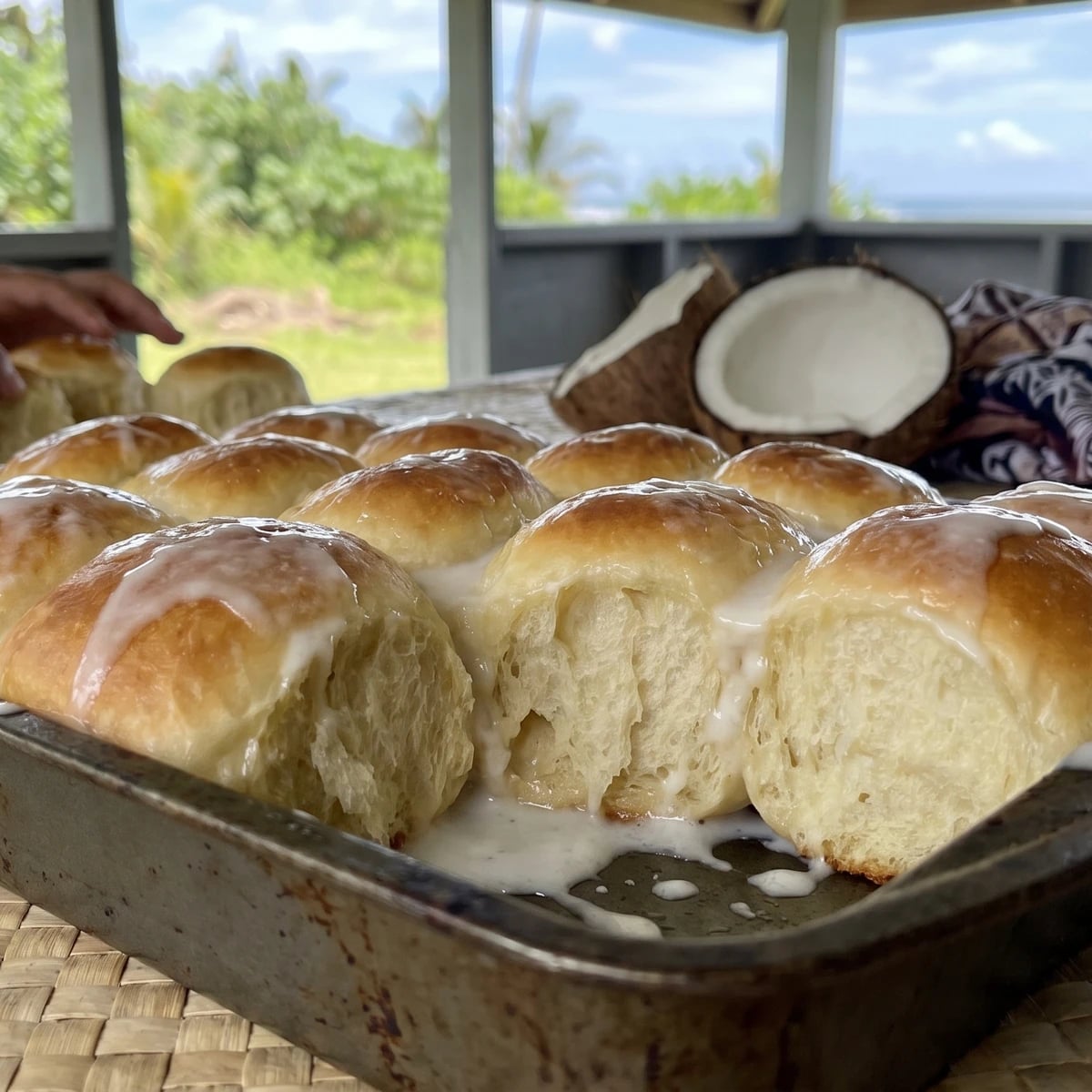
Sāmoa's panipopo, soft bread rolls baked sitting in sweet coconut cream until the bottoms turn gooey and gold. Not ancient canoe food, but living aiga food, warm from today's table.
My Sāmoan aunties taught me this one by feeding me first. That's the proper order, yeah? Sit down, take the bun, let the coconut cream soak your fingers, then listen. Panipopo belongs to Sāmoa: pani, bread, and popo, coconut, soft yeast rolls baked in sweetened coconut cream until the tops go golden and the bottoms turn tender and sticky.
This isn't the old canoe-crop food like talo, taro, ʻulu, breadfruit, or the leaf parcel, palusami, folded with peʻepeʻe, fresh coconut cream. This is Sāmoa living through mission, trade, church, town, school lunch, Sunday toʻonaʻi, the big family meal after service, and still making sweetness out of what sits on the table. Keeper, not gatekeeper. The deep foods feed the root. The everyday foods keep the house loud.
Across the Triangle, the cousins each took flour in their own way: Māori rēwena, potato-leavened bread, in Aotearoa; Hawaiian Portuguese sweet bread on the bakery table; Tongan coconut buns that carry a close name and a different hand. But this bowl of soft rolls in coconut cream is Sāmoan panipopo, and we name the hand clean.
The why is simple. You bake the buns in the sauce, not beside it, because the bread is supposed to drink. The top stays pillowy and gold, the bottom turns almost pudding-soft, and the coconut cream gathers in the pan for dragging one more piece through. Food for the soul, the aiga says. No need make it precious. Make enough.
Panipopo is a Sāmoan post-contact bread, shaped by wheat flour, sugar, and yeast that entered island kitchens through mission, trade, and colonial-era baking, then settled into local family tables on Sāmoa's own terms. Its older root is the coconut, popo, a central Polynesian food that fed people long before flour arrived, pressed into cream for palusami, koko alaisa, and Sunday toʻonaʻi. The dish shows how Sāmoan cooking holds deep food and newer everyday food side by side without shame.
Quantity
3 1/2 cups
plus more for dusting
Quantity
2 1/4 teaspoons
Quantity
1/4 cup
Quantity
1 teaspoon
Quantity
1 cup
warmed to 105F to 110F
Quantity
1
room temperature
Quantity
4 tablespoons
melted and cooled
Quantity
as needed
for the bowl and pan
Quantity
1 can (13.5 ounces)
Quantity
1/2 cup
Quantity
1/2 cup
for the coconut sauce
Quantity
1/4 teaspoon
for the coconut sauce
| Ingredient | Quantity |
|---|---|
| all-purpose flourplus more for dusting | 3 1/2 cups |
| instant yeast or active dry yeast | 2 1/4 teaspoons |
| granulated sugar | 1/4 cup |
| fine sea salt | 1 teaspoon |
| whole milkwarmed to 105F to 110F | 1 cup |
| large eggroom temperature | 1 |
| unsalted buttermelted and cooled | 4 tablespoons |
| neutral oil or butterfor the bowl and pan | as needed |
| full-fat coconut milk or coconut cream | 1 can (13.5 ounces) |
| water | 1/2 cup |
| granulated sugarfor the coconut sauce | 1/2 cup |
| fine sea saltfor the coconut sauce | 1/4 teaspoon |
In a large bowl, stir the warm milk, yeast, and a spoonful of the 1/4 cup sugar together. Let it sit 5 to 10 minutes, until it looks creamy and lightly foamy. If it stays flat, the yeast is tired. Eat what you have, but don't ask dead yeast to raise bread.
Add the flour, remaining sugar, salt, egg, and melted butter. Mix until a shaggy dough comes together, then knead by hand 8 to 10 minutes, or with a dough hook 5 to 6 minutes, until the dough turns smooth, soft, and a little tacky. It should pull from the bowl but still feel alive under your palm, not dry and stiff.
Oil the bowl lightly, set the dough inside, cover it, and let it rise in a warm place for 1 to 1 1/2 hours, until doubled and puffy. Press it with one finger. If the dent slowly fills back in, it's ready. If it springs back fast, give it more time.
Butter a 9 by 13 inch baking dish. Turn the dough out, divide it into 12 equal pieces, and shape each one into a tight smooth ball by tucking the edges underneath. Set them in the dish with a little room between them. Cover and let rise 35 to 45 minutes, until the buns look swollen and touch at the sides.
While the buns rise, whisk the coconut milk or coconut cream with the water, 1/2 cup sugar, and 1/4 teaspoon salt until smooth. Fresh popo cream is beautiful if you can squeeze it, and a good can does the weeknight job. The sauce should taste sweet, salty, and deeply coconut, because the bread will drink it down.
Heat the oven to 350F. Pour the coconut sauce around and over the risen buns, slow so you don't flatten them. Bake 25 to 30 minutes, until the tops are golden brown and the sauce bubbles thick around the edges. The middle bun should feel set, not doughy, and the pan should smell like warm bread and coconut.
Let the panipopo rest 10 to 15 minutes so the sauce settles into the bottoms. Spoon a little of the glossy coconut cream from the pan over the tops and serve warm, family-style. The best piece is the one with the sticky bottom, so no act shy at the table.
1 serving (about 110g)
Culinary guides, cultural storytelling, and the editorial depth that makes cooking meaningful.
Discover Culinary Explorer
Chef Makoa
A Sāmoan slab bread, dense with grated popo and coconut cream, baked gold in a home oven and eaten with koko Samoa, budget food that still keeps the family close.

Chef Makoa
Sāmoa's keke puaʻa wraps sweet white dough around savory pork, steamed soft and shared warm from a market cart, church kitchen, or aiga table.

Chef Juliette
Pâte à brioche ordinaire teaches enriched dough properly: wake the leaven, build strength before the last egg, then work in pliable butter by stages and let one long fermentation do its quiet work.

Chef Juliette
Ordinary brioche takes one exact measure of butter and a patient rise in the mould, becoming so light and silken that it can cradle fruit without losing its tender crumb.