
Chef Graziella
Schiacciata with Finocchiona
The sandwich of Florentine markets, where excellent bread and fennel-scented salami require nothing more than each other and a drizzle of oil. Two ingredients. No cooking. No compromise.
A cooking platform built around craft, culture, and the stories behind what we eat.
Created by
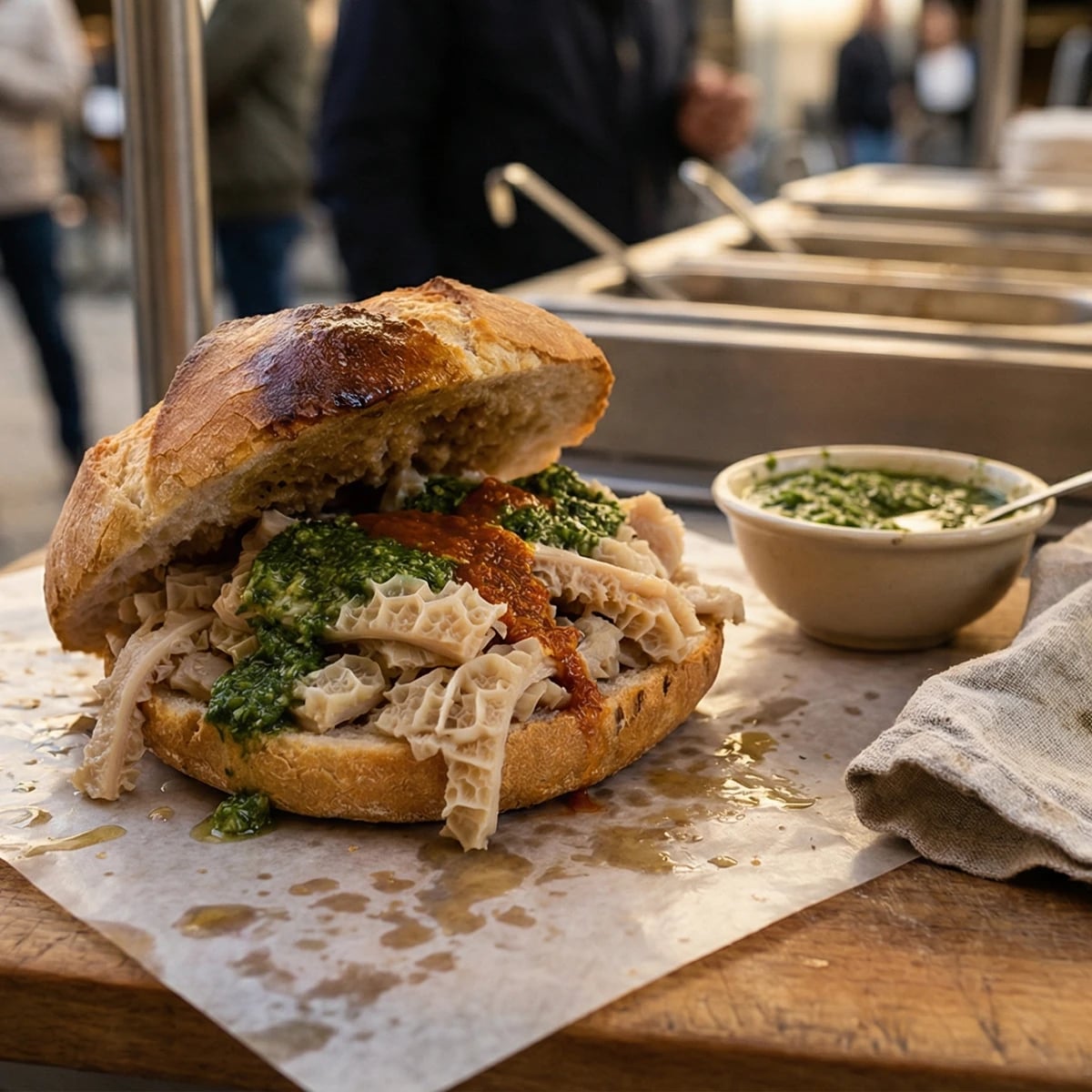
The workingman's lunch of Florence, where the fourth stomach of a cow becomes something noble through hours of patient braising and the alchemy of salsa verde.
Lampredotto is not for the timid. It is the fourth stomach of a cow, the abomasum, and it looks exactly like what it is. If this troubles you, stop reading now. But if you understand that cucina povera, the cooking of the poor, produced some of Italy's most profound dishes, then you will recognize lampredotto as a triumph of thrift and technique.
The trippaio, the tripe seller, stands at his cart in every Florentine market. He has been there since before your grandparents were born. He fishes the braised lampredotto from its simmering broth, slices it onto a crusty semelle, dips the top half of the roll into the cooking liquid so it becomes soft and saturated, then spoons salsa verde over everything. He asks if you want it piccante. You say yes. He hands you something wrapped in wax paper that costs almost nothing and tastes like everything.
This is not restaurant food. This is what Florentine laborers eat standing at the cart, broth dripping down their wrists, before returning to work. The roll must be crusty enough to hold together when wet. The tripe must be braised until it surrenders completely. The salsa verde must be sharp enough to cut through the richness. When these three elements align, you understand why this humble sandwich has survived centuries.
Lampredotto carts have fed Florentine workers since the Renaissance, when offal was the protein the poor could afford. The dish takes its name from the lamprey eel, which the honeycomb texture of the fourth stomach was thought to resemble. By the 19th century, trippaio carts were fixtures outside every factory and market in Florence, and they remain so today.
Quantity
2 pounds
cleaned
Quantity
1 large
halved
Quantity
2
peeled and cut into large chunks
Quantity
3
cut into large chunks
Quantity
1 can (14 ounces)
crushed by hand
Quantity
1 large bunch
stems and leaves separated
Quantity
6
Quantity
2
Quantity
to taste
Quantity
6
Quantity
1 cup packed
Quantity
2 tablespoons
rinsed and soaked
Quantity
4
rinsed
Quantity
1 small clove
Quantity
2 tablespoons
Quantity
1/2 cup
Quantity
to taste
freshly ground
Quantity
2 tablespoons
Quantity
1 teaspoon
Quantity
2 tablespoons
Quantity
1 tablespoon
| Ingredient | Quantity |
|---|---|
| lampredotto (beef fourth stomach)cleaned | 2 pounds |
| yellow onionhalved | 1 large |
| carrotspeeled and cut into large chunks | 2 |
| celery stalks with leavescut into large chunks | 3 |
| whole peeled tomatoescrushed by hand | 1 can (14 ounces) |
| flat-leaf parsleystems and leaves separated | 1 large bunch |
| black peppercorns | 6 |
| bay leaves | 2 |
| kosher salt | to taste |
| crusty Italian rolls | 6 |
| flat-leaf parsley leaves | 1 cup packed |
| salt-packed capersrinsed and soaked | 2 tablespoons |
| anchovy filletsrinsed | 4 |
| garlic | 1 small clove |
| red wine vinegar | 2 tablespoons |
| extra virgin olive oil | 1/2 cup |
| black pepperfreshly ground | to taste |
| tomato paste (optional) | 2 tablespoons |
| crushed red pepper flakes (optional) | 1 teaspoon |
| extra virgin olive oil (for salsa piccante) (optional) | 2 tablespoons |
| red wine vinegar (for salsa piccante) (optional) | 1 tablespoon |
If your butcher has not cleaned the lampredotto thoroughly, rinse it under cold running water, rubbing away any remaining membrane or debris. The tripe should be pale and smell fresh, like clean meat, not barnyard. Place it in a large bowl, cover with cold water and a splash of vinegar, and let it soak for 30 minutes. Drain and rinse again.
Place the lampredotto in a large pot. Add the onion halves, carrots, celery with its leaves, crushed tomatoes, parsley stems (reserve the leaves for salsa verde), peppercorns, and bay leaves. Add cold water to cover by two inches. Season generously with salt. Bring to a boil over high heat, skimming any foam that rises to the surface.
Reduce heat to maintain the gentlest simmer. The surface should barely tremble, with only occasional bubbles breaking through. Cover partially and cook until the lampredotto is completely tender, 2 1/2 to 3 hours. Test by piercing with a fork: it should slide in with no resistance. The texture should be soft but not falling apart.
While the lampredotto braises, prepare the salsa verde. On a cutting board, finely chop the parsley leaves, capers, anchovies, and garlic together until they form a coarse paste. Transfer to a bowl. Stir in the vinegar, then the olive oil. Season with pepper. Taste and adjust the vinegar and salt. The sauce should be bright and assertive, almost aggressively tangy. It must stand up to the rich meat.
If you want the spicy sauce, whisk together the tomato paste, red pepper flakes, olive oil, and vinegar until smooth. Taste for heat and adjust. This is optional but traditional. The trippaio always asks: 'Piccante?'
When the lampredotto is tender, transfer it to a cutting board. Let it rest for 5 minutes. Slice it into strips about 1/4 inch thick. Keep the braising broth hot over low heat. You will need it.
Split each roll horizontally, leaving a hinge if possible. Place a generous portion of sliced lampredotto on the bottom half. Now comes the essential step: take the top half of the roll and dip the cut side into the hot braising broth for 3 to 4 seconds. The bread should absorb the broth and become soft and saturated but not falling apart. Spoon salsa verde generously over the meat. Add a streak of salsa piccante if desired. Close the sandwich. Wrap in wax paper if serving immediately. Eat standing up, preferably near a market.
1 serving (about 300g)
Culinary guides, cultural storytelling, and the editorial depth that makes cooking meaningful.
Discover Culinary Explorer
Chef Graziella
The sandwich of Florentine markets, where excellent bread and fennel-scented salami require nothing more than each other and a drizzle of oil. Two ingredients. No cooking. No compromise.

Chef Juliette
Five classical fillings between bread buttered to every edge, cut into tidy rectangles and held under a light weight: a French buffet lesson in softness, proportion, and restraint.

Chef Juliette
Steak grilled dark at the edges, cooled, sharpened with horseradish and mustard, then pressed between buttered loaf heels until the crumb catches every juice: a race-day sandwich substantial enough to be supper.

Chef Thomas
Back bacon crisped in a hot pan, a ripe tomato that actually tastes of something, crisp lettuce and real butter on proper toast. A sandwich that earns its place in the notebook.