
Chef Lupita
Acambaritas de Acámbaro
Guanajuato's daily bread from Acámbaro, a small glazed roll built on pata, enriched with manteca de cerdo, and baked until the top shines lightly for merienda.
A cooking platform built around craft, culture, and the stories behind what we eat.
Created by
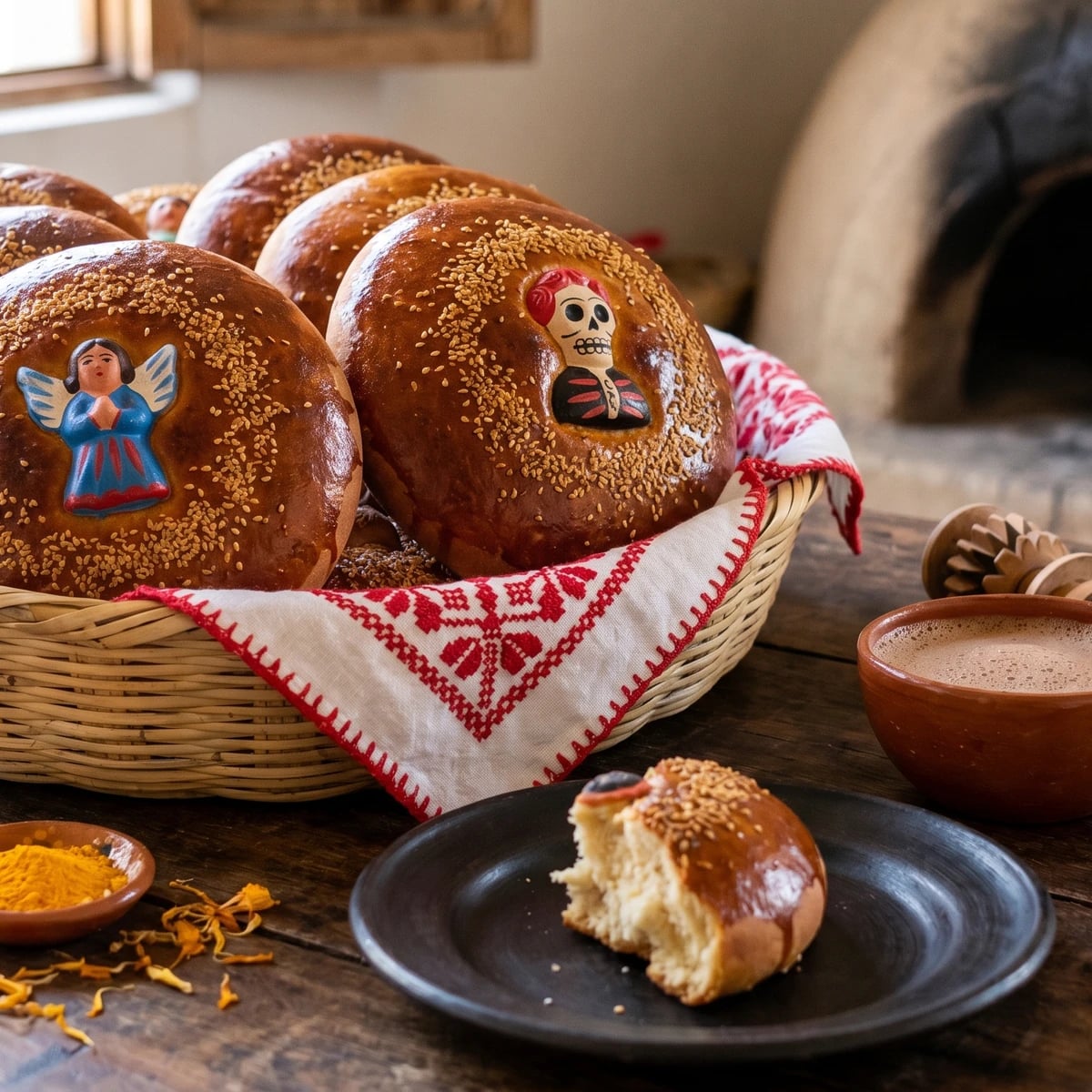
From the Sierra Sur of Oaxaca, the Sánchez family's pan de yema crowned with sun-dried cabecitas of angels, calaveras, and Frida Kahlo, hand-painted in cochinilla, cempasúchil, and añil before they go into the oven.
This bread comes from Miahuatlán de Porfirio Díaz, in the Sierra Sur of Oaxaca, two hours south of the capital on the road that climbs into the mountains toward Pluma Hidalgo. It is not the pan de muerto of Mexico City. It is not even the pan de muerto of the Valles Centrales. It is its own tradition, and it belongs to the panaderas of Miahuatlán, the Sánchez family chief among them, who have been pressing painted faces onto bread for generations.
The cabecita is the heart of it. A small figure made from a separate, stiffer dough, sculpted by hand into an angel, a calavera, sometimes a Frida Kahlo with the joined eyebrow and the flower crown. The cabecita is sun-dried for two days on a cotton cloth, then painted with vegetable dyes the panaderas have always used: grana cochinilla for red, cempasúchil for yellow, añil for blue, carbón vegetal for black, achiote for orange. The painted figure sits on top of the pan de yema and goes into the oven painted side up. It hardens like ceramic. The Sánchez children grow up watching their mother paint these in the back of the panadería on a long wooden table.
The bread underneath is pan de yema, the everyday enriched bread of Oaxaca, leavened with pulque blanco and built on egg yolks, manteca, anís, and agua de azahar. Pulque is not a substitute for yeast. Pulque is the leavener. The wild yeasts in the fermented agave give the bread a tang and a slow, deep rise that commercial yeast cannot duplicate. If you can find good pulque blanco, use it. If you cannot, this is one of the few times I will tell you what you are missing and let you make a compromise.
My mother had a single line in her notebook about Oaxacan bread: 'mas yema de la que crees, y manteca, no aceite.' More yolks than you think, and lard, not oil. She was right about that and she was right about most things. Saber cocinar es saber vivir.
Oaxaca's pan de yema tradition descends from the Spanish enriched bread the Dominican friars brought to the region in the 16th century, but the painted cabecita is purely a Oaxacan invention rooted in the state's pre-Columbian ceramic tradition and its long practice of vegetable dyeing for textiles and codices. The grana cochinilla, the prized red insect dye cultivated on nopal cactus in the Mixteca and the Valles Centrales, was Oaxaca's second most valuable colonial export after silver, and its survival as a kitchen colorant in towns like Miahuatlán reflects a continuity of artisanal practice that more industrialized regions lost. The town of Miahuatlán de Porfirio Díaz, named for the Oaxacan-born president, is the commercial hub of the Sierra Sur and the place where the Pacific coast traditions of Pluma Hidalgo meet the highland baking traditions of the Valles Centrales, producing a pan de muerto distinct from the work of bakers in the city of Oaxaca itself.
Quantity
1 cup (about 130 grams)
Quantity
1 tablespoon
Quantity
1/2 teaspoon
Quantity
1/4 cup
Quantity
1 tablespoon
for red paint
Quantity
2 tablespoons
for yellow paint
Quantity
1 teaspoon
for orange paint
Quantity
1 tablespoon
for blue paint
Quantity
1 tablespoon
for black paint
Quantity
1/4 cup
for thinning paints
Quantity
4 cups (about 500 grams)
plus more for dusting
Quantity
8
at room temperature
Quantity
1/2 cup
soft but not melted
Quantity
1/3 cup
Quantity
1 teaspoon
Quantity
1/2 cup
at room temperature
Quantity
1 tablespoon
Quantity
1 tablespoon
Quantity
1
zested
Quantity
1
mixed with 1 tablespoon water
Quantity
1/4 cup
untoasted
| Ingredient | Quantity |
|---|---|
| harina de trigo (for the cabecita) | 1 cup (about 130 grams) |
| manteca de cerdo (for the cabecita) | 1 tablespoon |
| kosher salt (for the cabecita) | 1/2 teaspoon |
| cold water (for the cabecita) | 1/4 cup |
| grana cochinilla powderfor red paint | 1 tablespoon |
| dried cempasúchil petalsfor yellow paint | 2 tablespoons |
| achiote pastefor orange paint | 1 teaspoon |
| dried añil (indigo)for blue paint | 1 tablespoon |
| ground carbón vegetal (food-grade activated charcoal)for black paint | 1 tablespoon |
| hot waterfor thinning paints | 1/4 cup |
| harina de trigoplus more for dusting | 4 cups (about 500 grams) |
| yemas de huevo (egg yolks)at room temperature | 8 |
| manteca de cerdosoft but not melted | 1/2 cup |
| azúcar | 1/3 cup |
| kosher salt | 1 teaspoon |
| pulque blancoat room temperature | 1/2 cup |
| anís en grano (whole anise seed) | 1 tablespoon |
| agua de azahar (orange blossom water) | 1 tablespoon |
| naranja criollazested | 1 |
| yema for egg washmixed with 1 tablespoon water | 1 |
| ajonjolí (sesame seeds)untoasted | 1/4 cup |
On a clean surface, work the cup of flour, the tablespoon of manteca, and the half teaspoon of salt together with your fingertips until the mixture looks like coarse sand. Add the cold water a little at a time and knead until you have a stiff, smooth dough that holds its shape. This is not bread dough. It should feel like clay. The cabecita is built to be sculpted, dried, and painted, not to rise. Wrap it tight and rest for 20 minutes before sculpting.
Pinch off pieces the size of a walnut. Shape each one into a face: an angel with wings tucked at the sides, a calavera with hollowed eye sockets and a wide grin, a Frida with thick joined eyebrows and flowers piled on her head. The Sánchez family in Miahuatlán has been pressing these for three generations. Whatever you sculpt, keep it flat on the back so it sits on the bread. About a quarter inch thick. Any thicker and the cabecita will not dry through.
Lay the figures on a clean cotton cloth set on a wooden board. Place them in direct sun for two full days, bringing them inside at night so the dew does not soften them. They are ready when they sound hollow if you tap them and feel light in your hand. This is not a step you can rush with an oven. The slow drying is what gives the cabecita the chalky surface that holds the paint. The cabecita is not a substitute for the bone shape on a Mexico City pan de muerto. It is its own tradition. Asi se hace y punto.
On the second day, while the figures finish drying, prepare your paints. Steep the cempasúchil petals in two tablespoons of hot water for ten minutes, then strain. That is your yellow. Stir the grana cochinilla powder into a tablespoon of hot water for red. Thin the achiote paste with a teaspoon of warm water for orange. Steep the añil in a tablespoon of hot water for blue. Stir the carbón vegetal into a teaspoon of water for black. These are the same colors the panaderas of the Sierra Sur have used since long before commercial food coloring reached the highlands.
With a fine brush, paint the dried figures. The angel takes a band of blue across the wings and red on the lips. The calavera gets black around the eye sockets and red roses on the forehead. Frida gets the joined eyebrow in carbón, a yellow flower crown, red lips. Let the paint dry completely, about thirty minutes. The painted figures will sit on top of the bread, not inside it.
In a large bowl, whisk the eight yemas with the sugar and salt until thick and pale yellow, about three minutes. Beat in the soft manteca, the pulque, the agua de azahar, the orange zest, and the anís en grano. Pulque is the leavener here, not flavoring. The wild yeasts in fresh pulque blanco are what give Oaxacan pan de yema its particular tang and the slow rise that develops the crumb. No me vengas con atajos. Add the four cups of flour gradually, mixing with your hand or a wooden spoon until the dough comes together.
Turn the dough out onto a lightly floured artesa or work surface. Knead for ten to twelve minutes. The dough is rich and should feel like silk under your hands by the end, smooth and a little tacky but not sticky. Place in an oiled bowl, cover with a damp cloth, and let rise in a warm spot until doubled. With pulque, this can take three to four hours. The rise is slow because the yeasts are wild. Patience is the recipe.
Punch down the dough and divide into eight equal pieces, about 130 grams each. Shape each piece into a tight round ball, tucking the seams under so the top is smooth. Arrange on a baking sheet lined with parchment, spaced four inches apart. They will spread. Press a painted cabecita gently into the top of each pane, pushing just enough that the figure sets into the dough but the painted face stays clear of the surface.
Cover with a clean cloth and rest at room temperature until the dough looks puffed and a finger pressed into the side leaves a slow-filling dent. About one to one and a half hours. While they rise, heat your oven to 350F. La cocina no es decoracion, es trabajo. The second rise is what gives pan de yema its tender, pull-apart crumb.
Brush the exposed dough around each cabecita with the egg wash, careful not to drip onto the painted figure. Scatter ajonjolí generously around the base of each cabecita. Bake on the middle rack for 30 to 35 minutes. The bread is ready when the crust is deep golden brown, the sesame seeds have toasted to amber, and the bottom sounds hollow when tapped. The painted cabecita will have set hard like ceramic on top. That is correct. It is meant to be admired more than eaten.
Cool on a rack for at least twenty minutes. Pan de yema is served torn, not cut, alongside chocolate de agua frothed with a molinillo in a clay jícara. In Miahuatlán, this is the bread families set on the ofrenda for Día de Muertos and the bread they break in the morning during the days that follow. Recetas probadas y garantizadas.
1 serving (about 140g)
Culinary guides, cultural storytelling, and the editorial depth that makes cooking meaningful.
Discover Culinary Explorer
Chef Lupita
Guanajuato's daily bread from Acámbaro, a small glazed roll built on pata, enriched with manteca de cerdo, and baked until the top shines lightly for merienda.

Chef Lupita
Michoacan's Tinguindin aguacatas are flat, leaf-scored sweet breads made with harina de trigo, piloncillo, anise, and manteca de cerdo, shaped by hand for the wood oven.

Chef Lupita
From Ajijic on Lake Chapala, Pan Tachihual is a lightly sweet wedding loaf built with harina de trigo, harina de maiz, piloncillo, manteca, anise, and the old Guadalajara pata.

Chef Lupita
Comitán's pan de yema shaped into little pigs, birds, and rabbits, a Chiapas bakery bread rich with egg yolks, manteca de cerdo, and anís, baked golden on hoja de plátano.