
Chef Lupita
Agua de Alfalfa
Ciudad de México's highland market agua fresca, fresh alfalfa blended with pineapple and lime until bright green, strained clean, and poured cold from the vitrolero.
A cooking platform built around craft, culture, and the stories behind what we eat.
Created by
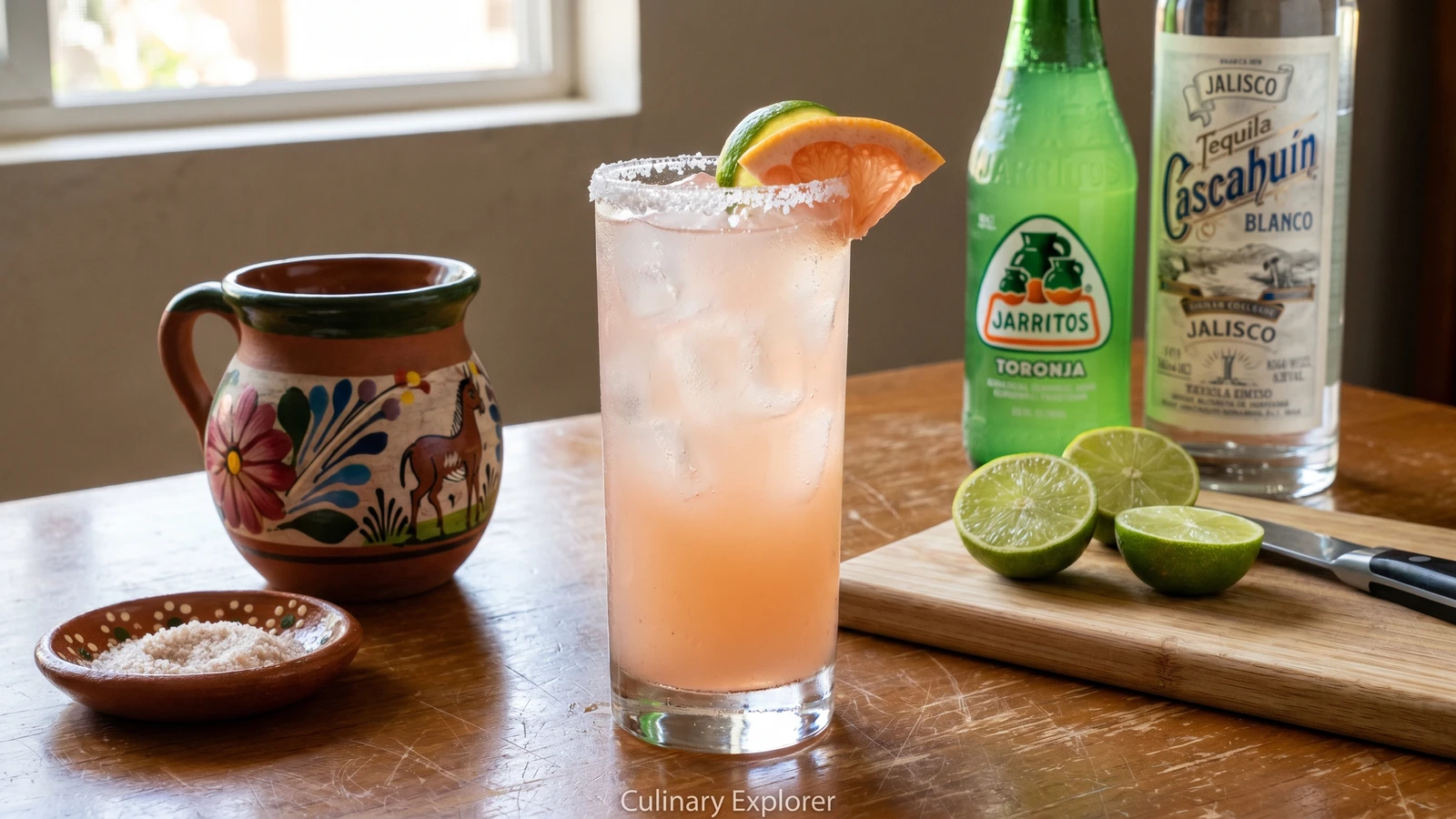
Jalisco's Paloma is tequila blanco, grapefruit soda, lime, salt, and ice, built in the glass without ceremony because the point is refreshment, not performance.
Jalisco owns the Paloma because Jalisco owns tequila. From Guadalajara to Los Altos, this is the drink people actually pour when the afternoon is hot, the carne is on the grill, and nobody wants to stand there shaking a cocktail like they work in a hotel bar.
The ingredient that matters is tequila blanco made from 100 percent agave, preferably from Jalisco. Do not bring mixto tequila into this glass. The grapefruit soda should be cold enough to bead condensation on the bottle before you open it. Squirt is the common choice in Mexico. Jarritos toronja works too, sweeter and brighter. Lime gives the edge. Salt wakes the whole thing up.
I have seen more Palomas built on plastic tables outside Guadalajara than margaritas in my whole 32-state life. That tells you something. The margarita became famous outside Mexico. The Paloma stayed useful inside it. Cada estado, su propia cocina, and in Jalisco, the agave drink does not need a blender, a neon color, or a story. It needs balance. Así se hace y punto.
The Paloma's exact inventor is not documented, though it is often, without proof, attributed to Don Javier Delgado Corona of La Capilla in Tequila, Jalisco. The drink became practical in the mid-20th century after grapefruit sodas such as Squirt, first introduced in 1938, became widely available in Mexico and paired naturally with Jalisco's tequila industry. Unlike the margarita, whose origin stories are heavily tied to tourism and border bars, the Paloma developed as a home and cantina drink built directly in the glass.
Quantity
1
for rimming the glass
Quantity
1 teaspoon
for the rim
Quantity
2 ounces
100 percent agave, preferably from Jalisco
Quantity
1/2 ounce
Quantity
4 to 5 ounces
preferably Squirt or Jarritos toronja
Quantity
enough to fill the glass
Quantity
1
for serving
Quantity
1
for serving
| Ingredient | Quantity |
|---|---|
| lime wedgefor rimming the glass | 1 |
| coarse sea salt or sal de Colimafor the rim | 1 teaspoon |
| tequila blanco100 percent agave, preferably from Jalisco | 2 ounces |
| fresh lime juice | 1/2 ounce |
| cold grapefruit sodapreferably Squirt or Jarritos toronja | 4 to 5 ounces |
| ice cubes | enough to fill the glass |
| lime wedgefor serving | 1 |
| thin grapefruit wedge (optional)for serving | 1 |
Run a lime wedge around half the rim of a tall glass or a cold jarrito de barro. Dip only that half into coarse salt. Half, not the whole thing. The drink should taste seasoned, not like you fell into the sea.
Fill the glass with ice. Pour in the tequila blanco. Use 100 percent agave tequila from Jalisco if you can. If the label does not say 100 percent agave, leave it on the shelf. Si no conoces el mercado, no conoces la cocina, and yes, that applies to the liquor store too.
Add the fresh lime juice directly over the ice. Bottled lime juice has no place here. It tastes tired before it touches the glass. Fresh lime gives the Paloma its clean edge.
Pour in the cold grapefruit soda slowly so it keeps its bubbles. The glass should look pale pink to golden, depending on the soda, with small bubbles moving through the ice. Stir once or twice with a bar spoon. Do not beat the carbonation out of it.
Add the lime wedge and the grapefruit wedge if using. Serve immediately while the glass is cold and the soda still snaps under your tongue. This is not a drink to make ahead. Build it, hand it over, drink it.
1 serving (about 275g)
Culinary guides, cultural storytelling, and the editorial depth that makes cooking meaningful.
Discover Culinary ExplorerChef Lupita
Ciudad de México's highland market agua fresca, fresh alfalfa blended with pineapple and lime until bright green, strained clean, and poured cold from the vitrolero.
Chef Lupita
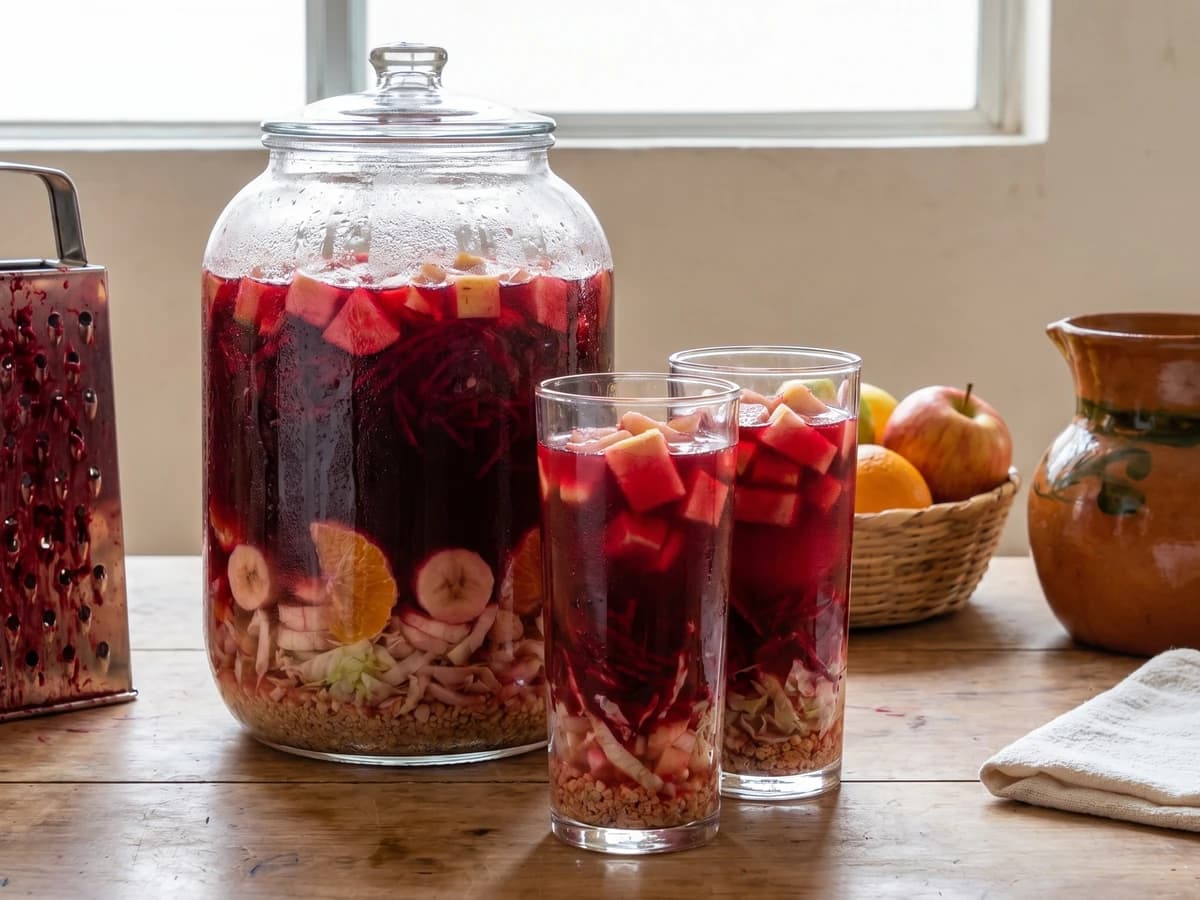
Aguascalientes' Lenten agua fresca, jewel-red from cooked beet and full of apple, banana, orange, lettuce, and ground peanuts, served cold when Holy Week meets the Feria de San Marcos.

Chef Lupita
Sonora and Sinaloa's creamy malted barley water, built on toasted cebada perla, Mexican canela, vanilla from Papantla, and evaporated milk. Pink-beige, rich, and served cold over heavy ice in a heavy glass tumbler. Liquid cookie comfort the northwest way.

Chef Lupita
Yucatán's everyday tonic of boiled chaya leaves blended with lima agria, sugar, and ice. The bright green jarra that sits on every Peninsula table from Mérida to Valladolid.