
Chef Makoa
Faraoa ʻIpo (Tahitian Coconut Dumplings)
Soft Tahitian ʻipo, coconut-milk dough rolled by hand and steamed until tender, born from the atoll table of the Tuamotu and carried now to Society Islands kitchens.
A cooking platform built around craft, culture, and the stories behind what we eat.
Created by
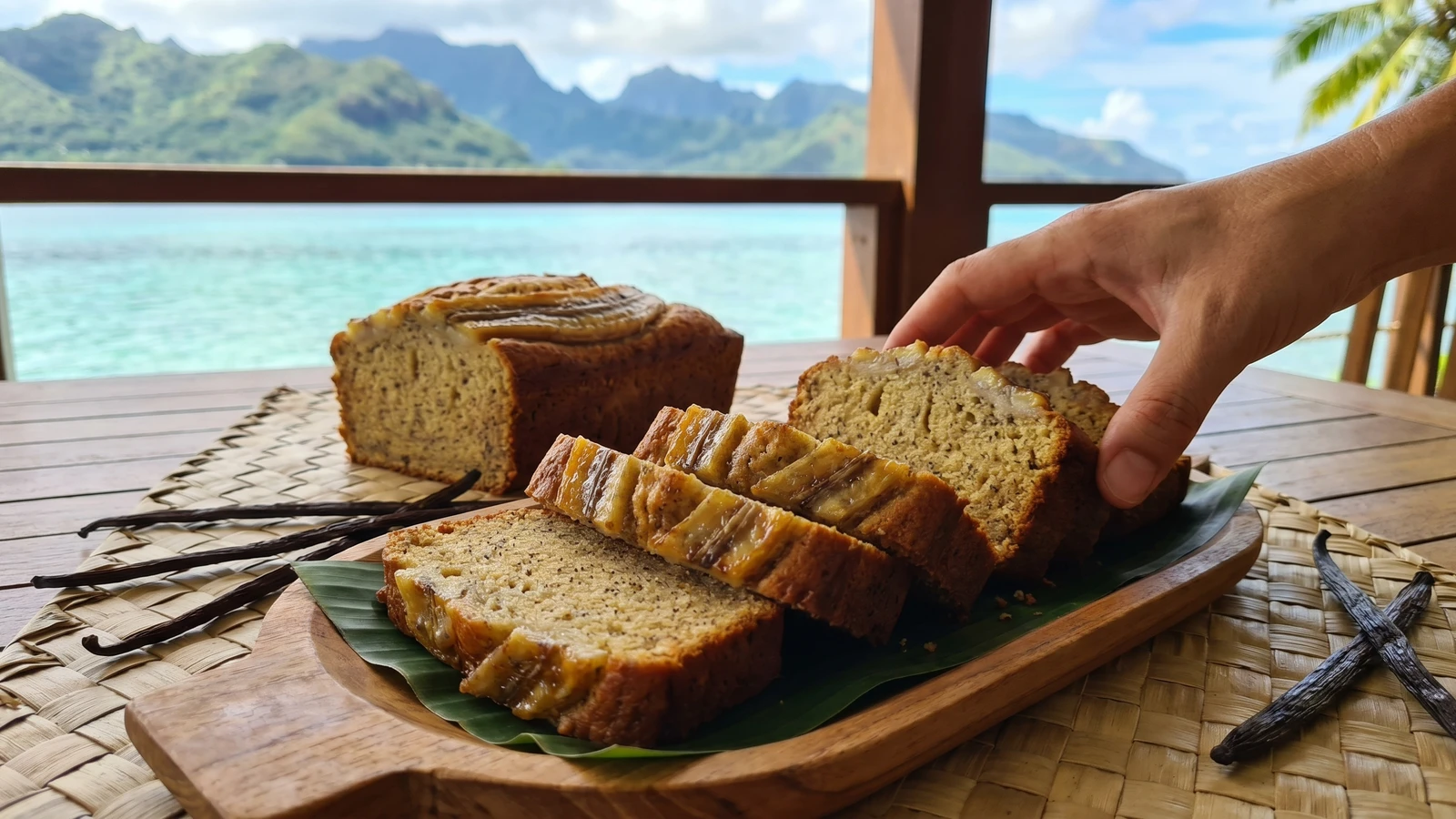
Very ripe Tahitian meiʻa folded into a soft quick-bread loaf with Tahaʻa vanilla, coconut milk, and the easy afternoon spirit of goûter, where an old canoe fruit meets today's kitchen.
The canoe never carried a loaf pan, but it carried the meiʻa, the banana, and that's why this Tahitian pain banane belongs at the table. Tahiti gives it the French name pain banane, banana bread, but the fruit underneath is older than that word, rooted in the fenua, the land, and in the Māʻohi hands, the Indigenous people of Tahiti, who kept food moving from garden to family.
I first ate this kind of loaf at a Tahitian cousin-auntie's table, not dressed up, not trying to impress anybody. Just thick slices, still tender in the middle, with coffee for the grown folks and a little piece cut for every child who wandered past. That afternoon goûter, the French word for the late-day snack, had the old fruit and the later pantry sitting side by side like they had made peace already.
Across the Triangle, the same canoe fruit wears different names: meiʻa in Tahiti, maiʻa in Hawaiʻi, faʻi in Sāmoa, meika in the Cook Islands. One ocean, one canoe, plenty hands. Tahiti folds it here with flour, sugar, and Tahaʻa vanilla from the neighboring Society Islands, and the loaf tells the truth of how the islands eat now: old crop, new oven, family still fed.
So let the bananas go nearly black. Don't throw them out when they look tired. That's when they're ready to give. Use Tahaʻa vanilla if you have it, good extract if you don't. Eat what you have, share what you bake, and don't make the loaf precious. It was meant to be cut thick.
Bananas were canoe plants in eastern Polynesia long before European contact; in Tahiti the meiʻa grew beside taro and ʻuru as part of the older Māʻohi food ground. The loaf called pain banane is later, with wheat flour, sugar, baking powder, and the French word pain from the mission and colonial pantry meeting that older fruit. Tahaʻa vanilla joined the table after nineteenth-century introductions, and the hand-pollination method Edmond Albius developed in Réunion in 1841 made commercial vanilla possible across the French Pacific.
Quantity
3
mashed, about 1 1/2 cups
Quantity
1
split lengthwise for the top
Quantity
1/2 cup
melted and cooled, or use neutral oil
Quantity
2/3 cup
Quantity
2
at room temperature
Quantity
1/2 cup
Quantity
1 tablespoon
or seeds from 1 vanilla bean
Quantity
1 3/4 cups
Quantity
1 teaspoon
Quantity
1/2 teaspoon
Quantity
1/2 teaspoon
Quantity
1/2 cup
| Ingredient | Quantity |
|---|---|
| very ripe bananas (meiʻa)mashed, about 1 1/2 cups | 3 |
| small ripe banana (optional)split lengthwise for the top | 1 |
| unsalted buttermelted and cooled, or use neutral oil | 1/2 cup |
| raw cane sugar or packed light brown sugar | 2/3 cup |
| large eggsat room temperature | 2 |
| coconut milk or whole milk | 1/2 cup |
| Tahaʻa vanilla extractor seeds from 1 vanilla bean | 1 tablespoon |
| all-purpose flour | 1 3/4 cups |
| baking powder | 1 teaspoon |
| baking soda | 1/2 teaspoon |
| fine sea salt | 1/2 teaspoon |
| grated fresh coconut or unsweetened shredded coconut (optional) | 1/2 cup |
Set a rack in the center of the oven and heat it to 350F. Grease a 9 x 5-inch metal loaf pan and line it with a parchment sling so the loaf lifts out clean. This is home food, not ceremony, so set yourself up plain and steady.
Peel the 3 very ripe meiʻa, bananas in reo Tahiti, and mash them with a fork until glossy and loose, leaving a few soft lumps. If the skins are almost black, good. That's sweetness, not waste.
Stir the melted butter or oil into the mashed banana, then whisk in the sugar, eggs, coconut milk, and Tahaʻa vanilla. If you're using a vanilla bean, rub the seeds into the sugar first so every black speck carries through the loaf. The bowl should smell floral, sweet, and soft, like the fruit finally gave in.
In a separate bowl, whisk the flour, baking powder, baking soda, and salt. Add the dry mix to the banana bowl, add the grated coconut if you're using it, and fold just until no dry flour shows. Stop while the batter is still thick and a little lumpy. Beat it hard and the loaf comes out tight, and that's on us, not the fruit.
Scrape the batter into the pan and smooth the top. Lay the split banana on top if you're using it, cut side up, pressing it in lightly. Bake 55 to 65 minutes, until the loaf is deep golden, the top springs back, and a skewer pushed into the center comes out with moist crumbs, not wet batter. If the top browns too fast, tent it loosely with foil.
Let the loaf rest in the pan for 15 minutes, then lift it out and cool at least 30 minutes before slicing so the crumb settles. Serve thick slices warm or room temperature, plain, buttered, or with a spoon of coconut cream. The next day it gets softer and more itself.
1 serving (about 115g)
Culinary guides, cultural storytelling, and the editorial depth that makes cooking meaningful.
Discover Culinary ExplorerChef Makoa
Soft Tahitian ʻipo, coconut-milk dough rolled by hand and steamed until tender, born from the atoll table of the Tuamotu and carried now to Society Islands kitchens.

Chef Makoa
Soft Tahitian pain coco, faraoa haʻari, kneaded with coconut milk and grated coconut until the loaf bakes tender, lightly sweet, and ready for a Sunday table.
Chef Juliette
Pâte à brioche ordinaire teaches enriched dough properly: wake the leaven, build strength before the last egg, then work in pliable butter by stages and let one long fermentation do its quiet work.

Chef Juliette
Ordinary brioche takes one exact measure of butter and a patient rise in the mould, becoming so light and silken that it can cradle fruit without losing its tender crumb.