Chef Takumi
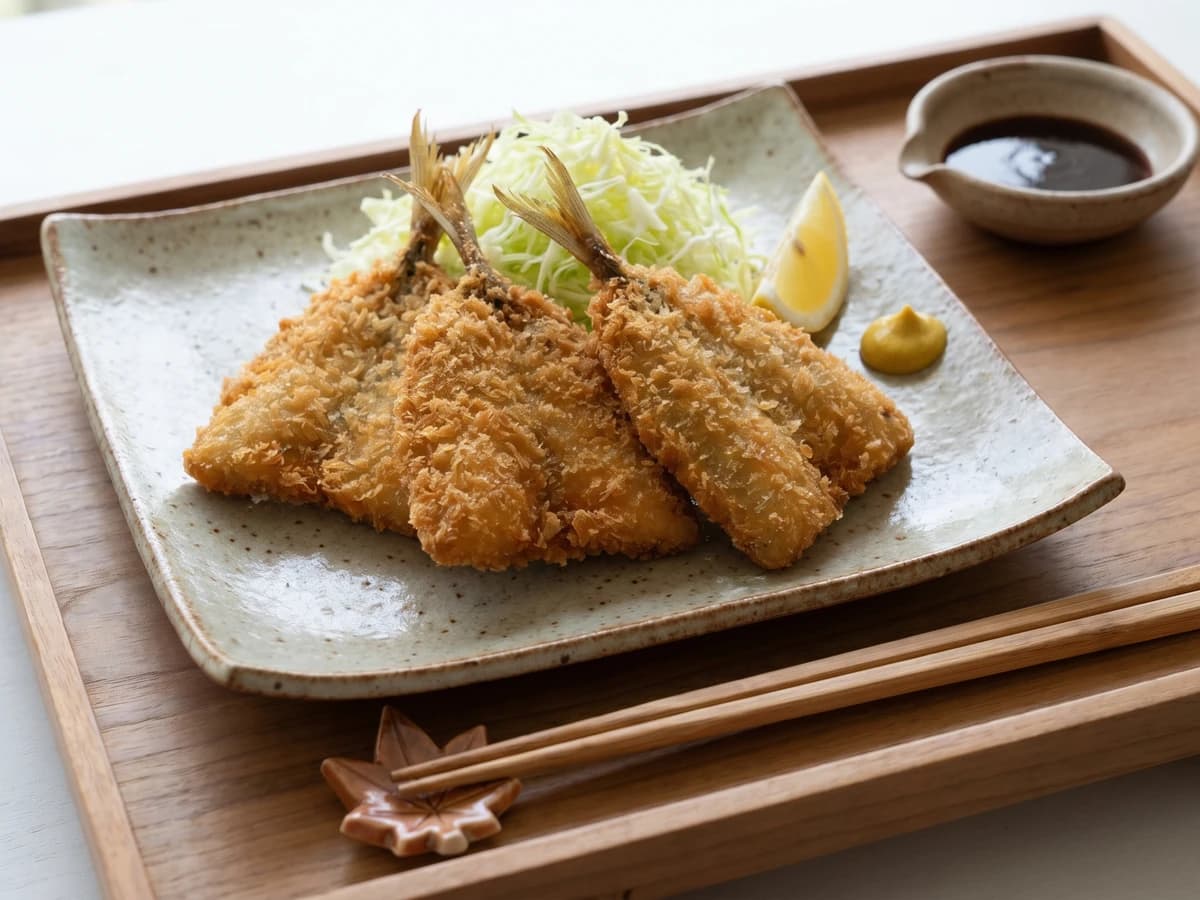
Aji Fry (アジフライ, panko-fried horse mackerel)
Aji fry is weeknight fish with no mystery: fresh horse mackerel opened cleanly, breaded lightly, and fried until the panko crackles while the flesh stays sweet.
A cooking platform built around craft, culture, and the stories behind what we eat.

Created by
Osaka ikayaki is not a squid pancake. It's a thin pressed cake, chewy at the edges, tender where the egg folds through, and honest enough that fresh squid decides the dish.
Ikayaki has a small trick in its name. In much of Japan it means a whole squid grilled and brushed with soy. In Osaka, especially around Umeda, it becomes something flatter and quicker: squid caught in a thin batter, pressed between iron plates, folded over an egg, and eaten from paper before anyone has time to make a ceremony of lunch.
Do not thicken the batter to make it familiar. That's the mistake. This is konamon, Osaka's flour-food craft, but flour is only the carrier. The batter should taste lightly of dashi, and the squid must be glistening fresh, cut small, and dried well. There is no heavy sauce here to rescue a tired squid. Nothing hidden.
The one detail that decides it is pressure. A true ikayaki press is two hot iron plates; at home, a hot griddle and a heavy cast-iron pan will do the work. Pressure spreads the batter thin, forces contact with heat, and gives the chew that belongs to this dish. The egg stays separate, a tender layer folded through the cake, not a disguise mixed into it.
We eat this as quick food, picnic food, food from a department-store counter that still belongs to washoku because the method is clear and the ingredient is respected. Simple, yes. Unfamiliar, certainly. That is where people often mistake it for difficult.
Ikayaki has two common meanings in Japan: in many regions it is grilled whole squid, while in Osaka it often means a pressed flour cake with squid. Hanshin Department Store in Umeda began selling its pressed ikayaki in 1957, and its basement snack counter helped make the dish a local Osaka marker. The egg version, sold there as a richer deluxe style, keeps the same iron-pressed form but turns a quick flour snack into a small meal.
Quantity
1 1/4 cups
for quick dashi
Quantity
1 small piece (about 5g)
Quantity
6g
Quantity
250g
cleaned, bodies cut into short strips, tentacles cut into 1-inch lengths
Quantity
100g
Quantity
1 tablespoon
Quantity
1/4 teaspoon
Quantity
4
one per cake
Quantity
1 tablespoon
for the press or griddle
Quantity
3 tablespoons
Quantity
1 tablespoon
drained
| Ingredient | Quantity |
|---|---|
| cold waterfor quick dashi | 1 1/4 cups |
| konbu (dried kelp) | 1 small piece (about 5g) |
| katsuobushi (bonito flakes) | 6g |
| fresh squidcleaned, bodies cut into short strips, tentacles cut into 1-inch lengths | 250g |
| cake flour or low-protein all-purpose flour | 100g |
| katakuriko (potato starch) | 1 tablespoon |
| fine sea salt | 1/4 teaspoon |
| large eggsone per cake | 4 |
| neutral oilfor the press or griddle | 1 tablespoon |
| okonomiyaki sauce or ikayaki sauce | 3 tablespoons |
| beni shōga (red pickled ginger) (optional)drained | 1 tablespoon |
Wipe the konbu with a damp cloth, but don't wash it. Put it in the cold water and warm it slowly over low heat. When the water trembles and small bubbles climb the sides, lift the konbu out. Bring the water just to a gentle boil, add the katsuobushi all at once, take the pot off the heat, and leave it alone for two minutes. Strain and let it drip without squeezing, then cool it. You need 1 cup for the batter.
Pat the squid very dry. Cut the bodies into short strips about 1/2 inch wide, and cut the tentacles into 1-inch lengths. Small pieces flatten under the press and cook before they toughen. Water on the surface thins the batter and makes the griddle spit, so dry squid is not fussiness. It's control.
Whisk the flour, katakuriko, and salt in a bowl. Add 1 cup cooled dashi and whisk until the batter pours like thin cream. Let it rest for 10 minutes while the griddle heats. Resting lets the flour drink, so the finished cake is chewy rather than pasty. Keep it thin. Ikayaki should press flat, not puff up.
Heat an ikayaki press until both plates are hot, or heat a flat griddle with a second heavy cast-iron pan or grill press. Oil the cooking surface lightly, then wipe it nearly clean. Too much oil fries the edges and keeps the batter from meeting the iron. The chew comes from hot contact and pressure.
For each cake, pour one quarter of the batter into a thin oval, then scatter one quarter of the squid over it. Close the press, or press firmly with the hot second pan, and cook for 90 seconds to 2 minutes. The edges should look set, the squid should turn opaque, and the cake should lift in one flexible sheet. If it tears, give it another few breaths before moving it.
Slide the pressed cake to a plate. Crack one egg onto the hot griddle, break the yolk, and spread it into a thin oval about the same size as the cake. Lay the cake back on top and press lightly for 30 to 45 seconds, just until the egg clings and sets. The egg is cooked as its own layer, not beaten into the batter, so it stays tender and the cake stays thin.
Turn the cake egg-side up, brush with a thin layer of sauce, and fold it in half. Brush the outside with a little more sauce only if it needs it. The sauce should season the squid and egg, not drown them. Repeat with the remaining batter, squid, and eggs, wiping the griddle clean between cakes so old sauce or batter doesn't scorch.
Serve the ikayaki warm, or let it cool on a rack and wrap it in parchment for a picnic. Add a small pinch of beni shōga if you like its sharpness. Do not pile the cakes while they are hot, because trapped moisture softens the pressed surface and steals the chew you worked for.
1 serving (about 180g)
Culinary guides, cultural storytelling, and the editorial depth that makes cooking meaningful.
Discover Culinary ExplorerChef Takumi
Aji fry is weeknight fish with no mystery: fresh horse mackerel opened cleanly, breaded lightly, and fried until the panko crackles while the flesh stays sweet.
Chef Takumi
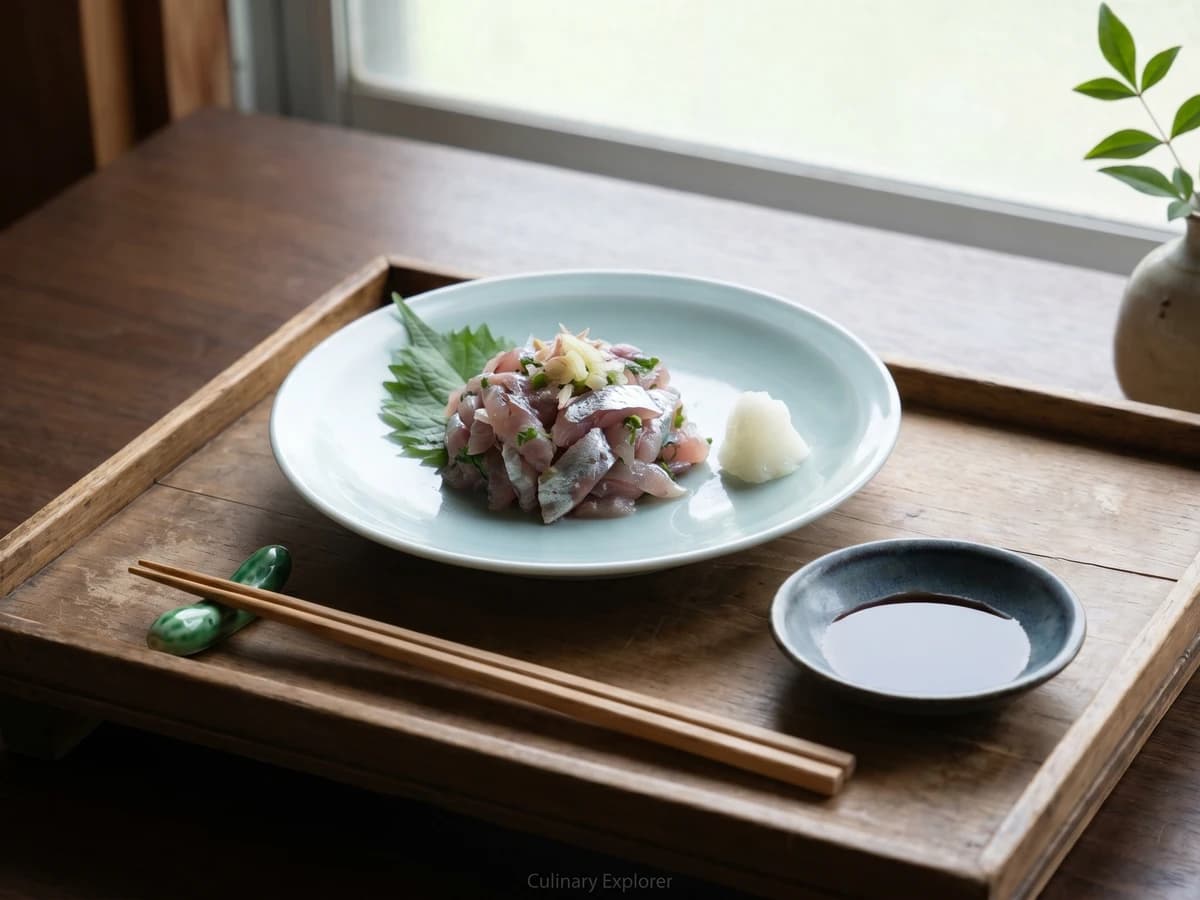
Summer horse mackerel, chopped just enough to catch ginger and scallion, becomes a cool, clean main dish with rice. The secret is fresh fish and a knife that does not bruise it.

Chef Takumi
Akashi-yaki is not sauced takoyaki. It is egg-rich batter, tender octopus, and clear dashi, cooked pale and soft so each ball can be dipped like a small custard dumpling.
Chef Takumi
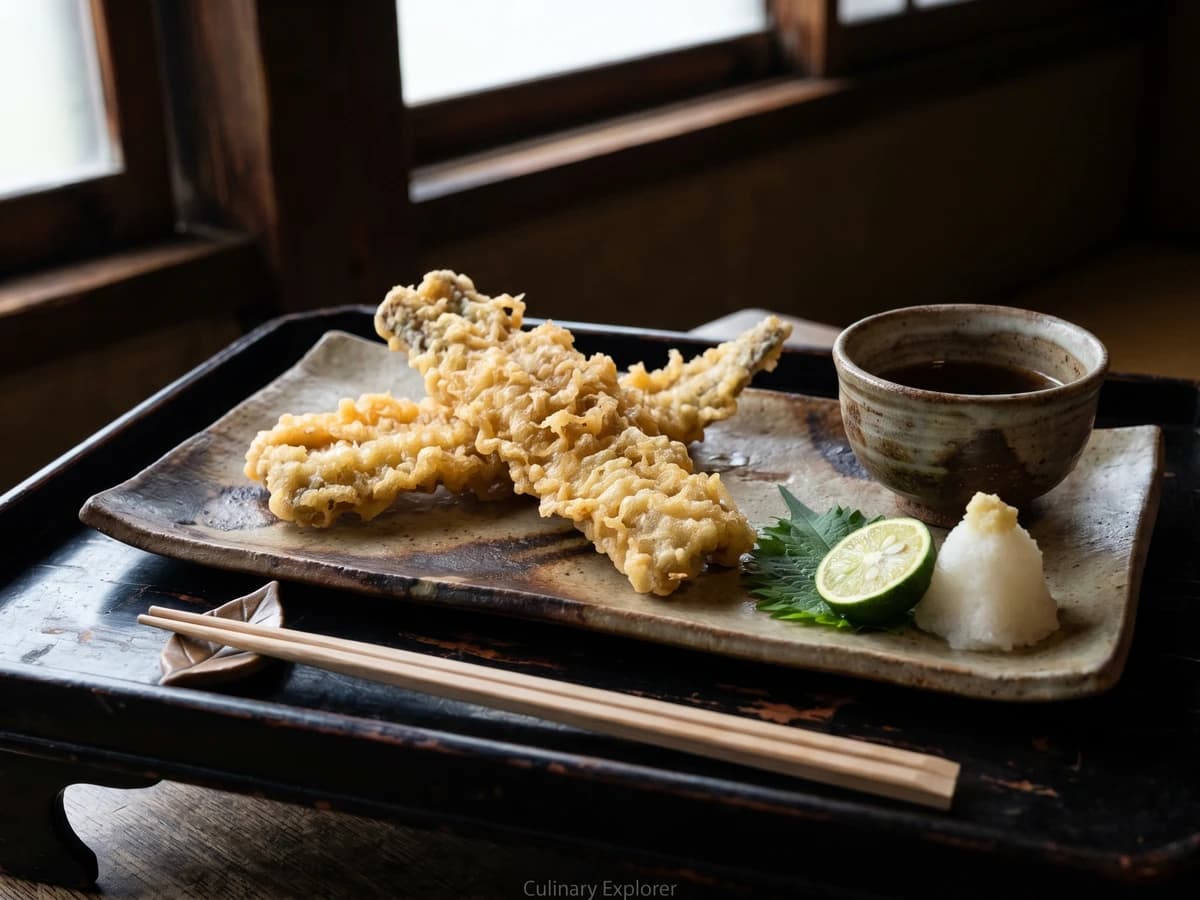
A whole anago looks like a test of nerve. It is mostly good sourcing, a dry skin, cold batter, and oil hot enough to leave the eel sweet under its lace.