
Chef Isabel
Aguaillo de la Sierra de Cadiz
Aguaillo is from the Sierra de Cadiz: cold water, stale bread, garlic, oil and vinegar, closer to a field drink than a bowl of soup, and sharp enough to wake you in the heat.
A cooking platform built around craft, culture, and the stories behind what we eat.
Created by
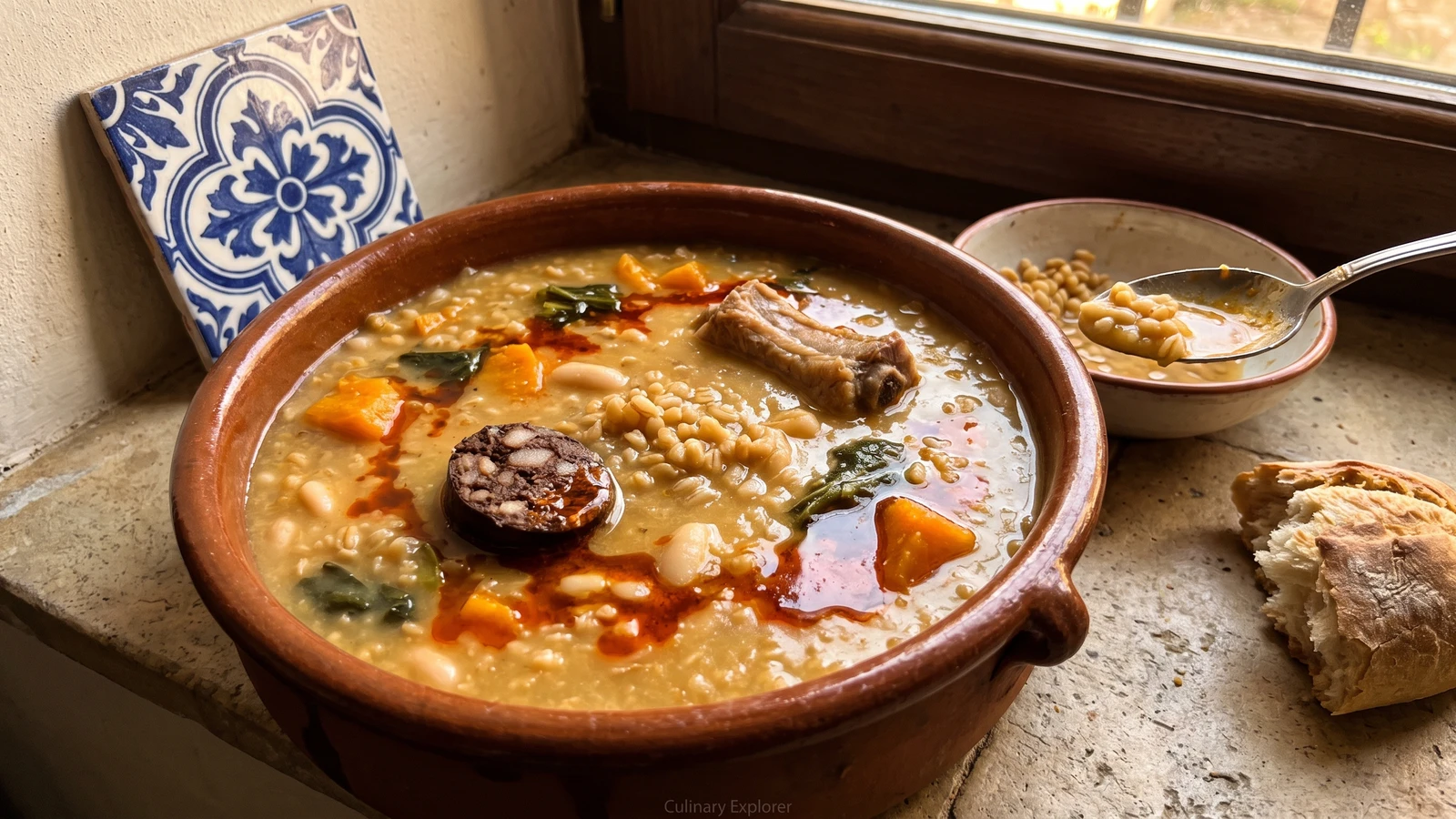
Olleta de blat is Alicante mountain spoon food: soaked wheat berries, white beans, pork, pumpkin, and greens cooked until the grain swells and thickens the pot. Keep it slow and it behaves.
Olleta de blat is Alicante's inland olla, Valencian spoon food with wheat as its signature: soaked blat, white beans, pork, pumpkin, greens, and a dark little sofrito, the slow onion-and-tomato base. The whole wheat is what makes it this dish and not a neighbour's bean pot. It swells, gives off starch, and turns the broth thick enough to carry a spoon. Esto es de Alicante, no de España a secas.
The method that decides it is patience with the grain and beans. Soak them well, start them in cold water with the pork, and keep the pot at a low tremble. A hard boil breaks the beans and leaves the wheat tough outside and chalky inside. Add the pumpkin late so it softens and sweetens the broth without disappearing before the beans are ready.
If you're far from Alicante, no hace falta haber pisado España. Look for blat picat, trigo pelado, or pearled wheat berries; ordinary whole wheat berries will work, but they need more time and keep more chew. Cannellini stand in for small white fesols. Morcilla de cebolla is the right sausage here; if you can't find it, use a Spanish morcilla added at the end, or leave it out and accept a leaner pot.
My Margin for this one says only: watch the bottom. Wheat settles. Sweep the pot gently now and then, especially after the sofrito goes in, and don't let it dry. Siempre sale, si lo sigues, but only if you give the grain the time it asks for.
Olleta de blat belongs to Alicante's inland Valencian comarcas, especially l'Alcoià, El Comtat, and the Marina Alta valleys, where wheat, beans, pumpkin, and the pig larder made a winter olla sturdy enough for a day's work. The word blat is Valencian for wheat; older cooks used blat picat, grain rubbed or pounded to loosen its husk, so the stew thickened from the grain itself rather than from rice alone. Like many ollas, it changed from village to village, with cardoons, chard, turnip, pork ribs, or morcilla de cebolla depending on the household and the matanza.
Quantity
250g
soaked overnight
Quantity
250g
soaked overnight
Quantity
300g
cut into 5cm pieces
Quantity
150g
in one piece
Quantity
1, about 300g
Quantity
1
Quantity
2.3 litres, plus more as needed
Quantity
3 tablespoons
Quantity
1 large, about 200g
finely chopped
Quantity
2, about 250g
grated
Quantity
1 teaspoon
Quantity
1 pinch
Quantity
200g
peeled and cut into 2cm chunks
Quantity
300g
peeled and cut into 3cm chunks
Quantity
200g
stems sliced and leaves chopped
Quantity
2, about 180g total
pricked once
Quantity
10g, plus more to taste
added near the end
| Ingredient | Quantity |
|---|---|
| blat picat, trigo pelado, or pearled wheat berriessoaked overnight | 250g |
| dried small white beanssoaked overnight | 250g |
| pork ribscut into 5cm pieces | 300g |
| panceta or fresh pork bellyin one piece | 150g |
| split pork trotter (optional) | 1, about 300g |
| bay leaf | 1 |
| cold water | 2.3 litres, plus more as needed |
| olive oil | 3 tablespoons |
| onionfinely chopped | 1 large, about 200g |
| ripe tomatoesgrated | 2, about 250g |
| sweet pimentón | 1 teaspoon |
| saffron threads (optional) | 1 pinch |
| turnip or rutabagapeeled and cut into 2cm chunks | 200g |
| pumpkin or winter squashpeeled and cut into 3cm chunks | 300g |
| Swiss chard or cardoon stalksstems sliced and leaves chopped | 200g |
| morcillas de cebollapricked once | 2, about 180g total |
| fine sea saltadded near the end | 10g, plus more to taste |
Drain the soaked wheat and beans and rinse them well. Put them in a 5 to 6 litre heavy pot with the pork ribs, panceta, optional trotter, bay leaf, and 2.3 litres cold water. Bring it up slowly over medium heat, skimming the grey foam that rises, then lower the heat before the boil gets rough.
Keep the pot at a quiet tremble for 1 hour 30 minutes to 1 hour 45 minutes, until the beans are beginning to soften and the wheat grains look swollen but still have a firm centre. Sweep the bottom gently with a wooden spoon every 20 minutes; wheat sinks and catches if you pretend it won't. Add hot water if the liquid drops below the solids.
While the pot simmers, heat the olive oil in a small frying pan. Add the onion with a pinch of salt and cook it low for about 15 minutes, until dark gold and jammy. Stir in the grated tomato and cook 8 to 10 minutes more, until the liquid has almost gone. Pull the pan off the heat, stir in the pimentón and saffron, then loosen it with a ladle of broth and scrape it into the olla. That slow sofrito is the sweetness of the stew; rush it and the pot tastes boiled and thin.
When the beans are nearly tender, add the turnip and the chard stems or cardoon stalks, then stir in 5g of the salt. Simmer gently for 20 minutes. Add the pumpkin and chard leaves and cook another 25 to 35 minutes, until the beans are creamy, the wheat is tender, and the pumpkin edges have softened into the broth.
Lay the pricked morcillas de cebolla on top for the last 10 to 12 minutes, just long enough to heat through and give the broth their sweetness. Do not boil them hard or they burst and cloud the pot. Taste and add the remaining salt only if the stew asks for it.
Turn off the heat and let the olleta rest 15 minutes. Lift out the panceta, trotter, and morcillas, slice what needs slicing, and return enough to the pot so every bowl gets a little. The stew should be thick but spoonable; loosen it with a splash of hot water if the wheat has drunk too much. Serve deep, with bread for the broth.
1 serving (about 680g)
Culinary guides, cultural storytelling, and the editorial depth that makes cooking meaningful.
Discover Culinary ExplorerChef Isabel
Aguaillo is from the Sierra de Cadiz: cold water, stale bread, garlic, oil and vinegar, closer to a field drink than a bowl of soup, and sharp enough to wake you in the heat.

Chef Isabel
Ajilimojili is Jaen's tomato-free cold soup: potato, roasted red pepper, garlic, olive oil, and vinegar pounded into a cool, silky spoonful.

Chef Isabel
Ajo carretero is Soriano, from the pine country of Soria: lamb cooked in a plain garlicky broth, then served the old way, meat first and bread-soaked soup after.

Chef Isabel
Ajoblanco Extremeño is the poor-kitchen cold soup of Extremadura: bread, garlic, oil, egg yolk, vinegar, and icy water, with no almonds. Whisk it slowly and serve it bien fresquito.