
Chef Ally
Cardamom Morning Buns
Flaky, buttery laminated pastry spiraled with brown sugar and freshly ground cardamom, baked until the edges turn deeply caramelized and the kitchen smells like Sunday mornings should.
A cooking platform built around craft, culture, and the stories behind what we eat.
Created by
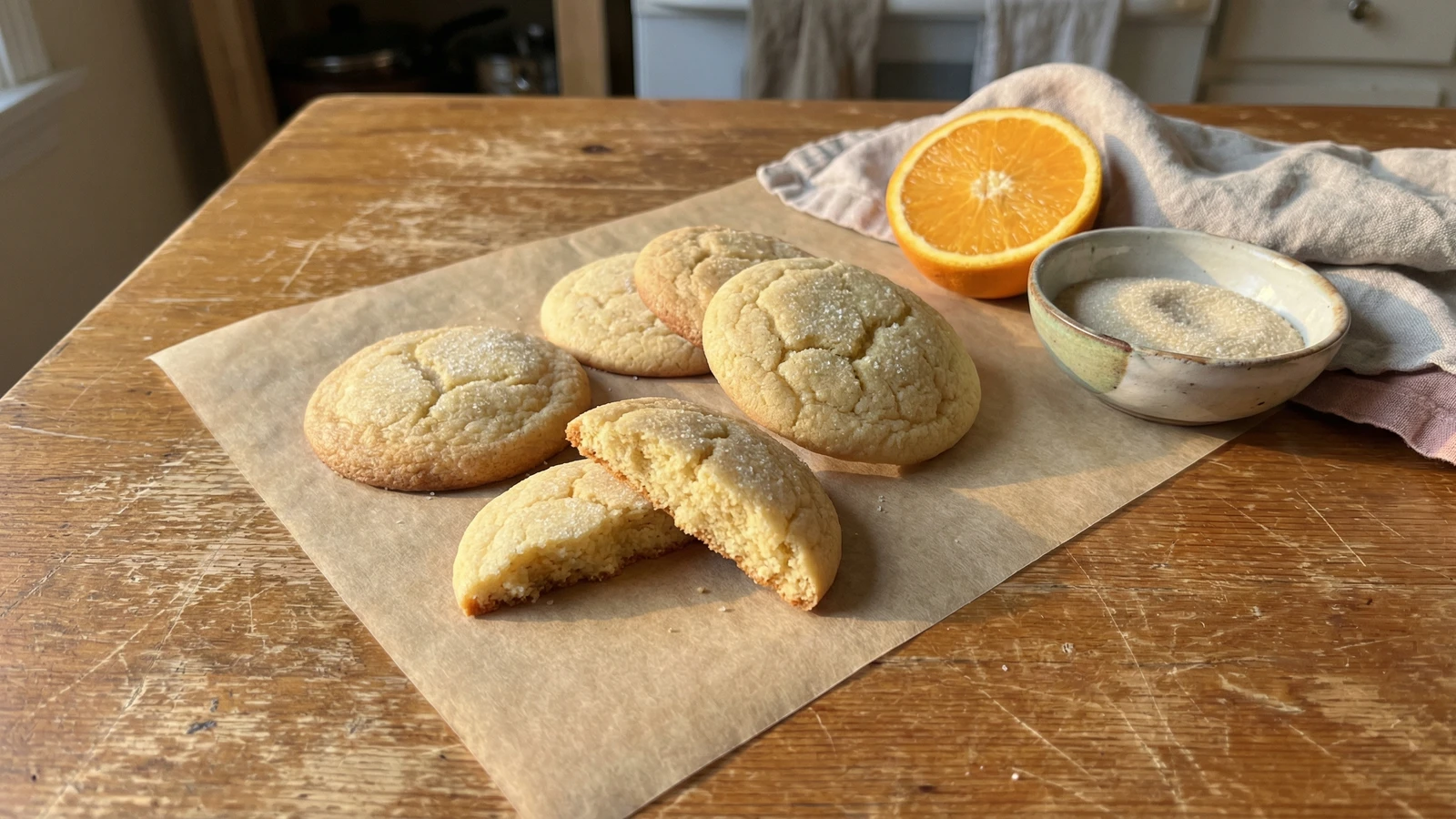
Tender, lightly crisp cookies made with fruity California olive oil and bright citrus zest, proving that the simplest ingredients need the least done to them.
Start with the olive oil. Not the bottle in the back of your cabinet, but something alive with fruit. A good California oil pressed from Arbequina or Mission olives will have notes of green apple, fresh grass, maybe a hint of pepper at the finish. This is your butter. This is where flavor begins.
These cookies came from a question I've asked myself a thousand times: what if we stopped doing so much? A traditional sugar cookie demands creaming butter, chilling, rolling, cutting. This one asks only that you find good oil, zest fresh citrus, and get out of the way. The texture is different from butter cookies, more tender and delicate, almost shortbread-like but lighter. The olive oil leaves a clean, fruity finish that makes room for the citrus to sing.
Winter is when I make these most. That's when California citrus reaches its peak, when navels and Meyers appear at the farmers market with their leaves still attached and their skins so fragrant you can smell them from across the stall. The orange and lemon zest together create something brighter than either alone. Every meal is a meaningful choice, and so is every cookie. These taste like someone cared where the ingredients came from.
Quantity
2 1/4 cups (280g)
Quantity
1 teaspoon
Quantity
1/2 teaspoon
Quantity
3/4 cup (150g), plus more for rolling
Quantity
2/3 cup (160ml)
Quantity
2
at room temperature
Quantity
1 tablespoon
freshly grated (about 1 large orange)
Quantity
2 teaspoons
freshly grated (about 1 lemon)
Quantity
1 tablespoon
Quantity
1 teaspoon
| Ingredient | Quantity |
|---|---|
| all-purpose flour | 2 1/4 cups (280g) |
| baking powder | 1 teaspoon |
| fine sea salt | 1/2 teaspoon |
| granulated sugar | 3/4 cup (150g), plus more for rolling |
| fruity extra-virgin olive oil | 2/3 cup (160ml) |
| large eggsat room temperature | 2 |
| orange zestfreshly grated (about 1 large orange) | 1 tablespoon |
| lemon zestfreshly grated (about 1 lemon) | 2 teaspoons |
| fresh orange juice | 1 tablespoon |
| pure vanilla extract | 1 teaspoon |
Zest your orange and lemon before you do anything else. Use a microplane and work in short strokes, rotating the fruit to avoid the bitter white pith beneath. The oils in the zest are volatile. They begin fading the moment you grate them. This is why we zest fresh, why we never reach for the jar.
Whisk together the flour, baking powder, and salt in a medium bowl. Set aside. This takes thirty seconds and ensures even distribution of the leavening throughout your dough.
In a large bowl, whisk together the sugar and olive oil until the mixture looks like wet sand at the beach, slightly clumpy but glistening. Add the eggs one at a time, whisking well after each. The mixture will become smooth and slightly thick, almost like a loose mayonnaise.
Whisk in the orange zest, lemon zest, orange juice, and vanilla. The bowl should smell like a California grove in January. Take a moment with it. This is the heart of the cookie.
Add the flour mixture in two additions, stirring with a wooden spoon or sturdy spatula until just combined. The dough will be soft and slightly sticky, more like a thick batter than a traditional cookie dough. This is correct. The olive oil creates a different texture than butter.
Cover the bowl and refrigerate for at least one hour, or overnight. The dough needs time to firm up so you can shape it. Cold dough also bakes more evenly, with less spread. Patience here is not optional.
Preheat your oven to 350F. Line baking sheets with parchment. Pour about half a cup of sugar into a shallow bowl. Scoop tablespoon-sized portions of dough and roll them between your palms into balls. Drop each ball into the sugar and roll to coat completely. Place on prepared sheets, spacing two inches apart.
Use the bottom of a drinking glass or measuring cup to press each ball into a round about a quarter inch thick. The sugar coating prevents sticking and creates that lovely sparkle on top. Work gently. These cookies are tender by nature.
Bake for 10 to 12 minutes, rotating the pan halfway through. The cookies are done when the edges turn the palest gold and the centers still look slightly soft. They will firm as they cool. Overbaking is the enemy of tenderness.
Let the cookies rest on the baking sheet for five minutes. They are fragile when hot. Transfer to a wire rack to cool completely. Once cooled, they keep in an airtight container at room temperature for up to a week, though they rarely last that long.
1 cookie (about 18g)
Culinary guides, cultural storytelling, and the editorial depth that makes cooking meaningful.
Discover Culinary ExplorerChef Ally
Flaky, buttery laminated pastry spiraled with brown sugar and freshly ground cardamom, baked until the edges turn deeply caramelized and the kitchen smells like Sunday mornings should.

Chef Ally
Tender, golden scones bright with Meyer lemon zest and scattered with poppy seeds, finished with a thin citrus glaze that catches the light like frost on a winter garden.

Chef Ally
Buttery shortbread studded with toasted California walnuts and sweetened with wildflower honey from a beekeeper you might know, the kind of cookie that disappears from the tin before you can hide it.

Chef Juliette
A pale short-paste shell holds silken, lightly sweet carrot purée beneath neat glazed half-discs, their butter syrup catching the light: a classical tart poised between vegetable course and sweet.