Culinary Explorer
A cooking platform built around craft, culture, and the stories behind what we eat.
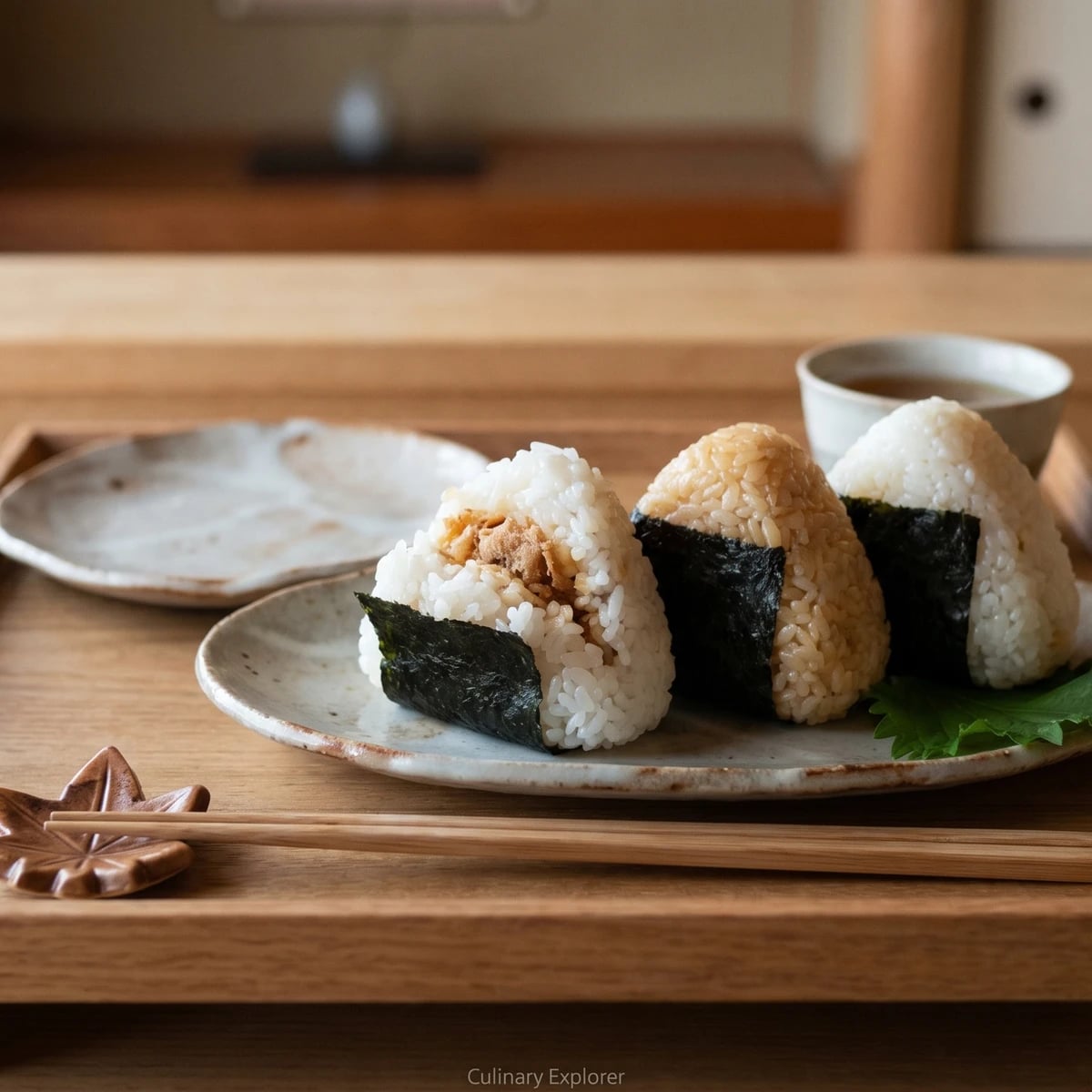
Okaka Onigiri (おかかおにぎり, bonito-soy rice ball)
Created by Chef Takumi
Warm rice, salted hands, and bonito flakes just dampened with soy sauce. Okaka onigiri proves how little a rice ball needs when the filling is honest.
Okaka looks like almost nothing: bonito flakes darkened with soy, tucked at the heart of warm rice. That smallness is the lesson. The flakes that usually give dashi its backbone carry enough flavor for a whole rice ball, if you don't drown them first.
The detail that decides it is moisture. Katsuobushi should be damp and fragrant, not wet. Too much soy seeps through the rice and turns the center sharp; too little leaves the flakes dry and papery. Mix until the flakes cling together in soft tufts, and stop there. This is the whole filling. Very serious people have built ceremonies out of less.
Shape while the rice is warm. Cold rice is stubborn, but warm short-grain rice gathers under the hand and holds with only a little pressure. Wet, salted palms do two jobs at once: they keep the rice from sticking to you and season the outside where the first bite lands. Press gently. The grains should still look like grains.
Okaka onigiri belongs to lunch boxes, train rides, picnics, and the plain hour when rice is ready and you need food now. It is the method, not the menu: rice, salt, soy, bonito, and restraint. Leave it room on the plate, and in your hands.
Ingredients
Japanese short-grain rice
Quantity
2 rice-cooker cups (300g)
water
Quantity
400ml, or to the 2-cup rice-cooker mark
katsuobushi (bonito flakes)
Quantity
10g
| Ingredient | Quantity |
|---|---|
| Japanese short-grain rice | 2 rice-cooker cups (300g) |
| water | 400ml, or to the 2-cup rice-cooker mark |
| katsuobushi (bonito flakes) | 10g |
Where cooking meets culture.
Culinary guides, cultural storytelling, and the editorial depth that makes cooking meaningful.
Discover Culinary Explorer