Culinary Explorer
A cooking platform built around craft, culture, and the stories behind what we eat.
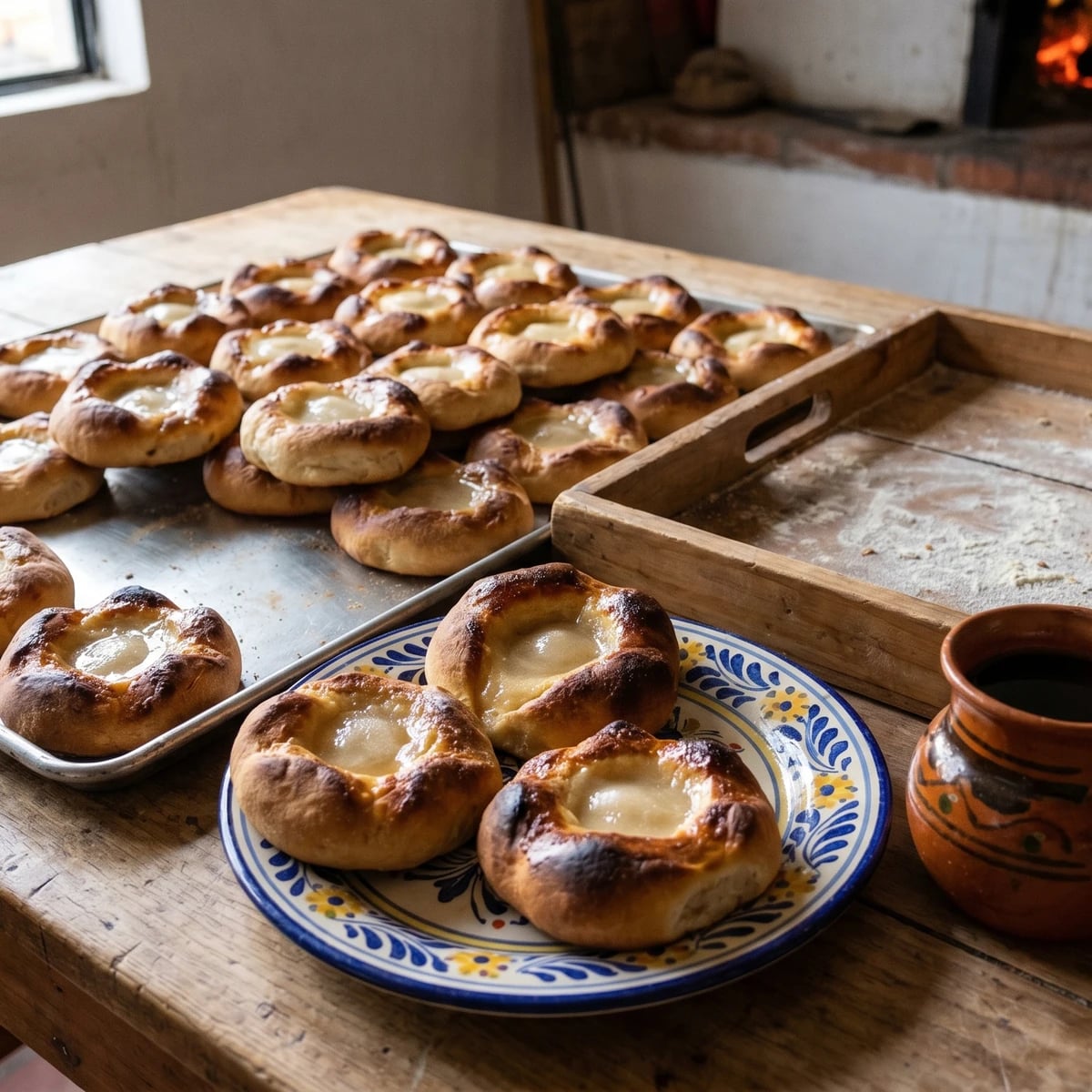
Ojos Acambarenses
Created by Chef Lupita
Guanajuato's Acambaro merienda bread, round and lard-rich, raised with pata, pressed at the center, and glazed with sugar until each piece looks ready for cafe de olla.
Guanajuato, southeastern Bajio, Acambaro. That is where these ojos live, in the panaderias that still understand the difference between bread made with time and bread inflated with powders. The town is famous for Pan Grande de Acambaro, yes, but the smaller pieces on the charola matter too: ojos, tornitos, picones, and the breads bought for merienda before the cafe de olla is poured.
An ojo acambarense is a small round bread with an indented sugar center. It is not a cookie. It is not a baking powder biscuit. The lift comes from pata, the masa madre saved from one batch to feed the next. That old dough carries the flavor of the bakery, the flour, the oven, the hands that have been working before sunrise. If a recipe tells you to use royal baking powder here, close it. That is not this bread.
The fat is manteca de cerdo because this is the secular panaderia register of the Bajio. Lard gives the crumb that tender, short bite that makes the bread hold together when you dunk it, then soften without collapsing. The sugar center should catch the light but still feel plain and honest, not decorated like a pastry case in a mall.
I learned to look for these breads on wooden trays, not behind glass, in Acambaro bakeries where the oven had blackened walls and the panadero judged the day by color, not by timer. Cada estado, su propia cocina. Guanajuato's bread is wheat, lard, old dough, wood heat, and a cup of coffee strong enough to make you pay attention.
Ingredients
mature wheat sourdough starter
Quantity
30 grams
for building the pata
warm water
Quantity
75 grams
80 to 85 F
bread flour
Quantity
120 grams
for the pata
| Ingredient | Quantity |
|---|---|
| mature wheat sourdough starterfor building the pata | 30 grams |
| warm water80 to 85 F | 75 grams |
| bread flourfor the pata | 120 grams |
Where cooking meets culture.
Culinary guides, cultural storytelling, and the editorial depth that makes cooking meaningful.
Discover Culinary Explorer