
Chef Dean
Bacon Egg and Cheese on a Roll
The iconic New York bodega breakfast: shattering-crisp bacon, a golden-yolked fried egg, and molten American cheese tucked into a soft kaiser roll. This is the sandwich that built a city.
A cooking platform built around craft, culture, and the stories behind what we eat.
Created by
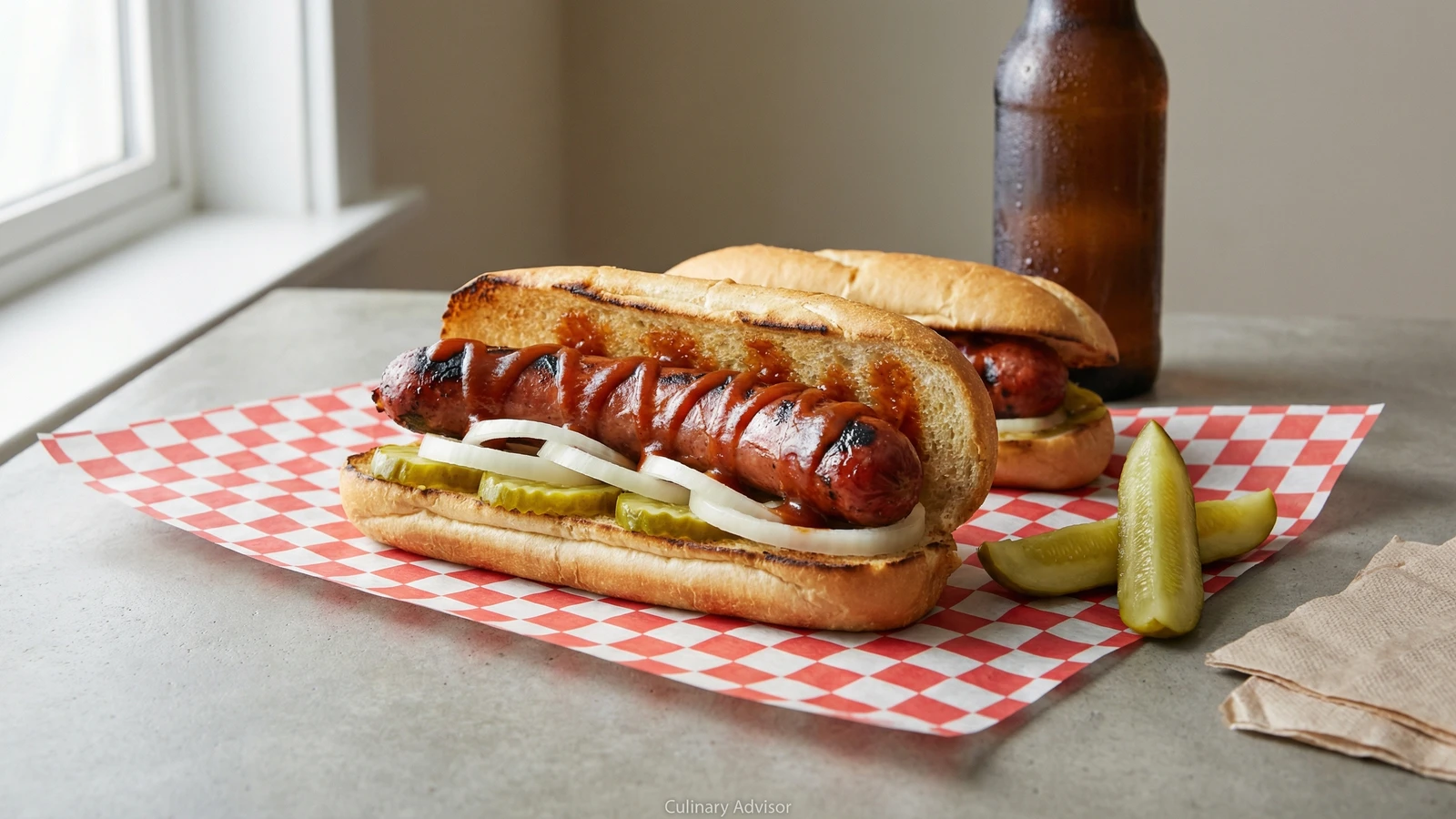
Charred hot links split and grilled until the casing crackles, drenched in tangy house sauce, piled on a soft roll with sharp pickles and raw onion—the sandwich that built Oakland's legendary barbecue reputation.
Oakland's barbecue tradition doesn't announce itself with neon signs or celebrity pitmaster endorsements. It lives in modest storefronts and converted gas stations where smoke drifts from blackened pits and the line stretches past the door. The hot link sandwich is the calling card of this scene, and it has been for generations.
The link itself tells the story. These aren't the mild breakfast sausages you find in grocery stores. Oakland hot links carry heat, smoke, and a coarse grind that gives them honest texture. They're grilled until the casing threatens to burst, then split lengthwise to expose more surface to the flame. The charred edges caramelize in the sauce, creating layers of flavor that no chain restaurant could replicate.
I've eaten these sandwiches at legendary spots throughout the East Bay, from Everett and Jones to the parking lot operations that spring up on weekends. The technique varies little because the technique works. You don't improve on decades of accumulated wisdom. You learn from it, respect it, and carry it into your own kitchen.
This version brings the Oakland link sandwich home. The sauce comes together in minutes. The grilling takes attention but not complexity. And the assembly follows a simple rule: the bread must be soft enough to compress around the filling, the pickles sharp enough to cut the richness, and the onion raw and honest.
Quantity
4 (about 4 ounces each)
Quantity
4 (6 inches each)
Quantity
2 tablespoons
softened
Quantity
1 medium
sliced into thin rings
Quantity
1 cup
Quantity
1 cup
Quantity
3 tablespoons
Quantity
2 tablespoons
Quantity
1 tablespoon
Quantity
1 tablespoon
Quantity
1 teaspoon
Quantity
1/2 teaspoon
Quantity
1/2 teaspoon
Quantity
1/4 teaspoon
Quantity
1/4 teaspoon
Quantity
to taste
| Ingredient | Quantity |
|---|---|
| beef hot link sausages | 4 (about 4 ounces each) |
| soft hoagie rolls or French bread sections | 4 (6 inches each) |
| unsalted buttersoftened | 2 tablespoons |
| white onionsliced into thin rings | 1 medium |
| dill pickle slices or spears | 1 cup |
| ketchup | 1 cup |
| apple cider vinegar | 3 tablespoons |
| brown sugar | 2 tablespoons |
| Worcestershire sauce | 1 tablespoon |
| yellow mustard | 1 tablespoon |
| smoked paprika | 1 teaspoon |
| garlic powder | 1/2 teaspoon |
| onion powder | 1/2 teaspoon |
| cayenne pepper | 1/4 teaspoon |
| freshly ground black pepper | 1/4 teaspoon |
| kosher salt | to taste |
Combine the ketchup, apple cider vinegar, brown sugar, Worcestershire sauce, yellow mustard, smoked paprika, garlic powder, onion powder, cayenne, and black pepper in a small saucepan. Whisk until smooth. Bring to a gentle simmer over medium heat, then reduce heat to low and cook for ten minutes, stirring occasionally. The sauce should thicken slightly and the raw edge of the vinegar should mellow into a balanced tang. Taste and add salt if needed. Set aside.
Heat a charcoal or gas grill to medium-high heat, around 400°F. If using charcoal, wait until the coals are covered in gray ash and you can hold your hand five inches above the grate for only three seconds. Clean and oil the grates. A cast iron grill pan over high heat works for indoor cooking, though you'll sacrifice some of that honest smoke flavor.
Place the hot links on the grill perpendicular to the grates. Cook for four to five minutes per side, rotating to char evenly on all surfaces. The casings will tighten and develop dark grill marks. You'll hear the fat sizzling inside. When the links feel firm and the exterior shows good color on all sides, move them to a cooler part of the grill.
Using tongs and a sharp knife, carefully split each link lengthwise without cutting all the way through. Open them like a book. Return the split links to direct heat, cut side down. Grill for two to three minutes until the interior develops char and caramelization. This step exposes more surface area and creates textural contrast between the snappy casing and the charred interior.
Transfer the split links to a shallow pan or aluminum tray. Spoon about two tablespoons of barbecue sauce over each link, turning to coat. Let them sit in the warm sauce for a minute while you prepare the rolls. The residual heat melds the sauce with the rendered fat on the sausage surface.
Split the hoagie rolls lengthwise, leaving one edge attached as a hinge. Spread the softened butter on the cut surfaces. Place the rolls cut side down on the grill for sixty to ninety seconds until golden and slightly crisp. Watch carefully. The difference between toasted and burnt is seconds. The rolls should have structure but remain soft enough to compress around the filling.
Lay the toasted rolls open on your work surface. Spread another tablespoon of sauce on the bottom half of each roll. Nestle a sauced link into each roll, pressing gently to open the split wider. Top with a generous handful of raw onion rings and a row of pickle slices. Drizzle additional sauce over the top if you want the full experience. Close the sandwiches and press down gently to compress.
Wrap the bottom half of each sandwich in wax paper or parchment for easier handling. Serve with extra pickles alongside and plenty of napkins. This is not a polite sandwich. The sauce will run. The onions will crunch. The casing will snap between your teeth. Accept the mess as evidence of good eating.
1 serving (about 340g)
Culinary guides, cultural storytelling, and the editorial depth that makes cooking meaningful.
Discover Culinary ExplorerChef Dean
The iconic New York bodega breakfast: shattering-crisp bacon, a golden-yolked fried egg, and molten American cheese tucked into a soft kaiser roll. This is the sandwich that built a city.

Chef Dean
Buffalo's proudest sandwich: silky rare roast beef mounded on a crusty roll showered with caraway and coarse salt, the top dipped in warm jus, the whole thing demanding horseradish and a cold beer.

Chef Dean
Shatteringly crisp beer-battered halibut piled on a buttery bun with tangy homemade tartar sauce and crunchy coleslaw. This is the Pacific Northwest on a plate, the kind of sandwich worth driving to the coast for.

Chef Dean
A pork cutlet pounded thin as a playing card, coated in seasoned cracker crumbs, and fried until it sprawls gloriously past the edges of its bun. This is Indiana on a plate.