
Chef Dimitra
Arkatena Omodous (Αρκατένα Ομόδους)
Omodos arkatena are Cypriot chickpea-leavened rusks, pale inside and sesame-studded, baked once as little rings and again until they crack clean under the tooth and keep beautifully.
A cooking platform built around craft, culture, and the stories behind what we eat.
Created by
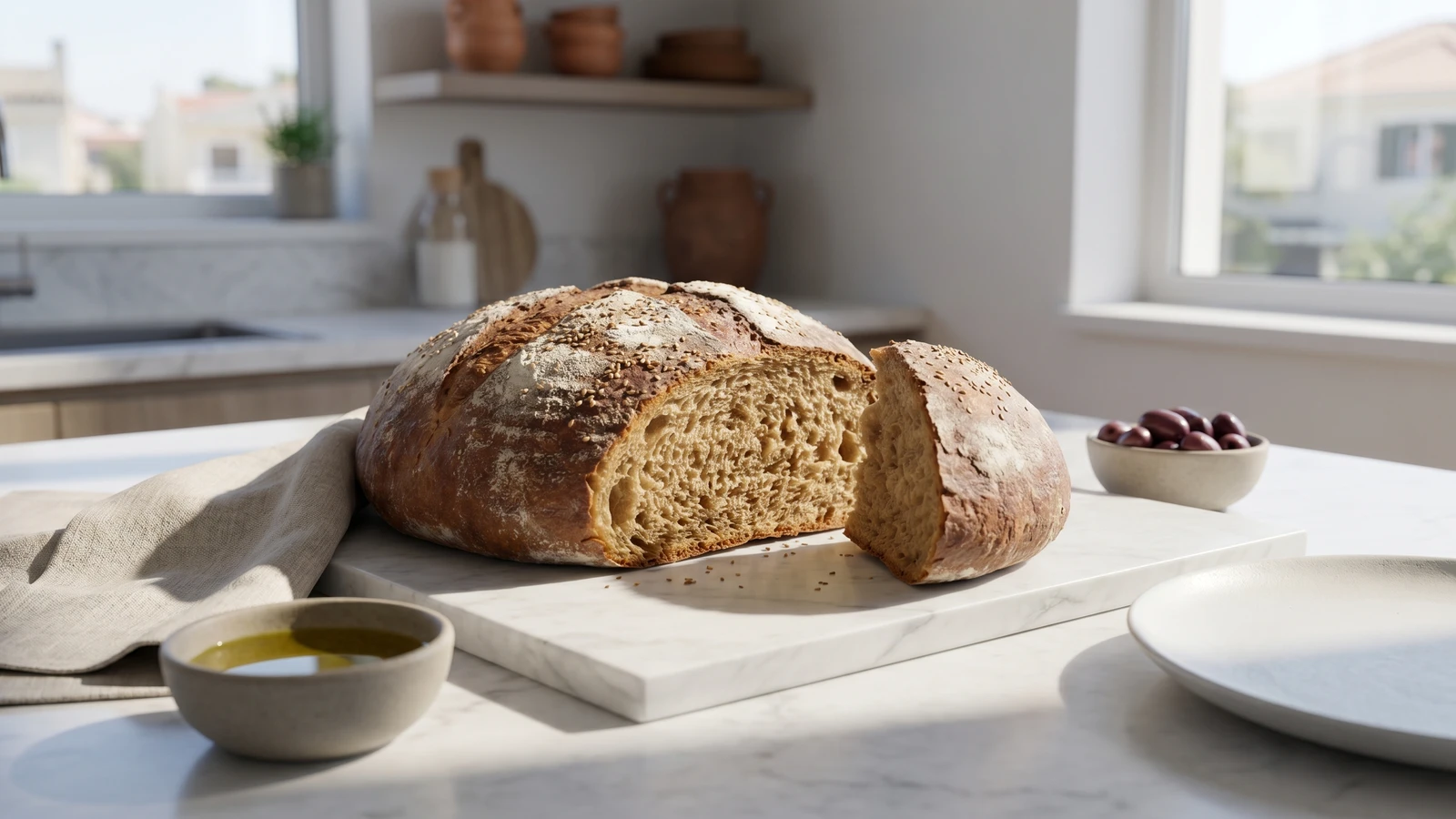
Northern Greek village bread is a round wheat loaf with a sturdy crust, chewy crumb, and the plain virtue of flour, water, yeast, salt, good olive oil, and patience.
Horiatiko psomi belongs to the mainland village table, and in northern Greece it is a round, sturdy wheat loaf with a thick crust and a close, chewy crumb. It isn't a soft sandwich loaf. It is bread for beans, olives, feta, tomato, and the last green-gold oil left on the plate.
The method that decides it is steam at the beginning of the bake. A dry oven seals the crust too quickly and traps the loaf small. Give it that first burst of moisture, then let the oven turn fierce and dry, and the bread rises properly before the crust sets hard and brown.
I use a little semolina or yellow hard-wheat flour because it gives the crumb the old village bite, the one I remember from loaves set straight on the table and torn, not politely sliced. Your grandmother cooked by eye because she'd made it a thousand times. Here are the numbers until you have.
Horiatiko psomi means village bread, and its form changed from region to region according to the local wheat, mill, and oven. In mainland Greece, especially Macedonia and Thessaly, hard wheat and communal wood ovens gave loaves with a thicker crust and denser crumb than the softer urban breads sold in later bakeries. Before daily bakery bread became common, families often baked large rounds once or twice a week and kept them wrapped in cloth for the table.
Quantity
500g
plus extra for dusting
Quantity
100g
Quantity
8g
Quantity
7g
Quantity
1 teaspoon
Quantity
390ml
Quantity
20ml
Quantity
1 tablespoon
| Ingredient | Quantity |
|---|---|
| strong bread flourplus extra for dusting | 500g |
| fine semolina or yellow hard-wheat flour | 100g |
| fine sea salt | 8g |
| instant yeast | 7g |
| honey | 1 teaspoon |
| lukewarm water | 390ml |
| extra virgin olive oil | 20ml |
| sesame seeds (optional) | 1 tablespoon |
Stir the bread flour, semolina, salt, and yeast in a large bowl. Dissolve the honey in the lukewarm water, pour it in with the olive oil, and mix until no dry flour remains. The dough should feel rough and slightly sticky, not stiff.
Cover the bowl and let the dough rest for 20 minutes. Knead for 8 to 10 minutes by hand, or 6 minutes in a mixer on low, until it turns elastic and holds together in a soft ball. That short rest lets the flour drink properly, so you don't keep adding flour and make the loaf heavy.
Oil the bowl lightly, return the dough, cover it, and leave it in a warm spot for 1 hour 30 minutes to 2 hours, until doubled. It should look swollen and alive, with a few bubbles showing under the surface.
Turn the dough onto a lightly floured surface. Fold the edges into the middle, turn it seam-side down, and tighten it into a round with both hands. Set it on baking paper, dust the top lightly, cover, and let it rise for 45 to 60 minutes.
Put a heavy baking stone or upturned tray in the middle of the oven and a small metal tray on the bottom. Heat to 240C for at least 30 minutes. A village oven gives fierce bottom heat; this is the home kitchen's honest answer.
Slash the loaf once across the top, scatter with sesame if using, and slide it onto the hot stone or tray. Pour 250ml boiling water into the lower metal tray and shut the door at once. Bake 15 minutes, then lower to 210C, remove the water tray carefully, and bake 25 to 30 minutes more, until the crust is deep brown and the loaf sounds hollow underneath.
Cool the bread on a rack for at least 1 hour before slicing. Cut too soon and the crumb turns gummy under the knife. Bread has patience built into it.
1 serving (about 90g)
Culinary guides, cultural storytelling, and the editorial depth that makes cooking meaningful.
Discover Culinary ExplorerChef Dimitra
Omodos arkatena are Cypriot chickpea-leavened rusks, pale inside and sesame-studded, baked once as little rings and again until they crack clean under the tooth and keep beautifully.

Chef Dimitra
Attica's Clean Monday lagana is lean, sesame-heavy, and deeply dimpled, made to be torn beside taramosalata before the bread goes stale by morning.

Chef Dimitra
Crete's eftazymo rises from a ground-chickpea ferment kept warm and still, then bakes into a fragrant sesame loaf with sweet-sour crumb and a faint whisper of mastic.

Chef Dimitra
Cypriot flaounes are Easter cheese breads with a sesame crust, fragrant dough, and a firm halloumi-anari filling that must rest before it bakes.