
Chef Juliette
Smelt (Éperlans)
Tiny éperlans, lightly floured and fried until their tails stand crisp, arrive in a generous heap on a napkin with fried parsley and grooved lemon, a weeknight lesson in heat and restraint.
A cooking platform built around craft, culture, and the stories behind what we eat.

Created by
Crisp Tahitian nems from the Chinese-Tahitian table: pork, cabbage, carrot, and glass noodles tucked tight, fried golden, and passed around with sweet-sour sauce for New Year or any full house.
The first thing the Tahitian-Chinese auntie gave me in Papeʻete wasn't advice. It was a place at the table, a paper napkin, and a hot nem she told me to eat before it lost its snap. This is Tahiti's dish by a Tahitian-Chinese hand, born on the fenua (land) where reef fish, ʻuru (breadfruit), rice, soy, pork, and market vegetables all learned to sit beside each other. Not everything at the table came in the first canoe, and no need pretend it did. The welcome is real.
That matters. The deep foods of Tahiti, ʻia ota (raw fish in coconut and lime), fāfā (taro leaf cooked with coconut), ʻuru, and the ahimaʻa (Tahitian earth oven), carry the old line. Nems Tahitiens carry another line, Chinese families making a life in Tahiti and feeding their neighbors until the food became part of the feast. Across the Triangle you see the cousins of that story: Sāmoan sapasui, the chop suey that belongs to the aiga (family) table now; Hawaiʻi's gau gee and plate-lunch lumpia; Tahiti's own māʻa tinitō, Chinese food in reo Tahiti (the Tahitian language). Same ocean, different arrivals, each island naming its own hand.
Keep the filling dry and generous, the wrappers tight but not strangled, the oil steady. Fry them for the table, not for one precious plate. New Year, potluck, birthday, somebody's garage with too many cousins, this is the food that disappears while the cook is still at the stove. Eat what you have. Just name where it comes from, and feed people well.
Chinese laborers, many Hakka from Guangdong, began arriving in Tahiti in 1865 to work the Atimaono cotton plantation, and their descendants became part of Papeʻete market life, shop life, and family feast life. Nems Tahitiens belong to that later Chinese-Tahitian layer, with the French name nems pointing toward the wider Asian and colonial routes that also shaped Tahiti's table. They sit beside older Tahitian deep foods like ʻuru, fāfā, ʻia ota, and the ahimaʻa, showing that island food history is not one flat flavor but named layers: canoe crops first, then mission, plantation, port, store, and family adaptation.
Quantity
2 ounces
Quantity
6
soaked, trimmed, and thinly sliced
Quantity
1 tablespoon, plus about 6 cups
for cooking the filling and frying
Quantity
1 pound
Quantity
1 small
finely diced
Quantity
3
minced
Quantity
1 tablespoon
grated
Quantity
2 cups
finely shredded
Quantity
1 large
grated
Quantity
3
thinly sliced
Quantity
2 tablespoons
Quantity
1 tablespoon
Quantity
1 teaspoon
Quantity
1/2 teaspoon
Quantity
1/2 teaspoon
Quantity
24 (8-inch)
or square wheat spring roll wrappers
Quantity
1 head
separated for serving
Quantity
1 bunch
Quantity
1
cut into sticks
Quantity
1/2 cup
for dipping sauce
Quantity
1/3 cup
for dipping sauce
Quantity
1/4 cup
for dipping sauce
Quantity
2 tablespoons
for dipping sauce
Quantity
1 tablespoon
for dipping sauce
Quantity
1
finely grated, for dipping sauce
Quantity
1 small
thinly sliced, for dipping sauce
Quantity
1 teaspoon cornstarch mixed with 1 tablespoon water
for dipping sauce
| Ingredient | Quantity |
|---|---|
| dried cellophane noodles | 2 ounces |
| dried wood ear mushroomssoaked, trimmed, and thinly sliced | 6 |
| neutral oilfor cooking the filling and frying | 1 tablespoon, plus about 6 cups |
| ground pork | 1 pound |
| onionfinely diced | 1 small |
| garlic clovesminced | 3 |
| fresh gingergrated | 1 tablespoon |
| green cabbagefinely shredded | 2 cups |
| carrotgrated | 1 large |
| green onionsthinly sliced | 3 |
| soy sauce | 2 tablespoons |
| oyster sauce (optional) | 1 tablespoon |
| sugar | 1 teaspoon |
| fine sea salt | 1/2 teaspoon |
| black pepper | 1/2 teaspoon |
| round rice paper spring roll wrappersor square wheat spring roll wrappers | 24 (8-inch) |
| lettuce leaves (optional)separated for serving | 1 head |
| fresh mint (optional) | 1 bunch |
| cucumber (optional)cut into sticks | 1 |
| waterfor dipping sauce | 1/2 cup |
| white vinegar or rice vinegarfor dipping sauce | 1/3 cup |
| sugarfor dipping sauce | 1/4 cup |
| soy saucefor dipping sauce | 2 tablespoons |
| tomato paste or ketchupfor dipping sauce | 1 tablespoon |
| garlic clovefinely grated, for dipping sauce | 1 |
| red chile (optional)thinly sliced, for dipping sauce | 1 small |
| cornstarch slurryfor dipping sauce | 1 teaspoon cornstarch mixed with 1 tablespoon water |
Put the cellophane noodles in hot water until they soften, 8 to 10 minutes, then drain them well and snip them into short pieces. Soak the wood ear mushrooms in hot water until they open up and feel springy, then trim away any hard bits and slice them thin. Keep both dry after soaking. Wet filling makes rolls burst, and no one wants to chase pork through hot oil.
Warm 1 tablespoon oil in a wide skillet over medium-high heat. Add the pork and cook, breaking it small, until no pink remains and the fat gives the meat a savory gloss, 5 to 6 minutes. Add the onion, garlic, and ginger and cook until the sharp smell softens. Fold in the cabbage, carrot, green onions, noodles, and wood ear, then season with soy sauce, oyster sauce if using, sugar, salt, and pepper. Cook just until the vegetables lose their raw edge but still keep some bite.
Spread the filling on a tray and let it cool until it is no warmer than your hand. Hot filling weakens rice paper and makes wheat wrappers sweat. The old people would tell you the same thing in fewer words: wait. Food teaches patience even when it came by ship and market, not by canoe.
In a small pot, combine the water, vinegar, sugar, soy sauce, tomato paste or ketchup, garlic, and chile if using. Bring it to a gentle boil, stir until the sugar dissolves, then whisk in the cornstarch slurry and cook 30 to 60 seconds, until the sauce turns glossy and lightly coats a spoon. Set it aside to cool. It should taste bright first, sweet second, salty underneath.
Fill a wide shallow dish with warm water and lay a clean damp towel beside it. Dip one rice paper wrapper for 5 to 8 seconds, just until it bends but before it goes limp, then set it on the towel; it keeps softening while you work. If you are using wheat spring roll wrappers, keep the stack covered so the corners do not dry out.
Place about 2 tablespoons filling near the lower third of the wrapper, shape it into a small log, fold the bottom over, fold the sides in, and roll snugly away from you. Tight, but not strangled. If the roll is packed too hard, it splits; if it is loose, oil sneaks in. Set finished nems seam-side down on lightly oiled parchment with space between them, because rice paper likes to stick to its neighbors.
Heat 2 to 3 inches of oil in a heavy pot to 350F. Fry the nems in small batches, keeping rice-paper rolls apart for the first minute so they do not glue together, then turn them until they are golden brown with tiny blisters and a firm shell, 4 to 5 minutes for rice paper or 3 to 4 minutes for wheat wrappers. Drain on a rack, not on a flat plate, so the bottoms stay crisp.
Pile the nems on a banana-leaf-lined wooden platter with lettuce, mint, cucumber sticks, and the sweet-sour sauce. Let people wrap a nem in lettuce if they like, tuck in mint, dip, and pass the plate along. This is Tahiti's Chinese-Tahitian feast food, not one careful restaurant portion. Celebration food should look like somebody expects more cousins to walk in.
1 serving (about 245g)
Culinary guides, cultural storytelling, and the editorial depth that makes cooking meaningful.
Discover Culinary ExplorerChef Juliette
Tiny éperlans, lightly floured and fried until their tails stand crisp, arrive in a generous heap on a napkin with fried parsley and grooved lemon, a weeknight lesson in heat and restraint.

Chef Juliette
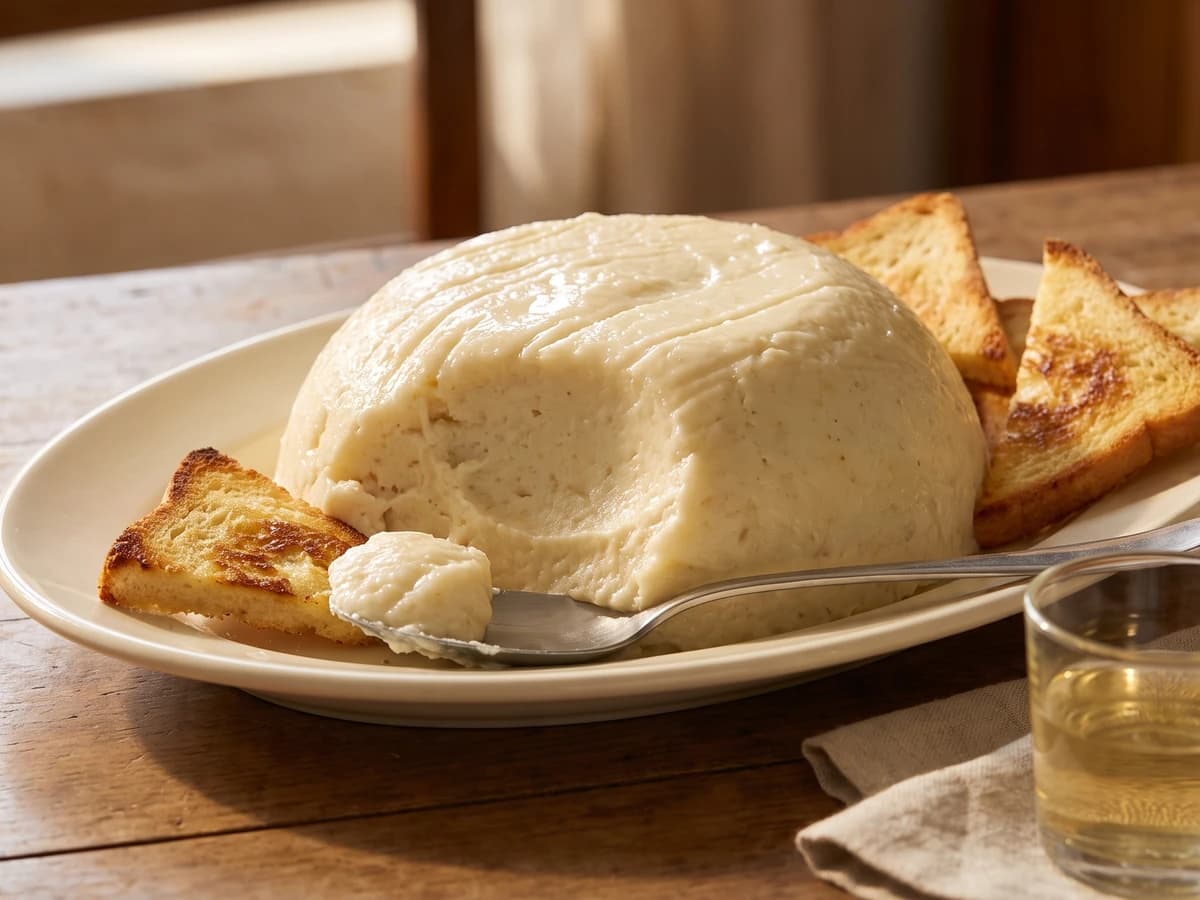
Brandade de Morue turns salt cod, warm olive oil, and milk into a pale, silky emulsion: keep everything warm and add the oil slowly, then crown the generous dome with butter-fried bread.
Chef Juliette
Salt cod worked warm with cream, one patient spoonful at a time, until the rough flakes become a glossy Nîmes paste, domed generously and ringed with butter-fried croutons for the table.

Chef Juliette
Wine-poached char packed in its earthenware crock beneath butter gold: a make-ahead first course that turns careful cooling, thorough boning, and one unbroken seal into quiet abundance.