Chef Lupita
Aceite de Chiltepin Bajacaliforniano
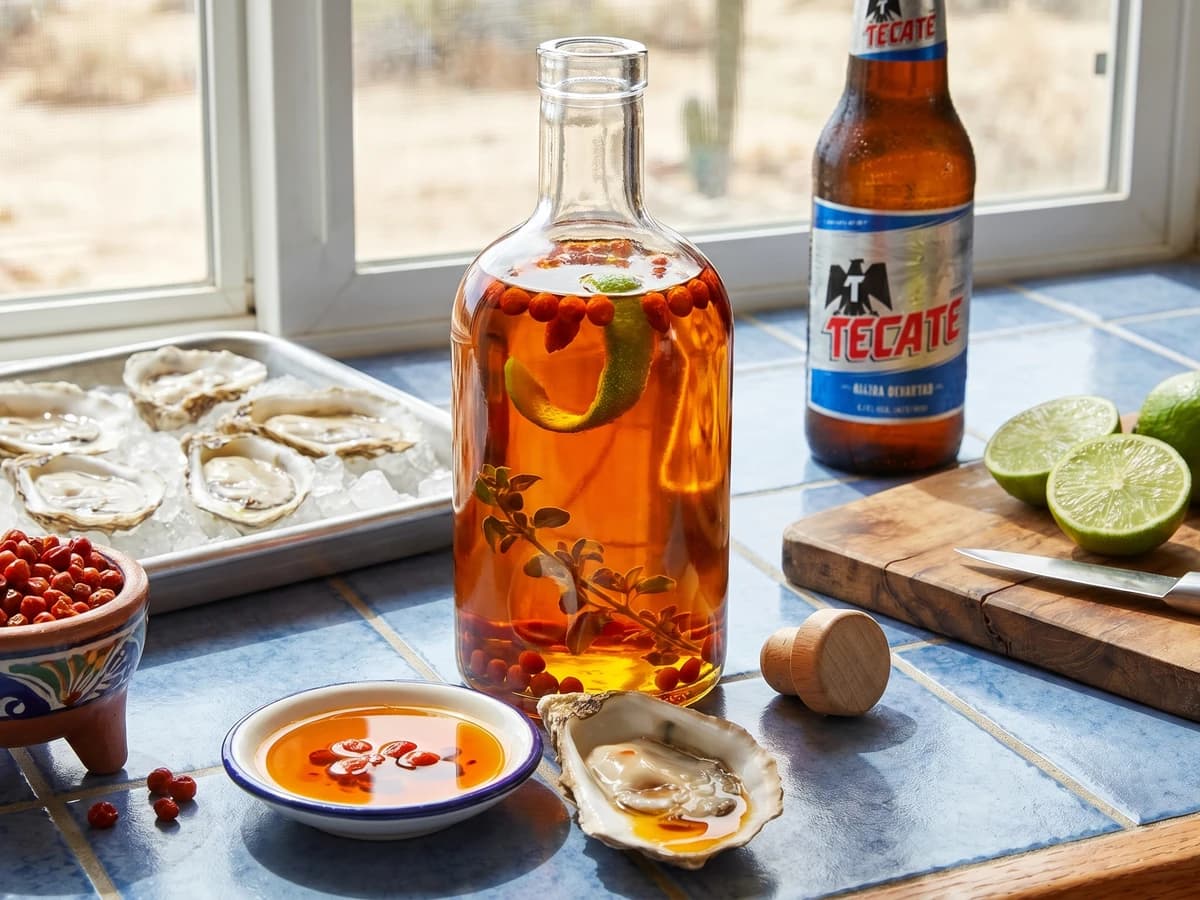
Baja California's wild chiltepin steeped in olive oil with garlic, orejon, and lime peel, until the oil turns ruby-amber and carries the slow, sneaky burn of the desert coast.
A cooking platform built around craft, culture, and the stories behind what we eat.
Created by
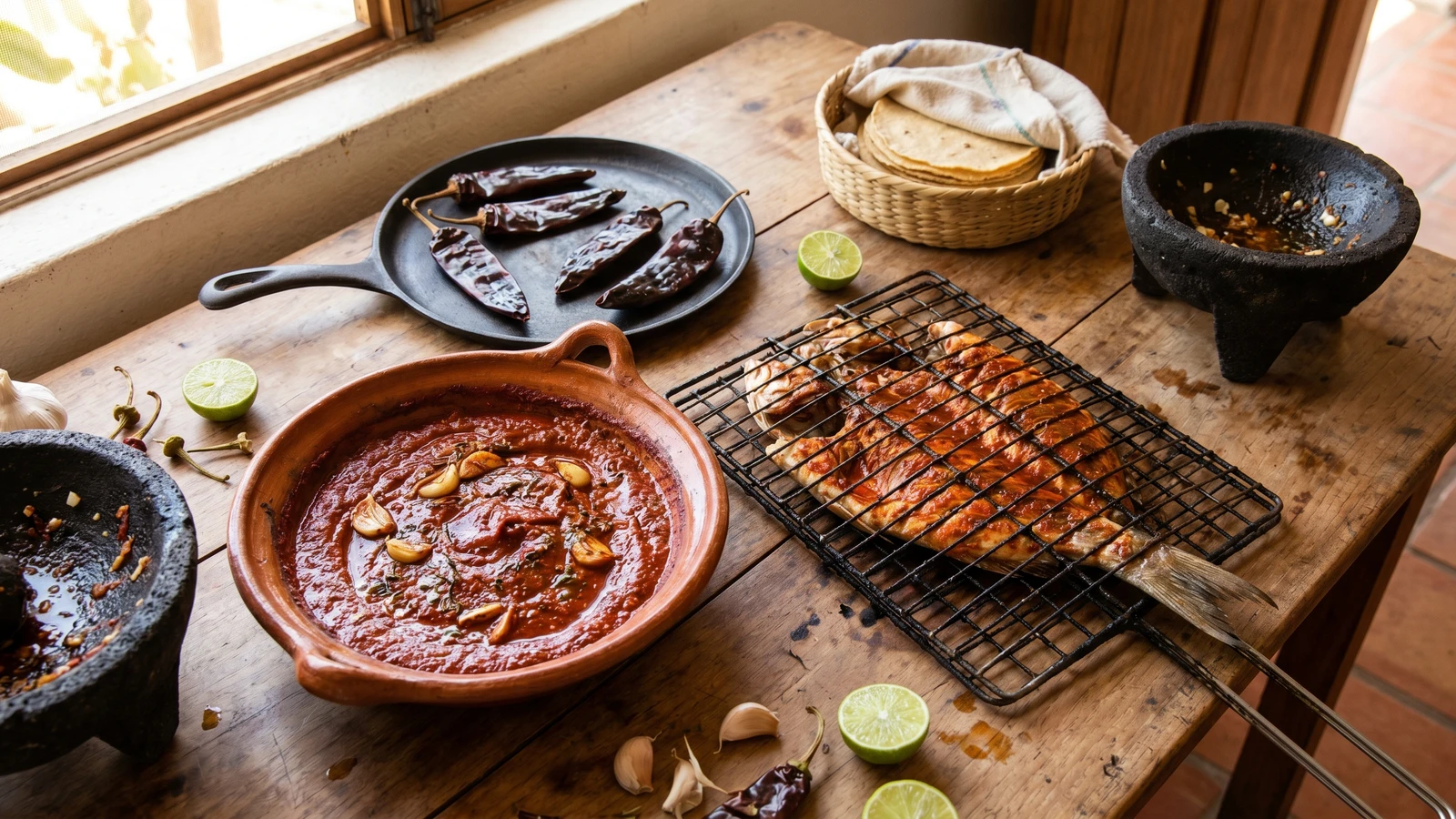
Nayarit's Pacific coast adobo, built from toasted guajillo, garlic, mustard, lime, and soy, made to cling to butterflied fish before it meets wood fire.
This comes from Nayarit's coast, from the line of mangroves, estuaries, and fishing towns that run through San Blas, Mexcaltitan, and the Riviera Nayarit. Pescado zarandeado is not just grilled fish. It is fish opened flat, painted with adobo, held in a metal basket, and turned over fire until the flesh tastes of chile, garlic, smoke, and sea.
The chile here is guajillo, with ancho for body. The mustard is not a mistake. Coastal cooks use what works, and in Nayarit the mustard helps the adobo grip the fish while the soy and Worcestershire bring salt and depth. Do not confuse practical with careless. The women who cook for fishing families know exactly why each spoonful goes in.
I learned one version near San Blas from a señora who kept her adobo in a glass jar next to a clay bowl of limes and a stack of tortillas wrapped in a cotton servilleta. She told me, 'If the paste runs off the fish, you made salsa, not adobo.' She was right. This paste should cling. Cada estado, su propia cocina.
Pescado zarandeado is strongly associated with Nayarit, especially the fishing communities around Mexcaltitan and San Blas, where whole fish were butterflied and cooked in a zaranda, a hinged grilling basket used over wood embers. Sinaloa also claims versions of the dish, but Nayarit's coastal tradition is older in the public record and remains tied to estuary fishing, mangrove wood cooking, and large family meals served with tortillas and salsa. The modern adobo reflects 20th-century coastal pantry changes, when mustard, soy sauce, and Worcestershire sauce entered Mexican seafood cooking without replacing the older base of dried chile, garlic, citrus, and fire.
Quantity
6
stemmed and seeded
Quantity
2
stemmed and seeded
Quantity
1
stemmed
Quantity
6
unpeeled
Quantity
1/2 medium
cut into thick slices
Quantity
1/4 cup
Quantity
3 tablespoons
Quantity
2 tablespoons
Quantity
2 tablespoons
Quantity
2 tablespoons
Quantity
2 tablespoons
Quantity
1 tablespoon
Quantity
1 teaspoon
Quantity
1/2 teaspoon
Quantity
1 teaspoon, plus more to taste
Quantity
1/2 teaspoon
| Ingredient | Quantity |
|---|---|
| dried chile guajillostemmed and seeded | 6 |
| dried chile anchostemmed and seeded | 2 |
| dried chile de arbol (optional)stemmed | 1 |
| garlic clovesunpeeled | 6 |
| white onioncut into thick slices | 1/2 medium |
| prepared yellow mustard | 1/4 cup |
| Mexican soy sauce or regular soy sauce | 3 tablespoons |
| Worcestershire sauce | 2 tablespoons |
| fresh lime juice | 2 tablespoons |
| fresh orange juice | 2 tablespoons |
| vegetable oil | 2 tablespoons |
| Mexican mayonnaise | 1 tablespoon |
| dried Mexican oregano | 1 teaspoon |
| ground cumin | 1/2 teaspoon |
| kosher salt | 1 teaspoon, plus more to taste |
| freshly ground black pepper | 1/2 teaspoon |
Heat a dry comal over medium. Toast the guajillo and ancho chiles one at a time, about 20 to 30 seconds per side, just until the skins puff and the color deepens. Toast the chile de arbol last if using it, and watch it because it burns quickly. Burned chile makes a bitter adobo. No me vengas con atajos.
Put the toasted chiles in a bowl and cover them with hot water, not boiling water. Let them soak for 15 minutes, until the flesh softens and bends easily. Drain them and save 1/4 cup of the soaking liquid in case the blender needs help.
On the same comal, roast the unpeeled garlic and onion slices until the onion has browned spots and the garlic skins are dark in places, about 6 to 8 minutes. Peel the garlic. This is not decoration. The char gives the paste the flavor of the grill before the fish even touches the fire.
Put the softened chiles, peeled garlic, onion, mustard, soy sauce, Worcestershire sauce, lime juice, orange juice, oil, mayonnaise, oregano, cumin, salt, and black pepper in a blender. Blend until the paste is completely smooth and thick enough to coat the back of a spoon. If the blades stall, add the reserved chile soaking liquid one tablespoon at a time. Do not turn it into soup.
Taste the adobo. It should be salty, bright, garlicky, and clean with chile, because the fish will dilute it as it cooks. Add a little more salt or lime if it tastes flat. The mustard should sharpen the paste, not dominate it.
Spread the adobo generously over a butterflied whole fish, especially into the cuts along the flesh. Let it sit 20 to 30 minutes before grilling over wood or charcoal. For Nayarit, use a firm Pacific fish like huachinango, pargo, robalo, or dorado. The adobo is made for fire, smoke, and fish skin that grips the grill.
1 serving (about 65g)
Culinary guides, cultural storytelling, and the editorial depth that makes cooking meaningful.
Discover Culinary ExplorerChef Lupita
Baja California's wild chiltepin steeped in olive oil with garlic, orejon, and lime peel, until the oil turns ruby-amber and carries the slow, sneaky burn of the desert coast.

Chef Lupita
Puebla's Lenten convent adobo, a brick-red vinegar chile paste of ancho, guajillo, garlic, oregano, and comino made to dress fish for the meatless calendar.
Chef Lupita
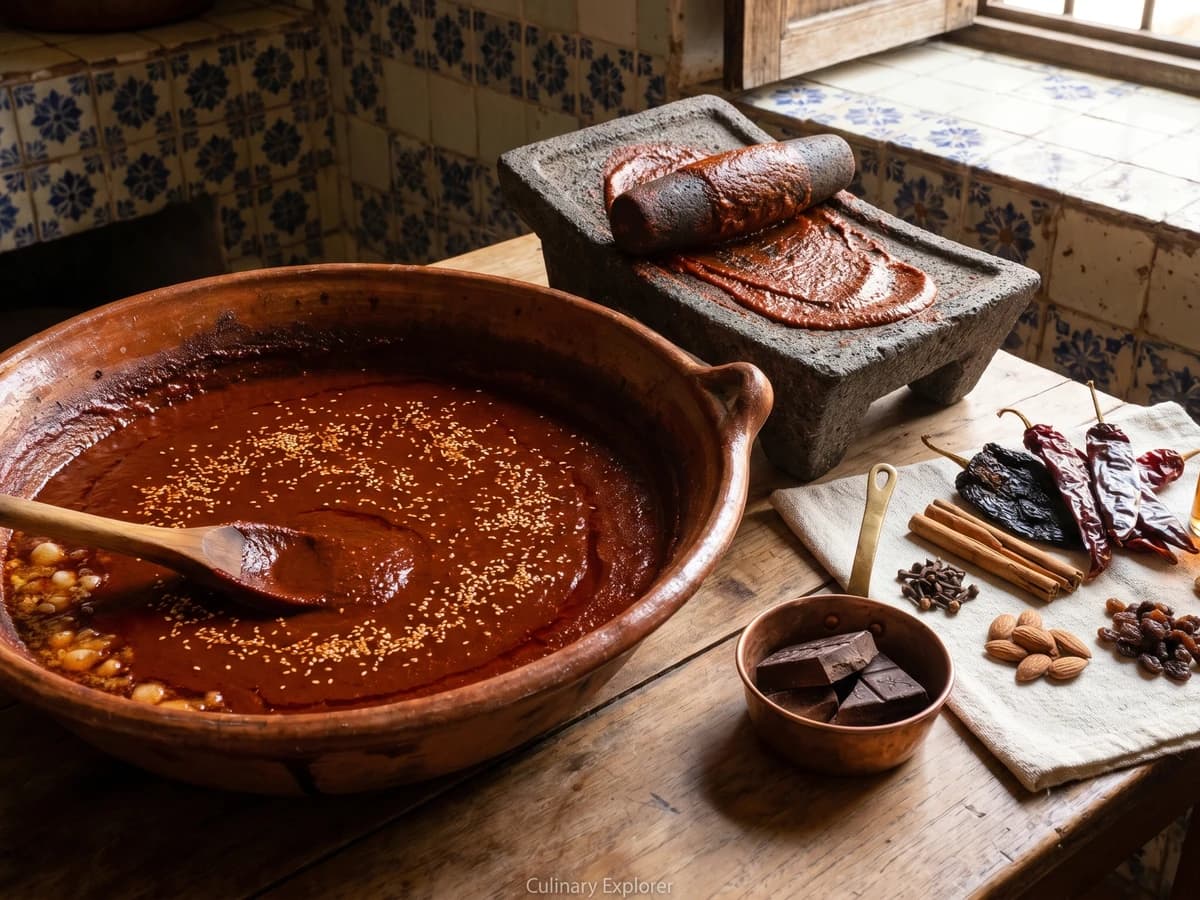
Zacatecas' wedding-table adobo, built from toasted guajillo and ancho, piloncillo, sour orange, chocolate, canela, clavo, almonds, sesame, and lard.

Chef Lupita
Puebla's convent kitchens built this adobo with ancho, guajillo, jerez, almonds, raisins, clove, and lard, a baroque marinade that stains pork loin and finishes as the sauce.