
Chef Fai
Southern Cucumber Relish (Ajad)
The one Thai condiment where vinegar replaces lime as the sour pillar, and the system still holds. Palm sugar for sweet, nam pla for salt, prik for heat. Ajad is the four pillars in a jar.
A cooking platform built around craft, culture, and the stories behind what we eat.
Created by
Makhwaen delivers a numbing citrus electricity no other Thai ingredient replicates. Roast it, pound it with charred chilies and garlic, season with nam pla. Pure Lanna, pure mortar, pure principle.
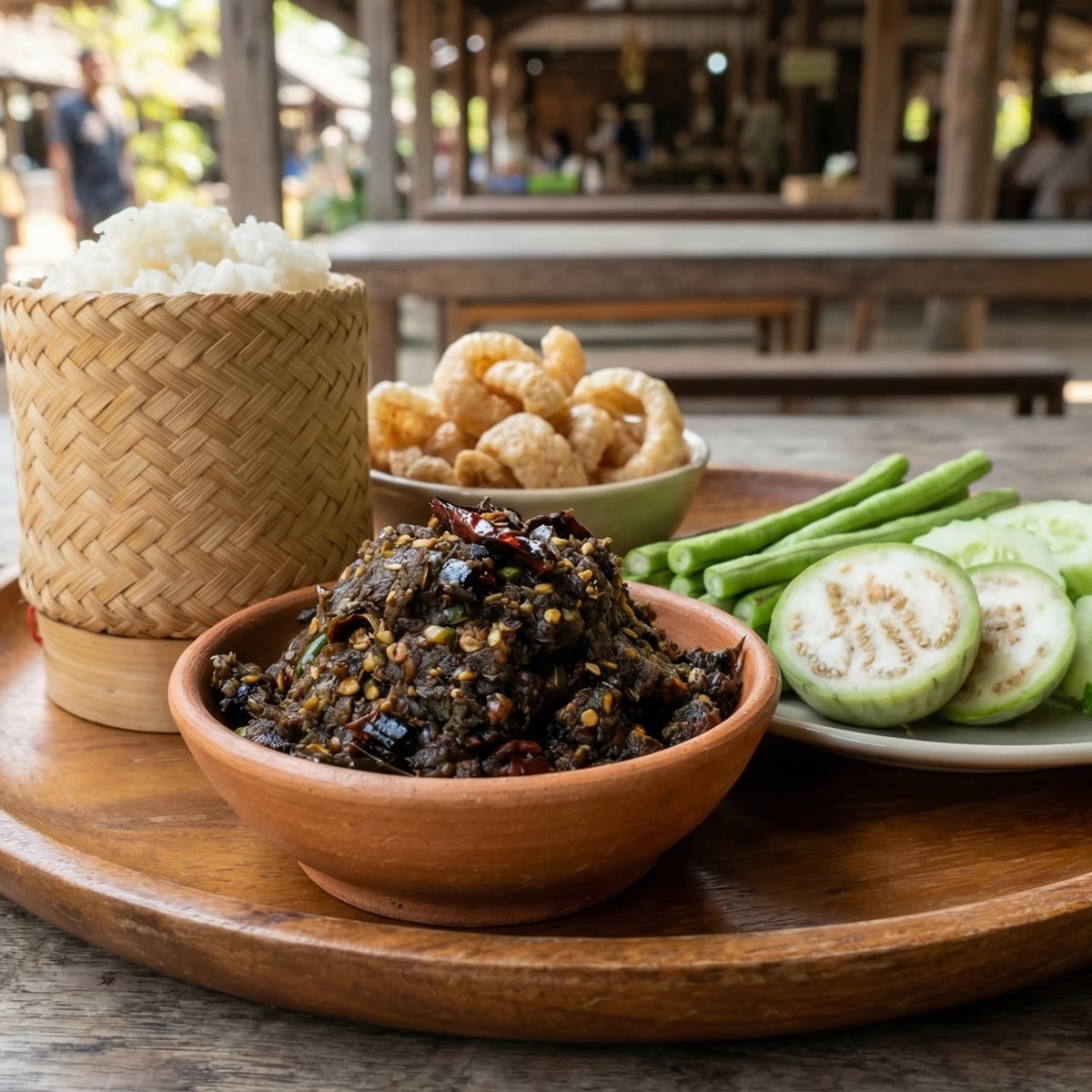
Nam prik is the kreung tam stripped bare. No coconut milk to cushion it, no broth to dilute it. Just pounded aromatics, chili, and fish sauce hitting your tongue with nothing between you and the mortar's work. In Lanna cooking, the nam prik isn't a side dish. It's the center of the meal. Every other element on the khantoke (the traditional low round tray) exists to support it: khao niew (sticky rice) to carry it, raw vegetables to cool your mouth, kab moo (pork rinds) to scoop it. The relish leads. Everything else follows.
Makhwaen (มะแขว่น) is where this nam prik becomes something you won't find anywhere else in Thailand. These tiny reddish-brown husks come from a prickly ash tree that grows in the highlands of Northern Thailand, Laos, and Myanmar. Bite one and your tongue goes electric: a buzzing, numbing sensation chased by sharp citrus. If you've had Sichuan pepper, you'll recognize the family resemblance. Makhwaen is a cousin, same Zanthoxylum genus, but it leans harder into citrus and less into pure numbness. It's a highland ingredient for highland people, and it doesn't grow in Central Thailand. This is Lanna food, full stop.
The roasting is where the flavor begins. Before anything touches the mortar, the dried chilies, garlic, and shallots go over charcoal or an open gas flame. The charring transforms their sugars, builds smokiness, softens their flesh so the mortar can break them down. The makhwaen gets dry-roasted separately in a hot pan, just until the aroma blooms and the husks crackle. Ajarn always said that fire is the first teacher. The mortar is the second. This nam prik passes through both.
You eat this with your hands. Tear a piece of khao niew, pinch some nam prik onto it, maybe grab a raw round Thai eggplant or a piece of cucumber alongside. A shard of kab moo for crunch. That's a bite. That's how a Lanna family eats on a cool-season evening, sitting around the khantoke on the floor of a teak house with the mountains outside. No plates, no forks. Just the mortar's work, shared between people who know each other well.
Makhwaen (Zanthoxylum limonella) is endemic to the mountainous regions of Northern Thailand, Laos, and the Shan States of Myanmar, where Tai-speaking highland communities have used it as a culinary spice for centuries. The ingredient has no presence in Central, Southern, or Isan Thai cooking, making it one of the clearest botanical markers of Lanna culinary identity. While often compared to Sichuan pepper (Zanthoxylum simulans), makhwaen is a distinct species with a more pronounced citrus aroma and a lighter numbing sensation, reflecting the biodiversity of Southeast Asia's highland forests rather than the Chinese culinary tradition.
Quantity
2 tablespoons
black seeds and stems removed, husks only
Quantity
8 large
stems removed
Quantity
8 cloves
unpeeled
Quantity
4
unpeeled
Quantity
3 tablespoons
Quantity
1 small disc
| Ingredient | Quantity |
|---|---|
| makhwaen (Thai prickly ash berry husks)black seeds and stems removed, husks only | 2 tablespoons |
| dried red chilies (prik haeng)stems removed | 8 large |
| garlicunpeeled | 8 cloves |
| shallots (hom daeng)unpeeled | 4 |
| fish sauce (nam pla) | 3 tablespoons |
| tua nao (fermented soybean disc) (optional) | 1 small disc |
Pick through the makhwaen and remove any black seeds and small stems. Keep only the reddish-brown husks. The seeds are bitter and gritty. You don't want them. Heat a dry pan (no oil) over medium heat and add the makhwaen husks. Shake the pan constantly for 2 to 3 minutes until the husks darken slightly and the aroma hits you: sharp, citrusy, electric. The moment your nose catches that buzz, they're done. Pull them off the heat immediately. Makhwaen burns fast and burnt makhwaen tastes like ash, not citrus.
If you have charcoal, use it. Place the dried chilies, whole unpeeled garlic cloves, and whole unpeeled shallots directly on the grill grate or near the embers. The chilies need 1 to 2 minutes per side until they blacken in spots and become brittle but not charred to dust. Turn them with tongs. The garlic and shallots need 8 to 10 minutes, turning occasionally, until the skins are charred black and the flesh inside is soft, sweet, and yielding when pressed. If you're using tua nao, roast the disc alongside until it darkens and smells deeply funky, about 3 minutes per side. No charcoal? A gas flame works. Hold the garlic and shallots with tongs over the burner, or blister everything in a dry cast-iron pan over high heat. You want char. You want smoke. That's the flavor foundation Northern Thai cooks have built on for generations.
Peel the charred garlic and shallots. Discard the blackened skins. In a heavy granite mortar (krok hin), start with the roasted makhwaen. Pound them to a coarse powder. They should shatter easily after roasting. If you're using tua nao, crumble it in now and pound until it integrates. Add the charred dried chilies, torn into rough pieces, and pound until they merge with the makhwaen into a rough, fragrant mass. Now add the roasted garlic and shallots. Pound everything together until the paste comes together but stays textured. This isn't a smooth puree. Nam prik should have body: visible flecks of chili skin, fragments of makhwaen husk, pockets of sweet roasted garlic. The mortar gives you this. A blender would give you baby food.
Add the fish sauce (nam pla) one tablespoon at a time. Pound it in after each addition. Taste. The nam pla provides all the salt this relish needs. The roasted shallots bring natural sweetness. The makhwaen brings citrus brightness. The chilies bring heat. You're balancing without measuring. Pound, taste, adjust. If the makhwaen flavor fades behind the chili, you went too heavy on the prik haeng. The makhwaen should lead. Everything else supports. Transfer to a small bowl and serve at room temperature on the khantoke alongside khao niew, kab moo, and raw vegetables. That's the meal.
1 serving (about 45g)
Culinary guides, cultural storytelling, and the editorial depth that makes cooking meaningful.
Discover Culinary Explorer
Chef Fai
The one Thai condiment where vinegar replaces lime as the sour pillar, and the system still holds. Palm sugar for sweet, nam pla for salt, prik for heat. Ajad is the four pillars in a jar.

Chef Fai
Every grilled dish in Isan answers to this dip. Roasted dried chilies, nam pla, manao, khao khua, and shallots: the four pillars in a condiment that's structural, not optional.

Chef Fai
Roasted dried chilies and galangal pounded to a rough paste, folded with shredded pork skin and palm sugar until it becomes something sweet, smoky, and chewy that belongs on every khantoke tray in Chiang Mai.

Chef Fai
The kreung tam that proves the system adapts. Ginger instead of galangal, cumin and star anise alongside lemongrass. Lanna's mortar holds the whole Burma-to-Chiang Mai trade route in a single paste.