Culinary Explorer
A cooking platform built around craft, culture, and the stories behind what we eat.
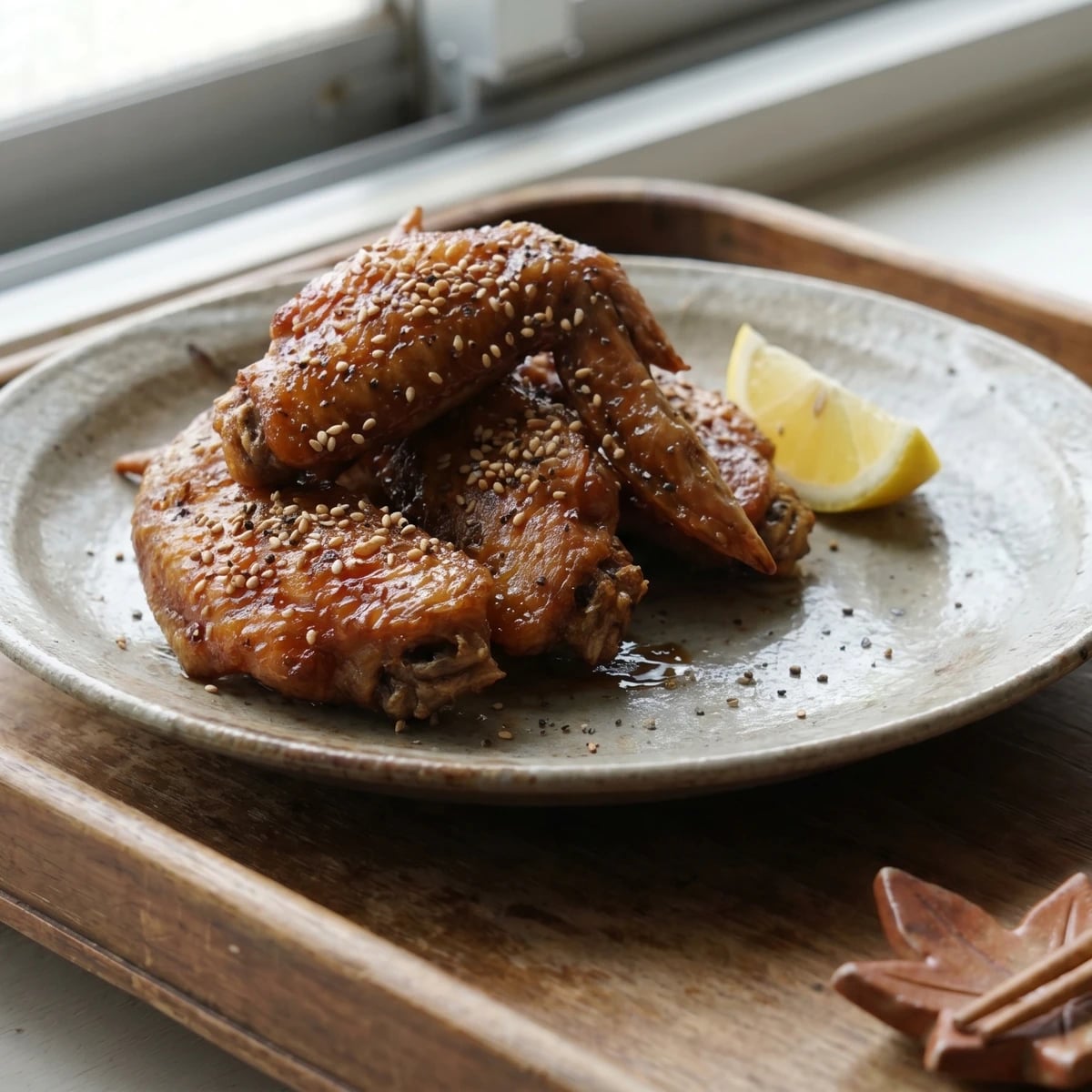
Nagoya Tebasaki (手羽先, glazed fried chicken wings)
Created by Chef Takumi
These wings are not complicated. Fry them bare, glaze them lightly, and let black pepper do its sharp work against soy, mirin, and crisp chicken skin.
Tebasaki looks like tavern food, and it is, which is not an insult. A good drinking snack has to be direct. Pick it up, bite cleanly, reach for the next one before pretending you meant to stop.
The fear is the frying. Leave the batter in the cupboard. Nagoya tebasaki is fried naked, twice, so the skin dries and tightens before it meets the tare, the sweet soy glaze. If the glaze goes on too early, it softens the skin and turns the whole thing polite. We are not making polite wings.
The one detail that decides it is restraint with the sauce. Brush or toss the wings just enough to lacquer them, then shower them with black pepper and sesame while they still cling. The pepper is not decoration. It is the counterweight to the sweetness, and Nagoya is not shy about it.
Set these beside rice, pickles, and something green, or pass them as sakana, the little dish that keeps a drink company. They are honmono because nothing is hidden: good chicken, hot oil, a tare made from the two-seasoning foundation of soy and sweetness, and your nerve to stop saucing before the crispness disappears.
Ingredients
chicken wings
Quantity
1 kg
flats and drumettes attached or separated
fine sea salt
Quantity
1 teaspoon
potato starch
Quantity
2 tablespoons
for a very light dusting
| Ingredient | Quantity |
|---|---|
| chicken wingsflats and drumettes attached or separated | 1 kg |
| fine sea salt | 1 teaspoon |
| potato starchfor a very light dusting | 2 tablespoons |
Where cooking meets culture.
Culinary guides, cultural storytelling, and the editorial depth that makes cooking meaningful.
Discover Culinary Explorer