
Chef Jeong-sun
Aehobak-bokkeum (Korean Stir-Fried Zucchini)
Tender Korean zucchini half-moons cooked quickly over real heat, seasoned with salted shrimp so the squash tastes deeper than oil and still clean enough for a weeknight table.
A cooking platform built around craft, culture, and the stories behind what we eat.
Created by
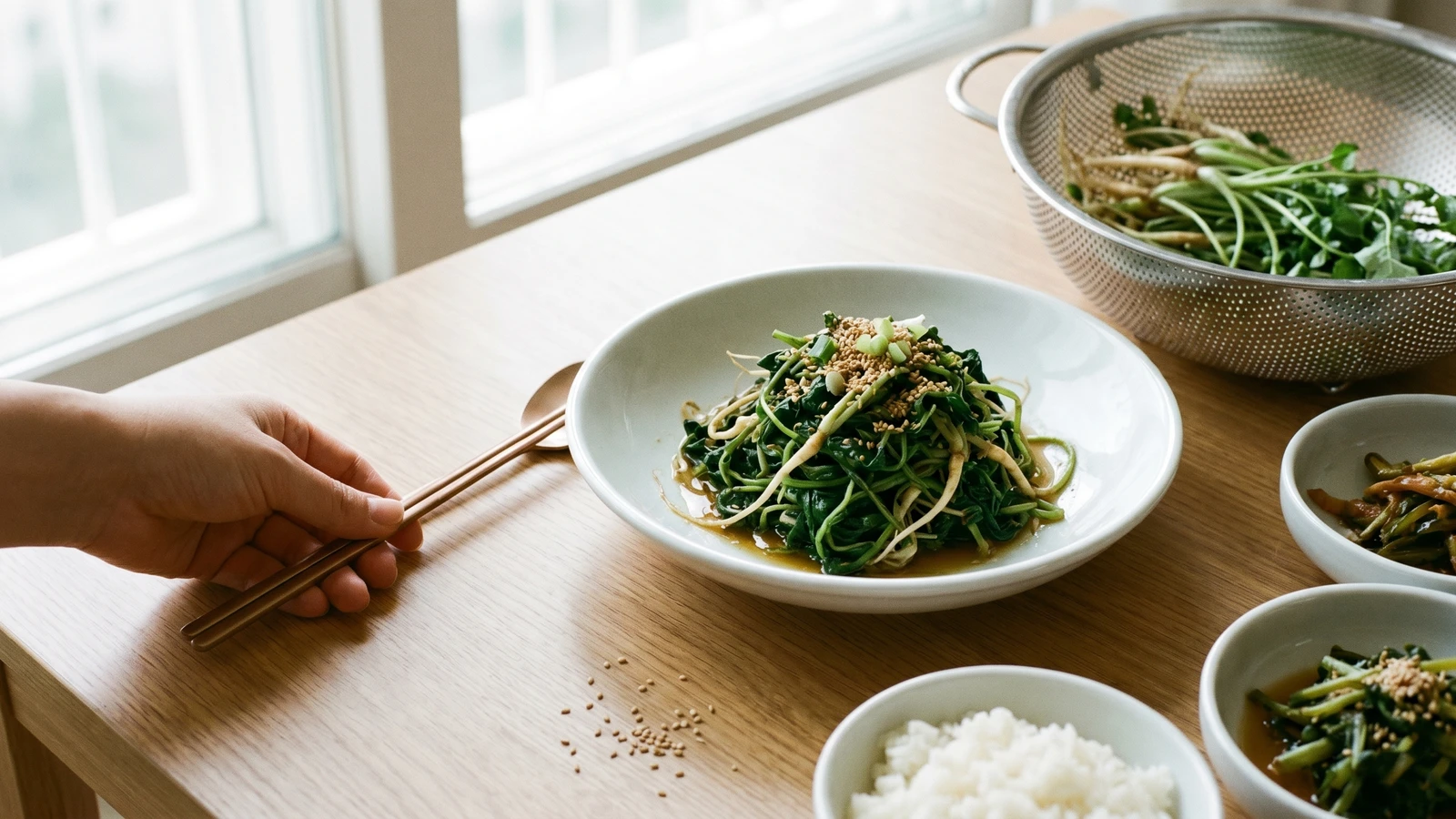
The first wild green of spring, root and leaf blanched just long enough to soften, then dressed with doenjang and sesame so its field-earth bitterness still speaks.
Naengi belongs to early spring, when the market baskets still look half-winter and then this little green appears with its tangled roots hanging on. Cook the month you're standing in. If you see good naengi in March or April, buy it that day. If it is July, don't force this dish; make spinach namul or minari-muchim instead and wait for the right green to come back.
The root is not a nuisance. It is where much of the flavor lives, earthy and sharp in the clean way spring greens should be. That means the dish asks for patience before it asks for heat: trim the dark root hairs, scrape away grit, rinse until the water stays clear. I won't tell you this is easy. A rushed washing gives you sand between the teeth, and no amount of sesame oil can apologize for that.
Once clean, naengi needs only a short blanch and a small bowl of seasoning. Doenjang gives depth, garlic gives edge, sesame oil rounds it, and the green must still taste like itself. Season it alone, in its own bowl, before it meets rice or any other banchan. 손맛 is real; I measure it anyway, so the first good spring bowl can be cooked again next year.
Naengi, shepherd's purse (Capsella bursa-pastoris), is one of Korea's best-known early spring wild greens, gathered from fields and market gardens before tougher summer vegetables arrive. In Korean home cooking it appears most often in naengi-guk or naengi-doenjang-guk, where its roots perfume soybean paste broth, and as naengi-namul, a small seasoned side dish that treats the whole plant as food. Its place is not court grandeur but seasonal household cooking: the first bitter green after winter, eaten because the market and the body both ask for it.
Quantity
250g
roots attached, washed and trimmed
Quantity
8 cups
for blanching
Quantity
1 tablespoon
for blanching water
Quantity
1 tablespoon
Quantity
1 teaspoon
or 3/4 teaspoon regular soy sauce
Quantity
1 teaspoon
Quantity
1 teaspoon
lightly crushed
Quantity
1 small clove
finely minced or grated
Quantity
1 teaspoon
finely chopped
Quantity
1/2 teaspoon
| Ingredient | Quantity |
|---|---|
| fresh naengi (shepherd's purse)roots attached, washed and trimmed | 250g |
| waterfor blanching | 8 cups |
| coarse sea saltfor blanching water | 1 tablespoon |
| doenjang (Korean fermented soybean paste) | 1 tablespoon |
| soup soy sauce (guk-ganjang)or 3/4 teaspoon regular soy sauce | 1 teaspoon |
| toasted sesame oil | 1 teaspoon |
| toasted sesame seedslightly crushed | 1 teaspoon |
| garlicfinely minced or grated | 1 small clove |
| scallionfinely chopped | 1 teaspoon |
| gochujang (optional) | 1/2 teaspoon |
Sort through the naengi and pull away yellow leaves, tough stems, and any blackened pieces. Keep the slender white roots, but scrape them lightly with the edge of a small knife and pinch off wiry root hairs. The roots carry the deep spring flavor, so don't cut them away just to save time.
Put the naengi in a large bowl of cold water and swish it hard with your fingers, loosening dirt from the root crowns. Lift the greens out, pour away the sandy water, and repeat 3 to 5 times, until no grit settles at the bottom of the bowl. Do not drain by tipping the bowl over the greens, or you pour the sand right back onto them.
Bring 8 cups water to a full boil and add 1 tablespoon coarse sea salt. Drop in the naengi root ends first, then press the leaves under. Blanch 45 seconds for tender young naengi, or up to 75 seconds if the roots are thicker. The stems should bend and the leaves should turn a deeper green, but the plant should not collapse into a soft tangle.
Lift the naengi into cold water and swish once to stop the cooking. Gather it in both hands and squeeze gently but firmly until it is damp, not dripping. Too much water thins the doenjang seasoning; too hard a squeeze bruises the leaves and makes the namul dull. Cut into 2-inch lengths if the stems are long.
In a mixing bowl, mash together the doenjang, soup soy sauce, sesame oil, crushed sesame seeds, garlic, scallion, and gochujang if using. Taste the seasoning before the greens go in. It should be salty and nutty, because the naengi will soften it, but it should not taste sweet or heavy.
Add the squeezed naengi to the bowl and loosen the clump with your fingers. Rub the seasoning through the roots and leaves until every strand is lightly coated. Taste one root and one leaf. If it tastes flat, add 1/4 teaspoon more soup soy sauce; if it tastes harsh, add another 1/2 teaspoon sesame oil. Stop there. Naengi should taste like spring earth, not like a spoonful of paste.
Let the seasoned naengi sit 10 minutes at room temperature, then taste once more. The doenjang settles into the root during this short rest. Serve in a small banchan dish with rice, soup, and one or two other vegetables, not buried under a crowded plate.
1 serving (about 55g)
Culinary guides, cultural storytelling, and the editorial depth that makes cooking meaningful.
Discover Culinary ExplorerChef Jeong-sun
Tender Korean zucchini half-moons cooked quickly over real heat, seasoned with salted shrimp so the squash tastes deeper than oil and still clean enough for a weeknight table.

Chef Jeong-sun
Tender Korean summer zucchini softened gently in the pan with saeujeot for salt and depth, finished with sesame so the vegetable stays sweet, green, and plainly itself.
Chef Jeong-sun
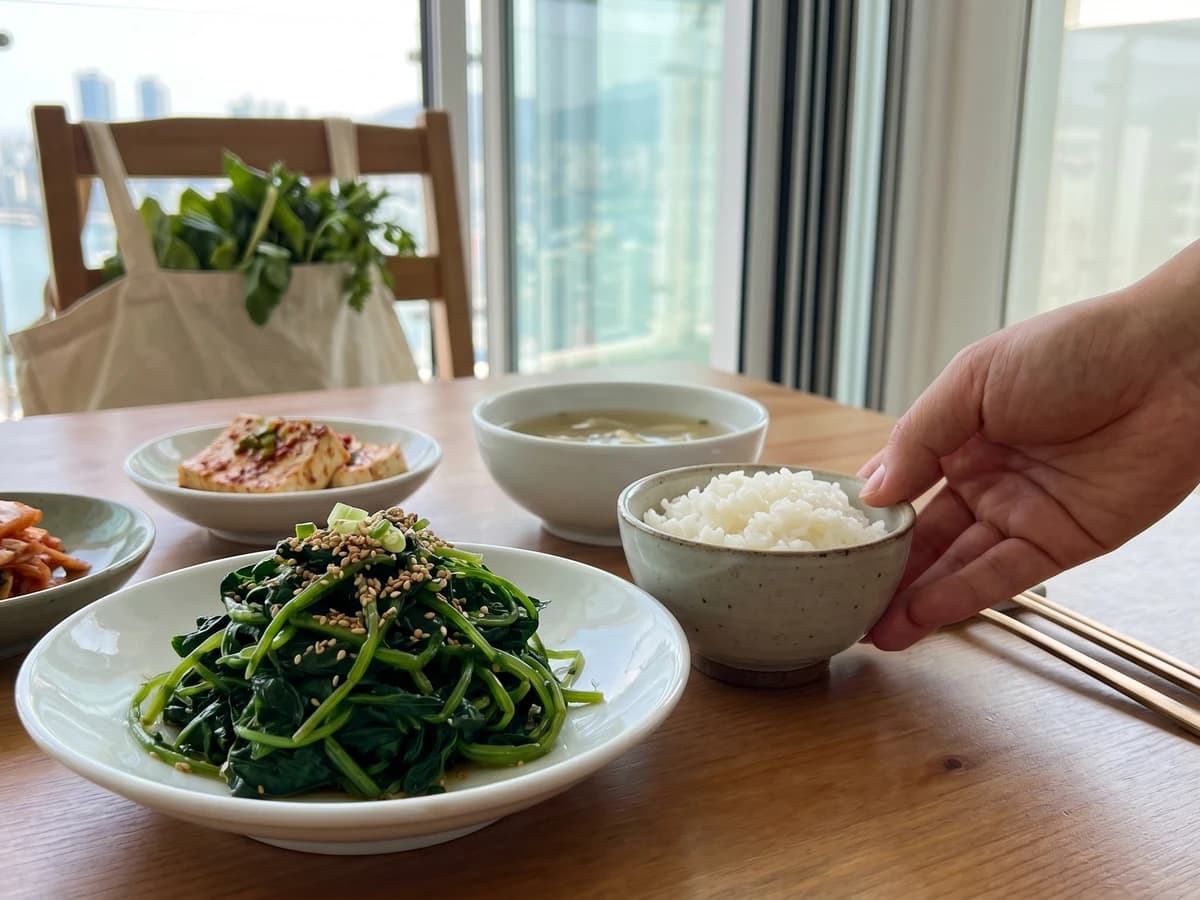
A bittersweet spring green from the southern shore, blanched just until pliant, then seasoned lightly so its clean coastal bitterness stays alive on the rice table.

Chef Jeong-sun
Torn king oyster or shiitake mushrooms, browned until their own water disappears, then finished with soy, garlic, sesame oil, and onion for a quiet banchan that earns its place.