
Chef Jeong-sun
Aehobak-guk (애호박국, Korean Zucchini Soup)
A clean summer soup of Korean zucchini and salted shrimp, built on quick anchovy-kelp broth and finished before the half-moons lose their shape on a weeknight table.
A cooking platform built around craft, culture, and the stories behind what we eat.
Created by
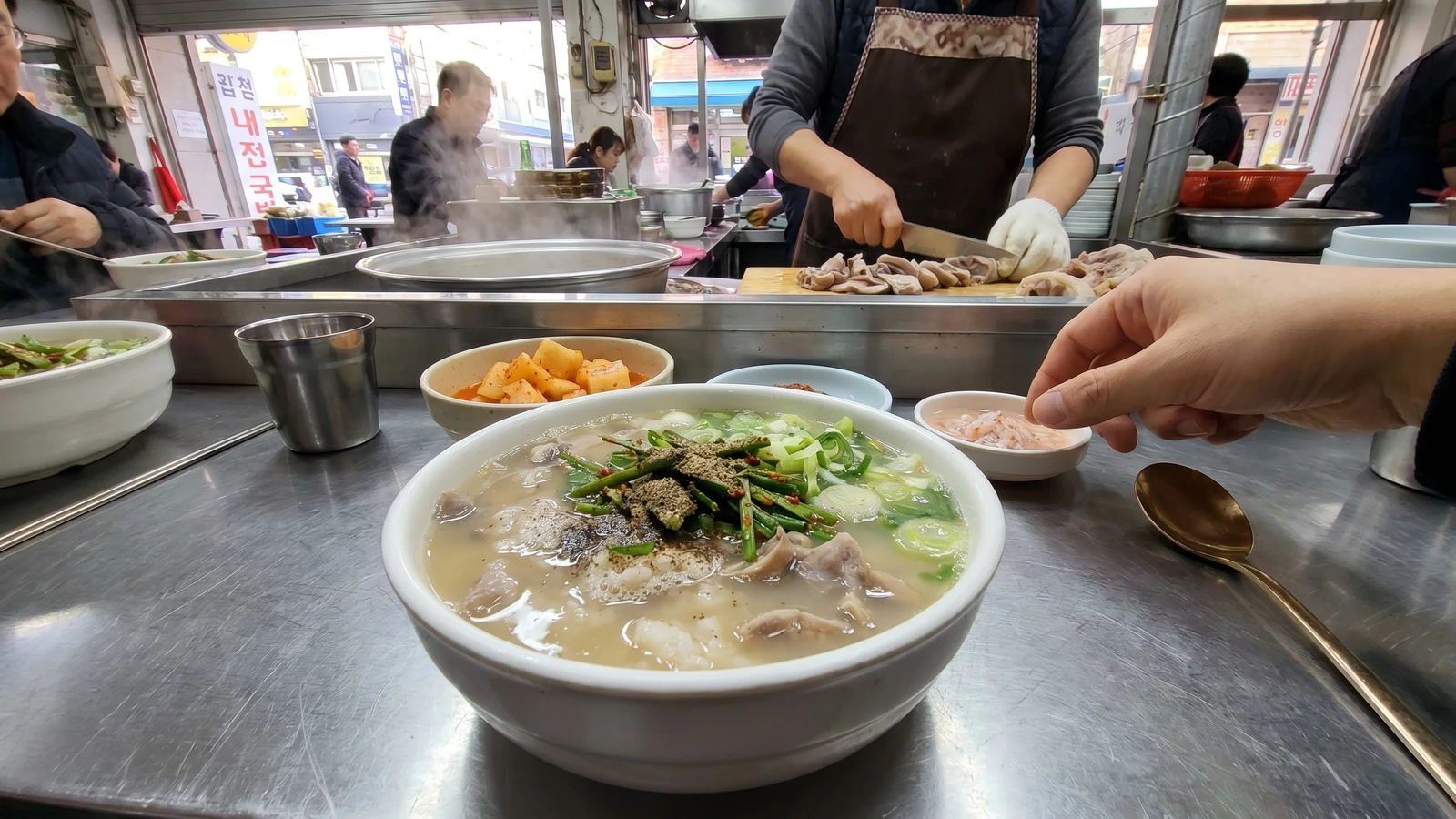
A thrifty market bowl of pork innards scrubbed clean, boiled until tender, and ladled over rice in a pale pork broth with scallion, salted shrimp, and chive muchim.
At a market gukbap stall, the first pot goes on before most houses have washed their rice. Naejang-gukbap belongs there: a thrift bowl, a worker's bowl, a bowl that uses what spoils first and would shame the cook to waste. It isn't polite food on a quiet plate. It is rice, broth, scallion, and innards made clean enough that the spoon comes back by itself.
The dish lives or dies before the fire is strong. You scrub the intestines and stomach with flour and coarse salt until the slickness is gone, rinse them until the water runs clear, then blanch and boil them tender. Chili cannot fix careless cleaning. Master Seong-nyeo made us smell the blanching pot, not because she was dramatic, though she was capable of it, but because the nose tells you whether you worked honestly.
I won't tell you this is quick. Tonight it asks for two pots, patience, and a sink you clean properly when you are done. The reward is a market bowl made in a home kitchen: pale pork broth, sliced offal with a little chew, hot rice underneath, saeujeot (salted shrimp) at the table so each person seasons their own spoon. 손맛 is real. I still measure it, so it can be handed on.
Naejang-gukbap grew from the same public eating-house world as gukbap more broadly: rice submerged in soup for people who needed a filling meal quickly at markets, ports, and roadsides. Pork versions are especially tied to the southeast, including Busan and Gyeongsang market food after the Korean War, when cheap cuts, bones, head meat, and innards fed crowded neighborhoods with little waste. The offal bowl is not a palace dish dressed down; it is market economy in a spoon, and its dignity is in the cleaning and the use of the whole animal.
Quantity
1.2kg
rinsed
Quantity
300g
whole piece for boiling
Quantity
500g
kept very cold
Quantity
300g
kept very cold
Quantity
200g
kept very cold
Quantity
150g
Quantity
3/4 cup
divided, for scrubbing
Quantity
3 tablespoons
divided, for scrubbing
Quantity
2 tablespoons
Quantity
1 tablespoon
for blanching
Quantity
12 cups
plus more for soaking and blanching
Quantity
1/2 large, about 150g
Quantity
6 cloves
crushed
Quantity
25g
sliced
Quantity
6
2 halved for broth, 4 thinly sliced
Quantity
1 tablespoon
Quantity
2 tablespoons
minced, plus more to serve
Quantity
1 teaspoon
divided, plus more as needed
Quantity
1/2 teaspoon
plus more to serve
Quantity
4 cups
Quantity
100g
cut into 2-inch lengths
Quantity
1 teaspoon
for the chives
Quantity
1 teaspoon
for the chives
Quantity
1 teaspoon
for the chives
Quantity
1 teaspoon
for the chives
Quantity
2
thinly sliced
Quantity
2 tablespoons
| Ingredient | Quantity |
|---|---|
| pork neck bones or split pork leg bonesrinsed | 1.2kg |
| pork shoulder or pork collar (optional)whole piece for boiling | 300g |
| fresh pork small intestine (dwaeji sochang)kept very cold | 500g |
| fresh pork stomachkept very cold | 300g |
| pork heart (yeomtong)kept very cold | 200g |
| pork liver (gan) (optional) | 150g |
| all-purpose flourdivided, for scrubbing | 3/4 cup |
| coarse saltdivided, for scrubbing | 3 tablespoons |
| white vinegar | 2 tablespoons |
| doenjang (fermented soybean paste)for blanching | 1 tablespoon |
| cold waterplus more for soaking and blanching | 12 cups |
| onion | 1/2 large, about 150g |
| garliccrushed | 6 cloves |
| fresh gingersliced | 25g |
| scallions2 halved for broth, 4 thinly sliced | 6 |
| soup soy sauce (guk-ganjang) | 1 tablespoon |
| salted shrimp (saeujeot)minced, plus more to serve | 2 tablespoons |
| fine sea saltdivided, plus more as needed | 1 teaspoon |
| freshly ground black pepperplus more to serve | 1/2 teaspoon |
| hot cooked short-grain rice | 4 cups |
| Korean garlic chives (buchu)cut into 2-inch lengths | 100g |
| fish sauce (aekjeot) or soup soy saucefor the chives | 1 teaspoon |
| gochugaru (Korean chili flakes)for the chives | 1 teaspoon |
| toasted sesame oilfor the chives | 1 teaspoon |
| toasted sesame seedsfor the chives | 1 teaspoon |
| green chilies (optional)thinly sliced | 2 |
| perilla seed powder (deulkkae-garu) (optional) | 2 tablespoons |
Put the pork bones in a large bowl and cover them by 2 inches with cold water. Soak 30 minutes, changing the water once after 15 minutes, then drain. This pulls away loose blood so the broth tastes clean instead of muddy.
Keep the offal cold while you work. Run cold water through the small intestine, turning it inside out if your butcher left it that way, and pull away only heavy clumps of fat. Rub the intestine, stomach, and heart with 1/2 cup flour and 2 tablespoons coarse salt for 3 minutes, rinse well, then repeat with the remaining 1/4 cup flour and 1 tablespoon coarse salt for 2 minutes. Soak in 8 cups cold water with the vinegar for 10 minutes, then rinse until the water runs clear. Flour grabs the slickness, salt scours, and the short vinegar soak brightens the smell without toughening the meat.
Put the bones in a clean pot, cover with fresh water, boil 10 minutes, then drain and rinse the bones and pot. In a second pot, bring enough water to cover the cleaned offal to a boil with the doenjang and 4 slices of the measured ginger. Blanch the intestine, stomach, and heart for 5 minutes, then drain and rinse. If using liver, blanch it separately for 3 minutes and keep it apart. This first boil is not broth; it is washing by fire.
Return the rinsed bones to the clean stockpot with 12 cups cold water, the onion, crushed garlic, remaining ginger, and 2 halved scallions. Bring to a strong boil for 15 minutes, skimming what rises, then lower to a steady simmer. If using the pork shoulder, add it now and pull it out after 45 minutes, when cooked through; cool it before slicing. Let the bones continue until the broth is pale and full-bodied, about 2 1/2 hours total.
After the broth has simmered for 1 hour, add the blanched intestine and stomach to the broth. Simmer 75 to 90 minutes, until a chopstick slides through without force. Add the heart for the last 35 minutes so it cooks through but does not turn hard. If using liver, simmer it separately in clean water for 5 to 6 minutes, until the center is no longer pink and reaches 71 C or 160 F, then cool and slice. The offal should keep a little chew, not fight your teeth.
Lift out the bones, offal, pork shoulder, and aromatics. Strain the broth through a fine sieve and measure it; you want about 8 cups. Add water if you are short, or boil it down if it tastes thin. Season with the soup soy sauce, 1 tablespoon minced salted shrimp, and 1/2 teaspoon sea salt. Simmer 2 minutes, then taste before adding the remaining salt. Saeujeot is salty in different ways from jar to jar, so the table gets the final say.
Slice the intestine into 1-inch lengths. Slice the stomach, heart, liver if using, and pork shoulder into thin bite-size pieces, about 1/4 inch thick. Return the sliced meat and offal to the seasoned broth and simmer 10 minutes. Cut surfaces need that time to drink the broth; otherwise the bowl tastes assembled, not cooked together.
Right before serving, toss the garlic chives with the fish sauce or soup soy sauce, gochugaru, sesame oil, and toasted sesame seeds. Do this at the last minute because buchu wilts quickly. Its sharp green bite cuts the richness of the pork, which is why this little side earns its place.
Divide 1 cup hot rice into each deep bowl. Ladle in about 2 cups broth with a generous share of sliced offal and pork. Scatter with thinly sliced scallions, black pepper, green chili if using, and a small spoon of perilla seed powder if you like that nutty finish. Put extra salted shrimp and the seasoned chives on the table. Add saeujeot 1/2 teaspoon at a time, tasting after each addition. This is a pale pork soup first, not a red pepper soup.
1 serving (about 1000g)
Culinary guides, cultural storytelling, and the editorial depth that makes cooking meaningful.
Discover Culinary ExplorerChef Jeong-sun
A clean summer soup of Korean zucchini and salted shrimp, built on quick anchovy-kelp broth and finished before the half-moons lose their shape on a weeknight table.

Chef Jeong-sun
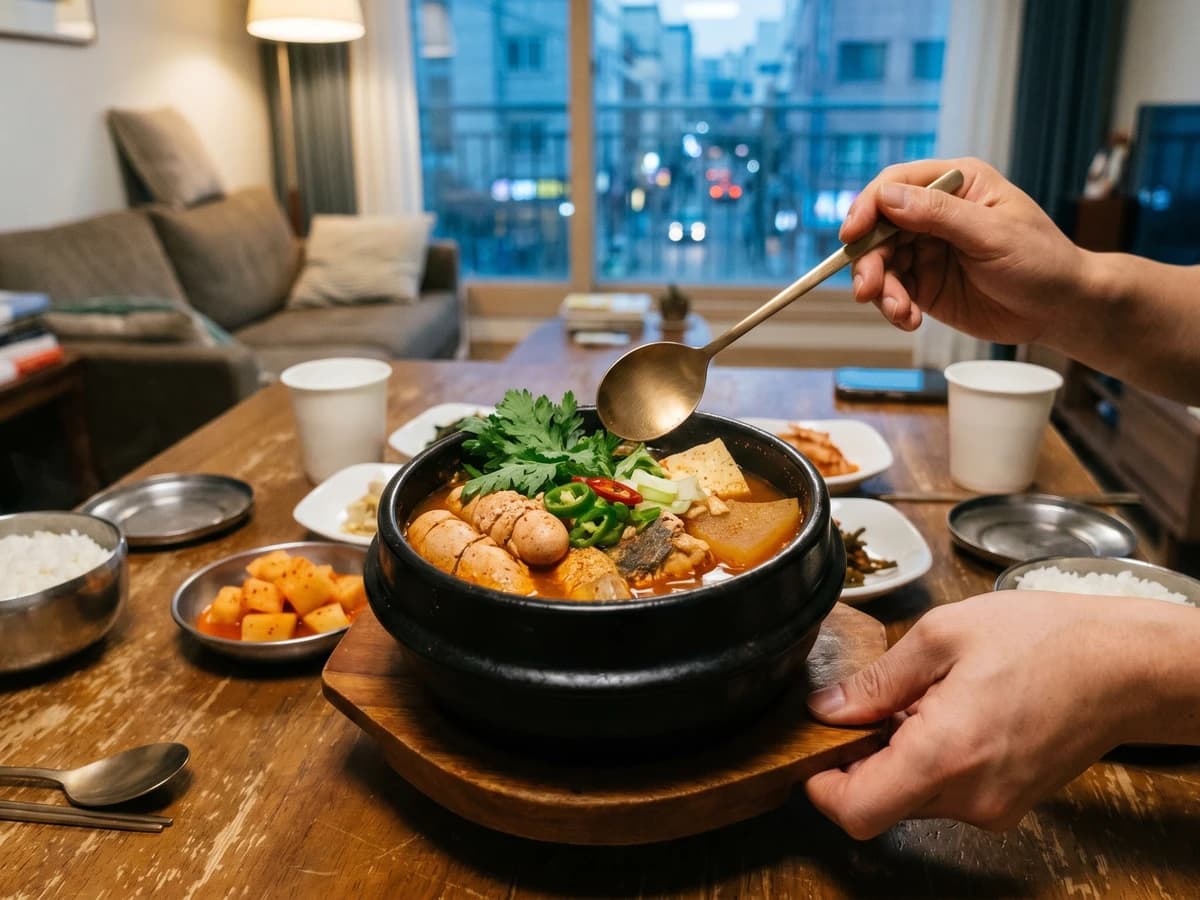
A Masan coast monkfish stew with firm white meat, gelatin at the bones, soybean sprouts for crunch, and a red broth seasoned to carry the fish, not bury it.
Chef Jeong-sun
A weeknight fish roe stew with radish and crown daisy in a clean spicy broth, where the whole success depends on adding the roe late enough that it sets tender, not chalky.

Chef Jeong-sun
Late-summer mallow leaves rubbed with salt until the bitter green water runs off, then simmered in a clean doenjang broth with dried shrimp, the quiet soup a Korean weeknight deserves.