
Chef Jeong-sun
Aehobak-bokkeum (Korean Stir-Fried Zucchini)
Tender Korean zucchini half-moons cooked quickly over real heat, seasoned with salted shrimp so the squash tastes deeper than oil and still clean enough for a weeknight table.
A cooking platform built around craft, culture, and the stories behind what we eat.
Created by
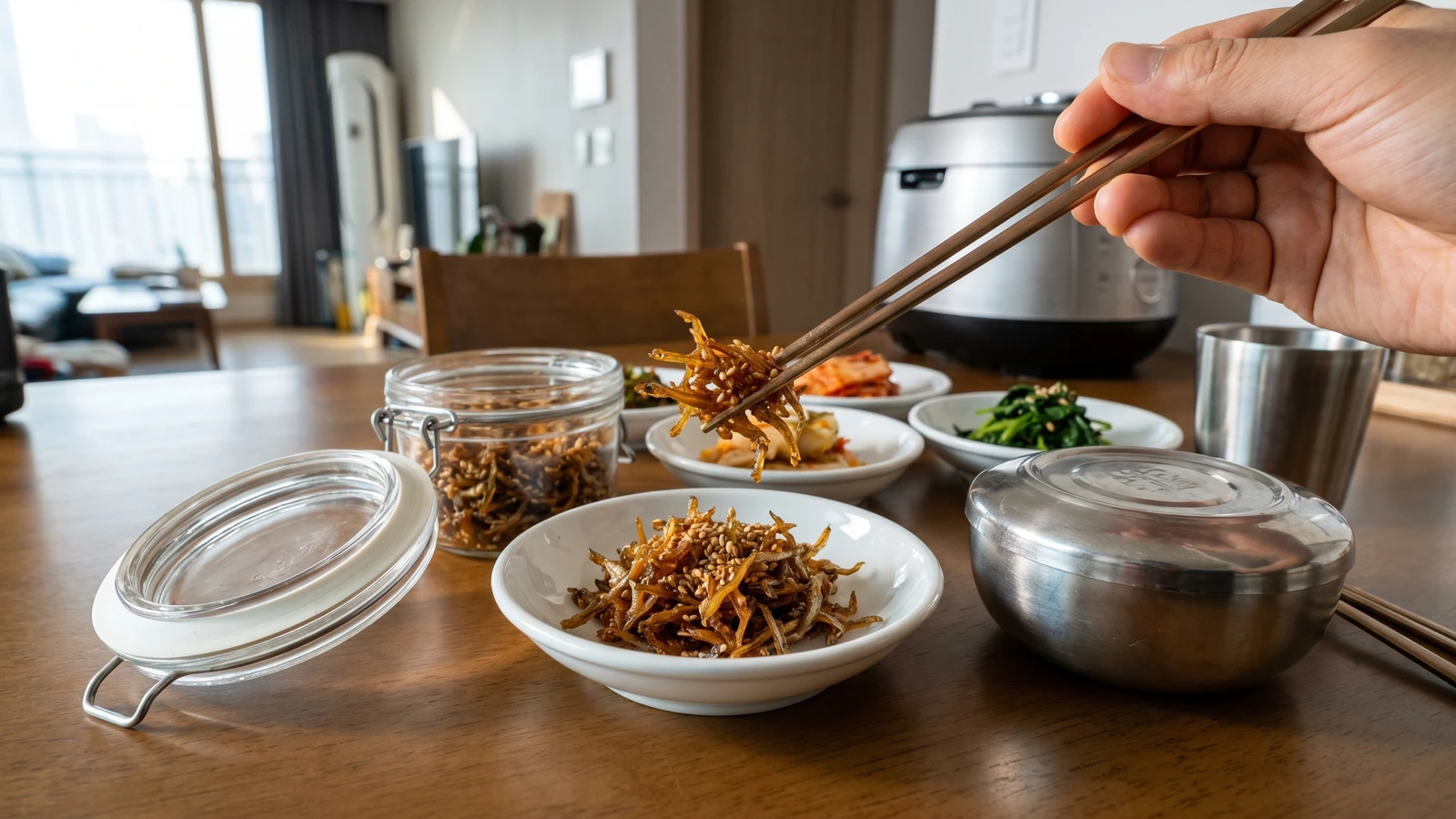
Tiny dried anchovies, toasted until clean and crisp, then glossed off the heat with soy, rice syrup, sesame, and restraint: the make-ahead mitbanchan that keeps rice from ever feeling lonely.
Myeolchi-bokkeum lives or dies before the sauce touches it. If you glaze damp anchovies, you get a sticky, fishy clump. Sift out the powder, dry-toast them until they rattle in the pan, then let the soy and syrup meet them off the heat. That one choice is why they stay crisp in the lunch box.
On the Korean table this is mitbanchan (make-ahead side dish), the little dish that waits in the refrigerator and saves a tired meal. No one bows to it. Everyone reaches for it. It is budget food, school lunch food, bachelor refrigerator food, the salty-sweet spoonful that makes plain rice feel attended to.
Master Seong-nyeo tasted one anchovy before she seasoned the pan, because some bags are already salty enough to scold you. Notebook 27 says 60 grams anchovies, not two handfuls, because hands change and tiny fish do not all weigh the same. Tonight it asks for 15 minutes of attention, a wide pan, and the discipline to turn off the heat before you toss. 손맛 (hand-taste) is real; I measure it anyway, so it can be handed on.
Dried anchovies (myeolchi) have long been pantry fish in Korea, especially from southern and eastern coastal markets, where drying made a small oily fish travel inland and keep through lean months. Gijang in Busan is still known for its spring anchovy catch and myeolchi festival, a reminder that this humble banchan begins with a real coastal trade. Myeolchi-bokkeum became especially common on twentieth-century home tables and in dosirak (lunch boxes), when small factory-dried anchovies could be bought year-round by the bag.
Quantity
60g, about 2 cups
Quantity
1/3 cup
Quantity
1 tablespoon
Quantity
1 small clove
finely minced
Quantity
1 tablespoon, or 2 teaspoons if anchovies taste very salty
Quantity
1 tablespoon
Quantity
1 teaspoon
Quantity
2 teaspoons
Quantity
1 teaspoon
Quantity
1 tablespoon
| Ingredient | Quantity |
|---|---|
| small dried anchovies (janchi-myeolchi or jiri-myeolchi) | 60g, about 2 cups |
| unsalted roasted peanuts, walnuts, or slivered almonds (optional) | 1/3 cup |
| neutral oil | 1 tablespoon |
| garlic (optional)finely minced | 1 small clove |
| soy sauce (ganjang) | 1 tablespoon, or 2 teaspoons if anchovies taste very salty |
| rice syrup (jocheong) or corn syrup | 1 tablespoon |
| sugar | 1 teaspoon |
| mirim (rice wine) or water | 2 teaspoons |
| toasted sesame oil | 1 teaspoon |
| toasted sesame seeds | 1 tablespoon |
Put the dried anchovies in a medium sieve and shake them over the sink or a bowl to remove the fine powder. That powder burns first and makes the whole pan taste old. Taste one anchovy now. If it is very salty, use 2 teaspoons soy sauce later instead of the full tablespoon.
Heat a wide dry skillet over medium-low heat. Add the anchovies and stir constantly for 4 to 5 minutes, until they feel dry, move separately, and make a light rattling sound against the pan. Add the optional nuts during the last minute just to warm them. Tip everything onto a plate and wipe out any dusty bits left in the skillet. This step chases off the fishy smell and keeps the finished banchan crisp.
In a small bowl, stir together the soy sauce, rice syrup, sugar, and mirim. Heat the oil in the wiped skillet over low heat. If using garlic, add it and stir for 20 to 30 seconds, only until pale and fragrant. Pull the skillet off the heat, then stir in the glaze. It should loosen and bubble gently in the pan's leftover heat, not boil hard.
Add the toasted anchovies and nuts back to the skillet while it is still off the heat. Fold and toss for 30 to 45 seconds, until every anchovy has a thin shine and no wet sauce sits at the bottom. If the glaze is not coating, return the pan to the lowest heat for only 10 to 15 seconds while tossing, then take it off again. Do not cook the anchovies in the sauce, or you lose the crispness you worked for.
Drizzle in the toasted sesame oil and scatter over the sesame seeds. Toss once more, then spread the anchovies on a plate or tray to cool for 10 minutes before storing. Covering them while warm traps moisture under the lid. Serve in a small banchan dish with rice, and keep the rest refrigerated in an airtight container.
1 serving (about 28g)
Culinary guides, cultural storytelling, and the editorial depth that makes cooking meaningful.
Discover Culinary ExplorerChef Jeong-sun
Tender Korean zucchini half-moons cooked quickly over real heat, seasoned with salted shrimp so the squash tastes deeper than oil and still clean enough for a weeknight table.

Chef Jeong-sun
Tender Korean summer zucchini softened gently in the pan with saeujeot for salt and depth, finished with sesame so the vegetable stays sweet, green, and plainly itself.
Chef Jeong-sun
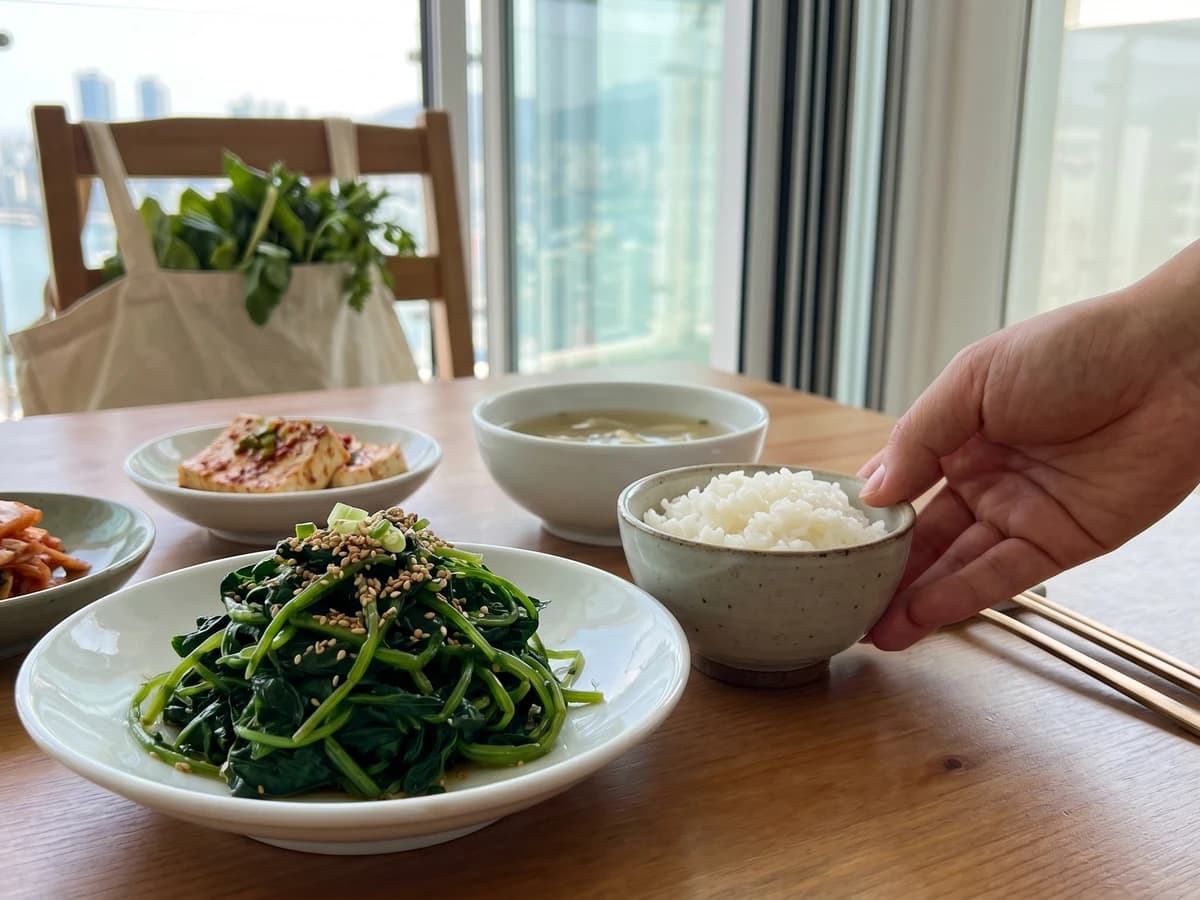
A bittersweet spring green from the southern shore, blanched just until pliant, then seasoned lightly so its clean coastal bitterness stays alive on the rice table.

Chef Jeong-sun
Torn king oyster or shiitake mushrooms, browned until their own water disappears, then finished with soy, garlic, sesame oil, and onion for a quiet banchan that earns its place.