
Chef Klaus
Allgäuer Krautkrapfen
The Allgäu pan dish that makes a meal from noodle dough, winter kraut, onion, and fat: brown the cut sides first, then cook gently so the rolls hold.
A cooking platform built around craft, culture, and the stories behind what we eat.
Created by
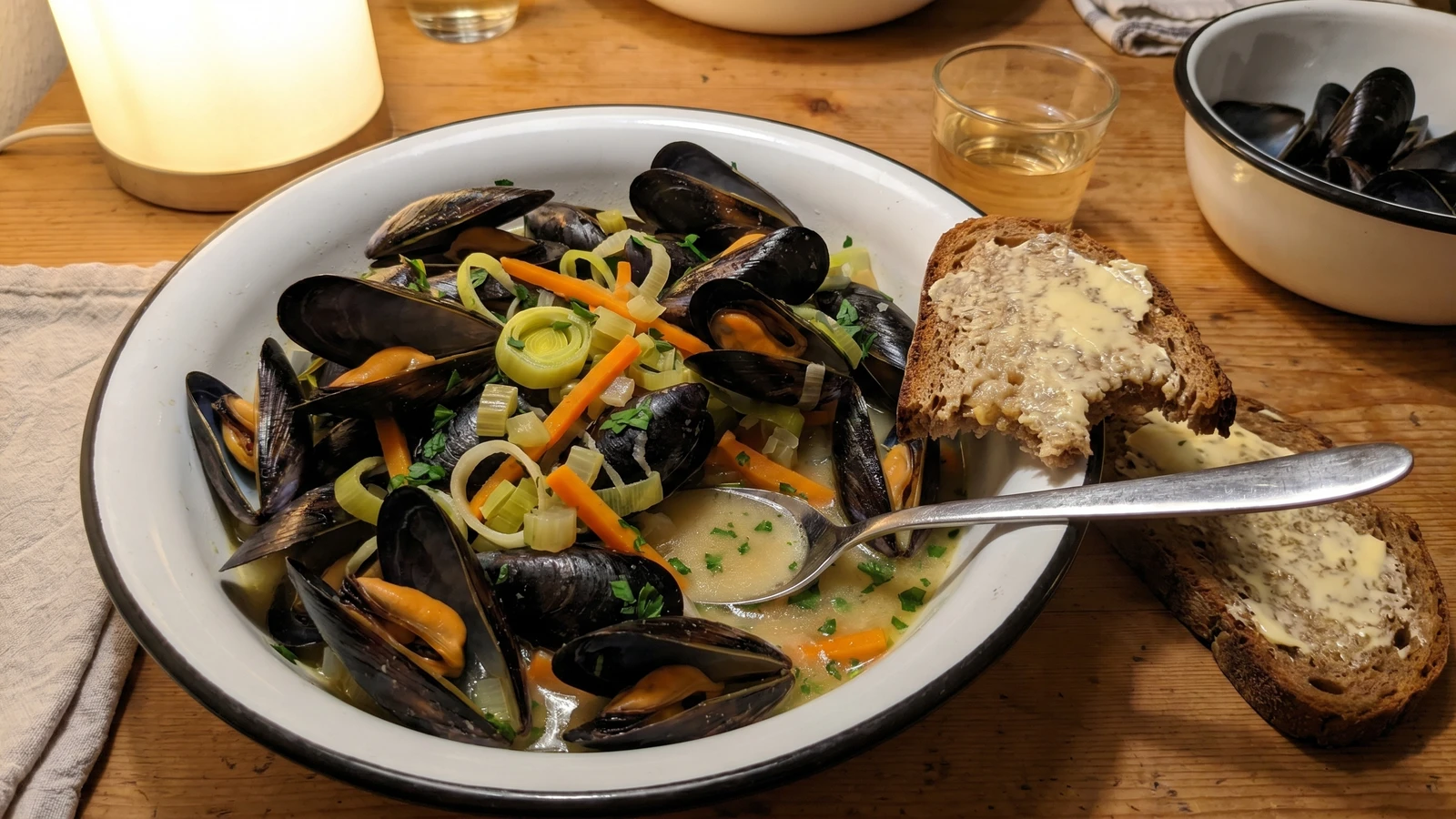
The Rhenish mussel pot for the r-months: clean shellfish, white wine, soup greens, and one rule that matters: fast heat, short cooking, no tired simmer.
Muscheln rheinische Art belong to the Rhineland autumn table, especially around Koln, when the r-months return and the mussel pots come out in the pubs. This is not a coastal dish trying to be grand. It is a city dish built on trade, white wine, Suppengrun, the leek, carrot, celery and onion that German kitchens keep for broth, and bread set close enough to catch what the spoon misses.
Im Norden anders, im Suden anders. On the North Sea coast the mussel may meet beer, dill, or a plainer fish broth; in Belgium and the Netherlands the pot often walks toward chips, cream, or more garlic. The Rhenish way keeps it clean: wine, vegetables, bay, pepper, parsley, and the liquor the mussels give back. Nicht aus dem Glas. The mussels make the broth if you don't drown them first.
The technique is short and strict. Build the broth before the mussels go in, then bring it to a hard boil and cover the pot. Mussels need fierce heat for a few minutes so the shells open quickly and the meat stays tender; slow simmering turns them tight before the broth has any life. Shake the pot, lift them out as they open, and stop. Das braucht seine Zeit only until it doesn't.
The habit of eating mussels in Germany during the r-months, roughly September through April, predates modern cold chains and also follows the safer, cooler part of the shellfish year. Koln and the lower Rhine could serve mussels regularly because river and rail trade connected the city to Dutch and Belgian shellfish waters, especially Zeeland, long before seafood felt ordinary inland. The Rhenish version shows that trade on the plate: inland soup greens and local wine meeting a coastal ingredient in a pot built for a pub table.
Quantity
2kg
scrubbed and debearded
Quantity
2 tablespoons
Quantity
1
white and pale green parts sliced and well washed
Quantity
2
cut into thin matchsticks or small dice
Quantity
2 stalks or 120g
finely diced
Quantity
1 large
thinly sliced
Quantity
2
lightly crushed
Quantity
2
Quantity
8
lightly crushed
Quantity
250ml
Riesling trocken or Silvaner
Quantity
150ml
Quantity
1 small bunch
chopped
Quantity
only if needed
Quantity
to taste
Quantity
to serve
| Ingredient | Quantity |
|---|---|
| live musselsscrubbed and debearded | 2kg |
| butter | 2 tablespoons |
| leekwhite and pale green parts sliced and well washed | 1 |
| carrotscut into thin matchsticks or small dice | 2 |
| celery stalks or celeriacfinely diced | 2 stalks or 120g |
| onionthinly sliced | 1 large |
| garlic cloves (optional)lightly crushed | 2 |
| bay leaves | 2 |
| black peppercornslightly crushed | 8 |
| dry German white wineRiesling trocken or Silvaner | 250ml |
| water or light fish stock | 150ml |
| flat-leaf parsleychopped | 1 small bunch |
| salt | only if needed |
| freshly ground black pepper | to taste |
| dark rye bread and butter | to serve |
Keep the mussels cold until you cook them, then tip them into the sink and sort them one by one. Scrub the shells, pull away any beards, and discard cracked shells or mussels that stay open after a firm tap. You are cooking live shellfish, and the closed shell is the first safety check, not decoration.
Melt the butter in a wide heavy pot over medium heat and add the leek, carrot, celery, onion, garlic if using, bay, and peppercorns. Cook them 6 to 8 minutes until glossy and softened but not browned. Browned vegetables turn the broth heavy; this pot wants sweetness and clean wine, not roast flavour.
Pour in the wine and water or light stock, then bring it to a full boil. Let it boil for 2 minutes so the raw edge of the wine cooks off before the mussels go in. If the wine is harsh now, it will be harsh in the shell; fix the pot before you add the one ingredient that cooks in minutes.
Add the mussels, cover the pot, and turn the heat high. Cook 4 to 6 minutes, shaking the pot once or twice so the top mussels trade places with the bottom ones. Fast heat opens the shells before the meat tightens; a lazy simmer gives you rubber and a sulking broth.
As soon as most shells are open, stir in the parsley and black pepper, then taste the broth before adding salt. Mussels bring their own salt water, so the salt goes last or you punish the whole pot. Discard any mussels that remain shut, ladle the open mussels and vegetables into deep bowls, and pour the broth over. Serve with rye bread and butter for the broth. Weggeworfen wird nichts.
1 serving (about 380g)
Culinary guides, cultural storytelling, and the editorial depth that makes cooking meaningful.
Discover Culinary ExplorerChef Klaus
The Allgäu pan dish that makes a meal from noodle dough, winter kraut, onion, and fat: brown the cut sides first, then cook gently so the rolls hold.

Chef Klaus
Swabian egg pasta turned toward the apple cellar: fresh Spätzle tossed with browned butter, tart apples, cinnamon, and enough restraint to stay supper, not cake.

Chef Klaus
Hesse's pork goulash belongs to Apfelwein country: shoulder, onions, and tart cider cooked low until the cheap cut turns soft and the sauce lands sweet-sour, not sour-sweet.

Chef Klaus
The old sweet supper that saves yesterday's loaf: stale bread drinks eggy milk, the pan stays moderate, and butter browns the outside only after the centre has set.