Culinary Explorer
A cooking platform built around craft, culture, and the stories behind what we eat.
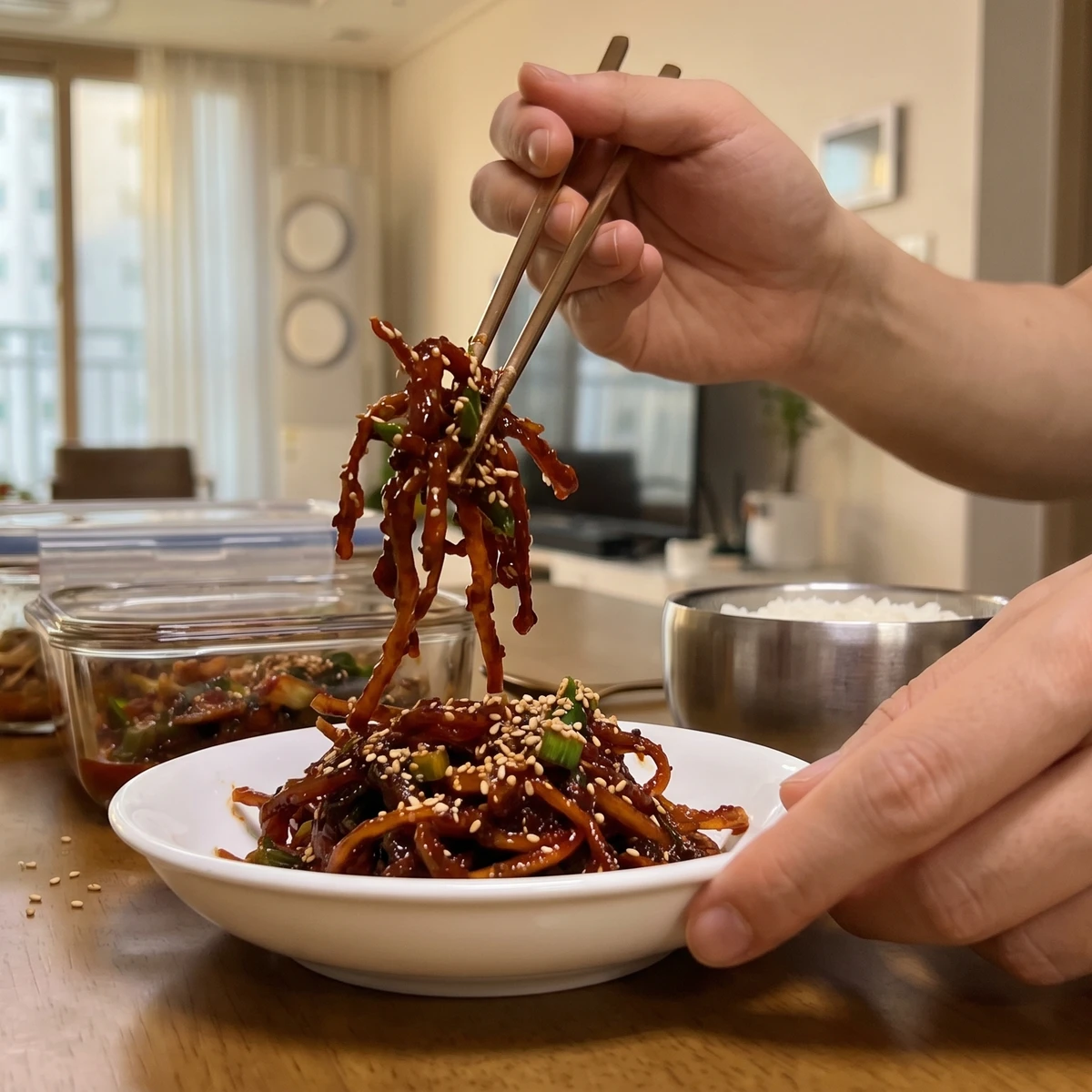
Mumallaengi-muchim (Seasoned Dried Radish)
Created by Chef Jeong-sun
Sun-dried radish strips brought back just enough to stay chewy, then worked by hand with gochujang, perilla oil, garlic, and sesame into the banchan that makes plain rice feel cared for.
By the time late-autumn radish starts piling up at the market, you should already be thinking beyond tonight's soup. Mu is sweet then, heavy for its size, and Korean kitchens used to cut the extra into strips and dry it for the months when fresh vegetables were thin. My mother spread radish on trays where the sun could reach it; Master Seong-nyeo made us measure the dried weight, then the soaked weight, because chew is not a feeling you can teach without a number.
Mumallaengi-muchim is a stored banchan, one of those small dishes that makes plain rice feel like a meal. It is red, yes, but it should not taste only of gochujang. The radish has to stay wrinkled and springy under the teeth, with enough perilla oil and sesame to round the chili, enough soy and fish sauce to season the center, and no extra sweetness covering up the radish. Let it taste like itself.
Tonight this dish asks for three honest things: rinse away the dust, soak only until the strips bend, and squeeze harder than you think. Then mix the seasoning in its own bowl and let the gochugaru wake up before it touches the radish. 손맛 (hand-taste) is real. I measure it anyway, so it can be handed on, and Notebook 41 says 100 grams of dried radish should come back to about 300 grams after soaking and squeezing.
Ingredients
dried Korean radish strips (mumallaengi)
Quantity
100g
about 3 loosely packed cups
cool water
Quantity
6 cups, divided
plus more for rinsing
gochugaru (Korean chili flakes)
Quantity
2 tablespoons
| Ingredient | Quantity |
|---|---|
| dried Korean radish strips (mumallaengi)about 3 loosely packed cups | 100g |
| cool waterplus more for rinsing | 6 cups, divided |
| gochugaru (Korean chili flakes) | 2 tablespoons |
Where cooking meets culture.
Culinary guides, cultural storytelling, and the editorial depth that makes cooking meaningful.
Discover Culinary Explorer