
Chef Juliana
Amalá de Xangô
You don't need mystery for this pot. You need okra, dendê, onion, dried shrimp, and the patience to stir until the quiabo gives up its own caldo.
A cooking platform built around craft, culture, and the stories behind what we eat.
Created by
You think crab stew is restaurant food. It's not. Siri, a real refogado, urucum, and farinha turn into a creamy Capixaba pot that deserves its way back to the table.
You look at a pot of crab and think, isso não é pra mim. I know. Seafood does that to people. It arrives with claws and opinions, and suddenly everyone pretends cooking is a talent. No. Cozinhar não é dom, é um aprendizado. Anota aí: if you can soften onion, smell garlic before it burns, and add farinha slowly, you can make muma.
This is comida de verdade from Espírito Santo's clay-pot seafood kitchen, the same family of thought that gives us moqueca capixaba: fresh seasoning, urucum-stained oil, limão, tomate, cebola, alho, coentro, and restraint. No azeite de dendê, no coconut milk, no bell pepper. That absence isn't a missing step. It's the definition.
The method is plain. You season the siri so it tastes like itself, build a refogado until the onion murcha and sweetens, layer the pot, and let the crab cook gently. Then you save the broth and thicken it with farinha de mandioca, little by little, until it pega ponto and becomes pirão. Nothing wasted. Nothing powdered pretending to be dinner.
Serve it with arroz soltinho, feijão if the table asks for it, and couve or another green thing. That's the pê-efe thinking: rice, beans, something that carries the meal, something green. A country keeps itself in plates like this, not because they're fancy, but because a gente keeps cooking them.
Muma de siri belongs to the coastal cooking of Espírito Santo, where crab, cassava flour, tomato, onion, garlic, limão, coentro, and urucum form a quieter cousin to the better-known moqueca capixaba. The traditional vessel is the black, unglazed panela de barro made by the Paneleiras de Goiabeiras, whose craft was registered by IPHAN as Brazilian intangible heritage in 2002. The proud saying "moqueca é capixaba, o resto é peixada" is Capixaba pride, not a court ruling; Bahia has its own dendê-rich moqueca, and both kitchens deserve to be learned from the people who carry them.
Quantity
500 g
checked carefully for shell pieces
Quantity
2 tablespoons
Quantity
1 teaspoon, divided, plus more to taste
Quantity
3 cloves
minced, divided
Quantity
3 tablespoons
Quantity
2 teaspoons seeds or 1 1/2 teaspoons colorau
Quantity
1 medium
finely chopped
Quantity
2
seeded and chopped
Quantity
1/2 cup
chopped, divided
Quantity
2
thinly sliced
Quantity
2 cups
Quantity
1/2 cup, plus more if needed
Quantity
1 tablespoon
for finishing
Quantity
as needed
for serving
| Ingredient | Quantity |
|---|---|
| picked siri crab meatchecked carefully for shell pieces | 500 g |
| fresh lime juice | 2 tablespoons |
| salt | 1 teaspoon, divided, plus more to taste |
| garlicminced, divided | 3 cloves |
| neutral oil | 3 tablespoons |
| urucum seeds or colorau | 2 teaspoons seeds or 1 1/2 teaspoons colorau |
| onionfinely chopped | 1 medium |
| ripe tomatoesseeded and chopped | 2 |
| cilantrochopped, divided | 1/2 cup |
| green onions (optional)thinly sliced | 2 |
| water or light fish stock | 2 cups |
| fine cassava flour, farinha de mandioca fina | 1/2 cup, plus more if needed |
| olive oilfor finishing | 1 tablespoon |
| lime wedges (optional)for serving | as needed |
Spread the crab meat on a plate and run your fingers through it for shell pieces. Season with the lime juice, 1/2 teaspoon salt, and 1 minced garlic clove. Let it sit for 10 minutes while you chop the onion and tomato. The lime wakes up the sweet crab, but don't leave it sitting all afternoon, or the meat tightens and loses its softness.
Warm the oil with the urucum seeds in a heavy 4-liter pot over low heat for 2 to 3 minutes, until the oil turns clear orange-red. Strain out the seeds and return the oil to the pot. If you're using colorau, stir it into the warm oil for 30 seconds. Urucum gives Capixaba seafood its color and earthy smell. Dendê does not come into this pot.
Raise the heat to medium. Add the onion to the urucum oil and cook, stirring now and then, until it goes soft and see-through, about 5 minutes. Add the remaining 2 minced garlic cloves and cook for 1 minute, just until you smell them. Then add the tomatoes and cook until they slump and release their juice, about 5 minutes. This is the foundation, not decoration. Rush it and the stew tastes raw and separate.
Add half the cilantro and the seasoned siri with any juices on the plate. Fold it gently into the refogado once, just to coat, then spread it level. Pour in the water or light stock around the edges, not straight onto the crab. Keep the pot at a gentle simmer, with small bubbles at the sides, for 10 minutes. Don't stir it hard. In the Capixaba clay-pot way, you let the seafood cook in place so it stays tender instead of being knocked into threads.
Scoop about 2 cups of the orange crab broth into a bowl or small pan, leaving the crab mostly in the pot. Taste the crab in the pot and adjust salt. Keep it warm on low. Saving the broth is the whole point: it carries the flavor of the siri, tomato, onion, garlic, coentro, and urucum. Throwing it away would be a small kitchen crime.
Set the broth over medium-low heat. Sprinkle in the cassava flour slowly with one hand while whisking or stirring with the other. Cook for 3 to 5 minutes, stirring, until it turns glossy and creamy and holds a soft trail when the spoon passes through. Add a splash of water if it gets too stiff, or a spoonful more farinha if it's loose. Farinha thickens fast, and dumping it in all at once makes lumps that no prayer will fix.
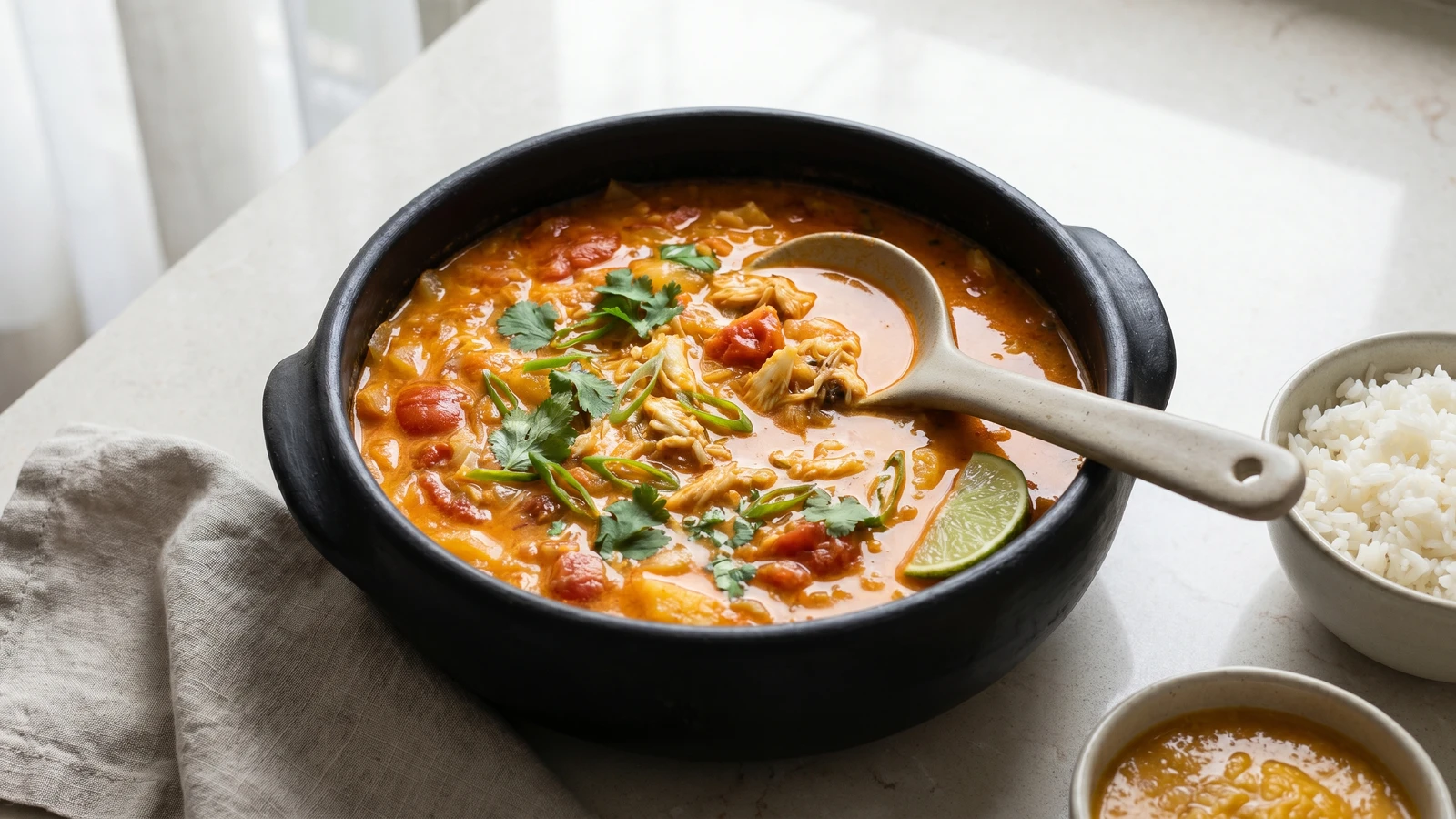
Spoon the pirão back beside the crab or serve it in a small bowl next to the muma, whichever your table prefers. Finish with the remaining cilantro, green onions if using, and the olive oil. The surface should look glossy, orange-red from urucum, green from the herbs, and thick enough to spoon over rice. Serve from the pot, because this food doesn't need a stage. It needs a table.
1 serving (about 335g)
Culinary guides, cultural storytelling, and the editorial depth that makes cooking meaningful.
Discover Culinary ExplorerChef Juliana
You don't need mystery for this pot. You need okra, dendê, onion, dried shrimp, and the patience to stir until the quiabo gives up its own caldo.

Chef Juliana
You think a Polish hunter's stew is not for your kitchen. Wrong. Brown meat properly, build a real refogado, simmer cabbage low, and tomorrow's lunch is already better.

Chef Juliana
Whole fish in a pot looks like a test. It isn't. Build the refogado, layer the filhote, let tucupi do its work, and the Círio table starts making sense.

Chef Juliana
You don't need river wisdom in your bones to cook tambaqui well. You need real tucupi, a calm simmer, and the sense to let the fish stay whole until it gives.