
Chef Dimitra
Chios Nerantzi Glyko Koutaliou (Νεράντζι Γλυκό Κουταλιού)
Chios bitter orange peel rolled into tight coils, blanched through clean waters, then preserved in a clear fragrant syrup for the spoon-sweet tray.
A cooking platform built around craft, culture, and the stories behind what we eat.
Created by
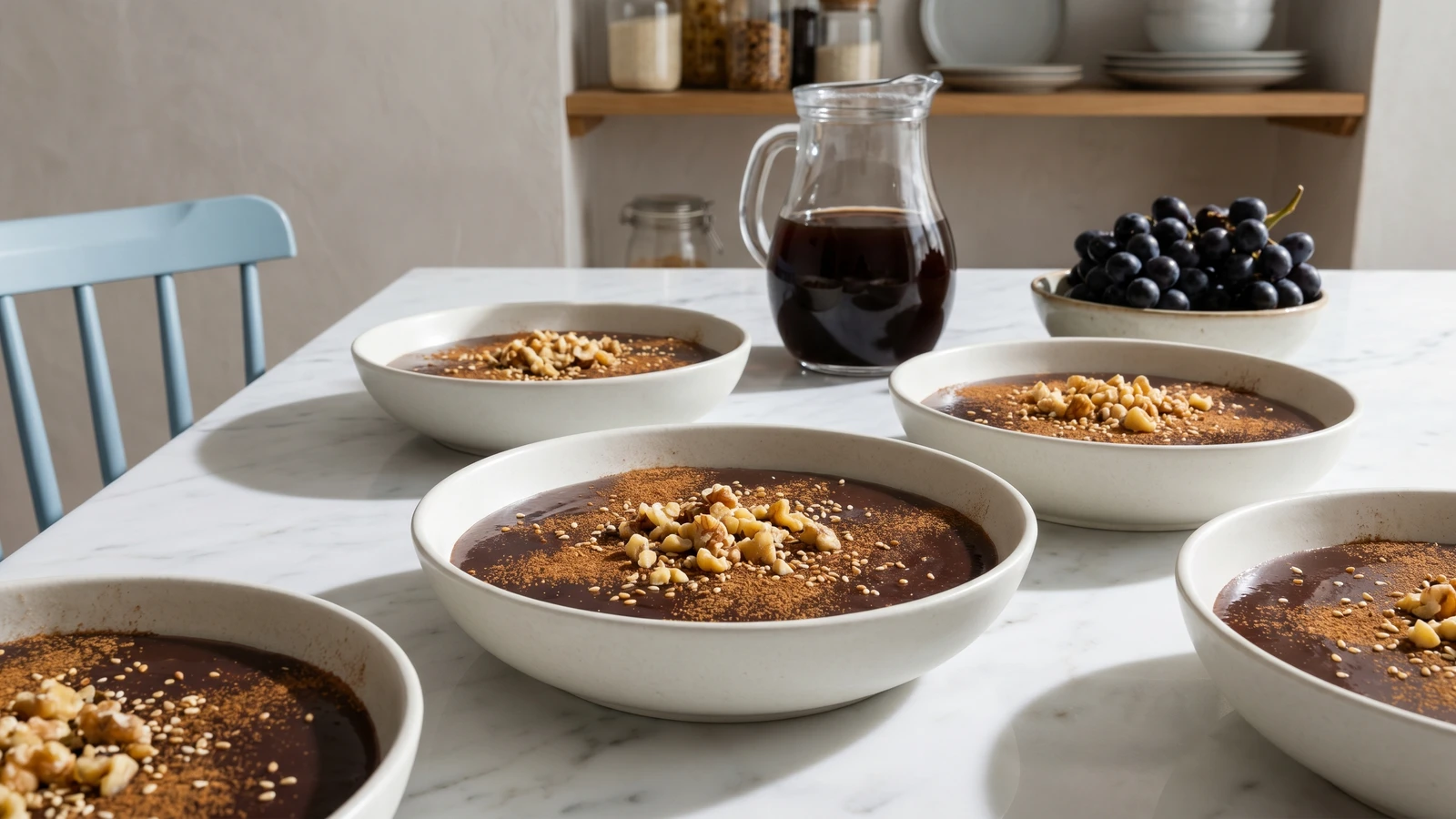
Nemea's grape-harvest pudding is only fresh must, flour, walnuts, sesame and cinnamon. Skim the must clean, whisk it cold into flour, and it sets dark and glossy.
Nemea moustalevria is the Peloponnese at grape harvest, fresh unfermented must thickened with flour into a dark, glossy pudding and finished with walnuts, sesame, and cinnamon. It belongs to the press day, when the juice is sweet, raw, and already impatient. The region is the dish's surname here, because the must is not a background flavor; it is the dish.
The method that decides it is the cleaning of the must. Bring it up slowly, skim every gray froth that rises, and strain it before flour comes near the pot. That froth carries the rough taste and cloud from the crushed grapes. Leave it behind and the pudding sets clear, deep, and gentle.
After that, you only whisk cool must with flour, cook until the spoon leaves a path, and pour it into shallow bowls. It is nistisimo, fasting food, without trying: no milk, no butter, no eggs. I have recipes in my Thessaloniki notebook from Nemea, Patras, and Kalamata, and the careful cooks all wrote the same warning in different handwriting: clean the must first.
Nemea and the wider Peloponnese make moustalevria during the September vintage, when unfermented must has to be cooked within a day or two of pressing before it starts turning to wine. Older kitchens often 'cut' the must with clean vine ash or asprochoma, white earth, then let it settle before straining it, a practical clarification before flour was added. Cyprus keeps a close cousin called palouzes, often dried with nuts, while the Peloponnese version is usually served soft in shallow plates.
Quantity
1.5L
unclarified, or use 1.2L already clarified must
Quantity
120g
Quantity
1/4 tsp
Quantity
80g
coarsely chopped
Quantity
25g
Quantity
1 1/2 tsp
| Ingredient | Quantity |
|---|---|
| fresh unfermented grape must (moustos, μούστος)unclarified, or use 1.2L already clarified must | 1.5L |
| all-purpose flour (alevri, αλεύρι) | 120g |
| fine sea salt | 1/4 tsp |
| walnutscoarsely chopped | 80g |
| sesame seeds | 25g |
| ground cinnamon | 1 1/2 tsp |
Pour 1.5L fresh must into a 3L heavy pot. Bring it to a lively boil over medium heat, then lower the heat slightly and skim the gray froth as it rises, 10 to 15 minutes, until the surface stays mostly clear and the smell is sweet rather than grassy. Strain through muslin into a jug and measure 1.2L cleaned must for the pudding. Keep any extra for thinning.
Toast the sesame seeds in a dry pan for 2 to 3 minutes, shaking the pan, until they smell nutty and turn pale gold. Toast the walnuts in the same pan for 4 minutes, then let both cool. Keep the cinnamon separate for the finish.
Let the cleaned must cool until it is only warm. Pour 300ml of it into a bowl and whisk in the flour and salt until the mixture is completely smooth, with no dry pockets at the bottom. Flour goes into cool must first; add it straight to a hot pot and you'll chase lumps until supper.
Pour the remaining 900ml cleaned must into the pot and warm it over medium-low heat until small bubbles gather at the edges. Whisk in the flour mixture in a thin stream, then switch to a flat wooden spoon or heatproof spatula. Cook, stirring constantly, 12 to 15 minutes, until the pudding is glossy, thick, and the spoon leaves a clean path across the bottom for a second. Taste a little; the raw flour taste should be gone.
Rinse 8 shallow dessert dishes with cold water and leave them damp. Pour in the hot moustalevria, tap each dish once on the counter, and sprinkle the surface with walnuts, sesame, and cinnamon while it is still tacky. Let it stand at room temperature for 1 hour, then chill until set, about 1 more hour.
Serve at room temperature or chilled, with a little more cinnamon if you like. Cover and refrigerate for up to 4 days. The walnuts soften as they sit, so for the cleanest bite, keep a little of the toasted topping aside and add it just before serving.
1 serving (about 180g)
Culinary guides, cultural storytelling, and the editorial depth that makes cooking meaningful.
Discover Culinary ExplorerChef Dimitra
Chios bitter orange peel rolled into tight coils, blanched through clean waters, then preserved in a clear fragrant syrup for the spoon-sweet tray.

Chef Dimitra
Chios gives vanilla submarine its mastic breath: a pearly spoon sweet stirred stiff, served cold in water, and offered as the simplest kerasma.

Chef Dimitra
Mahalepi is the cooling milk pudding of Cyprus and the Politiki table: pale, trembling, and loosened at the spoon with cold rosewater syrup.

Chef Dimitra
Cyprus keeps the watermelon after the red flesh is gone: firm white rind, lime-soaked for snap, simmered slowly in lemon syrup until each piece shines on the spoon.