
Chef Freja
Andelår med Rødkål
Slow-roasted duck legs with crisp, deeply golden skin, served with braised red cabbage and caramelized potatoes. The weeknight Danish duck that proves the best part of the bird is the one that takes its time.
A cooking platform built around craft, culture, and the stories behind what we eat.
Created by Chef Freja
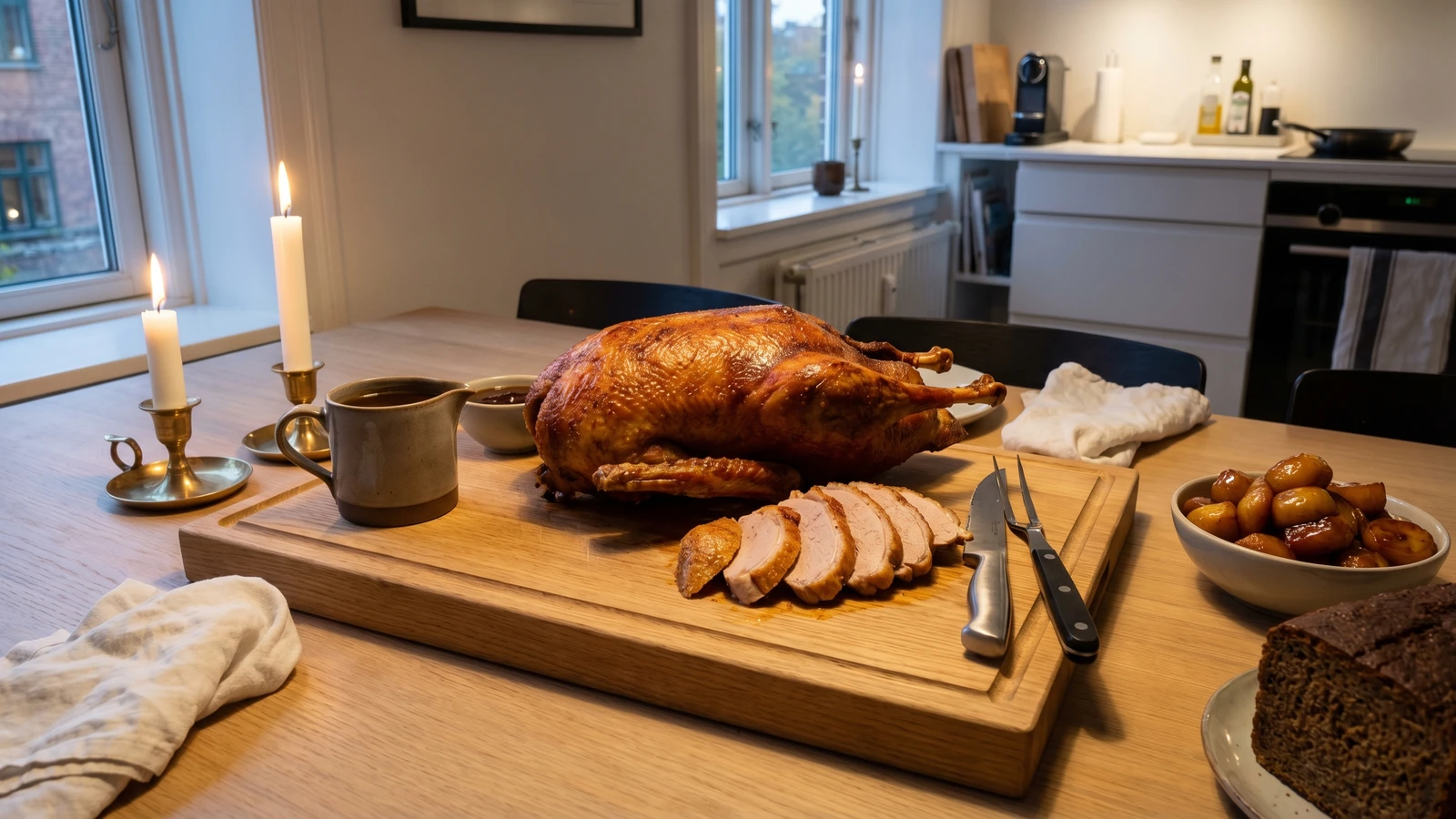
The whole roasted goose of Mortensaften, stuffed with tart apples and soft prunes, slow-roasted until the skin crisps deep gold and the kitchen fills with the smell that means winter is coming.
November tenth. Mortensaften. The one evening of the year when Denmark sits down to goose.
The tradition is older than anyone can pin down exactly, but the ritual is the same in every household that keeps it: a whole goose, stuffed with apples and prunes, roasted slowly until the breast turns deep brown and the fat has rendered out from beneath the skin into something worth saving in a jar. The house fills with a smell that belongs only to this night, rich and sweet and heavy with the knowledge that winter is close. You set the table properly. You light candles. You carve at the table or on the board in the kitchen, and the first slice through the skin should crackle.
A goose is not a chicken. It's a bigger, wilder bird with thicker skin and a thick layer of fat beneath it, and that fat is both your challenge and your reward. Your job is to coax it out slowly, patiently, so the skin crisps and tightens while the breast meat stays juicy underneath. I'll show you exactly how. You'll prick the skin all over without piercing the flesh beneath. You'll roast low and steady, pouring off the rendered fat every forty-five minutes. And in the final stretch you'll turn up the heat and watch the skin go taut and golden, the colour of November firelight.
The stuffing is simple: tart apples and soft prunes, nothing else. They steam inside the cavity, absorb the juices, and by the time you carve they've become a sweet, savoury compote that belongs on the plate alongside the meat. Serve it with brunede kartofler, those caramelized potatoes glazed in sugar and butter that every Danish child learns to love, and a bowl of rødkål. Pour the brun sovs from a warm jug. This is mortensaften, cooked with love. You'll know when it's right.
The Mortensaften goose traces to the medieval feast of St. Martin of Tours, whose saint's day falls on November 11th. Legend holds that Martin, a humble man, hid among a flock of geese to avoid being named bishop, but the birds honked and gave him away, and the Danes have been eating goose on his eve ever since. By the 1800s the mortensaften meal had become one of the most widely observed food traditions in Denmark, second only to juleaften, and the combination of apples and prunes in the stuffing appears in Danish household cookbooks from the same period. In rural Jutland, the goose was traditionally the last great feast before the lean weeks of Advent began.
Quantity
1, about 4.5-5 kg
giblets removed and reserved
Quantity
2 tablespoons
Quantity
1 teaspoon
freshly ground
Quantity
500g (about 4 medium)
peeled, cored, and quartered
Quantity
200g
Quantity
2 tablespoons
Quantity
500ml
made from the giblets or a rich chicken stock
Quantity
1 tablespoon
Quantity
to taste, for the gravy
Quantity
to taste, for the gravy
| Ingredient | Quantity |
|---|---|
| whole goosegiblets removed and reserved | 1, about 4.5-5 kg |
| coarse salt | 2 tablespoons |
| black pepperfreshly ground | 1 teaspoon |
| tart applespeeled, cored, and quartered | 500g (about 4 medium) |
| soft pitted prunes | 200g |
| plain flour | 2 tablespoons |
| good stockmade from the giblets or a rich chicken stock | 500ml |
| ribsgele (redcurrant jelly) | 1 tablespoon |
| fine sea salt | to taste, for the gravy |
| black pepper | to taste, for the gravy |
Take the goose out of the fridge a full hour before you plan to cook it. A cold bird roasts unevenly, the outside overcooking before the heat reaches the centre. Pull out any loose fat from inside the cavity and save it. Trim any excess skin at the neck. Pat the entire bird dry with kitchen paper, inside and out. Moisture on the skin is the enemy of crispness.
This is the step that makes everything else work. Take a skewer or a sharp-tined fork and prick the goose skin all over, concentrating on the breast, thighs, and the fatty areas around the legs. You want to puncture the skin and the fat layer beneath it, but not the flesh itself. The holes create channels for the fat to escape during roasting. Without them, the fat stays trapped under the skin, which goes soft and flabby instead of crisp. Angle the skewer at a slant rather than straight down. This helps you pierce the fat without reaching the meat.
Rub the coarse salt and black pepper generously over the entire surface of the goose, working it into every fold and crevice, especially where the legs meet the body and around the wings. Season the cavity as well. Coarse salt matters here. Fine salt dissolves too quickly and doesn't grip the skin the way coarse crystals do. The salt needs to sit in those tiny prick holes and draw moisture out of the skin during roasting. That's how you get the crackling.
Mix the quartered apples and prunes together and pack them loosely into the cavity of the goose. Don't force them in. They'll swell as they cook, absorbing the juices that run inside the bird, and if you pack too tightly they'll turn to mush instead of holding their shape. You want them to steam gently and become a sweet, savoury compote by the time the goose is done. Close the cavity with two or three wooden skewers or tie the legs together with kitchen string to keep everything inside.
Heat the oven to 160°C. Place the goose breast-side up on a rack set inside a deep roasting tin. The rack is important: it lifts the bird out of its own fat so the bottom skin crisps instead of braising. Pour a cup of water into the bottom of the tin. This catches the dripping fat and prevents it from smoking. Slide the goose into the oven and let it roast. The low temperature is deliberate. Goose fat renders best slowly. High heat seizes the surface before the fat underneath has a chance to escape, and you end up with greasy skin and dry meat. Patience is the technique here.
Every forty-five minutes, open the oven and carefully pour or ladle the rendered fat out of the roasting tin into a heatproof jug or bowl. The fat accumulates quickly, sometimes half a litre or more from a large goose. If you leave it in the tin, the bottom of the bird sits in liquid fat and the skin there goes soft. Removing it also prevents the oven from smoking. This is the rhythm of roasting a goose: forty-five minutes, pour off the fat, close the oven, repeat. After about two and a half to three hours at 160°C, the goose should be nearly done.
When the goose has roasted for about three hours and the juices run clear when you pierce the thickest part of the thigh, raise the oven temperature to 220°C. Pour off the fat one final time. Roast for another fifteen to twenty minutes, watching carefully. The skin should tighten, darken to a deep amber gold, and develop a dry, papery crispness. You'll hear it crackle faintly when you tap it with a spoon. That sound is how you know it's done. If any areas are colouring too fast, shield them loosely with a piece of foil.
Lift the goose onto a carving board and tent it loosely with foil. Let it rest for at least twenty minutes, and thirty is better. Resting is not optional. The fibres of the meat, which have been tightened by heat, need time to relax and reabsorb their juices. If you carve immediately, those juices run out onto the board instead of staying in the meat. While the goose rests, make the gravy.
Pour off all but about two tablespoons of the drippings from the roasting tin. Set the tin over medium heat on the stovetop. Add the flour and stir it into the drippings, scraping up the browned bits from the bottom of the tin. These caramelised residues are concentrated flavour and they're the foundation of the gravy. Cook the flour paste for two minutes, stirring constantly, until it turns a deep golden brown. Don't rush this. If the flour stays pale, the gravy tastes floury. Gradually pour in the stock, whisking as you go, until the gravy is smooth and the consistency of double cream. Let it simmer gently for five minutes. Stir in the ribsgele. It adds a gentle tartness that balances the richness of the goose without sweetening the gravy. Season with salt and pepper. Strain through a fine sieve into a warm jug.
Scoop the apple and prune stuffing out of the cavity into a warm serving bowl. Carve the goose at the table or on the board: remove the legs first, then slice the breast in long, even pieces, cutting parallel to the breastbone. Arrange on a warm platter. Serve with the stuffing, brun sovs, brunede kartofler, and rødkål. Pour the gravy generously. Light the candles. This is mortensaften, and the table is where it happens. Tak for mad.
1 serving (about 400g)
Culinary guides, cultural storytelling, and the editorial depth that makes cooking meaningful.
Discover Culinary ExplorerChef Freja
Slow-roasted duck legs with crisp, deeply golden skin, served with braised red cabbage and caramelized potatoes. The weeknight Danish duck that proves the best part of the bird is the one that takes its time.

Chef Freja
The whole roasted duck of juleaften, stuffed with tart apples and dark prunes, slow-roasted for four patient hours until the skin crackles like something earned and the meat underneath gives way without resistance.

Chef Freja
Whole sea trout baked with butter, lemon, and armfuls of dill, served beside the first nye kartofler of the season and a melting slab of dildsmor. The Danish summer table at its most generous.

Chef Freja
A side of salmon baked gently in butter and white wine, served warm with a bright dill cream sauce and the season's first nye kartofler. Late spring on a Danish table, cooked with love.