
Chef Freja
Aebleflaesk
The Fyn autumn supper where thick pork belly renders slowly into its own fat, then meets apples and onions that cook down into a deep amber tangle. Sweet, salt, and the oldest pairing in the Danish larder.
A cooking platform built around craft, culture, and the stories behind what we eat.
Created by Chef Freja
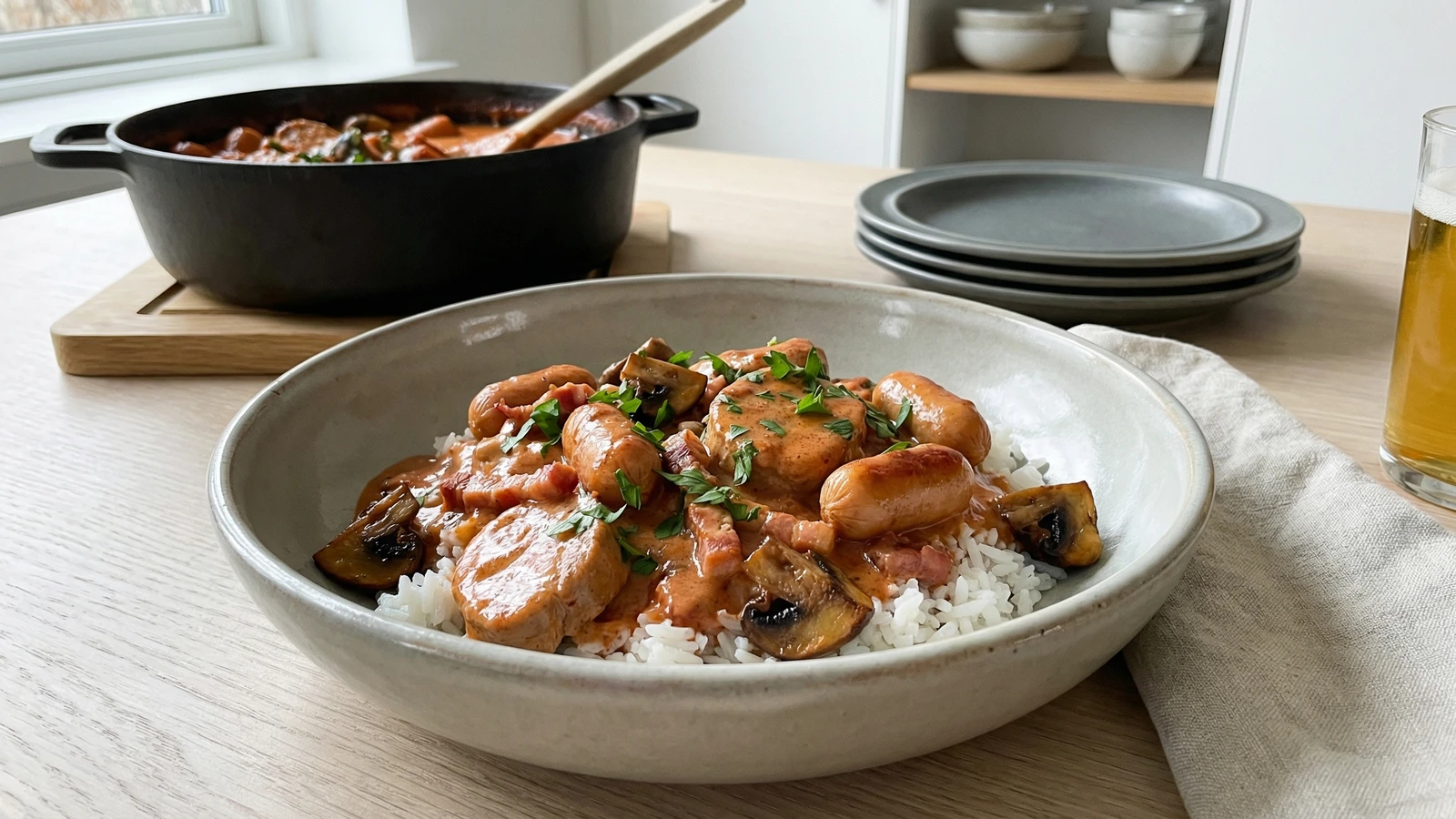
The Danish party stew of pork tenderloin, bacon, and cocktail sausages in a creamy tomato sauce. The pot every farmor pulls out when there are people to feed and love to show.
Morbradgryde is a party dish. Not a weeknight dinner, not a quiet bowl for one. It's what you make when the extended family is coming for a birthday, when there's a confirmation to mark, when twelve people are walking through the door and you need to feed them something that tastes like it was cooked with love. This is the pot your farmor pulled out of the oven when it mattered.
The combination sounds unlikely if you've never had it. Pork tenderloin, bacon, and cocktail sausages together in a creamy tomato sauce with mushrooms and paprika. But the logic is pure Danish home cooking: take three kinds of pork that each bring something different, and let them share a sauce. The tenderloin gives you tender, lean bite. The bacon gives you smoke and fat. The little sausages give you the childhood pleasure of finding something snug and meaty in your spoon. All three belong, and the dish only works because all three are there.
What matters most is the order of operations, and I'll walk you through it so nothing goes wrong. You brown the meat first and take it out. You render the bacon. You brown the sausages. You build the sauce in the same pot, using all the fat and fond the meat has left behind. Then everything comes back together for a gentle simmer. Each step builds on the last, and if you follow them in order, you'll end up with a stew that tastes like it's been cooking all afternoon even though it hasn't.
This is faellesspisning food, the cooking of the shared table. Make it the day before if you can. It only gets better overnight, and on the day of the party all you have to do is warm it through and welcome people in.
Morbradgryde belongs to the generation of Danish dishes that rose to prominence in the 1960s and 1970s, when home freezers and imported ingredients like paprika and tinned tomatoes reached ordinary Danish kitchens for the first time. Cocktail sausages, known as cocktailpølser, became a playful addition in the 1970s, borrowed from the cold buffet tradition and dropped into the hot pot with the kind of confidence that defined Danish home cooking of the era. The dish became the default festmad for birthdays and confirmations because it could be made the day before, stretched to feed a crowd, and held its own on the buffet table for hours without suffering.
Quantity
800g
trimmed and cut into 2cm medallions
Quantity
200g
cut into 1cm lardons
Quantity
300g small
Quantity
400g
quartered
Quantity
2 medium
finely chopped
Quantity
3
finely chopped
Quantity
2 tablespoons
Quantity
2 tablespoons
Quantity
1 tablespoon
Quantity
400g
Quantity
400ml
Quantity
250ml
Quantity
2
Quantity
1 tablespoon
Quantity
2 tablespoons
Quantity
1 tablespoon
Quantity
to taste
Quantity
freshly ground, to taste
Quantity
small bunch
chopped, to finish
Quantity
to serve
| Ingredient | Quantity |
|---|---|
| pork tenderlointrimmed and cut into 2cm medallions | 800g |
| smoked streaky baconcut into 1cm lardons | 200g |
| cocktail sausages (pølser) | 300g small |
| chestnut mushroomsquartered | 400g |
| yellow onionsfinely chopped | 2 medium |
| garlic clovesfinely chopped | 3 |
| plain flour | 2 tablespoons |
| tomato paste | 2 tablespoons |
| sweet paprika | 1 tablespoon |
| tinned chopped tomatoes | 400g |
| chicken stock | 400ml |
| double cream | 250ml |
| bay leaves | 2 |
| Dijon mustard | 1 tablespoon |
| unsalted butter | 2 tablespoons |
| neutral oil | 1 tablespoon |
| fine sea salt | to taste |
| black pepper | freshly ground, to taste |
| flat-leaf parsleychopped, to finish | small bunch |
| long-grain rice or mashed potatoes | to serve |
Pat the pork medallions completely dry with kitchen paper and season them with salt and pepper. Wet meat steams, dry meat browns, and browning is where half the flavor of this stew lives. Heat the oil in a wide heavy pot or casserole over medium-high heat. When it shimmers, add the medallions in a single layer with space between them. Sear for about a minute and a half on each side until deeply golden, then lift them out onto a plate. Do this in two batches if you need to. Crowding the pan drops the temperature and you get grey meat instead of brown.
Drop the heat to medium and add the bacon lardons to the same pot. Let them render slowly for five or six minutes, stirring now and then, until the fat has pooled and the bacon is golden and crisp at the edges. Lift the bacon out with a slotted spoon and set it aside. Leave the fat in the pot. That fat is the foundation of everything that follows.
Add the cocktail sausages to the bacon fat and roll them around until they pick up color on all sides, about three minutes. Lift them out to join the pork. Now add the mushrooms in an even layer and leave them alone for two minutes before stirring. Mushrooms release water, and if you keep moving them, they boil in that water instead of browning. Once they've taken on color, scoop them out with the bacon.
Add the butter to the pot and let it melt into the remaining fat. Add the chopped onions with a pinch of salt and cook gently for seven or eight minutes until soft and translucent. You don't want color here. Color came earlier, from the meat. Now you want sweetness. Stir in the garlic and cook for a minute more until it smells nutty.
Sprinkle the flour over the onions and stir it through until it disappears. Cook for a minute to take the raw edge off. Add the tomato paste and the paprika and stir them in. Let them cook for another minute. You'll see the paste darken and the paprika turn fragrant and almost earthy. This step is the one most people skip, and it's the one that separates a flat sauce from a deep one. Raw tomato paste tastes of tin. Cooked tomato paste tastes of sunshine and time.
Pour in the chicken stock, stirring as you go to work out any lumps from the flour. Add the chopped tomatoes, bay leaves, and mustard. Bring to a gentle simmer and let it bubble quietly for five minutes so the sauce thickens and the raw tomato edge softens. Stir in the cream. The sauce should look rusty-pink and glossy, thick enough to coat the back of a spoon.
Tip the pork, bacon, sausages, and mushrooms back into the sauce along with any juices that have collected on the plate. Those juices are concentrated flavor and you don't leave them behind. Bring the stew back to a gentle simmer, cover partially, and cook for fifteen to twenty minutes. The pork should be just cooked through and tender, the sauce rounded and slightly reduced. Taste and adjust the salt and pepper. You'll know when it's right because the sauce will taste like one thing, not like a list of ingredients.
Take the pot off the heat and let it sit for five minutes. Morbradgryde always tastes better after a short rest, and better still the next day. Scatter the parsley over the top and bring the whole pot to the table. Serve generously over rice or mashed potatoes, the sauce spooned over everything. Tak for mad.
1 serving (about 450g)
Culinary guides, cultural storytelling, and the editorial depth that makes cooking meaningful.
Discover Culinary ExplorerChef Freja
The Fyn autumn supper where thick pork belly renders slowly into its own fat, then meets apples and onions that cook down into a deep amber tangle. Sweet, salt, and the oldest pairing in the Danish larder.

Chef Freja
Warm Danish apple soup for the first cool evenings of autumn. Tart apples simmered with cinnamon and lemon peel, thickened to a soft gloss, and served with cold cream and buttery toasted oats.

Chef Freja
Danish white asparagus velouté with tiny veal meatballs, flour dumplings, and bright green tips scattered on the surface. The Easter soup of Copenhagen, built from five small pans of spring.

Chef Freja
Thin beef slices rolled around bacon and onion, tied with string, and braised slowly in a dark glossy gravy finished with cream and redcurrant jelly. Danish Sunday dinner at its most comforting.