Culinary Explorer
A cooking platform built around craft, culture, and the stories behind what we eat.
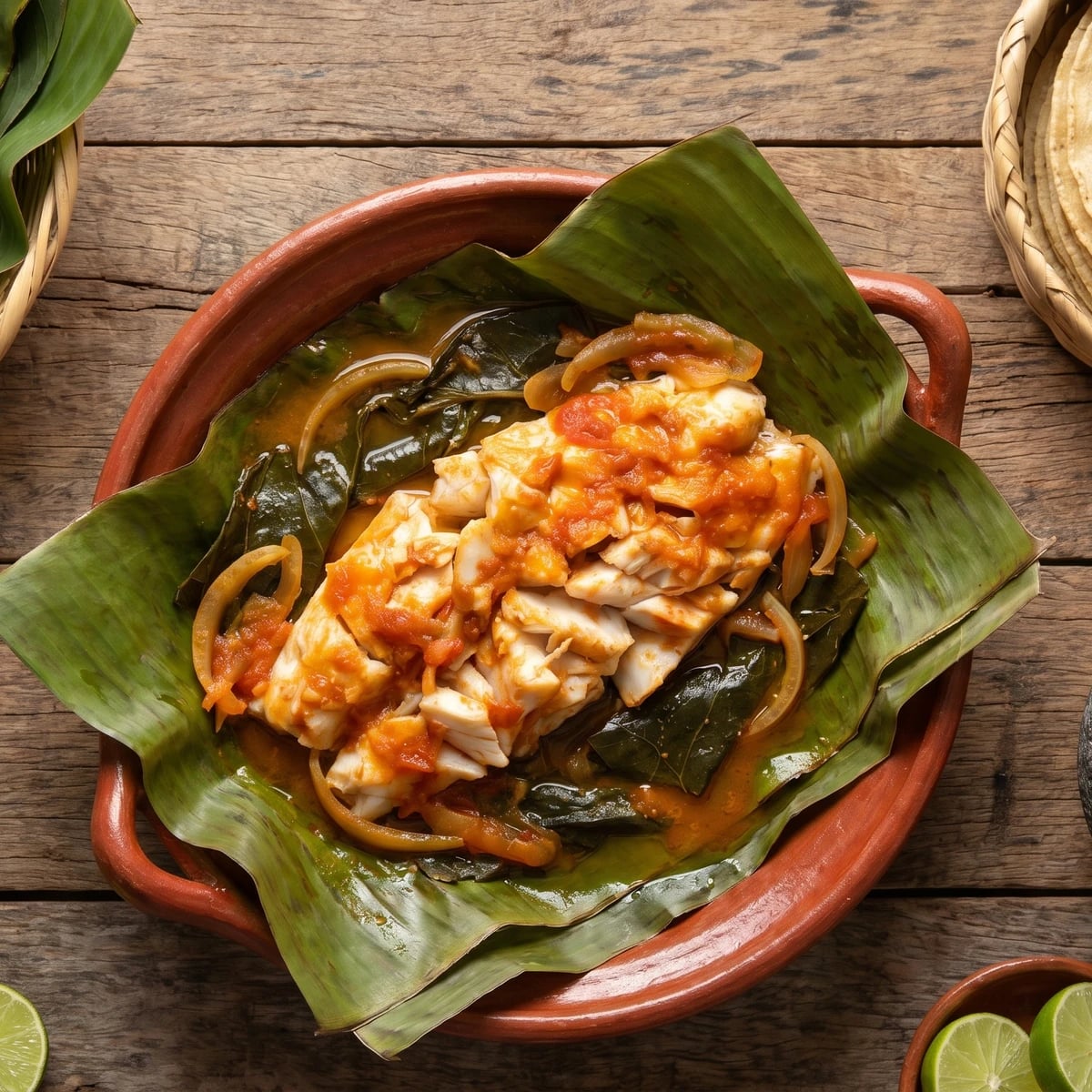
Mone de Robalo Tabasqueño
Created by Chef Lupita
Tabasco's Sierra fish parcel, robalo wrapped in hoja de momo and banana leaf with manteca, chile amashito, tomato, and black pepper, then steamed until the leaf perfumes every bite.
Tabasco, especially the Sierra around Tacotalpa, Teapa, and Tapijulapa, is where this mone lives. The robalo comes from Gulf water, river mouths, and lagoons. The hoja de momo grows fat and glossy in humid patios. The banana leaf is not decoration. It is the cooking vessel.
I learned this technique from women who could wrap a fish parcel tighter than most people can tie a shoe. First the hoja de momo touches the fish, because that leaf gives the perfume. Then the tomato, onion, chile dulce, chile amashito, black pepper, and manteca de cerdo settle over it. Last comes the banana leaf, folded like a package that knows its job. The fish cooks in its own juices, not in a dry pan pretending to be elegant.
Do not replace the hoja de momo with parsley. Do not use butter because you are nervous about lard. La manteca es el sabor. This is Tabasco's green, wet, river-fed cooking, and it should arrive at the table opened in its leaf, with the juices still pooled inside and warm corn tortillas waiting. Cada estado, su propia cocina.
Ingredients
robalo fillets
Quantity
2 1/2 pounds
skinless, pin bones removed, cut into 6 portions
hoja de momo leaves
Quantity
12 large
rinsed, thick center ribs trimmed
banana leaf rectangles
Quantity
6 large pieces, about 14 by 16 inches each
plus extra for lining the steamer
| Ingredient | Quantity |
|---|---|
| robalo filletsskinless, pin bones removed, cut into 6 portions | 2 1/2 pounds |
| hoja de momo leavesrinsed, thick center ribs trimmed | 12 large |
| banana leaf rectanglesplus extra for lining the steamer | 6 large pieces, about 14 by 16 inches each |
Where cooking meets culture.
Culinary guides, cultural storytelling, and the editorial depth that makes cooking meaningful.
Discover Culinary Explorer