Chef Lupita
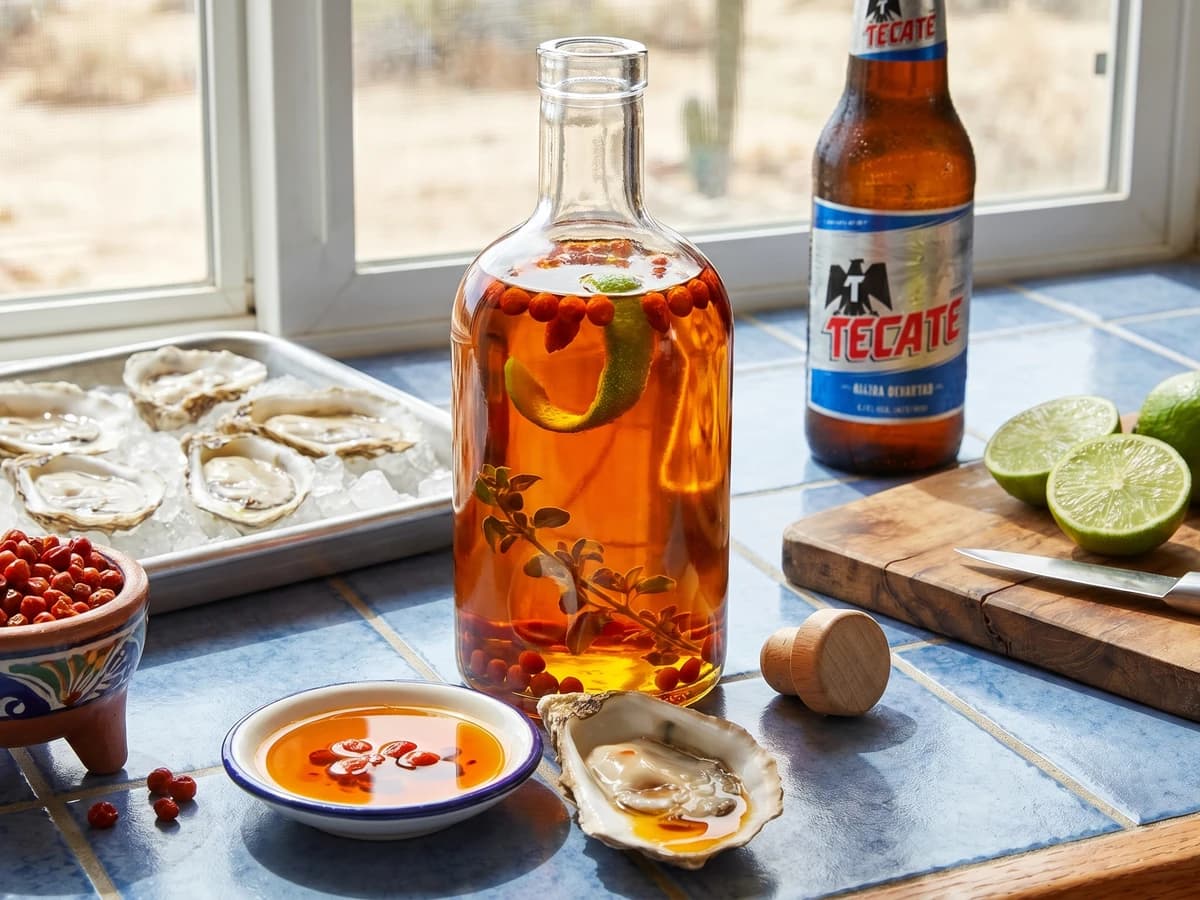
Aceite de Chiltepin Bajacaliforniano
Baja California's wild chiltepin steeped in olive oil with garlic, orejon, and lime peel, until the oil turns ruby-amber and carries the slow, sneaky burn of the desert coast.
A cooking platform built around craft, culture, and the stories behind what we eat.
Created by
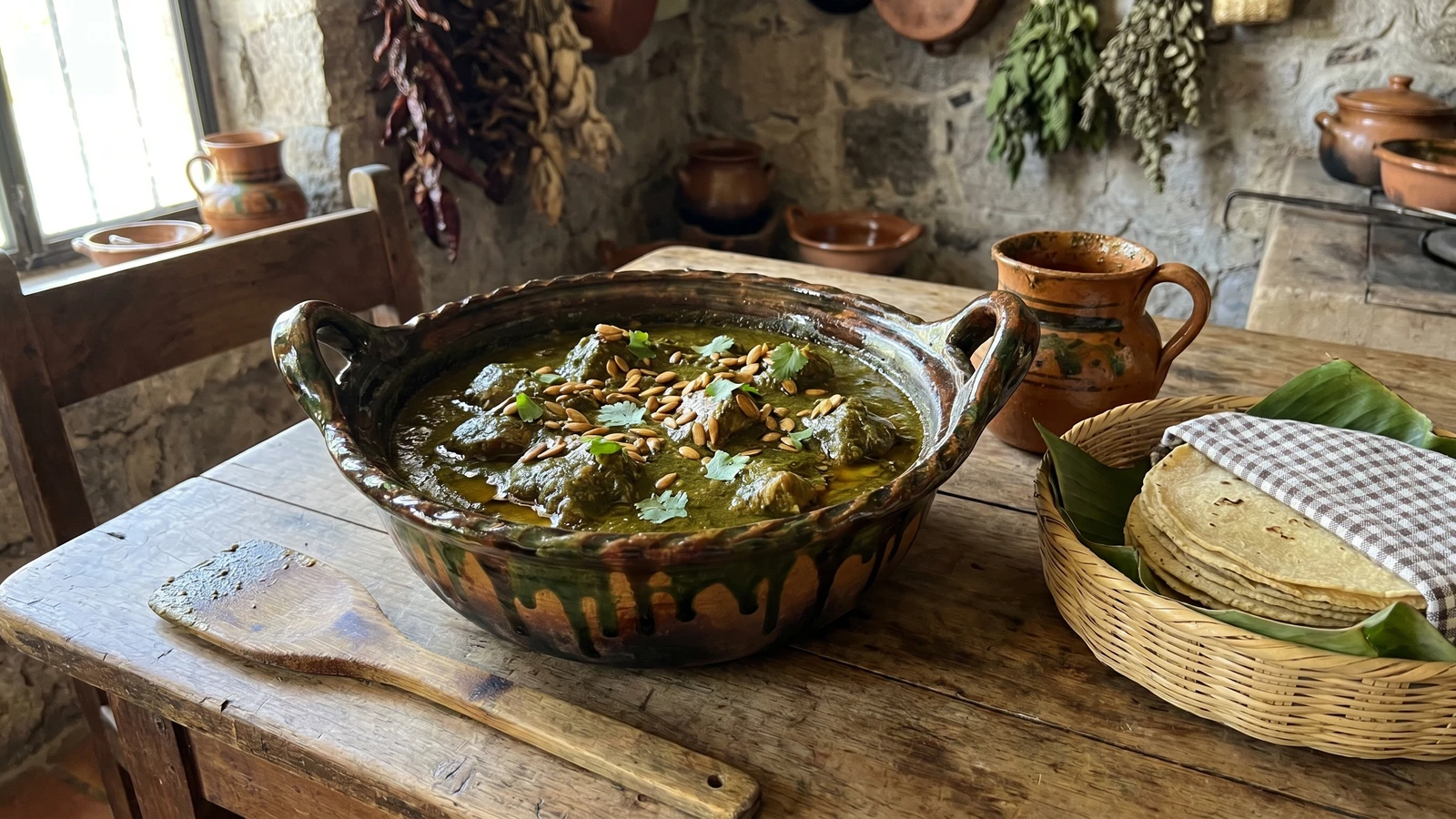
Veracruz's central highland mole verde, built with tomatillo, jalapeno, epazote, hierba santa, and pumpkin seed, then fried in lard and spooned over tender pork.
Veracruz, the central highlands around Xalapa, Coatepec, and Naolinco, is where this green mole belongs. Not Oaxaca. Not Puebla. Veracruz. The Gulf gives the state fish, olives, vinegar sauces, and trade, but the mountains give this dish its herbs, tomatillos, chiles, and the cool-weather kitchen where pork sits well under a green sauce.
The color comes from tomatillo, jalapeno, cilantro, epazote, and hierba santa. The body comes from ground pumpkin seed. That is the hand of Veracruz here: green, herbal, a little sharp, thickened with seed instead of bread alone. I learned a version outside Coatepec from a woman who stirred her mole with a wooden pala and corrected me before I even touched the blender. She said, 'The seed goes first. If the seed is wrong, the mole is wrong.' She was right.
Do not confuse this with Oaxacan mole verde, which leans on hoja santa, masa, and a different herb balance, or with the thin green sauces people pour over enchiladas and call mole because the word sounds serious. This is a home pot. You toast the pumpkin seed, roast the tomatillos and chiles, blend the herbs, then fry the sauce in manteca de cerdo until it stops tasting raw. No me vengas con atajos.
Serve it in a glazed cazuela from the Veracruz highlands, with warm corn tortillas and the pork tucked into the sauce. The mole should look generous, not precious. La cocina no es decoracion, es trabajo.
Veracruz mole verde reflects the inland cooking of the state's central highlands, where Nahua ingredients such as tomatillo, pumpkin seed, chile, and epazote met colonial pork and Spanish-introduced spices after the 16th century. Unlike Oaxaca's better-known mole verde, the Veracruz version often uses jalapeno and hierba santa with ground pumpkin seed as the main thickener, a structure tied to the herb-rich markets around Xalapa and Coatepec. Veracruz's port history brought olives, capers, vinegar, and spices into the state's cuisine, but this mole shows the mountain side of Veracruz, not the seafood table.
Quantity
2 pounds
cut into 2-inch pieces
Quantity
1 small
halved
Quantity
4
divided
Quantity
1
Quantity
2 teaspoons, plus more to taste
Quantity
1 1/2 pounds
husked and rinsed
Quantity
4
stemmed
Quantity
1
stemmed
Quantity
1 cup
Quantity
1/4 cup
Quantity
1
torn into pieces
Quantity
1 cup, packed
Quantity
6 large
Quantity
2 large
center rib removed
Quantity
1/2 cup
Quantity
1/2 teaspoon
Quantity
4
Quantity
2
Quantity
3 tablespoons
Quantity
1 1/2 cups, plus more as needed
Quantity
for serving
| Ingredient | Quantity |
|---|---|
| bone-in pork shouldercut into 2-inch pieces | 2 pounds |
| white onionhalved | 1 small |
| garlic clovesdivided | 4 |
| bay leaf | 1 |
| kosher salt | 2 teaspoons, plus more to taste |
| tomatilloshusked and rinsed | 1 1/2 pounds |
| fresh chile jalapenostemmed | 4 |
| fresh chile serranostemmed | 1 |
| raw hulled pumpkin seeds | 1 cup |
| raw sesame seeds | 1/4 cup |
| corn tortillatorn into pieces | 1 |
| fresh cilantro leaves and tender stems | 1 cup, packed |
| fresh epazote leaves | 6 large |
| fresh hierba santa leavescenter rib removed | 2 large |
| fresh flat-leaf parsley leaves | 1/2 cup |
| cumin seeds | 1/2 teaspoon |
| whole black peppercorns | 4 |
| whole cloves | 2 |
| manteca de cerdo | 3 tablespoons |
| reserved pork broth | 1 1/2 cups, plus more as needed |
| warm corn tortillas (optional) | for serving |
Put the pork shoulder in a heavy pot with the onion, 2 garlic cloves, bay leaf, salt, and enough cold water to cover by 2 inches. Bring to a gentle simmer and skim the foam during the first 15 minutes. Cook until the pork is tender but not falling apart, about 1 hour and 20 minutes. Strain and save the broth. Keep the pork warm.
Heat a dry comal over medium. Toast the pumpkin seeds, stirring constantly, until they puff, turn dull green-gold, and smell nutty, 3 to 5 minutes. Toast the sesame seeds separately until pale gold. Do not walk away. Burned pumpkin seed makes the mole bitter, and no amount of tomatillo will forgive you.
On the same comal, roast the tomatillos, jalapenos, serrano, and remaining 2 garlic cloves until the tomatillos soften and show blackened spots, about 8 to 10 minutes. The chiles should blister, not collapse into mush. Veracruz green mole needs brightness, not a dead boiled salsa.
Toast the torn tortilla pieces on the comal until dry, spotted, and crisp at the edges. This is not garnish. It gives the mole structure and keeps the sauce from tasting thin.
Grind the cumin seeds, peppercorns, and cloves in a molcajete or spice grinder until fine. Use a light hand with the clove. Veracruz cooks know restraint here. You want warmth under the green herbs, not a Christmas sweet shop.
Blend the toasted pumpkin seeds, sesame seeds, tortilla, roasted tomatillos, roasted chiles, roasted garlic, ground spices, cilantro, epazote, hierba santa, parsley, and 1 cup reserved pork broth until very smooth. Blend longer than you think. The pumpkin seed must disappear into the sauce. If the blender struggles, add broth by the tablespoon.
Melt the manteca de cerdo in a 12-inch cazuela over medium heat. Pour in the green puree carefully. It will sputter. Stir with a wooden paddle for 8 to 10 minutes, scraping the bottom, until the sauce darkens slightly, thickens, and the fat begins to shine at the edges. La manteca es el sabor. This frying step is what turns a blender sauce into mole.
Add the remaining 1/2 cup pork broth and simmer gently for 15 to 20 minutes. The mole should coat the spoon but still move like a sauce, not a paste. Taste for salt. If it tightens too much, loosen it with more pork broth. If it tastes raw, keep simmering. Green does not mean unfinished.
Nestle the cooked pork pieces into the mole and warm them through for 5 minutes. Serve family-style in the cazuela with warm corn tortillas. No flour tortillas here. Flour tortillas are a northern tradition, and this pot belongs to the Veracruz highlands. Cada estado, su propia cocina.
1 serving (about 350g)
Culinary guides, cultural storytelling, and the editorial depth that makes cooking meaningful.
Discover Culinary ExplorerChef Lupita
Baja California's wild chiltepin steeped in olive oil with garlic, orejon, and lime peel, until the oil turns ruby-amber and carries the slow, sneaky burn of the desert coast.

Chef Lupita
Puebla's Lenten convent adobo, a brick-red vinegar chile paste of ancho, guajillo, garlic, oregano, and comino made to dress fish for the meatless calendar.
Chef Lupita
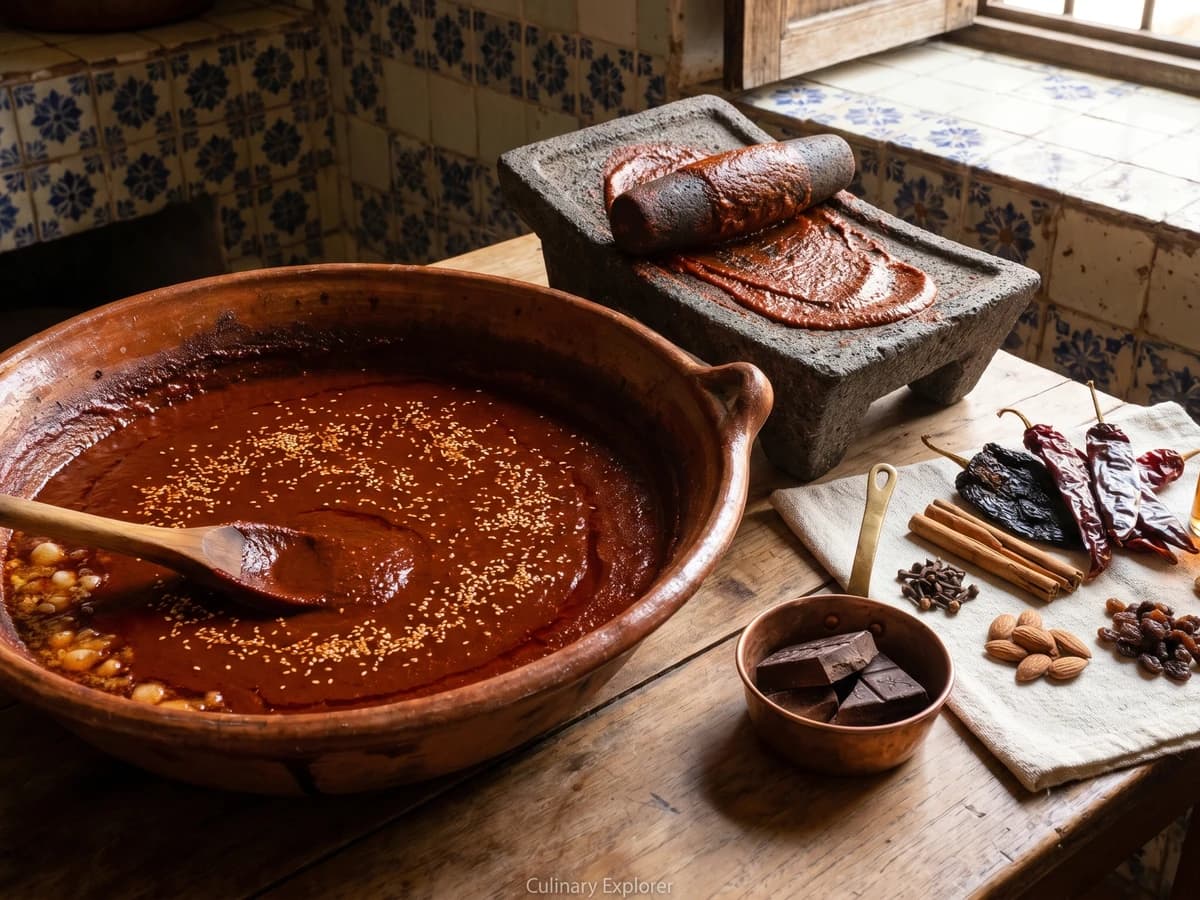
Zacatecas' wedding-table adobo, built from toasted guajillo and ancho, piloncillo, sour orange, chocolate, canela, clavo, almonds, sesame, and lard.

Chef Lupita
Puebla's convent kitchens built this adobo with ancho, guajillo, jerez, almonds, raisins, clove, and lard, a baroque marinade that stains pork loin and finishes as the sauce.