
Chef Lupita
Aceite de Chiltepin Bajacaliforniano
Baja California's wild chiltepin steeped in olive oil with garlic, orejon, and lime peel, until the oil turns ruby-amber and carries the slow, sneaky burn of the desert coast.
A cooking platform built around craft, culture, and the stories behind what we eat.
Created by
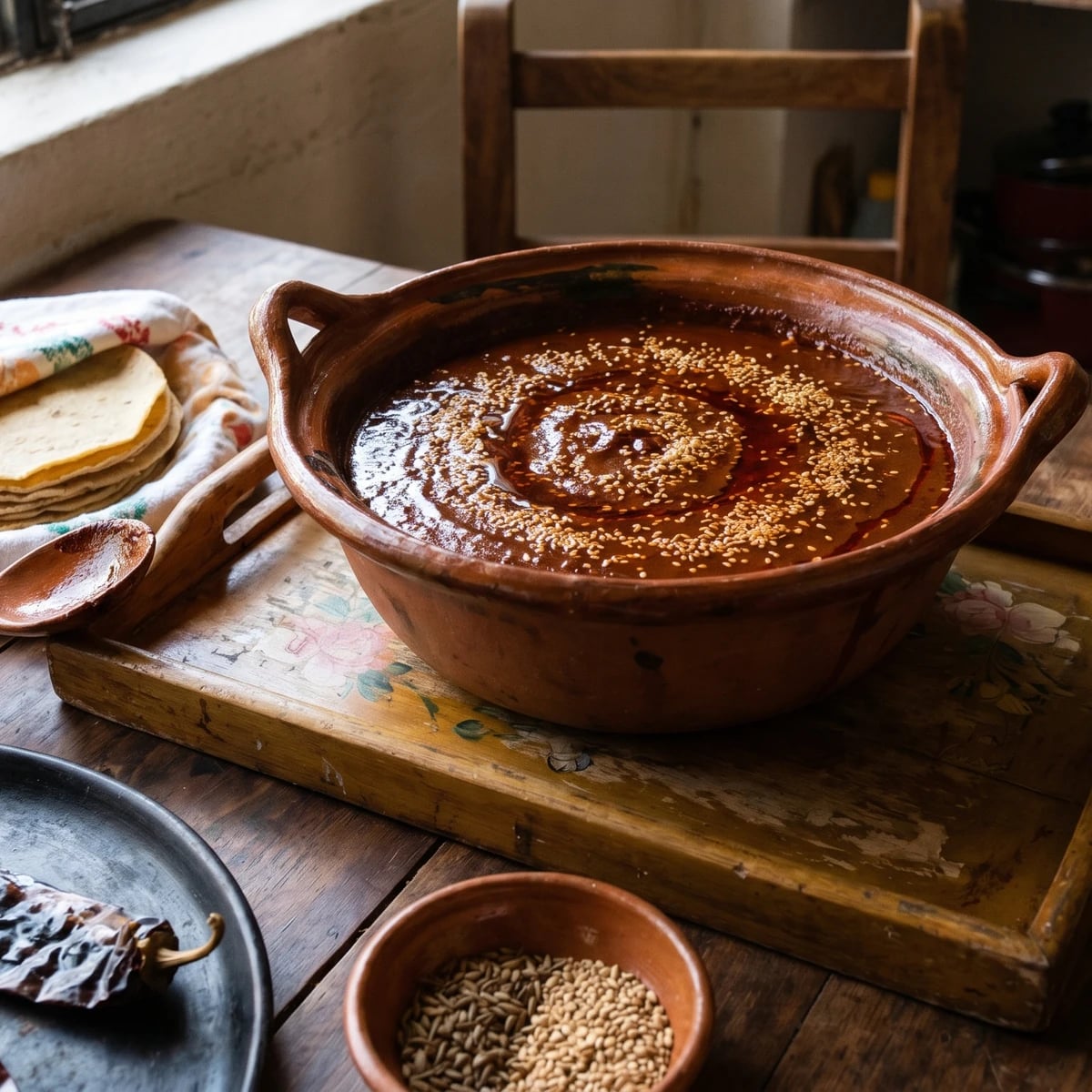
Guerrero's Sierra Madre del Sur mole rojo is a lean red sauce of chile pasilla, ancho, sesame, and anís, fried in manteca until glossy and serious.
Guerrero's Sierra Madre del Sur, especially the mountain and central market towns around Chilapa, Tixtla, and Chilpancingo, is where this mole rojo belongs. It is not the chocolate-dark story people repeat about mole because they learned one version and made a national rule. This sauce is leaner and sharper: chile pasilla for depth, chile ancho for red body, a little guajillo for brightness, sesame for substance, and anís seed for the mountain perfume that gives the sauce its backbone.
I learned this style from women who made fiesta food in clay cazuelas large enough to feed three tables. They did not thicken it with flour and they did not sweeten it with chocolate. They toasted, soaked, ground, strained, and fried the paste in manteca de cerdo until the sauce shone red-brown against the clay. No me vengas con atajos. Some steps are the recipe.
At Chilapa market, the chile vendor will correct your eyes before your hands do. Pasilla mexicano is long, dark, wrinkled, with raisin and tobacco notes; ancho is wider and sweeter. If your store calls every dried poblano pasilla, fix that before you cook. Si no conoces el mercado, no conoces la cocina.
Serve this over turkey, chicken, pork, or enchiladas, but learn the sauce first. Guerrero is not Puebla, Oaxaca, or the north. Cada estado, su propia cocina. Saber cocinar es saber vivir.
Guerrero became a state in 1849, but the foodways that shaped its mountain moles are older, tied to Nahua, Me'phaa, Mixtec, and Amuzgo communities moving maize, chiles, herbs, and later colonial spices through the Sierra Madre del Sur and the Balsas basin. Sesame entered Mexican kitchens through colonial trade routes and became one of the quiet engines of many southern moles, while anís seed and canela marked the Spanish and Mediterranean spice line that local cooks made their own. Unlike Puebla's chocolate-associated mole poblano, many central and mountain Guerrerense red moles keep a sharper profile built on chile pasilla, tomato or tomatillo, sesame, and anís, with no chocolate and no wheat flour.
Quantity
6
stemmed and seeded
Quantity
4
stemmed and seeded
Quantity
2
stemmed and seeded
Quantity
5, about 1 pound
Quantity
4
husked and rinsed
Quantity
1 small
quartered
Quantity
5
unpeeled
Quantity
1/2 cup, plus 1 tablespoon
extra tablespoon toasted for finishing
Quantity
1 teaspoon
not star anise
Quantity
1/2 teaspoon
Quantity
6
Quantity
3
Quantity
1 small piece, about 1 inch
Quantity
1 teaspoon
crumbled
Quantity
4 cups, plus more as needed
Quantity
3 tablespoons
Quantity
1 1/2 teaspoons, plus more to taste
| Ingredient | Quantity |
|---|---|
| dried chile pasilla mexicanostemmed and seeded | 6 |
| dried chile anchostemmed and seeded | 4 |
| dried chile guajillostemmed and seeded | 2 |
| Roma tomatoes | 5, about 1 pound |
| tomatilloshusked and rinsed | 4 |
| white onionquartered | 1 small |
| garlic clovesunpeeled | 5 |
| sesame seedsextra tablespoon toasted for finishing | 1/2 cup, plus 1 tablespoon |
| anís seed (semilla de anís)not star anise | 1 teaspoon |
| cumin seeds | 1/2 teaspoon |
| black peppercorns | 6 |
| whole cloves | 3 |
| Mexican canela | 1 small piece, about 1 inch |
| dried Mexican oreganocrumbled | 1 teaspoon |
| warm turkey or chicken broth | 4 cups, plus more as needed |
| manteca de cerdo | 3 tablespoons |
| fine sea salt | 1 1/2 teaspoons, plus more to taste |
Wipe the chiles with a dry cloth. Stem them, open them flat, and shake out the seeds. Do not rinse dried chiles under water. You wash away aroma before the comal has a chance to wake it up.
Heat a dry comal over medium. Toast the pasilla, ancho, and guajillo separately, 10 to 20 seconds per side, pressing them with a spatula until the skins blister and the kitchen smells deep and raisiny. The pasilla is thin and turns bitter fast. If a chile blackens, throw it out. Burned chile will ruin the whole cazuela.
Put the toasted chiles in a bowl and cover with hot water, not boiling. Set a small plate on top so they stay submerged. Let them soften for 20 minutes. Drain them. Use broth for blending, not the soaking water, unless you are desperate. That water often carries the rough edge of the skins.
On the same comal, roast the tomatoes, tomatillos, onion, and unpeeled garlic. Turn them until the tomato skins blister, the tomatillos slump with yellow-brown spots, the onion edges char, and the garlic softens inside its skin. Peel the garlic. This roasted sharpness is part of Guerrero's mountain register. Do not replace it with tomato puree from a can.
Toast the 1/2 cup sesame seeds in a dry skillet over medium heat, stirring constantly, until golden and nutty. Scrape them out. In the same skillet, toast the anís seed, cumin, peppercorns, cloves, and canela for 30 to 45 seconds, just until fragrant. Rub the Mexican oregano between your palms and keep it ready. Anís gives this mole its backbone, but too much heat makes it bitter.
In a blender, combine the drained chiles, roasted tomatoes, tomatillos, onion, peeled garlic, toasted sesame, toasted spices, oregano, and 2 cups of warm broth. Blend until completely smooth. Work in batches if your blender is small. If the blades struggle, add a little more broth. You want a fine paste, not a chunky salsa.
Pass the blended paste through a fine-mesh strainer into a bowl, pressing with a spoon until only skins and spice grit remain. This step is work. La cocina no es decoración, es trabajo. A Guerrerense mole should be lean and smooth enough to coat meat without dragging chile skins across your tongue.
Melt the manteca de cerdo in a wide clay cazuela or heavy Dutch oven over medium heat. Pour in the strained paste carefully. It will sputter. Stir with a wooden spoon for 10 to 12 minutes, until the paste darkens to red-brown, thickens, and the fat begins to show at the edges. La manteca es el sabor. Oil will cook it, but manteca gives it the Guerrero kitchen smell.
Stir in the remaining broth and the salt. Bring the sauce to a gentle simmer, then lower the heat and cook 35 to 40 minutes, stirring often so the bottom does not catch. The mole should coat the back of a spoon and fall in a slow ribbon. If it gets too thick, add broth a few tablespoons at a time. Do not add chocolate. Do not add flour. Mole is not chocolate sauce, and this version does not need a wheat crutch.
Taste for salt, then let the mole rest at least 30 minutes before serving. Scatter the reserved toasted sesame seeds over the surface if the sauce is going straight to the table. Use it over turkey, chicken, pork, tamales, or enchiladas. The sauce is the architecture. Recetas probadas y garantizadas.
1 serving (about 160g)
Culinary guides, cultural storytelling, and the editorial depth that makes cooking meaningful.
Discover Culinary Explorer
Chef Lupita
Baja California's wild chiltepin steeped in olive oil with garlic, orejon, and lime peel, until the oil turns ruby-amber and carries the slow, sneaky burn of the desert coast.

Chef Lupita
Puebla's Lenten convent adobo, a brick-red vinegar chile paste of ancho, guajillo, garlic, oregano, and comino made to dress fish for the meatless calendar.

Chef Lupita
Zacatecas' wedding-table adobo, built from toasted guajillo and ancho, piloncillo, sour orange, chocolate, canela, clavo, almonds, sesame, and lard.

Chef Lupita
Puebla's convent kitchens built this adobo with ancho, guajillo, jerez, almonds, raisins, clove, and lard, a baroque marinade that stains pork loin and finishes as the sauce.