Chef Lupita
Aceite de Chiltepin Bajacaliforniano
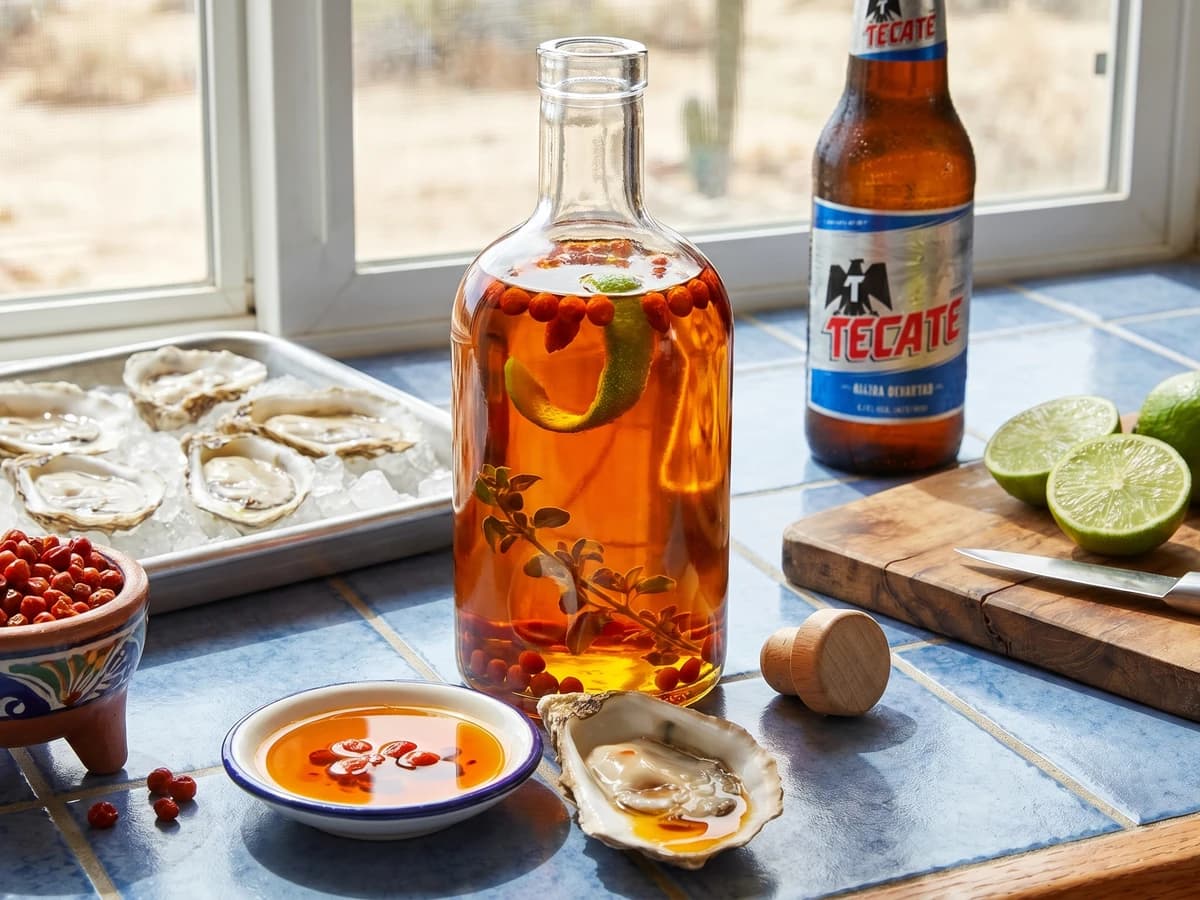
Baja California's wild chiltepin steeped in olive oil with garlic, orejon, and lime peel, until the oil turns ruby-amber and carries the slow, sneaky burn of the desert coast.
A cooking platform built around craft, culture, and the stories behind what we eat.

Created by
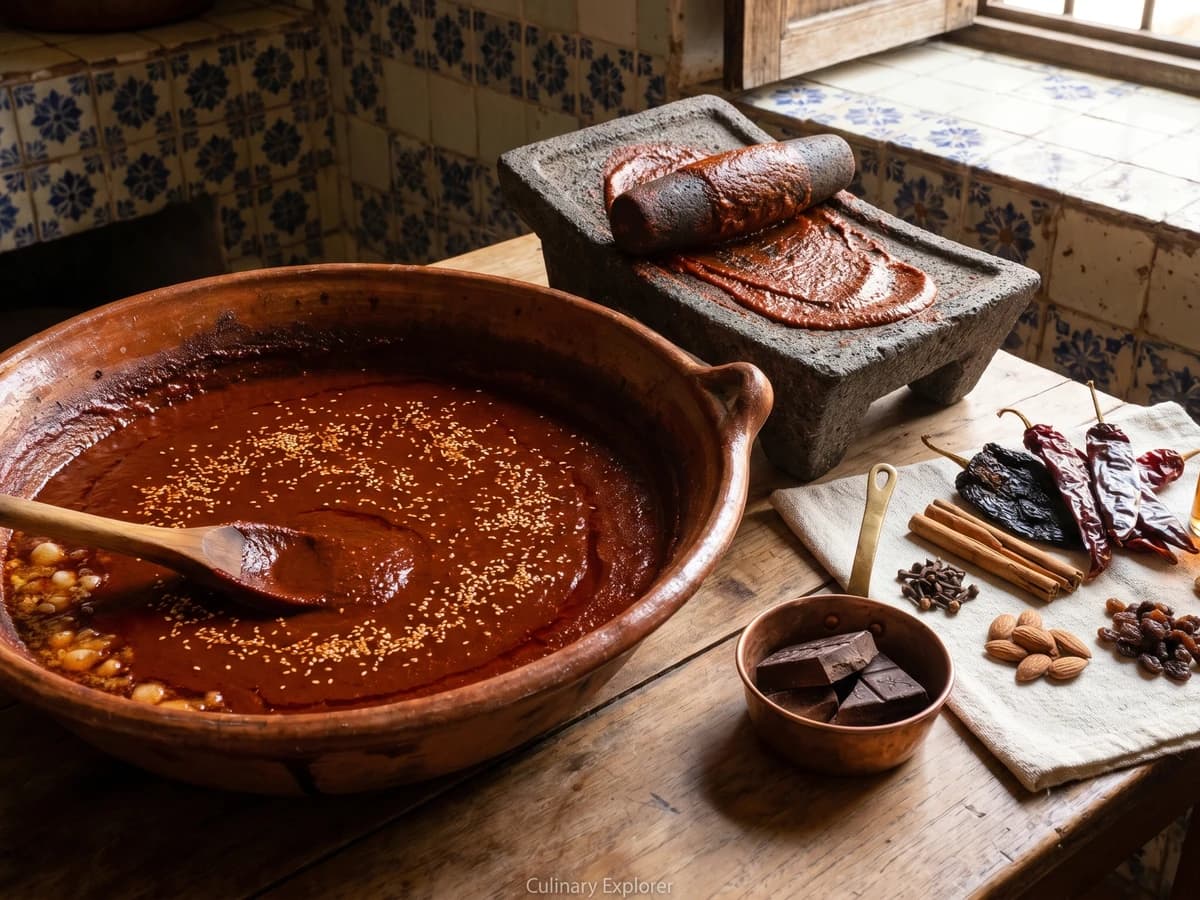
Oaxaca's darkest conventual mole, built from chilhuacle negro, toasted seeds, almonds, chocolate, jerez, and lard, then simmered until the sauce turns black, glossy, and serious.
Oaxaca, Valles Centrales. This mole belongs to the conventual cooking of Santa Catalina de Siena, the Dominican house in Oaxaca City where Indigenous grinding, Spanish spices, and institutional patience met in one black sauce. This is not a plate. This is the sauce that dresses turkey, chicken, or ceremonial meat somewhere else. Here we are building the architecture.
The chile that defines it is chilhuacle negro, grown in Oaxaca and difficult outside the state because the market protects what matters. You also need chilhuacle rojo, ancho, mulato, pasilla, and guajillo. Each one is toasted on the comal, never burned except for the tortilla and a careful spoonful of seeds. That controlled bitterness is the backbone. Burn the chiles and you ruin the mole. Burn the tortilla and you deepen it. Learn the difference.
In the old convent kitchens, this paste was ground on the metate until the cook's arms knew the recipe better than her eyes did. El metate es la regla. A blender can help a modern kitchen, yes, but it must make a paste as smooth as the metate would. No me vengas con atajos. The almonds, canela, clavo, pasas, ajonjoli, chocolate, and jerez are the conventual register. The manteca carries it all. La manteca es el sabor.
This takes two days if you do it correctly. Day one, toast, fry, soak, and grind. Day two, fry the paste and simmer it until the sauce darkens, shines, and stops tasting like separate ingredients. My mother wrote beside her Oaxacan mole notes: 'mover sin flojera' (stir without laziness). She was right. La cocina no es decoracion, es trabajo.
The Convento de Santa Catalina de Siena in Oaxaca City was founded by Dominican nuns in the late 16th century, and its kitchen belonged to the same criollo-conventual world that produced the famous convent kitchens of Puebla, including Santa Rosa. Oaxaca's mole negro grew from Indigenous chile, cacao, tortilla, and metate traditions joined to Old World ingredients brought through colonial trade: almonds, cinnamon, cloves, raisins, sesame, and fortified wine such as jerez. The word mole comes from the Nahuatl 'molli,' meaning sauce, and Oaxaca's black mole became one of the state's defining ceremonial sauces by the 19th and 20th centuries, especially in the Valles Centrales.
Quantity
6
stemmed and seeded, seeds reserved
Quantity
4
stemmed and seeded
Quantity
4
stemmed and seeded
Quantity
4
stemmed and seeded
Quantity
3
stemmed and seeded
Quantity
3
stemmed and seeded
Quantity
1
burned on the comal until fully blackened
Quantity
1 bolillo or 2 slices
torn into pieces
Quantity
1/2 cup, plus more as needed
Quantity
1/2 cup
Quantity
1/3 cup
Quantity
1/3 cup
Quantity
1/4 cup, plus 2 tablespoons for finishing
Quantity
1/4 cup
Quantity
1/4 cup
Quantity
1
peeled and sliced
Quantity
1 medium
thickly sliced
Quantity
8
peeled
Quantity
3
Quantity
4
husked and rinsed
Quantity
2 ounces
chopped, preferably Oaxacan
Quantity
1 small
Quantity
5
Quantity
6
Quantity
4
Quantity
1/2 teaspoon
Quantity
1/2 teaspoon
Quantity
1/2 teaspoon
Quantity
1
Quantity
1/4 cup
Quantity
6 cups
warm
Quantity
2 teaspoons, plus more to taste
Quantity
1 tablespoon
grated, only if the chiles taste harsh
| Ingredient | Quantity |
|---|---|
| dried chile chilhuacle negrostemmed and seeded, seeds reserved | 6 |
| dried chile chilhuacle rojostemmed and seeded | 4 |
| dried chile anchostemmed and seeded | 4 |
| dried chile mulatostemmed and seeded | 4 |
| dried chile pasilla mexicanostemmed and seeded | 3 |
| dried chile guajillostemmed and seeded | 3 |
| corn tortillaburned on the comal until fully blackened | 1 |
| bolillo or day-old white breadtorn into pieces | 1 bolillo or 2 slices |
| pork lard | 1/2 cup, plus more as needed |
| raw almonds | 1/2 cup |
| raw peanuts | 1/3 cup |
| raisins | 1/3 cup |
| sesame seeds | 1/4 cup, plus 2 tablespoons for finishing |
| pumpkin seeds | 1/4 cup |
| pecans | 1/4 cup |
| ripe plantainpeeled and sliced | 1 |
| white onionthickly sliced | 1 medium |
| garlic clovespeeled | 8 |
| Roma tomatoes | 3 |
| tomatilloshusked and rinsed | 4 |
| Mexican table chocolatechopped, preferably Oaxacan | 2 ounces |
| Mexican cinnamon stick | 1 small |
| whole cloves | 5 |
| whole black peppercorns | 6 |
| allspice berries | 4 |
| anise seed | 1/2 teaspoon |
| dried thyme | 1/2 teaspoon |
| dried Mexican oregano | 1/2 teaspoon |
| bay leaf | 1 |
| dry jerez | 1/4 cup |
| unsalted turkey or chicken stockwarm | 6 cups |
| kosher salt | 2 teaspoons, plus more to taste |
| piloncillo (optional)grated, only if the chiles taste harsh | 1 tablespoon |
Wipe the chiles clean with a dry cloth. Open them, remove the stems and seeds, and keep one tablespoon of chilhuacle negro seeds aside. The chiles should be flexible and smell fruity, smoky, and deep. If they crumble like old paper, they are dead. Preguntale a las señoras del mercado before you spend money on bad chiles.
Heat a dry comal over medium. Toast each chile variety separately, pressing briefly with a spatula, 10 to 20 seconds per side depending on thickness. Chilhuacle and ancho can take a little more time. Pasilla and guajillo burn fast. The skin should darken, puff in spots, and release a deep chile smell. Do not let the flesh turn black.
Place the toasted chiles in a large bowl and cover with hot water, not boiling water. Weigh them down with a plate and soak for 30 minutes. Hot water softens the flesh without cooking the skins into bitterness. Drain the chiles and discard the soaking water unless your chiles are unusually mild and sweet.
Set the tortilla directly on the comal and let it burn until black all the way through. This is intentional. Toast the reserved tablespoon of chilhuacle negro seeds beside it until they are very dark but not ashy. The burned tortilla and dark seeds give the mole its convent shadow, that bitter edge that keeps the chocolate and raisins from making it sweet.
Melt 2 tablespoons of lard in a heavy skillet. Fry the bolillo pieces until golden on both sides, then remove them to a large bowl. They give body to the sauce. This is a sauce with weight, not a thin salsa pretending to be mole.
In the same lard, fry the almonds, peanuts, pecans, pumpkin seeds, 1/4 cup sesame seeds, and raisins in batches. Stir constantly. The sesame should turn gold, the almonds should smell toasted, and the raisins should puff. Remove each batch before it crosses into bitterness. Add more lard by the tablespoon as needed.
Fry the plantain slices in the same pan until deep golden on both sides. They should smell caramelized and hold their shape. Add them to the bowl with the bread, nuts, and fruit. Plantain gives roundness and body, not dessert sweetness.
On the comal, roast the onion, garlic, tomatoes, and tomatillos until blistered and softened. The tomatoes should slump, the tomatillos should turn olive green, and the onion should have brown edges. Scrape any good browned bits into the bowl. Those marks matter.
Toast the canela, cloves, peppercorns, allspice, and anise seed on the comal for 30 to 45 seconds, just until fragrant. Add the thyme, Mexican oregano, and bay leaf for the last 10 seconds. Spices this small go from alive to bitter quickly. Watch them.
If using a metate, grind the soaked chiles first, then the fried nuts, bread, plantain, vegetables, spices, burned tortilla, and toasted seeds, working everything into one dark paste. If using a blender, blend in small batches with just enough warm stock to move the blades. Do not make soup. Make paste. Strain each batch through a medium sieve if your blender leaves skins or seed grit behind.
Cover the paste and refrigerate it overnight. This is not laziness. This is how the fried ingredients hydrate evenly and the chile settles into itself. The convent kitchens had time because they cooked for institutions, feast days, and saints, not for a rushed Tuesday dinner.
The next day, heat 1/4 cup lard in a wide barro rojo cazuela or heavy Dutch oven over medium. Add the mole paste carefully. It will sputter, so use a long wooden spoon. Fry for 25 to 35 minutes, stirring constantly, until the paste darkens, thickens, and the fat begins to shine at the edges. La manteca es el sabor. Without this frying, the mole tastes raw.
Add the warm stock one cup at a time, stirring until each addition is absorbed before adding the next. Stir in the jerez, salt, and chocolate. Lower the heat and simmer uncovered for 2 to 3 hours, stirring often so the bottom does not catch. The mole should move like heavy cream, coat the spoon, and leave a dark glossy trail when you stir.
Taste only after the mole has simmered at least two hours. If it tastes flat, it needs salt. If it tastes sharp and harsh, add the piloncillo. If it tastes sweet, do nothing except simmer longer. A proper mole negro is bitter, fruity, smoky, spiced, and dark all at once. It should not taste like chocolate sauce.
Toast the remaining 2 tablespoons sesame seeds until pale gold. Serve the mole as a sauce in a warm barro negro or barro rojo cazuela, glossy and thick, with the sesame scattered over the surface. The turkey or chicken it dresses belongs to another recipe. This is the mother sauce. Asi se hace y punto.
1 serving (about 125g)
Culinary guides, cultural storytelling, and the editorial depth that makes cooking meaningful.
Discover Culinary ExplorerChef Lupita
Baja California's wild chiltepin steeped in olive oil with garlic, orejon, and lime peel, until the oil turns ruby-amber and carries the slow, sneaky burn of the desert coast.

Chef Lupita
Puebla's Lenten convent adobo, a brick-red vinegar chile paste of ancho, guajillo, garlic, oregano, and comino made to dress fish for the meatless calendar.
Chef Lupita
Zacatecas' wedding-table adobo, built from toasted guajillo and ancho, piloncillo, sour orange, chocolate, canela, clavo, almonds, sesame, and lard.

Chef Lupita
Puebla's convent kitchens built this adobo with ancho, guajillo, jerez, almonds, raisins, clove, and lard, a baroque marinade that stains pork loin and finishes as the sauce.