Culinary Explorer
A cooking platform built around craft, culture, and the stories behind what we eat.
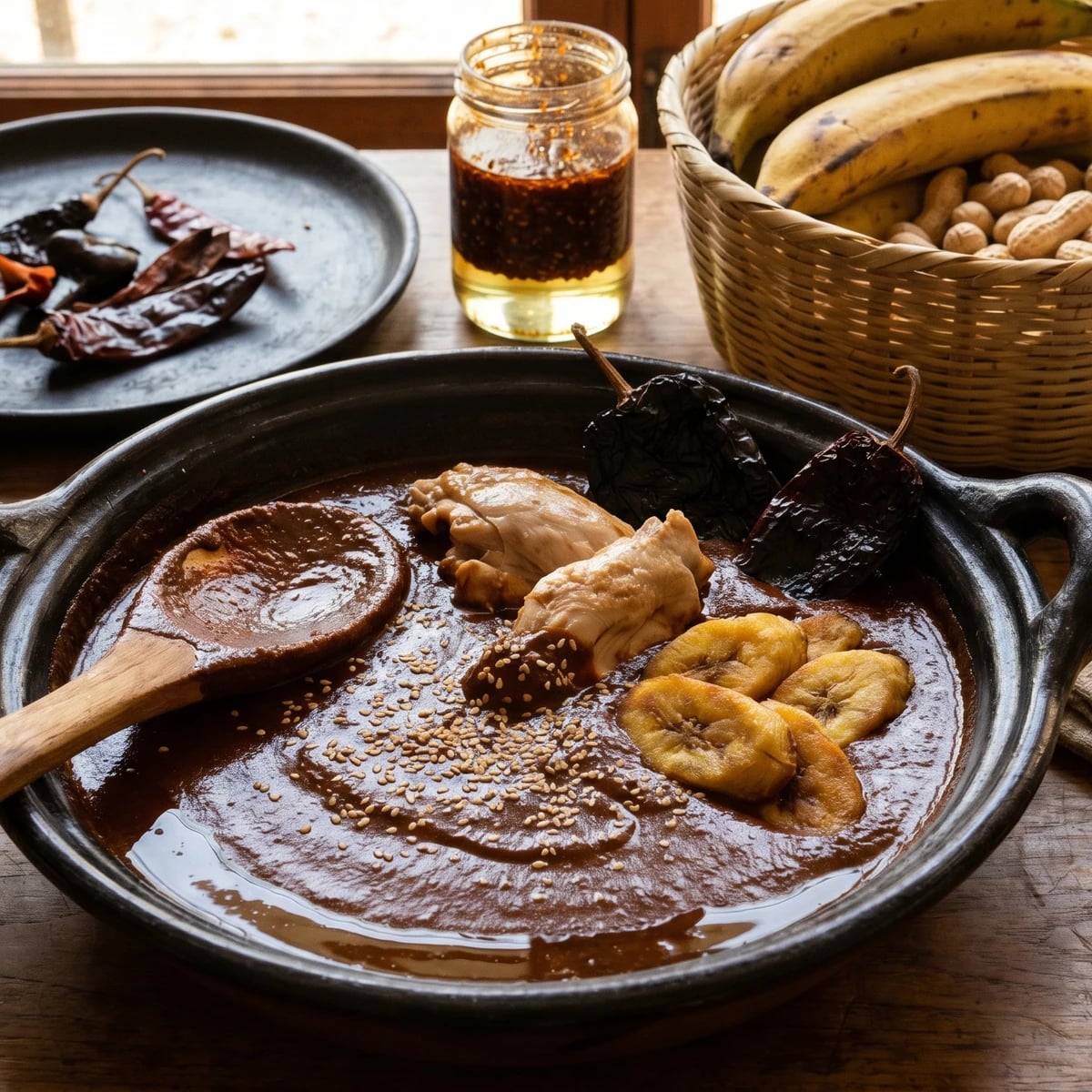
Mole de Plátano Jarocho
Created by Chef Lupita
Veracruz's sweet-dark plantain mole from the Sotavento, built with chile ancho, pasilla mexicano, chile costeño, peanuts, sesame, and ripe plátano macho fried in manteca.
Veracruz, especially the Sotavento around Tlacotalpan, Alvarado, and the port kitchens that look toward the Gulf, knows what fruit can do in a sauce. Mole de plátano jarocho lives there, in the lowland heat where plantains, peanuts, sesame, chile costeño, and Afro-jarocho memory sit in the same cazuela.
The plátano macho is not garnish and it is not sweetness thrown in for decoration. It thickens the mole. It gives the sauce its body, the way seeds thicken a pipián and bread thickens some Puebla moles. That is the Afro-jarocho architecture here: fruit as structure, chile as spine, sesame and peanut as the deep floor underneath. Mole is not chocolate sauce. Say that twice if you need to.
I learned a version of this from a woman near the mercado in Veracruz who fried the plantain in manteca before she even touched the blender. She said, 'Si no lo doras, no sabe.' If you don't brown it, it has no flavor. She was right. The ancho gives dried-fruit depth, the pasilla mexicano gives shadow, and the chile costeño gives the coastal edge. Cada estado, su propia cocina.
Serve this in a clay cazuela, dark and glossy, with turkey, chicken, pork, or more fried plantain. Put warm corn tortillas beside it. Flour tortillas belong to the north. Veracruz has its own table, and this sauce knows where it comes from.
Ingredients
ripe plátanos machos
Quantity
3
black-spotted but still firm
dried chile ancho
Quantity
5
stemmed and seeded
dried chile pasilla mexicano
Quantity
3
stemmed and seeded
| Ingredient | Quantity |
|---|---|
| ripe plátanos machosblack-spotted but still firm | 3 |
| dried chile anchostemmed and seeded | 5 |
| dried chile pasilla mexicanostemmed and seeded | 3 |
Where cooking meets culture.
Culinary guides, cultural storytelling, and the editorial depth that makes cooking meaningful.
Discover Culinary Explorer