Culinary Explorer
A cooking platform built around craft, culture, and the stories behind what we eat.
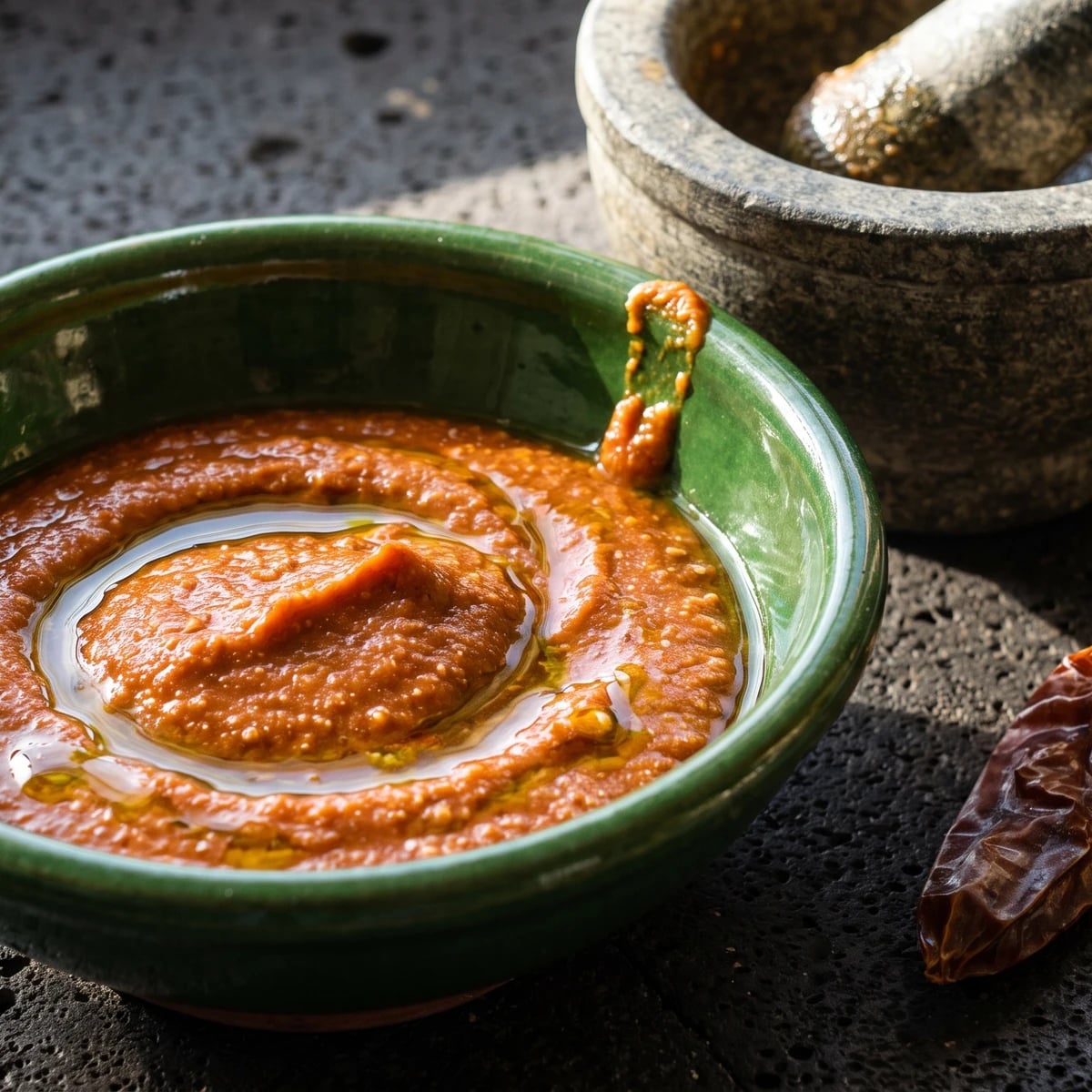
Mojo Palmero de Almendras
Created by Chef Isabel
La Palma's almond mojo is a thick red sauce of dried pimienta palmera, garlic, cumin, vinegar, and toasted nuts, pounded until creamy enough to cling to papas arrugadas without losing its bite.
Mojo palmero de almendras belongs to La Palma in the Canary Islands. Dried pimienta palmera gives it its deep brick-red warmth, while almonds make it thicker, rounder, and creamier than the lean red mojos made elsewhere in the archipelago. It should cling to a papa arrugada, a salt-wrinkled potato, without sitting on it like cement.
The method that decides it is simple: pound the pepper, garlic, and cumin first, then grind in the toasted almonds before a drop of oil goes near them. Add the oil slowly only after the nuts have become a fine cream. Pour it in too soon and the almonds slide around instead of breaking down, leaving you with oily rubble. A mortar gives the best texture, though a small food processor works if you pulse patiently and stop before the sauce becomes completely smooth.
If pimienta palmera doesn't reach your market, use dried ñoras and one small dried guindilla. Ñora is sweeter, milder, and a little less earthy, while the guindilla returns the bite. It won't carry quite the same pepper fragrance, but it makes a proper working substitute from the larder of another kitchen in Spain. No hace falta haber pisado España. Weigh the almonds, mind the order, and this one comes out.
Ingredients
dried pimienta palmera, or dried ñora peppers plus 1 small dried guindilla
Quantity
24g, about 3 pimientas palmeras or 4 ñoras
stems and most seeds removed
just-boiled water
Quantity
500ml
for soaking the peppers
raw blanched almonds
Quantity
75g
| Ingredient | Quantity |
|---|---|
| dried pimienta palmera, or dried ñora peppers plus 1 small dried guindillastems and most seeds removed | 24g, about 3 pimientas palmeras or 4 ñoras |
| just-boiled waterfor soaking the peppers | 500ml |
| raw blanched almonds | 75g |
Where cooking meets culture.
Culinary guides, cultural storytelling, and the editorial depth that makes cooking meaningful.
Discover Culinary Explorer