
Chef Lupita
Agua de Alfalfa
Ciudad de México's highland market agua fresca, fresh alfalfa blended with pineapple and lime until bright green, strained clean, and poured cold from the vitrolero.
A cooking platform built around craft, culture, and the stories behind what we eat.

Created by
The Peninsula's answer to the Cuban mojito, built on lima agria, the floral sour lime of Yucatán, with yerbabuena, white rum, and crushed ice. More perfume than punch, and meant to be drunk the moment it is built.
This is from Yucatán. Specifically from the cantinas of Mérida and the sorbeterías around the Plaza Grande that have been pouring cold drinks against the Peninsula heat since the henequen years. The base is rum, mint, sugar, and citrus, which is the Cuban architecture, but the citrus is lima agria and that changes everything.
Lima agria is not Persian lime. It is not the small Mexican lime you squeeze over tacos al pastor. It is the floral sour lime of the Yucatán Peninsula, smaller and paler, with a perfume that sits closer to orange blossom and bergamot than to the sharp green snap of a regular lime. It is the same citrus that builds sopa de lima and cochinita pibil. If you have eaten cochinita pibil in Mérida and wondered why the orange-citrus note hits so differently than the version you ate in Texas, this is the answer. The lima agria carries the Peninsula on its rind.
The Cuban mojito was built for sugarcane country, where the rum is white, the mint is hierbabuena, and the lime is sharp. The Yucatecan version takes the same bones and dresses them in the perfume of the Peninsula. Less sweet. More aromatic. The yerbabuena, the lower, rounder-leafed mint that grows on every Mérida kitchen window, contributes a softer green note than spearmint. Together, the lima agria and the yerbabuena make a drink that is more floral than punchy. Cada estado, su propia cocina, and Yucatán's drinks belong to it just as much as its food does.
My mother was from Jalisco and did not make this. I learned it from a bartender at a cantina on Calle 60 in Mérida who poured me one and told me, without being asked, that the secret was bruising the yerbabuena, not shredding it, and using less sugar than the Cuban recipe calls for because the lima agria does not need rescuing. He was right. Saber cocinar es saber vivir, and that includes knowing how to build a proper drink for the climate you are drinking it in.
Lima agria (Citrus aurantiifolia variant local to the Yucatán Peninsula, sometimes called lima de Yucatán or lima dulce in error) arrived with Spanish colonization in the 16th century and adapted to the Peninsula's limestone soils, developing the distinctive floral aromatics that distinguish it from the broader Citrus aurantiifolia family. By the late 19th century, during Yucatán's henequen boom, Mérida's cantina culture had absorbed Cuban influences, including the Bucanero and Draque cocktails that would eventually evolve into the modern mojito, and Yucatecan bartenders adapted them to local citrus rather than importing Caribbean limes. The sorbetería Colón, opened in Mérida in 1907 and still operating on the Plaza Grande, is among the older establishments that codified the Peninsula's tradition of cold mint-and-citrus drinks built for tropical heat.
Quantity
1
halved, plus a wheel for garnish
Quantity
10
plus a sprig for garnish
Quantity
2 teaspoons, or to taste
Quantity
2 ounces
Quantity
1 tablespoon
from the second half of the lima
Quantity
to fill the glass
Quantity
2 to 3 ounces
Quantity
1
for the rim
| Ingredient | Quantity |
|---|---|
| lima agria (Yucatecan sour lime)halved, plus a wheel for garnish | 1 |
| fresh yerbabuena leavesplus a sprig for garnish | 10 |
| white cane sugar | 2 teaspoons, or to taste |
| white rum | 2 ounces |
| fresh lima agria juicefrom the second half of the lima | 1 tablespoon |
| crushed ice | to fill the glass |
| chilled mineral water (agua mineral) | 2 to 3 ounces |
| thin slice of fresh chile habanero (optional)for the rim | 1 |
Drop the yerbabuena leaves into a tall glass with the sugar. Press the leaves against the side of the glass with the back of a wooden spoon or a muddler. Press, do not pulverize. You want the leaves bruised, the oils released, the kitchen smelling like a Mérida patio at dusk. Shredded mint turns the drink bitter and cloudy. Yerbabuena is not the same plant as hierbabuena spearmint from the central states. It is the lower, rounder-leafed mint that grows in pots on every Yucatecan kitchen window.
Squeeze one half of the lima agria directly into the glass over the muddled yerbabuena and sugar. Drop the spent shell in. The peel matters. Lima agria perfume lives in the rind, not the juice, and a few minutes of contact with the rum pulls that floral oil into the drink. This is what separates a Peninsula mojito from a Caribbean one. The lima agria is not Persian lime. It is not Mexican lime. It is its own citrus, smaller, paler, with a perfume closer to orange blossom than to lime.
Pour the rum and the tablespoon of fresh lima agria juice over the muddled mixture. Stir with a long spoon until the sugar dissolves completely. Taste the base before you add ice. It should be sour first, sweet second, with the yerbabuena clearly present on the back end. Adjust the sugar by quarter teaspoons. The lima agria is more aromatic than acidic, so the drink wants less sugar than a Cuban mojito. Más azúcar y se vuelve un refresco.
Pack the glass to the rim with crushed ice. Not cubes. Crushed. The Mérida sorbeterías and cantinas use shaved or crushed ice because it chills the drink fast in tropical heat and dilutes it just enough to soften the rum without drowning the lima agria. Top with chilled mineral water until it reaches the rim. Stir once from the bottom with a long spoon to lift the yerbabuena and sugar through the ice.
Slide a sprig of yerbabuena and a wheel of lima agria into the top of the glass. If your guest knows what they are asking for, perch a paper-thin slice of habanero on the rim, not in the drink, just there for the perfume. Serve the moment it is built. A mojito that sits loses its top notes within five minutes. Así se hace y punto.
1 serving (about 240g)
Culinary guides, cultural storytelling, and the editorial depth that makes cooking meaningful.
Discover Culinary ExplorerChef Lupita
Ciudad de México's highland market agua fresca, fresh alfalfa blended with pineapple and lime until bright green, strained clean, and poured cold from the vitrolero.
Chef Lupita
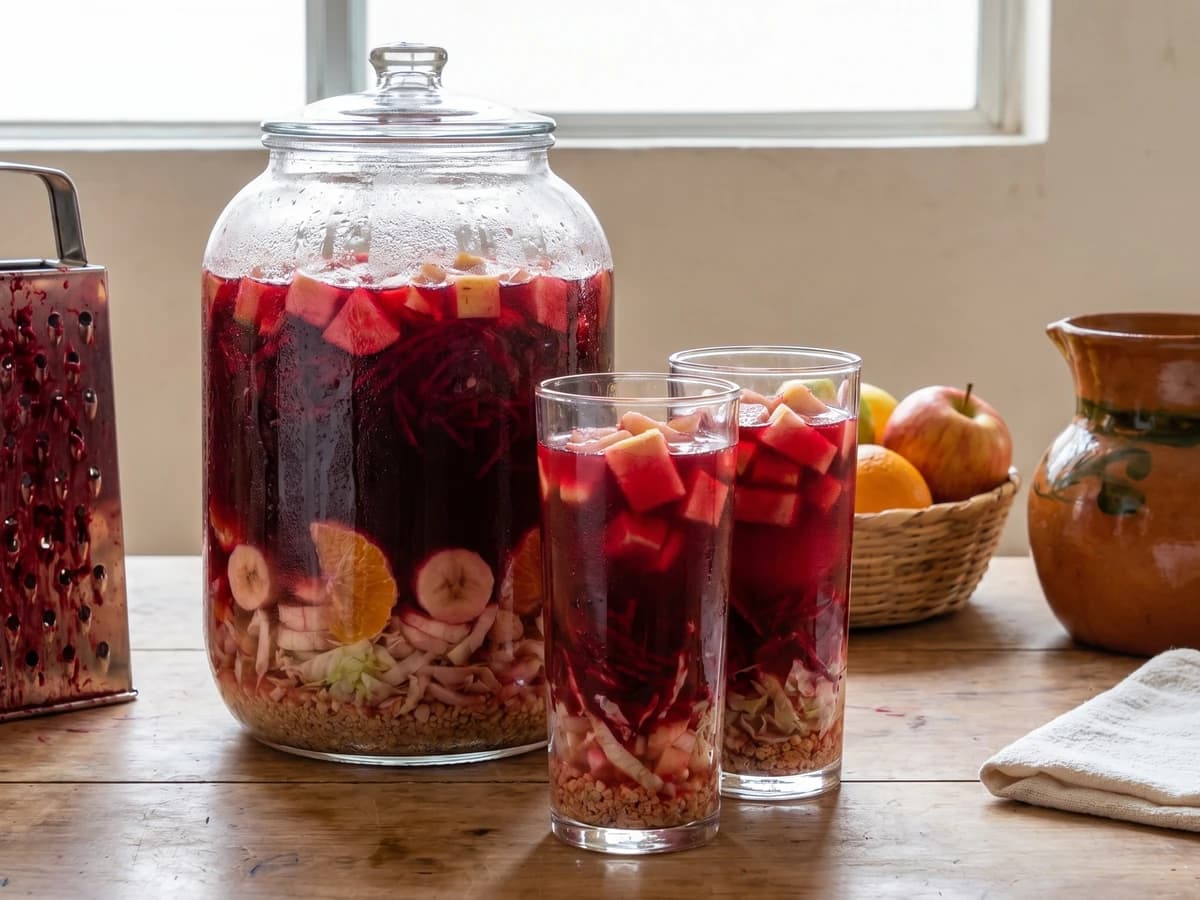
Aguascalientes' Lenten agua fresca, jewel-red from cooked beet and full of apple, banana, orange, lettuce, and ground peanuts, served cold when Holy Week meets the Feria de San Marcos.

Chef Lupita
Sonora and Sinaloa's creamy malted barley water, built on toasted cebada perla, Mexican canela, vanilla from Papantla, and evaporated milk. Pink-beige, rich, and served cold over heavy ice in a heavy glass tumbler. Liquid cookie comfort the northwest way.

Chef Lupita
Yucatán's everyday tonic of boiled chaya leaves blended with lima agria, sugar, and ice. The bright green jarra that sits on every Peninsula table from Mérida to Valladolid.