Culinary Explorer
A cooking platform built around craft, culture, and the stories behind what we eat.
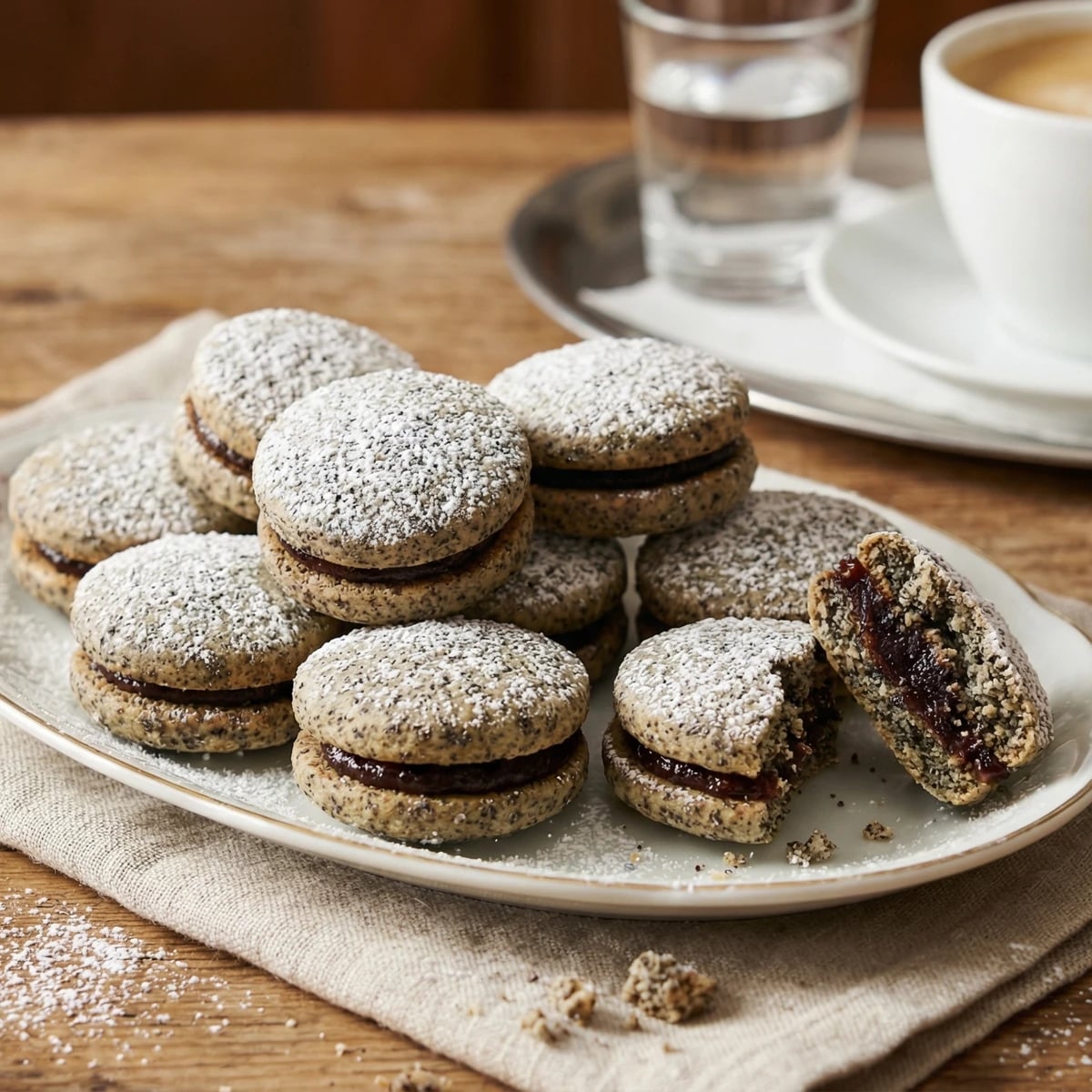
Mohnkekse mit Powidl
Created by Chef Elsa
Crumbly poppy seed shortcrust from the Waldviertel, sandwiched with dark, spiced Powidl and dusted in powdered sugar. Two of Austria's oldest regional ingredients, together in one bite.
In my grandmother Eva's kitchen in Kent, the Christmas baking started in November. Gretel would arrive with a bag of ground poppy seeds, already measured out, because she didn't trust the ones from the local shops. Too old, she'd say. Poppy seeds go stale faster than people think. She'd open the bag and the kitchen would fill with that particular smell, nutty and faintly sweet, like nothing else in the baking cupboard.
Mohnkekse were always part of the Weihnachtsbäckerei, the Christmas cookie collection that every Austrian household puts together in the weeks before Advent. These aren't decorated sugar cookies. They're short, crumbly, almost sandy little rounds made dark with ground poppy seeds, baked until just set, then sandwiched with Powidl, a thick plum butter so concentrated it's nearly black. The combination is quiet and grown-up. Poppy and plum. One from the Waldviertel, one from Bohemia. Both carrying centuries of Austrian kitchen history in a cookie you can eat in two bites.
The dough is a simple Murbteig, a shortcrust that relies on cold butter and a light hand. You don't knead it. You bring it together, let it rest in the cold, and roll it thin. The ground poppy seeds make it fragile, which is the point. These cookies should crumble when you bite through them, the butteriness giving way to the dense, spiced sweetness of the Powidl inside. Gretel always said the filling should be visible at the edges, a dark ring peeking out between two pale, sugar-dusted rounds. That's how you know someone filled them generously.
Ingredients
plain flour
Quantity
250g
ground poppy seeds (Mohn)
Quantity
100g
unsalted butter
Quantity
150g
cold and cubed
| Ingredient | Quantity |
|---|---|
| plain flour | 250g |
| ground poppy seeds (Mohn) | 100g |
| unsalted buttercold and cubed | 150g |
Where cooking meets culture.
Culinary guides, cultural storytelling, and the editorial depth that makes cooking meaningful.
Discover Culinary Explorer