
Chef Makoa
Eke Takare (Cook Islands Curried Octopus)
Rarotonga's reef catch brought home to the pot: tender eke simmered with onion, garlic, turmeric, curry powder, and coconut cream until the sauce turns gold and rich.
A cooking platform built around craft, culture, and the stories behind what we eat.
Created by
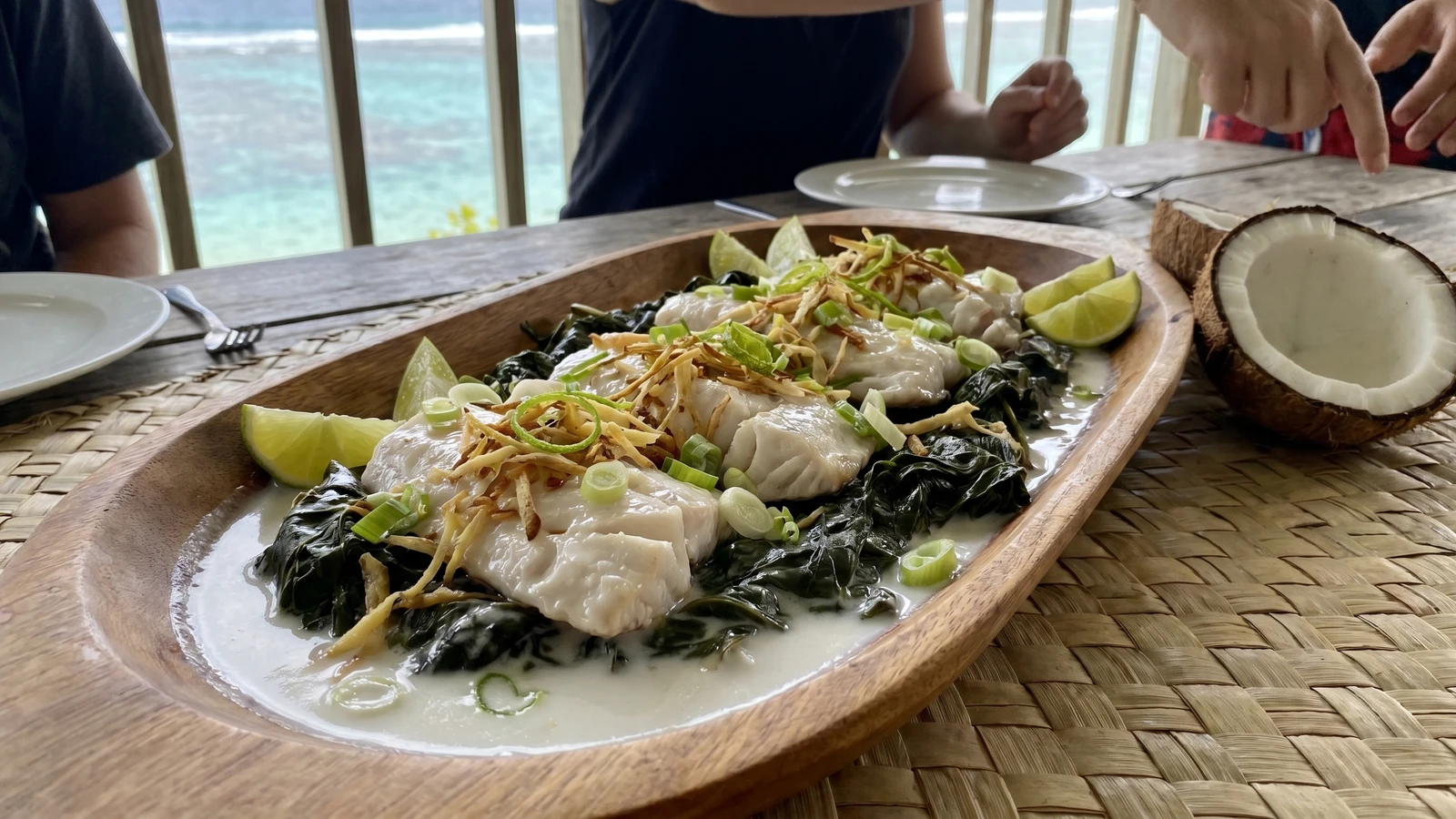
Rarotonga fish laid over silky rukau, bathed in coconut cream, then finished bright with lime zest and crisp ginger. Cook Islands hand, contemporary kitchen, old ocean grammar.
The old people in the Cooks will tell you the ocean is not empty space between islands. It's the road. Moana-roa, the long ocean, brought the canoes, the coconut, the taro, and the fish that feeds Rarotonga still, and this plate belongs to that Cook Islands hand: white fish, coconut cream, rukau, and the lagoon close enough you can smell salt in the air.
Rukau is taro leaf cooked down with coconut cream until it goes dark and silky, the Cook Islands cousin to Sāmoan palusami, Tongan lū, Tahitian fāfā, and Hawaiian laulau. Same elder brother leaf, different hand. Back home in Hawaiʻi we talk about Hāloa, the taro as our elder sibling; across the Triangle the names change, but the kinship doesn't. One ocean, one canoe, one root.
So cook the leaf first, all the way soft, because raw taro leaf still has bite in it and no blame the taro if you rush it. Then lay in the fish only at the end, because good mahimahi tightens when you bully it. The coconut cream should move slow around the fish, not boil hard, and the lime and ginger come last, bright and modern, like something a cousin would put on the table in Rarotonga today.
This isn't mine to claim. I cook it open-handed, honoring the Cook Islands table, and for the deep ceremonial layers I send you to Cook Islands Māori elders and aunties who carry that story from inside. What I can do is help you bring it into your kitchen without making it precious: fresh fish if you can get it, thick coconut cream if you can't squeeze it, rukau cooked with patience, and enough for one more.
In Cook Islands foodways, rukau is the local expression of the taro-leaf-and-coconut-cream family, kin to Sāmoan palusami, Tongan lū, Tahitian fāfā, and Hawaiian laulau, all built from canoe plants carried by voyaging families across the Triangle. Rarotonga's oral histories remember great canoes and ariki chiefly lines tied to travel among Tahiti, Sāmoa, and the Cooks in the central Pacific voyaging world. Fish and coconut cream held the everyday table together, while rice, tinned goods, and new seasonings later joined after mission and colonial trade, so a dish like this sits between deep-food memory and a living Rarotonga kitchen.
Quantity
1 1/2 pounds
skin removed, pin bones removed, cut into 2-inch pieces
Quantity
1 1/2 teaspoons
divided, plus more to taste
Quantity
2 tablespoons
Quantity
1 thumb-size piece
peeled and cut into fine matchsticks
Quantity
1 small
thinly sliced
Quantity
2 cloves
thinly sliced
Quantity
12 large leaves
thick stems and ribs removed, sliced, or 1 pound frozen taro leaves thawed and squeezed
Quantity
2 cups
fresh-squeezed if possible, or good canned coconut cream
Quantity
1/2 cup
Quantity
1
zested and juiced, plus more wedges for serving
Quantity
2
thinly sliced
Quantity
to taste
Quantity
for serving
| Ingredient | Quantity |
|---|---|
| mahimahi or other very fresh firm white fishskin removed, pin bones removed, cut into 2-inch pieces | 1 1/2 pounds |
| sea saltdivided, plus more to taste | 1 1/2 teaspoons |
| coconut oil or neutral oil | 2 tablespoons |
| fresh gingerpeeled and cut into fine matchsticks | 1 thumb-size piece |
| sweet onionthinly sliced | 1 small |
| garlic (optional)thinly sliced | 2 cloves |
| young taro leaves for rukauthick stems and ribs removed, sliced, or 1 pound frozen taro leaves thawed and squeezed | 12 large leaves |
| thick coconut creamfresh-squeezed if possible, or good canned coconut cream | 2 cups |
| water or light fish stock | 1/2 cup |
| limezested and juiced, plus more wedges for serving | 1 |
| green onionsthinly sliced | 2 |
| freshly ground black pepper | to taste |
| steamed taro, breadfruit, green banana, or rice | for serving |
Pat the mahimahi dry and season it with 1 teaspoon of the salt. Set it in the fridge while you cook the rukau. The fish should smell clean, like ocean and almost nothing else. If it smells tired, no make it the center of the table; cook something else and save everybody the trouble.
Warm the oil in a wide heavy pot over medium heat. Add the ginger matchsticks and cook, stirring, until the edges turn golden and the ginger feels crisp when you press it with a spoon, 2 to 4 minutes. Lift the ginger to a small plate and leave the fragrant oil in the pot.
Add the onion to the ginger oil and cook until soft and sweet-smelling, about 5 minutes. Add the garlic if you're using it, then the taro leaves, the remaining 1/2 teaspoon salt, 1 1/2 cups coconut cream, and the water or fish stock. Stir it down as the leaves collapse. It will look like too much leaf at first, then it gives, like all stubborn good things.
Cover and simmer the rukau gently for 35 to 45 minutes, stirring now and then, until the taro leaves are dark, silky, and completely tender with no scratch in the throat. This is the step you don't rush. Raw taro leaf has calcium oxalate bite, and only a full cook makes it safe and soft.
Turn the heat to low so the coconut cream barely moves. Nestle the salted fish pieces into the rukau and spoon some of the coconut cream over the top. Cover and cook 6 to 9 minutes, depending on thickness, until the fish flakes at the thickest part but still looks moist and glossy. Don't boil it hard. Fish gets tight when you shout at it.
Take the pot off the heat. Spoon in the remaining 1/2 cup coconut cream, the lime zest, and enough lime juice to wake the pot without making it sharp. Taste for salt and black pepper. Scatter the crisp ginger and green onion over the top, then serve with steamed taro, breadfruit, green banana, or rice. The starch is there to catch every bit of cream.
1 serving (about 575g)
Culinary guides, cultural storytelling, and the editorial depth that makes cooking meaningful.
Discover Culinary ExplorerChef Makoa
Rarotonga's reef catch brought home to the pot: tender eke simmered with onion, garlic, turmeric, curry powder, and coconut cream until the sauce turns gold and rich.

Chef Makoa
The Cook Islands bowl: fresh fish just turned in lime, softened with thick coconut cream, and kept crisp with cucumber, onion, and tomato. Same fish, different bowl.

Chef Makoa
Cook Islands kare moa, chicken curry softened in coconut milk with turmeric, ginger, garlic, potato, and carrot, the kind of weeknight pot that feeds the family twice.

Chef Makoa
Firm white fish simmered gently in coconut milk, curry, chilli, onion, and tomato. The Cook Islands call this kari ika, British curry made local by the lagoon.