
Chef Makoa
Confiture de Coco (Tahitian Coconut Jam)
Tahiti's coconut jam turns grated haʻari, sugar, and vanilla into a glossy golden spread for firi firi, pain coco, toast, or any table that needs one more sweet spoon.
A cooking platform built around craft, culture, and the stories behind what we eat.
Created by
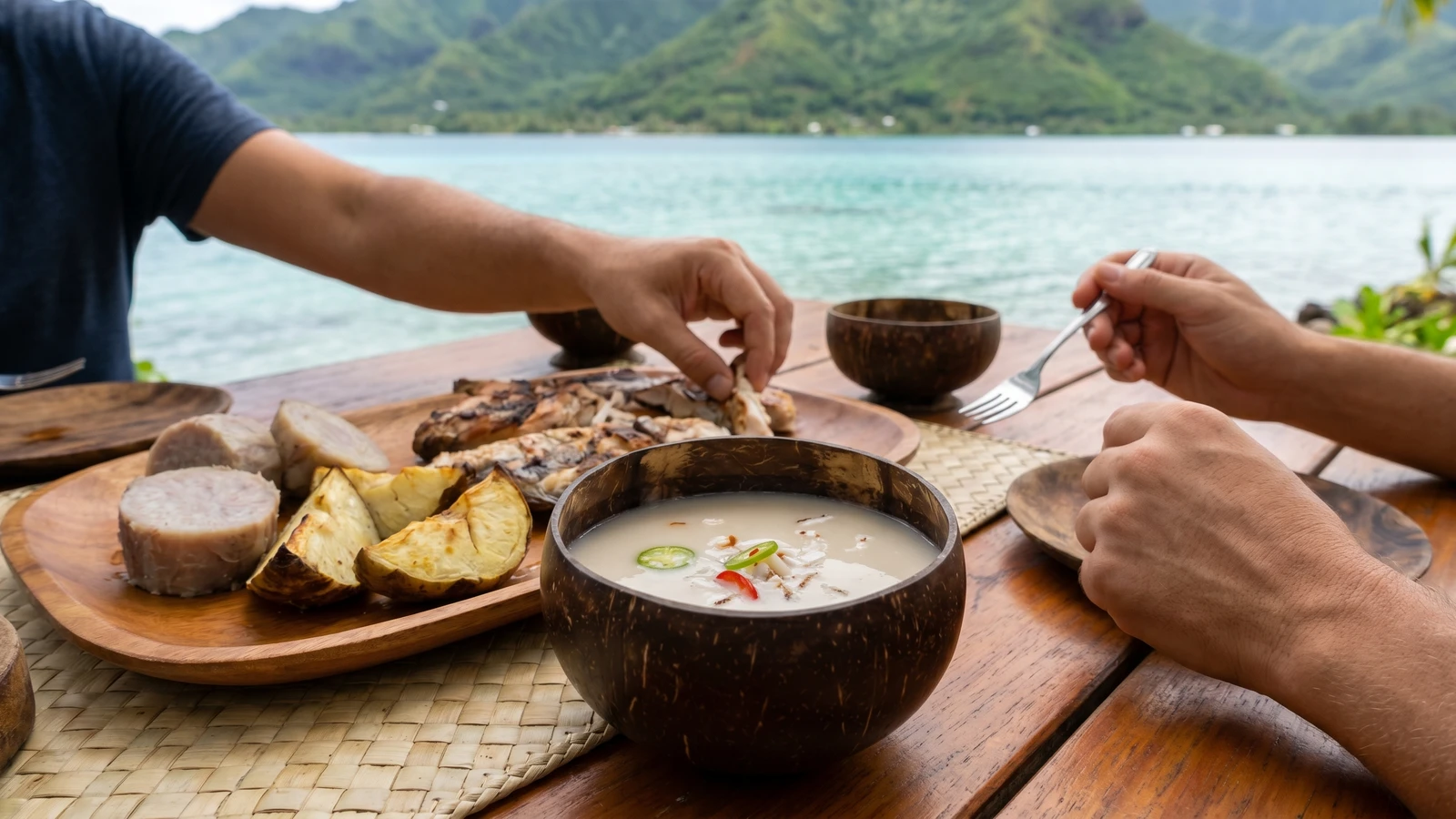
Tahiti's sharp, funky coconut condiment, grated coco fermented with brine and shrimp until it smells of reef and feast, then spooned over fish, ʻuru, taro, and maʻa Tahiti.
ATahitian table teaches you fast that the little bowl can carry the loudest voice. Miti hue belongs to Tahiti, to maʻa Tahiti, the food of the fenua, the land and people there. It sits beside the fish and the ʻuru, the breadfruit, small and strong, not trying to be polite. First time I tasted it, one auntie in Papeʻete laughed at my face before I even swallowed. She knew. This one wakes you up.
The coconut is kin across the whole Triangle, same as kalo and ʻulu, carried in the canoe and planted where the people landed. Hawaiʻi pounds poi, Sāmoa wraps palusami, Tonga folds lū, the Cooks serve ika mata, Tahiti sets out ʻia ota and this miti hue. Same ocean, different bowl. The sauce starts sweet and white from grated coconut, then time and salt and shrimp turn it sour, savory, deep, a little wild in the nose and clean on the tongue when it's right.
Traditionally, the sea itself seasons it. In a home kitchen, I won't tell you to scoop random seawater and hope. Make a clean brine with sea salt, use very fresh shrimp or a good dried shrimp, keep everything clean, and let the ferment go only until it smells pleasantly sharp and reefy, never rotten. Eat what you have, but respect the part that carries the meaning: coconut, salt water, time, and Tahiti's hand.
Miti hue is a Tahitian condiment tied to maʻa Tahiti, the feast grammar of fish, coconut, taro, and breadfruit, where a small fermented sauce could sharpen a whole spread. Its older method used grated coconut, seawater, and crushed shrimp heads, a reef-and-coconut fermentation from a foodway with no fired pottery and deep skill in wood, leaf, gourd, shell, salt, and time. Across Polynesia, coconut sauces and raw-fish dressings show the same canoe-crop logic, but this pungent fermented form is Tahiti's own hand, not a generic ocean sauce.
Quantity
2 cups
or thawed unsweetened grated coconut
Quantity
1 1/2 cups
made with non-chlorinated water and fine sea salt
Quantity
4
rinsed, or 2 tablespoons dried shrimp, crushed
Quantity
1 small 1-inch piece
lightly crushed
Quantity
1 small
split
Quantity
1 tablespoon
for finishing if needed
| Ingredient | Quantity |
|---|---|
| freshly grated mature coconutor thawed unsweetened grated coconut | 2 cups |
| clean sea-salt brinemade with non-chlorinated water and fine sea salt | 1 1/2 cups |
| very fresh raw shrimp headsrinsed, or 2 tablespoons dried shrimp, crushed | 4 |
| fresh ginger (optional)lightly crushed | 1 small 1-inch piece |
| hot chile (optional)split | 1 small |
| fresh lime juice (optional)for finishing if needed | 1 tablespoon |
Stir 2 teaspoons fine sea salt into 1 1/2 cups non-chlorinated water until clear. This stands in for seawater in a kitchen where you don't know the reef, the tide, or the runoff. It should taste salty like the ocean, not harsh like medicine.
Crush the very fresh shrimp heads lightly so their shells crack and the flavor can move into the coconut. If that makes you nervous, use dried shrimp instead and crush it small. No shame. The old way used the reef right there; your kitchen needs clean handling first.
Put the grated coconut in a very clean glass jar and stir in the brine, crushed shrimp, ginger, and chile if using. The coconut should be fully wet and loose, like a rough white slurry, with the shrimp tucked down under the liquid. Leave at least an inch of headspace.
Cover the jar with a clean cloth or a loose lid and leave it at cool room temperature, about 68F to 75F, for 24 to 48 hours. Stir once or twice a day with a clean spoon. It should turn tangy, salty, coconut-rich, and reefy in a good way, with tiny bubbles and a sharper smell than when it started.
When the miti hue tastes sharp and savory, strain it through a fine sieve, pressing hard on the coconut so the cloudy sauce runs through. For a stronger old-style texture, leave a spoonful or two of the fermented coconut in the bowl. Pull out and discard the shrimp shells.
Taste the sauce. It should be salty, sour, coconut-sweet underneath, and pungent enough to make plain fish or ʻuru stand up straight. Add a small squeeze of lime only if it needs brightness, then refrigerate it. Serve cold or room temperature in a small coconut shell or wooden bowl, spooned over grilled fish, boiled taro, ʻuru, or alongside ʻia ota.
1 serving (about 30g)
Culinary guides, cultural storytelling, and the editorial depth that makes cooking meaningful.
Discover Culinary ExplorerChef Makoa
Tahiti's coconut jam turns grated haʻari, sugar, and vanilla into a glossy golden spread for firi firi, pain coco, toast, or any table that needs one more sweet spoon.

Chef Makoa
Tahitian taioro is mature coconut, grated fine and left with clean sea-salt brine until it turns sharp, nutty, and sea-salty, then spooned over fish, ʻuru, or taro.

Chef Juliette
Beef shin, lean beef, and fowl begin in cold water and rise slowly toward a tremble. Skim before the boil, and you learn the quiet discipline that gives every clear French broth its backbone.

Chef Juliette
Break the veal bones small, then give them eight hours at a bare tremble. This pale, gelatinous fond becomes the quiet foundation beneath velouté, blanquette, and every sauce that must stay light.