
Chef Takumi
Autumn Mushroom Rice (きのこの炊き込みご飯, Kinoko Takikomi Gohan)
Autumn mushrooms do most of the work here. Rinse the rice well, season the liquid before cooking, and let the pot rest so every grain comes out separate and fragrant.
A cooking platform built around craft, culture, and the stories behind what we eat.
Created by
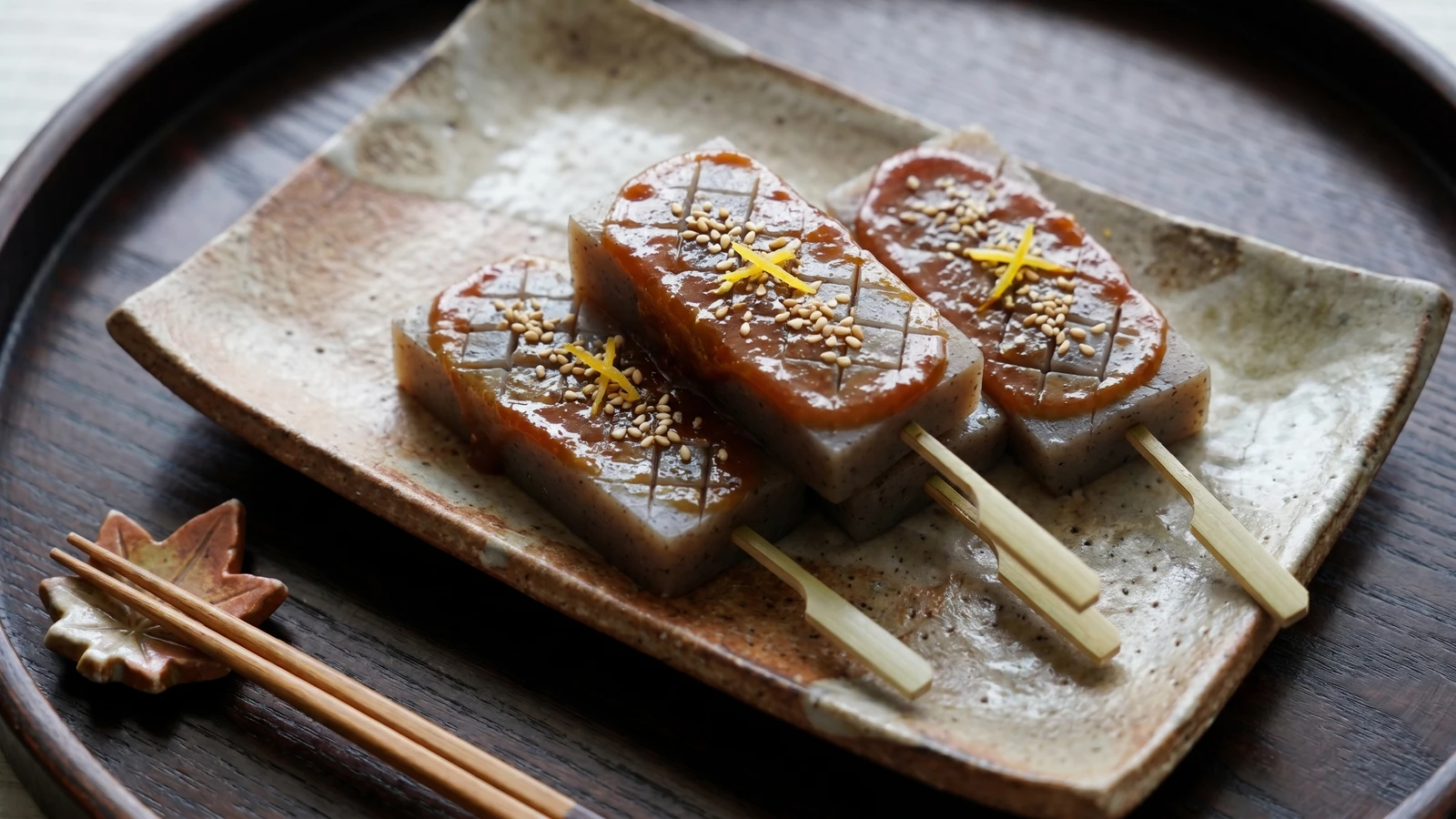
Konnyaku dengaku asks almost nothing: draw off the bitterness, dry the surface, then let sweet miso glaze the springy slabs until they shine.
Konnyaku is the ingredient that makes many cooks pause. It looks severe, behaves like no vegetable, and offers very little flavor of its own. Good. That is why it works. Its springy plainness lets the miso speak clearly, with nothing hidden under a heavy sauce.
The first secret is the parboil. Konnyaku often carries a faint alkaline bitterness from the way it's made, and three minutes in boiling water draws that off. Then dry the surface before the glaze goes on. If the slabs are wet, the sweet miso slides away and sulks on the tray, which helps no one.
Dengaku is the method here: skewered food, grilled or broiled, then dressed with miso tare. It belongs happily beside rice, soup, and one brighter vegetable dish, the quiet side that gives the meal a little chew and a little sweetness. Use red miso for depth, mixed miso if that's what your shop has. This is honmono made with a small pan and a broiler, and it is much less mysterious than the ingredient wants you to believe.
Dengaku takes its name from medieval rice-field ritual performances called dengaku, whose dancers wore tall hats said to resemble food set on skewers. By the Muromachi period, the word was already attached to skewered tofu and vegetables coated with miso and grilled. Konnyaku became a natural fit because it held its shape over heat and took well to the strong miso seasonings common in inland and temple cooking.
Quantity
1 block (about 250g)
Quantity
2 tablespoons
Quantity
1 tablespoon
Quantity
1 tablespoon
Quantity
1 tablespoon
Quantity
1 teaspoon
Quantity
1 teaspoon
Quantity
1 strip
finely grated
| Ingredient | Quantity |
|---|---|
| konnyaku | 1 block (about 250g) |
| red miso or mixed miso | 2 tablespoons |
| sugar | 1 tablespoon |
| mirin | 1 tablespoon |
| sake | 1 tablespoon |
| soy sauce | 1 teaspoon |
| toasted white sesame seeds | 1 teaspoon |
| yuzu peel (optional)finely grated | 1 strip |
Rinse the konnyaku, then score both faces in a shallow crosshatch, barely cutting the surface. Cut it into 8 slabs. The scoring isn't decoration. Konnyaku is smooth and stubborn, and those little cuts give the miso tare somewhere to cling.
Bring a small pot of water to a boil and add the konnyaku. Boil for 3 minutes, then drain well. This draws out the faint bitterness and packet smell, leaving the clean springy texture we want. Skip this and the glaze has to fight the ingredient, which is a poor arrangement.
In a small pan, combine the miso, sugar, mirin, sake, and soy sauce. Warm over low heat, stirring, until glossy and thick enough to coat the spoon, about 2 minutes. Low heat matters because miso scorches easily, and scorched miso tastes harsh instead of deep.
Thread the drained konnyaku slabs onto bamboo skewers. Set them on a lightly oiled rack or foil-lined tray and broil until the surface looks dry and lightly tightened, 3 to 4 minutes. This little drying step helps the glaze grip instead of sliding off.
Brush the top of each slab with the warm miso tare and broil again just until the glaze turns shiny and dark at the edges, 1 to 2 minutes. Watch closely. You want lacquer, not burn. Sprinkle with sesame and a little yuzu peel if using, then serve warm or at room temperature.
1 serving (about 80g)
Culinary guides, cultural storytelling, and the editorial depth that makes cooking meaningful.
Discover Culinary ExplorerChef Takumi
Autumn mushrooms do most of the work here. Rinse the rice well, season the liquid before cooking, and let the pot rest so every grain comes out separate and fragrant.

Chef Takumi
A whole salmon fillet laid on seasoned rice does nearly all the work. Cook it gently, flake it back through, and autumn has found its bowl.

Chef Takumi
Daigakuimo is simple student comfort: sweet potato cut stout, fried until the corners take color, then turned in a soy-sugar syrup that sets shiny instead of sticky.

Chef Takumi
Chawanmushi looks delicate, but the secret is plain: good dashi, strained egg, and quiet heat. Keep the steam soft and the custard sets smooth, tender, and calm.