
Chef Takumi
Ago Dashi (あごだし, grilled flying fish stock)
Ago dashi is quiet luxury: roasted flying fish, konbu, and patient water. Steep it slowly and you get a clear stock that tastes sweet, clean, and full without heaviness.
A cooking platform built around craft, culture, and the stories behind what we eat.
Created by
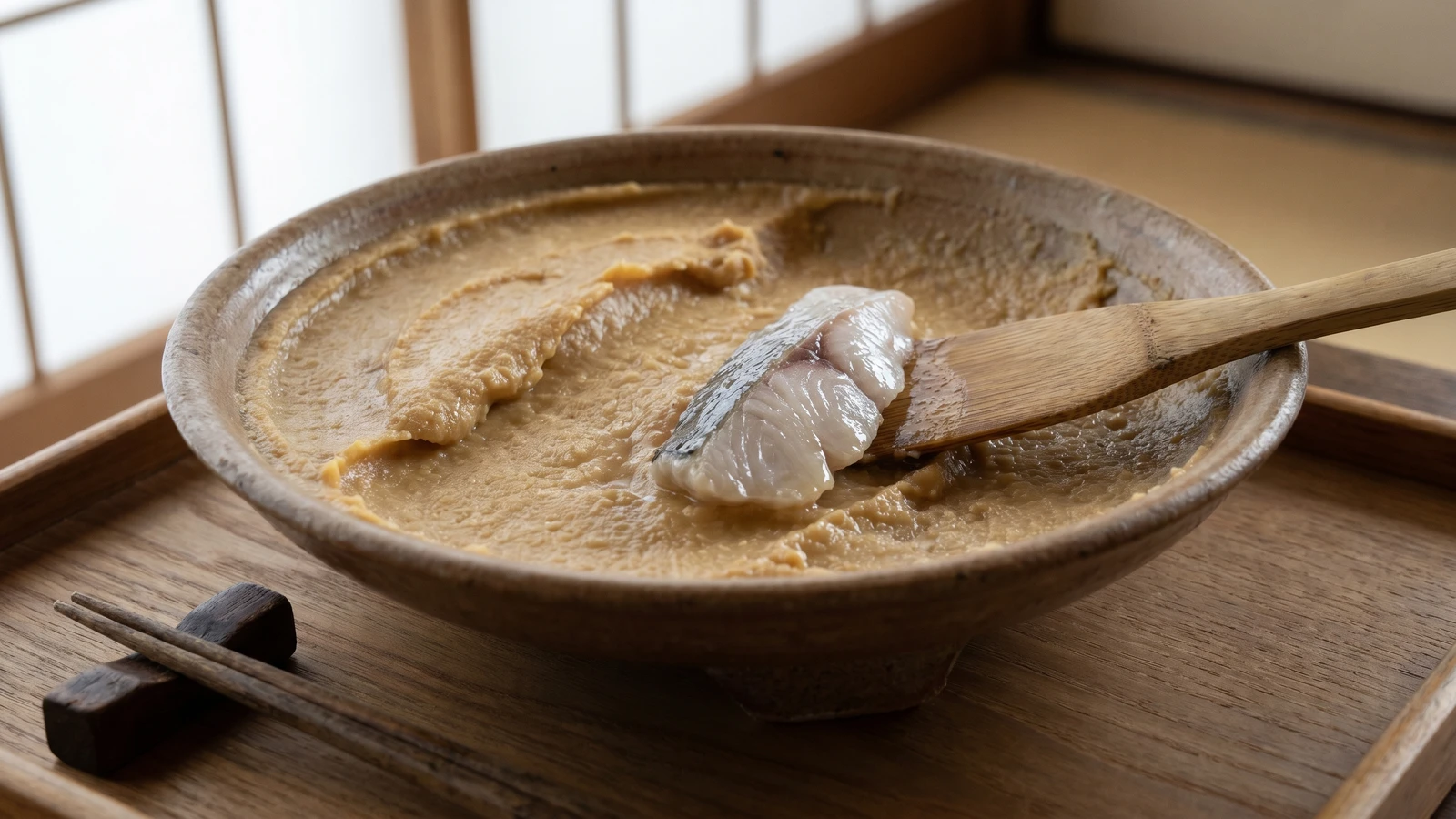
Half miso for body, half sake lees for fragrance. This quiet Hokuriku bed seasons fish, vegetables, and chicken while asking only that you keep time and salt in balance.
Amarinade bed looks more severe than it is. The word doko means a bed, and that is exactly how we use it: spread, tuck the ingredient inside, and let time do the careful work.
Misokasu doko sits between two preserving habits, misozuke and kasuzuke. Miso gives salt, body, and a steady sweetness. Sake lees, kasu, gives fragrance, faint alcohol, and that soft rice-brew aroma you cannot fake with more sugar. Use equal weights and the two keep each other honest. Too much miso grows heavy. Too much kasu can turn sharp and boozy, like a guest who has mistaken the hour.
The one detail that decides it is moisture. Salt fish or watery vegetables first, then blot them dry before they enter the bed. If you put wet ingredients straight into the paste, the doko loosens, the seasoning turns muddy, and the surface flavors more than the center. Wrap delicate fish in gauze if you have it. The paste seasons through the cloth, and you don't have to scrape good flesh raw to get it clean.
This is make-ahead food in the best sense. A small piece of yellowtail in winter, a few turnips in spring, a chicken thigh for tomorrow's supper: each comes out tasting more itself, not hidden. That is the point of honmono. The bed does not cover the ingredient. It steadies it.
Kasu-zuke, foods preserved in sake lees, became closely tied to sake-brewing districts during the Edo period, when pressed lees from breweries were plentiful and valuable rather than waste. Along the Hokuriku coast, where winter fish such as buri are central to the table, cooks used miso and kasu together for preservation, fragrance, and deeper seasoning. The word doko, meaning a bed or base, is also used for nukadoko, the rice-bran pickling bed, showing the shared Japanese idea of a living seasoning medium used again with care.
Quantity
300g
Quantity
300g
softened
Quantity
3 tablespoons
Quantity
2 tablespoons
Quantity
1 tablespoon
use if the miso is salty or harsh
Quantity
1 teaspoon
use only with very sweet white miso
| Ingredient | Quantity |
|---|---|
| miso, preferably white miso or mild awase miso | 300g |
| sake kasu (sake lees)softened | 300g |
| mirin | 3 tablespoons |
| sake | 2 tablespoons |
| sugar (optional)use if the miso is salty or harsh | 1 tablespoon |
| fine sea salt (optional)use only with very sweet white miso | 1 teaspoon |
Break the sake kasu into small pieces and sprinkle it with the sake. Leave it for 10 minutes, then mash it smooth with a spoon or spatula. Kasu can be stiff and grainy when cold; softening it first lets it blend into the miso instead of leaving hard pockets that season unevenly.
Add the miso, mirin, and sugar if using. Mash until the paste is even, thick, and spreadable, about the texture of soft clay. Taste a small dab. It should be salty, faintly sweet, and fragrant with rice and sake, stronger than you would eat by itself because it is meant to lend seasoning, not be served as sauce.
Spread half the misokasu doko in a clean glass or enamel container. Press it into an even layer so there are no dry gaps. A shallow container is easier than a deep jar because the ingredient lies flat and the seasoning reaches it evenly.
For fish, salt it lightly and rest 20 minutes, then blot very dry. For vegetables, salt firm pieces such as turnip, daikon, or cucumber until they bend slightly, then blot. For chicken, pat dry well and keep it in its own separate bed. Drawing out surface moisture first keeps the doko from thinning and helps the seasoning move inward cleanly.
Lay the ingredient on the bed, directly or wrapped in clean gauze, then cover with the remaining paste. Press gently so the surface is fully covered. Refrigerate 6 to 12 hours for thin fish, 12 to 24 hours for thick fish or chicken, and 4 to 12 hours for vegetables. Time is the seasoning here; leave it too long and the salt outruns the fragrance.
Lift the ingredient out, wipe off the paste with your fingers or a damp cloth, and never rinse unless it is too salty. Cook fish or chicken gently over a grill, under a broiler, or in a skillet over low heat because miso and kasu scorch quickly. Vegetables can be sliced and served as pickles, with only a little paste clinging at the edges.
Smooth the surface of the remaining bed, cover tightly, and refrigerate. Keep one bed for vegetables and another for raw fish or chicken. A doko is thrifty, not magical; once it has touched raw chicken, it belongs to raw chicken use only, and it should be discarded after that batch.
1 serving (about 60g)
Culinary guides, cultural storytelling, and the editorial depth that makes cooking meaningful.
Discover Culinary ExplorerChef Takumi
Ago dashi is quiet luxury: roasted flying fish, konbu, and patient water. Steep it slowly and you get a clear stock that tastes sweet, clean, and full without heaviness.

Chef Takumi
Akamiso dengaku-miso is plain work: bean miso, sweetness, sake, and patient stirring until the glaze turns dark, glossy, and thick enough to cling to the grill.

Chef Takumi
Snow-country takuan begins with smoke. Hang the daikon, dry it gently, then let rice bran, salt, and time turn it into Akita's amber pickle.

Chef Takumi
Aso takanazuke is spring caught in salt: sharp mustard greens pressed until they soften, fermented until their edge turns round, then fried briefly with sesame for rice.