
Chef Lupita
Agua de Alfalfa
Ciudad de México's highland market agua fresca, fresh alfalfa blended with pineapple and lime until bright green, strained clean, and poured cold from the vitrolero.
A cooking platform built around craft, culture, and the stories behind what we eat.
Created by
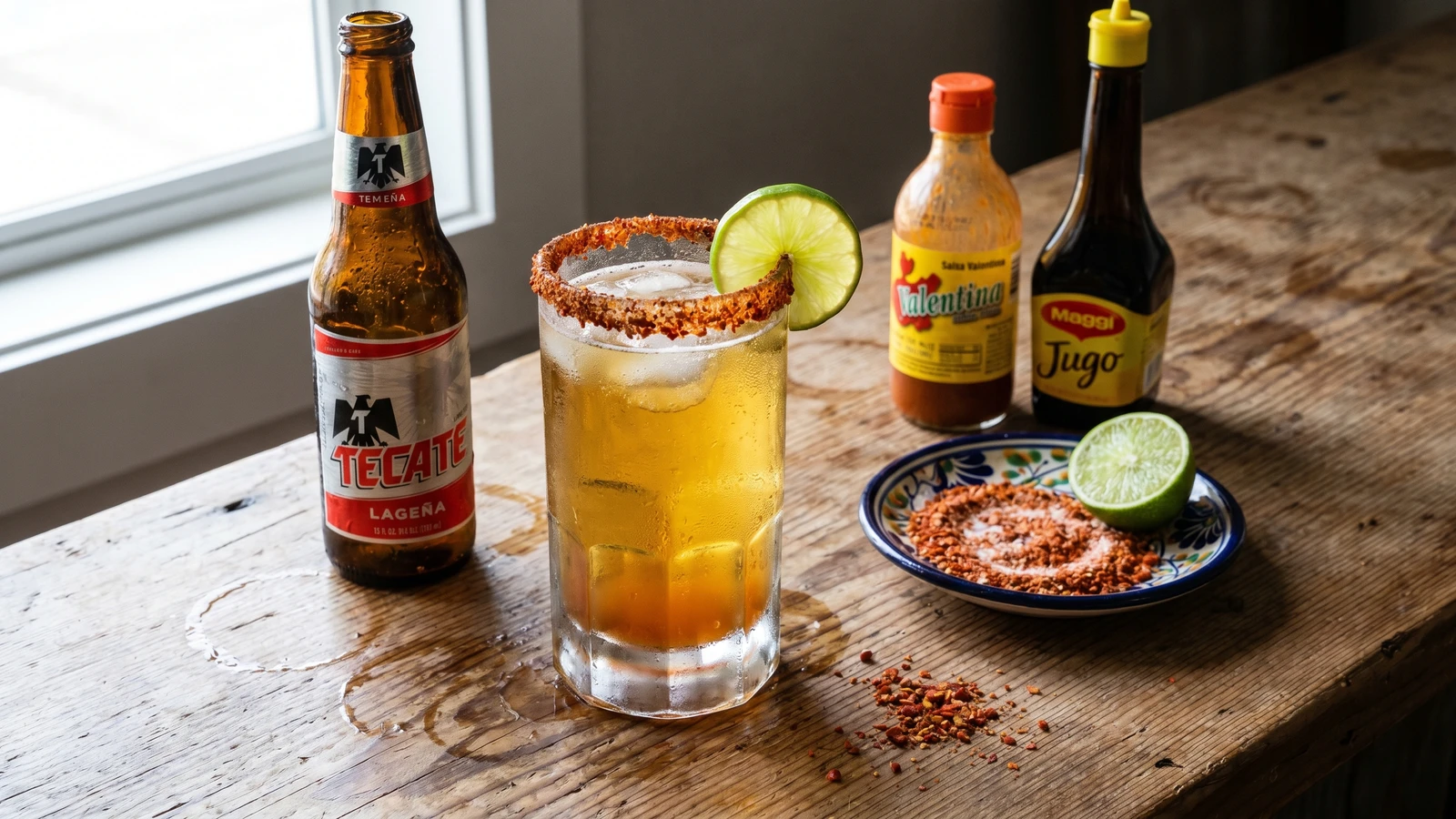
The michelada as they pour it in Sonora, Chihuahua, and Coahuila: cold light cerveza, fresh lime, Salsa Valentina, Worcestershire, and Maggi over ice with a Tajín-salt rim. Built tall, drunk fast, made for the desert.
This is a norteño drink. Sonora, Chihuahua, Coahuila, Nuevo León, the desert states where the heat does not let up from May through September and the beer comes out of the cooler so cold the bottle frosts.
The michelada norteña is not the Mexico City version with clamato and shrimp on the rim. That is a chelada preparada, a different animal from a different region. The norteño version is direct: cold light lager, fresh lime, Salsa Valentina, Worcestershire, Maggi, a pinch of salt, ice, and a Tajín-salt rim. Five ingredients in the base. None of them optional. The Maggi is what people miss when they try to make this at home and wonder why their michelada tastes thin. It is the salt-savory line that holds the drink together.
The rim takes Tajín, not just salt. And if you can get your hands on chiltepín, the wild bird-pepper from the Sonoran sierra harvested by hand from thorned shrubs every fall, grind a little into the rim. That is the norteño signature. Chiltepín is not chile de árbol. It is not cayenne. It is its own wild thing and it tastes like the desert.
My mother did not drink micheladas. She was from Jalisco and she drank her cerveza plain with a wedge of lime, the way Tapatíos do. But I learned this preparation from a cantinera in Hermosillo named Doña Beti who poured them by the dozen at a long pine bar on a Saturday afternoon in August, and she told me the rule that I have never forgotten: the beer has to be colder than the day is hot. Saber cocinar es saber vivir, y saber preparar una michelada también.
The michelada's origin is contested between two regional claims: the Club Deportivo Potosino in San Luis Potosí, where a member named Michel Esper is said to have ordered beer with lime, salt, ice, and hot sauce in the 1970s (giving rise to the name 'la michelada' from 'la chela helada'), and an older norteño tradition of dressing lager with salsa inglesa and lime that predates the Potosí story by decades. The norteño preparation distinguished itself from the central-Mexican chelada preparada by rejecting clamato and tomato juice, holding instead to the dry, lime-forward, Maggi-anchored profile that aligns with the desert palate. Tajín, founded in 1985 in Guadalajara by Horacio Fernández, became the standard rim seasoning across northern Mexico in the 1990s, displacing the older practice of rimming with plain salt and ground chiltepín.
Quantity
1
cut in half, plus one extra wedge for the rim
Quantity
2 tablespoons
Quantity
1 tablespoon
Quantity
1 teaspoon
for a Sonoran rim
Quantity
1 ounce
from the halved lime above
Quantity
1 1/2 teaspoons
Quantity
1 teaspoon
Quantity
1/2 teaspoon
Quantity
2 dashes
for the norteño bite
Quantity
1 pinch
Quantity
enough to fill a 16-ounce vaso tall glass
Quantity
1 bottle (12 ounces)
| Ingredient | Quantity |
|---|---|
| limecut in half, plus one extra wedge for the rim | 1 |
| Tajín Clásico | 2 tablespoons |
| coarse sea salt | 1 tablespoon |
| ground chiltepín or chile piquín (optional)for a Sonoran rim | 1 teaspoon |
| fresh-squeezed lime juicefrom the halved lime above | 1 ounce |
| Salsa Valentina (yellow-label) | 1 1/2 teaspoons |
| Worcestershire sauce (salsa inglesa) | 1 teaspoon |
| Maggi Jugo sazonador | 1/2 teaspoon |
| Salsa Huichol (optional)for the norteño bite | 2 dashes |
| coarse sea salt for the glass | 1 pinch |
| ice | enough to fill a 16-ounce vaso tall glass |
| cold light Mexican lager (Tecate, Tecate Light, Pacifico, or Carta Blanca) | 1 bottle (12 ounces) |
On a small flat plate, combine the Tajín, coarse sea salt, and ground chiltepín if you are using it. Mix with your fingers until the color is even. The chiltepín is the norteño signature, the wild bird-pepper from the Sonoran sierra that grows on thorned shrubs along arroyos. It is not chile de árbol and it is not cayenne. If you cannot find it, leave the rim plain Tajín and salt. A substitution is a compromise, not an upgrade.
Run the cut side of a lime wedge around the outside rim of a tall 16-ounce glass, all the way around, no gaps. Turn the glass upside down and press it into the Tajín-salt mixture, rolling slightly so the rim is evenly coated. Tap off the excess. The rim should be on the outside of the glass only, never the inside. Tajín on the inside of the glass dissolves into the beer and the drink turns muddy.
Set the rimmed glass down carefully. Squeeze the lime juice directly into the bottom of the glass. Add the Salsa Valentina, the Worcestershire, the Maggi, the Huichol if you are using it, and a pinch of coarse salt. Do not stir yet. This is the base that makes a michelada norteña a michelada and not a beer with hot sauce floated on top. Each line of the base matters. The Valentina brings the chile-vinegar tang. The Worcestershire brings the dark umami. The Maggi brings the salt-savory backbone. Skip one and the drink falls flat.
Fill the glass with ice, all the way to just below the rim. Hold the cold cerveza at an angle and pour it down the inside of the glass slowly, so the foam stays controlled. Stop when the beer reaches the top of the ice. You will have beer left in the bottle. Set the bottle next to the vaso. As the drinker works the michelada down, they top it up from the bottle. Asi se hace y punto.
Give the michelada one slow stir with a long spoon, just enough to bring the base up through the ice without killing the carbonation. Garnish with a lime wedge perched on the rim. Drink it cold and drink it fast. The michelada is a hot-weather drink. It does not improve as it sits. The ice melts, the base separates, the rim dissolves into the lager. There is a reason norteños order the second one before they finish the first.
1 serving (about 400g)
Culinary guides, cultural storytelling, and the editorial depth that makes cooking meaningful.
Discover Culinary ExplorerChef Lupita
Ciudad de México's highland market agua fresca, fresh alfalfa blended with pineapple and lime until bright green, strained clean, and poured cold from the vitrolero.
Chef Lupita
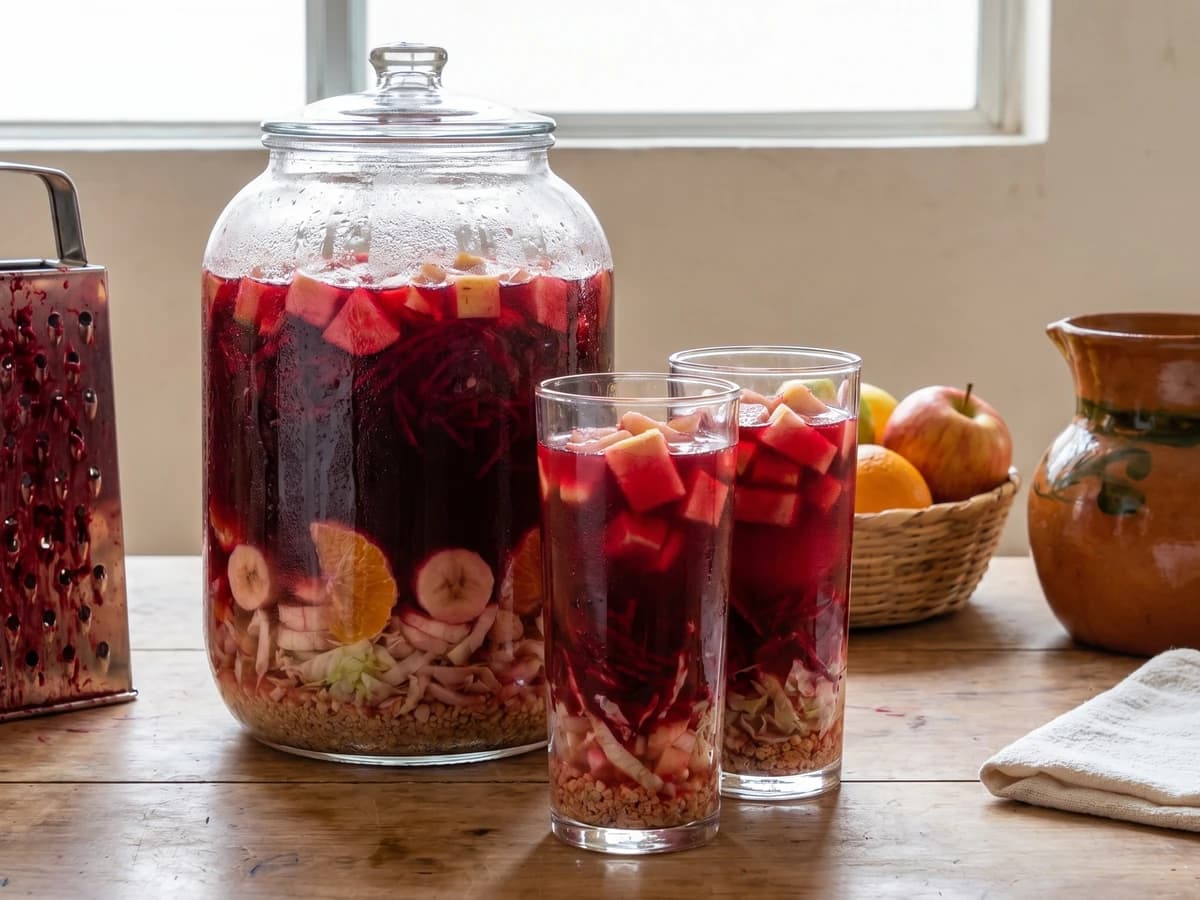
Aguascalientes' Lenten agua fresca, jewel-red from cooked beet and full of apple, banana, orange, lettuce, and ground peanuts, served cold when Holy Week meets the Feria de San Marcos.

Chef Lupita
Sonora and Sinaloa's creamy malted barley water, built on toasted cebada perla, Mexican canela, vanilla from Papantla, and evaporated milk. Pink-beige, rich, and served cold over heavy ice in a heavy glass tumbler. Liquid cookie comfort the northwest way.

Chef Lupita
Yucatán's everyday tonic of boiled chaya leaves blended with lima agria, sugar, and ice. The bright green jarra that sits on every Peninsula table from Mérida to Valladolid.