Chef Takumi
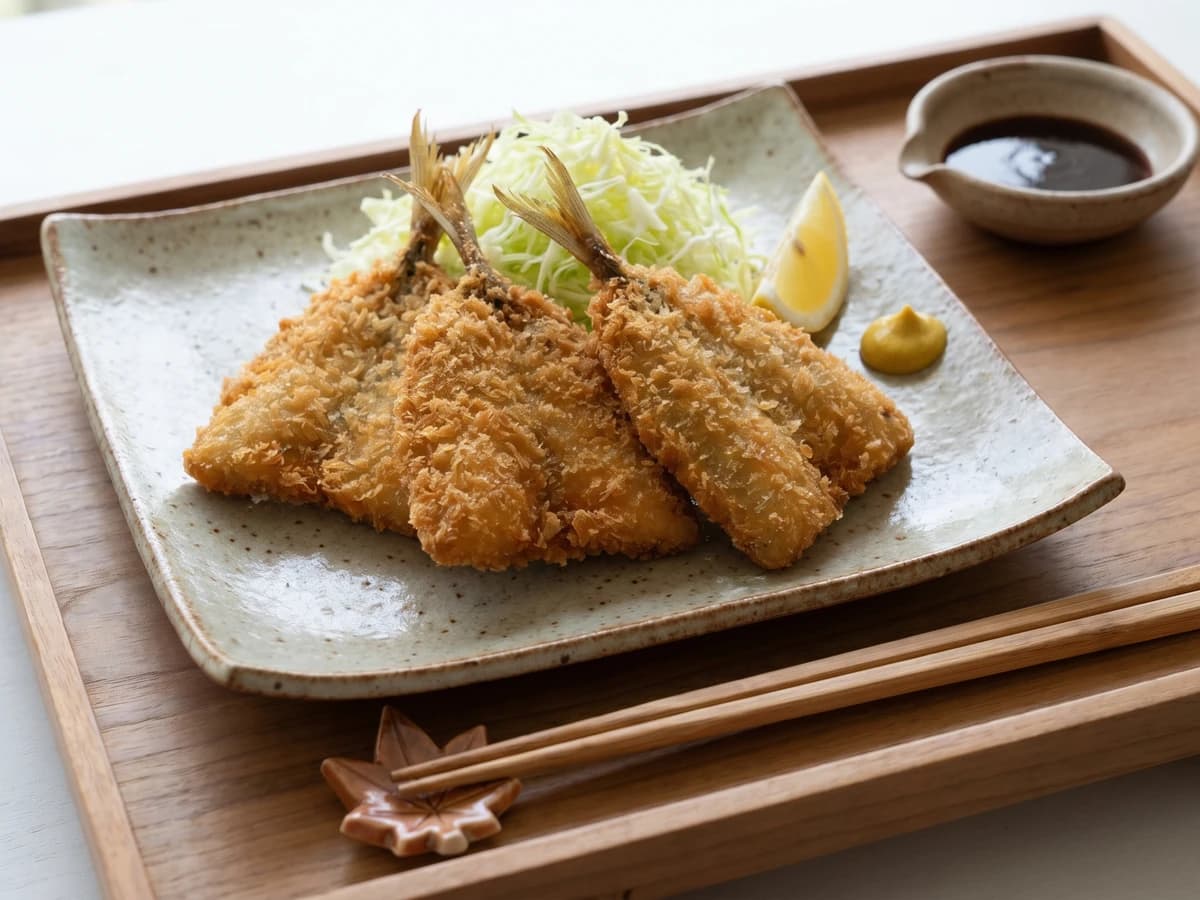
Aji Fry (アジフライ, panko-fried horse mackerel)
Aji fry is weeknight fish with no mystery: fresh horse mackerel opened cleanly, breaded lightly, and fried until the panko crackles while the flesh stays sweet.
A cooking platform built around craft, culture, and the stories behind what we eat.

Created by
Karashi mentaiko brings salt, chili, and a clean sea sweetness. Keep the sauce off the flame, let the hot spaghetti do the work, and each strand turns glossy and pink-speckled.
Mentaiko is small but not shy. The chili-cured roe brings salt, heat, and a clean sea sweetness that disappears the moment you bully it. This pasta looks suspicious to some cooks, spaghetti under nori, butter beside roe, but it is honmono yōshoku, Japanese Western-style cooking, a home dish with its own manners.
The one detail that decides it is heat. Mentaiko is roe, a crowd of tiny eggs, and direct heat makes it tighten, turn grainy, and lose its brightness. Mix it with softened butter and a spoon of cream in a bowl, then let the hot spaghetti melt everything off the flame. Pasta water brings starch, starch brings cling, and each strand becomes lightly coated instead of drowned. Nothing hidden.
Because the roe is cured, shun, the season when an ingredient is at its prime, speaks more softly here than it does with spring greens or autumn mushrooms. Freshness still matters. Buy sacs that look moist and glistening, with a clean smell and no leaking. If you have tarako, the milder salted roe, use the same method and call the dish tarako pasta; the heat will be gone, but the manners are the same. Finish with shiso and nori at the last moment, because their aroma is brief and a little vain, as herbs often are. Leave it room, eat it while the gloss is still there.
Karashi mentaiko, chili-seasoned pollock roe, became closely tied to Hakata after Toshio Kawahara of Fukuya began selling his version in Fukuoka in 1949, adapting the Korean myeongnan-jeot he had known in Busan. Tarako spaghetti is commonly credited to Kabe no Ana, a Tokyo spaghetti shop that put cod roe with spaghetti in the 1960s, and mentaiko pasta followed naturally once the spiced roe became a national favorite. The dish sits in wafū pasta, the Japanese home and kissaten habit of treating spaghetti with local seasonings, not as imitation but as a Japanese form of yōshoku.
Quantity
200g
preferably 1.6 to 1.7 mm
Quantity
2 small sacs (about 80 to 100g)
kept cold, membranes removed
Quantity
30g
softened
Quantity
2 tablespoons
Quantity
1/2 to 1 teaspoon
to taste
Quantity
2 teaspoons
for 2 liters boiling water
Quantity
up to 1/4 cup
reserved before draining
Quantity
4
thinly sliced
Quantity
1/2 sheet
cut into fine strips
| Ingredient | Quantity |
|---|---|
| spaghettipreferably 1.6 to 1.7 mm | 200g |
| karashi mentaiko (chili-seasoned pollock roe)kept cold, membranes removed | 2 small sacs (about 80 to 100g) |
| unsalted buttersoftened | 30g |
| heavy cream | 2 tablespoons |
| soy sauceto taste | 1/2 to 1 teaspoon |
| sea saltfor 2 liters boiling water | 2 teaspoons |
| hot pasta cooking waterreserved before draining | up to 1/4 cup |
| shiso leavesthinly sliced | 4 |
| toasted noricut into fine strips | 1/2 sheet |
Keep the mentaiko cold until you need it. Slit each sac lengthwise with a small knife or kitchen scissors, then scrape the tiny eggs from the membrane with the back of the knife. The membrane is edible, but it clings in strings and won't coat the noodles smoothly, so take the minute to remove it. Set aside a teaspoon of roe for the top if you like the look of those orange beads.
In a large heatproof bowl, mash the scraped mentaiko with the softened butter, cream, and 1/2 teaspoon soy sauce. Use a bowl, not the hot pan. Soft butter melts from the pasta's heat, and the bowl keeps the roe from cooking before it has a chance to coat the spaghetti. Taste the paste. It should be salty and sharp because the noodles will tame it.
Bring 2 liters water to a lively boil and salt it lightly, about 2 teaspoons. This is less salt than you might use for plain pasta because mentaiko carries its own. Boil the spaghetti until just firm at the center, usually one minute less than the package timing. Scoop out 1/4 cup cooking water before draining. The starch in that water is what turns the roe and butter into a sauce instead of a paste.
Add the drained spaghetti directly to the mentaiko bowl while the noodles are still hot. Toss quickly with tongs or long chopsticks, adding hot pasta water a tablespoon at a time until every strand is glossy and speckled pink-orange. Keep it off the heat. Direct flame tightens the roe into something grainy, while residual heat melts the butter, loosens the cream, and leaves the eggs tender.
Taste one strand. If it needs depth, add the remaining soy sauce a few drops at a time; if it needs looseness, add another spoonful of pasta water. Twirl into two restrained mounds on warm plates, leaving a wide bare rim. Scatter shiso first, then nori, and serve at once. The nori wilts and the shiso fades if they wait, and this dish is at its best while the gloss still catches the light.
1 serving (about 340g)
Culinary guides, cultural storytelling, and the editorial depth that makes cooking meaningful.
Discover Culinary ExplorerChef Takumi
Aji fry is weeknight fish with no mystery: fresh horse mackerel opened cleanly, breaded lightly, and fried until the panko crackles while the flesh stays sweet.
Chef Takumi
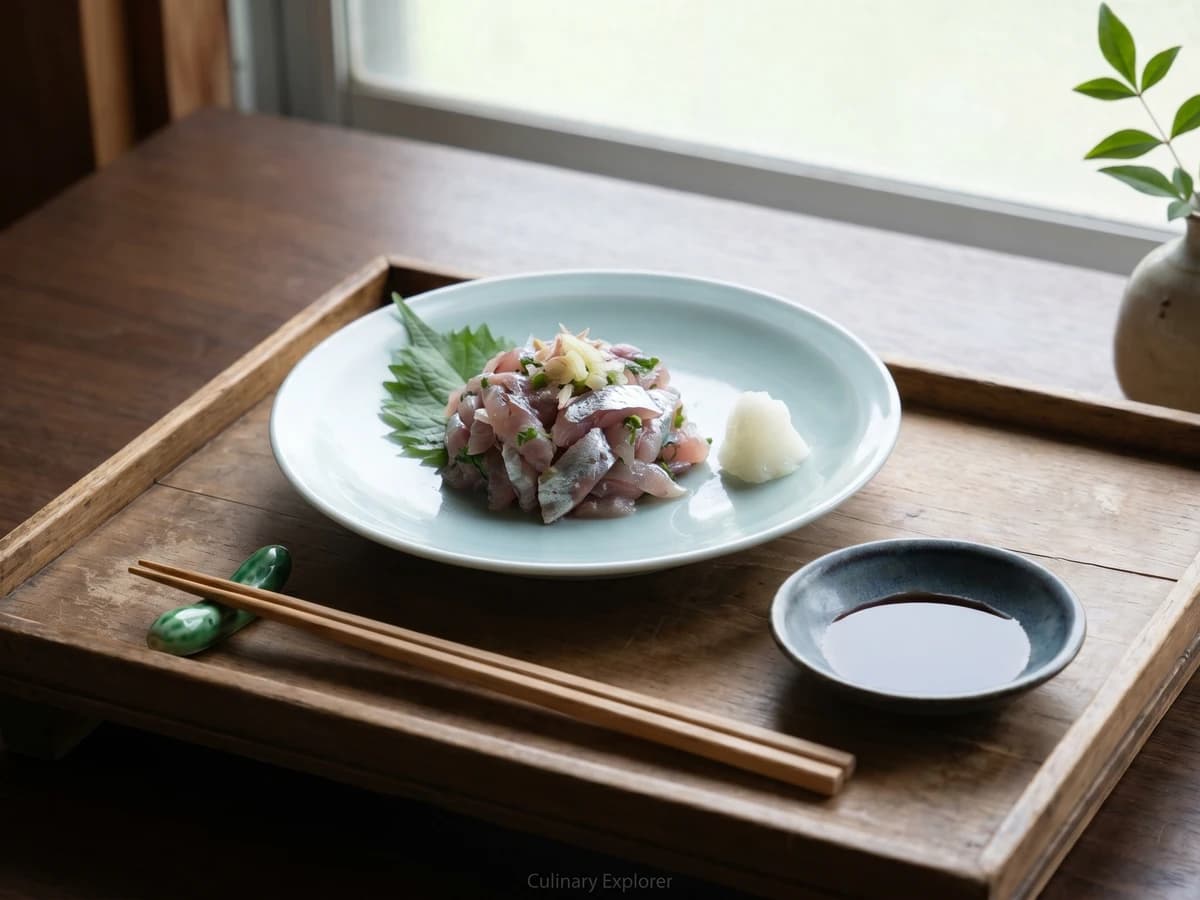
Summer horse mackerel, chopped just enough to catch ginger and scallion, becomes a cool, clean main dish with rice. The secret is fresh fish and a knife that does not bruise it.

Chef Takumi
Akashi-yaki is not sauced takoyaki. It is egg-rich batter, tender octopus, and clear dashi, cooked pale and soft so each ball can be dipped like a small custard dumpling.
Chef Takumi
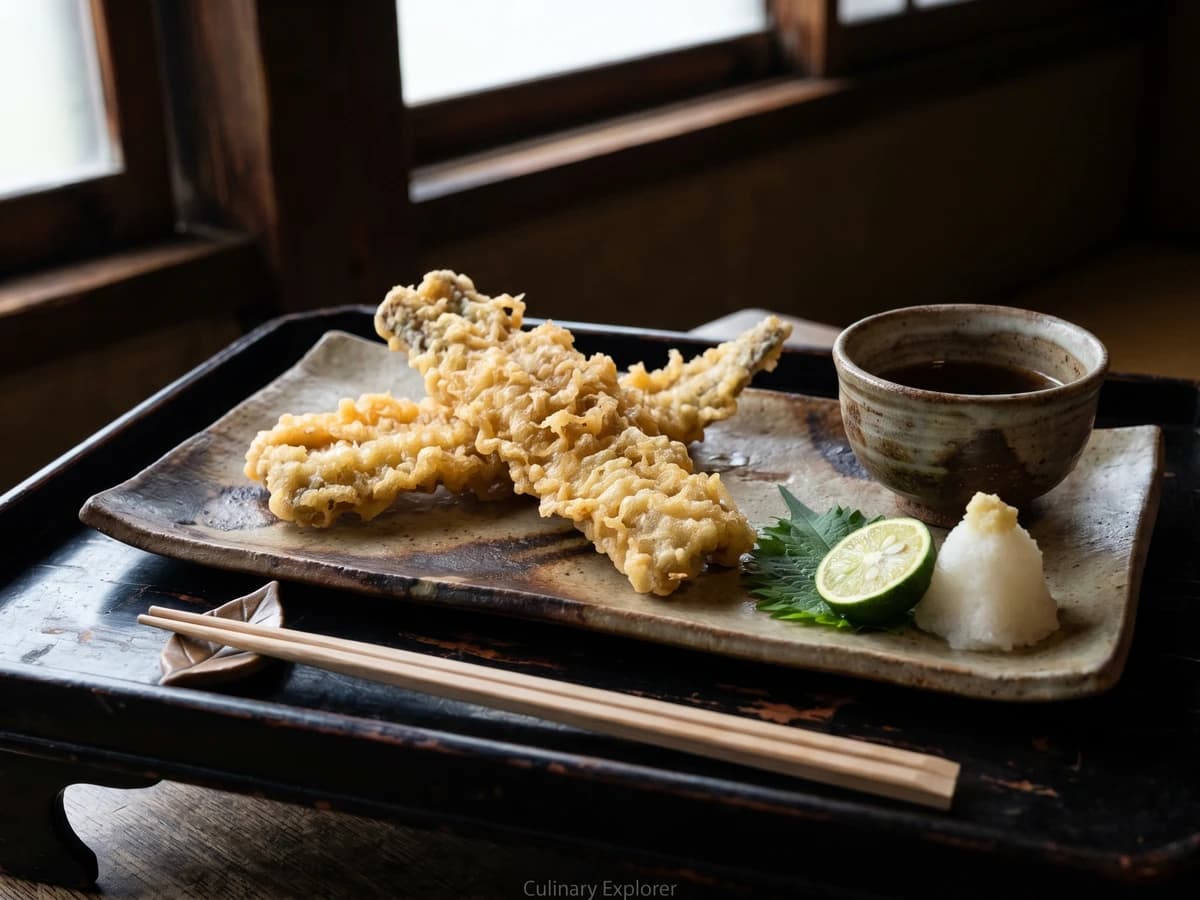
A whole anago looks like a test of nerve. It is mostly good sourcing, a dry skin, cold batter, and oil hot enough to leave the eel sweet under its lace.