Chef Takumi
Aji Fry (アジフライ, panko-fried horse mackerel)
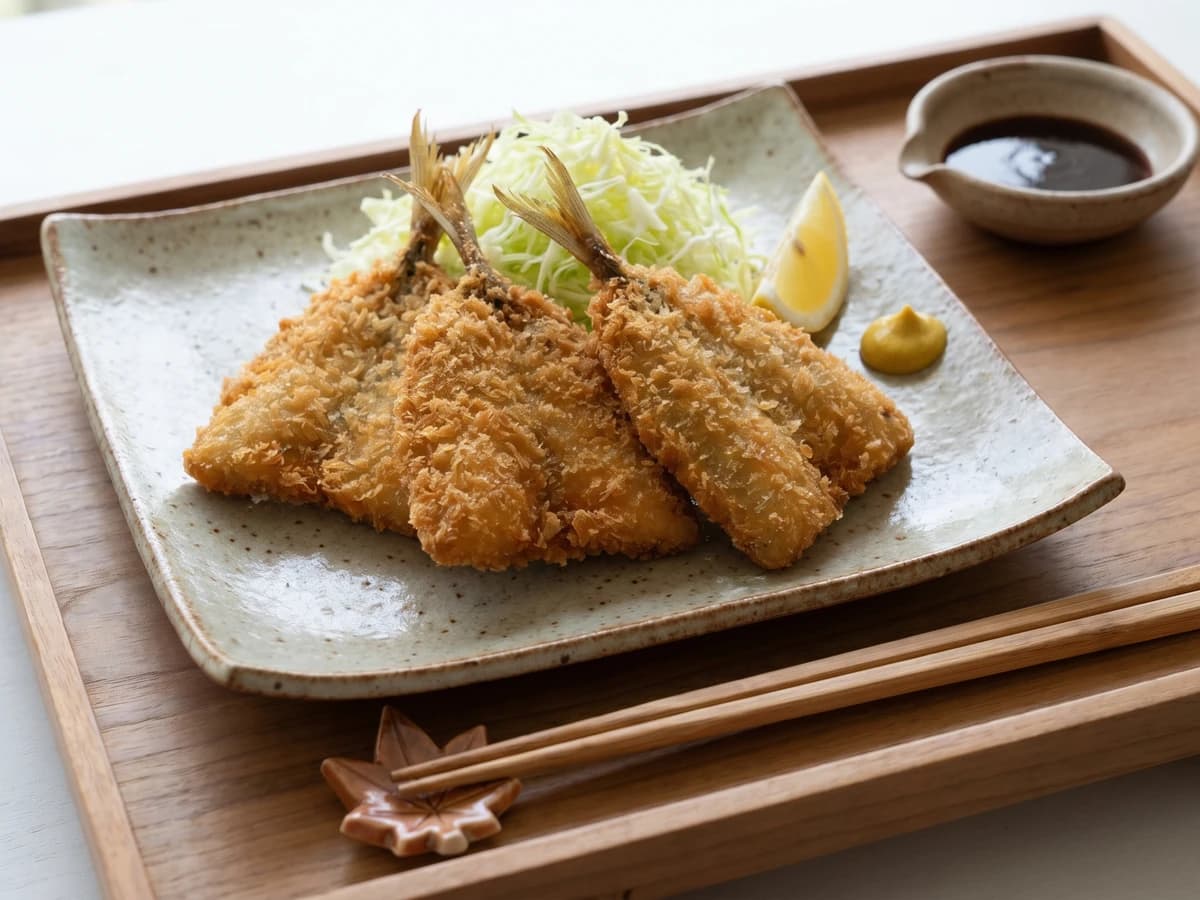
Aji fry is weeknight fish with no mystery: fresh horse mackerel opened cleanly, breaded lightly, and fried until the panko crackles while the flesh stays sweet.
A cooking platform built around craft, culture, and the stories behind what we eat.
Created by
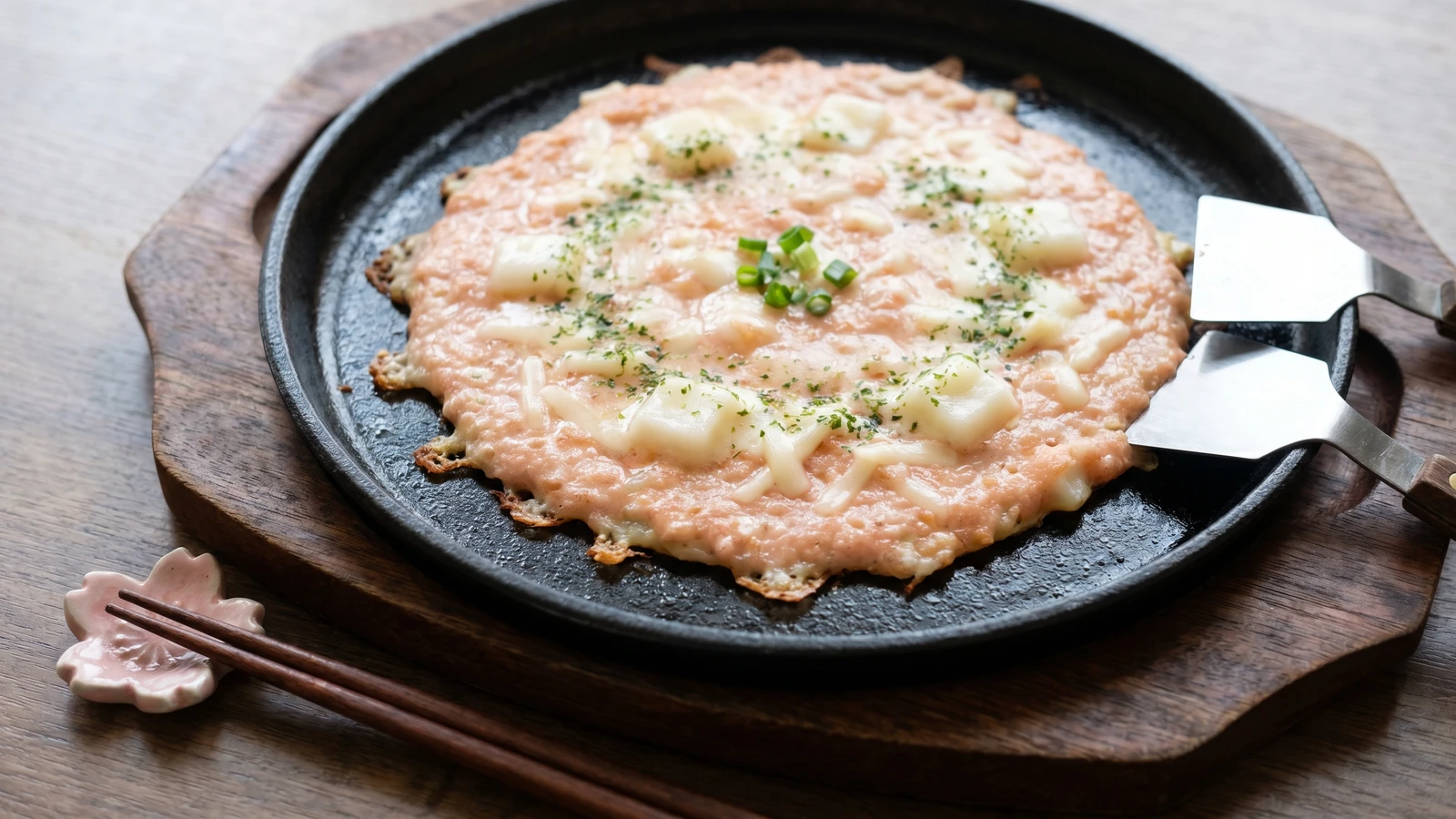
The default Tsukishima order looks unruly at first: loose batter, chopped cabbage, spicy cod roe, mochi, and cheese. Keep the wall tight, cook it thin, and the mochi will pull.
Monjayaki is the dish that makes a tidy cook nervous. The batter is loose on purpose, almost too thin to trust, and then we pour it into a ring of chopped cabbage on a hot iron plate. It looks like a mistake until it becomes dinner. This is not difficult. It is only unfamiliar, and a little rude about neatness.
The one detail that decides it is the bank. Chop the cabbage small, cook it with the mentaiko, mochi, and other fillings, then gather it into a low wall before the batter goes in. That wall holds the dashi-rich liquid long enough for the starch to thicken and the bottom to turn crisp at the edges. Break the wall and the batter runs everywhere, which is still edible but much less calming to watch.
Mentai, spicy salted cod roe, brings salt and a chili lick; the mochi brings chew; the cheese melts through both and softens the sharpness. This is Tokyo comfort food, eaten straight from the hot plate with small metal spatulas, scraped up in little bites as the bottom browns. Don't bury it under sauce. The pleasure is in the contrast: briny roe, sweet cabbage, soft mochi, crisp skirt, and that molten thread when the mochi finally pulls. Honmono, with no grand speech required.
Monjayaki is closely associated with Tokyo's shitamachi neighborhoods, especially Tsukishima, where Monja Street became known for shops serving the dish on tabletop iron plates. Its older form is often traced to mojiyaki, a simple flour-and-water batter used by children in the late Edo and Meiji periods to draw letters, moji, on a hot plate while snacking. The mentai mochi cheese version is a modern standard order, joining spicy cod roe, soft rice cake, and processed cheese in the style that became popular in postwar urban monja shops.
Quantity
1 cup
cooled
Quantity
2 tablespoons
Quantity
1 tablespoon
Worcestershire-style Japanese sauce
Quantity
1 teaspoon
Quantity
2 cups
finely chopped
Quantity
60g
membrane removed
Quantity
2 small
cut into 1/2-inch cubes
Quantity
1/2 cup
Quantity
1 tablespoon
Quantity
1 tablespoon
finely chopped
Quantity
1 teaspoon
for the griddle
Quantity
for finishing
| Ingredient | Quantity |
|---|---|
| dashicooled | 1 cup |
| all-purpose flour | 2 tablespoons |
| chūnō sauceWorcestershire-style Japanese sauce | 1 tablespoon |
| soy sauce | 1 teaspoon |
| green cabbagefinely chopped | 2 cups |
| mentaiko or karashi mentaikomembrane removed | 60g |
| kirimochi rice cakescut into 1/2-inch cubes | 2 small |
| shredded melting cheese | 1/2 cup |
| tenkasu (tempura bits) | 1 tablespoon |
| scallionfinely chopped | 1 tablespoon |
| neutral oilfor the griddle | 1 teaspoon |
| aonori (optional) | for finishing |
Whisk the flour with a few spoonfuls of cooled dashi until smooth, then whisk in the remaining dashi, chūnō sauce, and soy sauce. The batter should look far too thin, closer to seasoned stock than pancake batter. That looseness is correct. It lets the cabbage and starch thicken on the plate instead of making a heavy cake.
Put the chopped cabbage in a bowl and set the mentaiko, mochi cubes, cheese, tenkasu, and scallion beside it. Remove the mentaiko from its membrane so it can season the whole dish instead of sitting in one salty lump. Cut the mochi small enough to soften quickly, because large pieces stay hard in the center while the batter overcooks.
Heat a tabletop griddle or wide cast-iron pan over medium heat and oil it lightly. Add the cabbage, mentaiko, mochi, tenkasu, and scallion, leaving the batter in the bowl. Chop and turn the mixture with spatulas for 3 to 4 minutes, until the cabbage softens and the mentaiko turns pale pink. Cooking the filling first drives off raw cabbage harshness and gives the mochi a head start.
Gather the cooked filling into a low ring about 8 inches across, with a clear well in the center. Press the ring firmly so there are no gaps. This is the small piece of discipline in a disorderly dish: the cabbage wall holds the batter in place while it thickens.
Stir the batter once, then pour it into the center of the ring in two additions. Let the first pour thicken for a minute before adding the rest if your wall looks delicate. When the center turns glossy and lightly thickened, fold the cabbage wall inward and spread everything into a thin oval. Thin is better here. More surface means more crisp edge.
Scatter the cheese over the surface and let it melt into the batter without stirring hard. Scrape the edges inward now and then so the bottom browns in patches but does not burn. The monja is ready when the surface is glossy, the edges cling to the plate, and the mochi stretches when lifted.
Finish with a light dusting of aonori if using. Eat straight from the griddle with small metal spatulas, pressing each bite briefly against the hot surface before lifting it. That last scrape gives you the crisp bottom, which is half the reason everyone at the table has stopped pretending to be polite.
1 serving (about 300g)
Culinary guides, cultural storytelling, and the editorial depth that makes cooking meaningful.
Discover Culinary ExplorerChef Takumi
Aji fry is weeknight fish with no mystery: fresh horse mackerel opened cleanly, breaded lightly, and fried until the panko crackles while the flesh stays sweet.
Chef Takumi
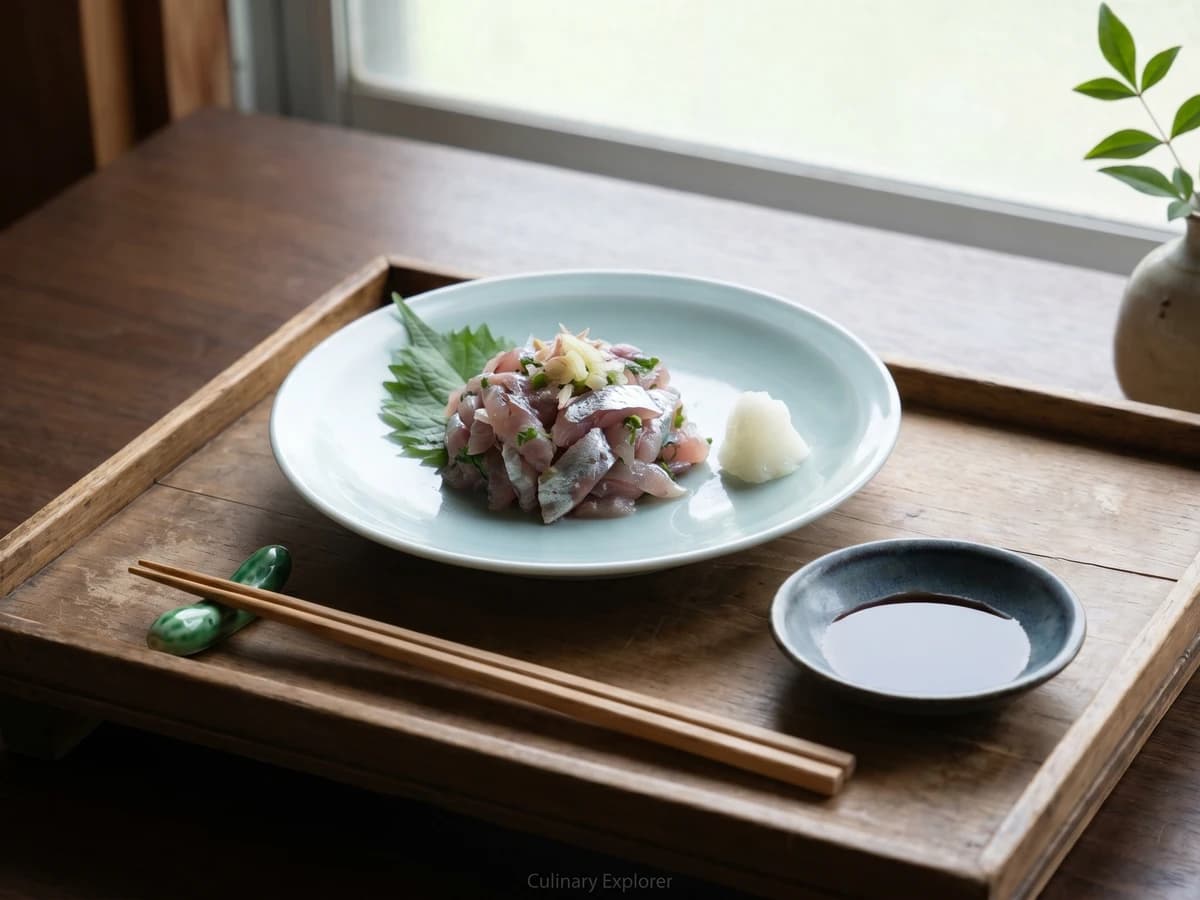
Summer horse mackerel, chopped just enough to catch ginger and scallion, becomes a cool, clean main dish with rice. The secret is fresh fish and a knife that does not bruise it.

Chef Takumi
Akashi-yaki is not sauced takoyaki. It is egg-rich batter, tender octopus, and clear dashi, cooked pale and soft so each ball can be dipped like a small custard dumpling.
Chef Takumi
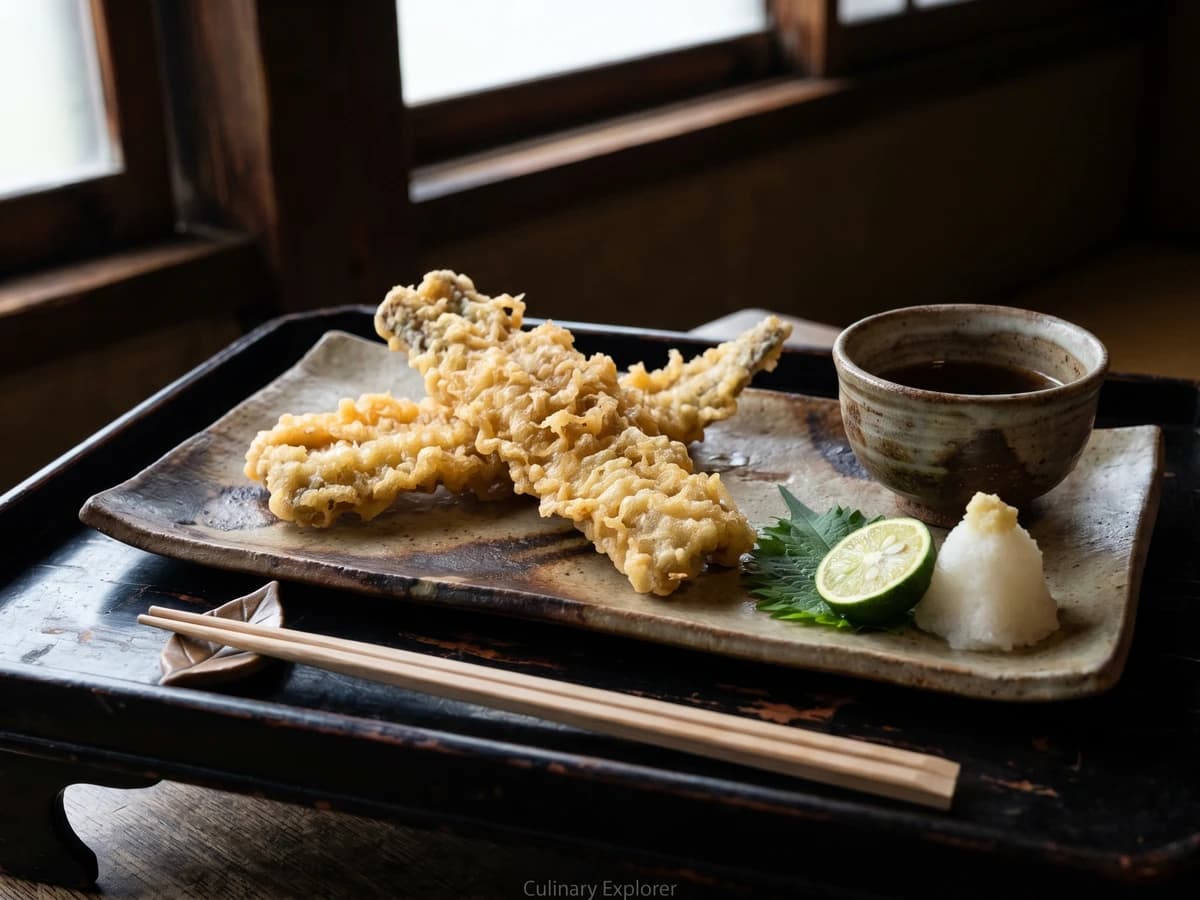
A whole anago looks like a test of nerve. It is mostly good sourcing, a dry skin, cold batter, and oil hot enough to leave the eel sweet under its lace.