Chef Takumi
Aji Fry (アジフライ, panko-fried horse mackerel)
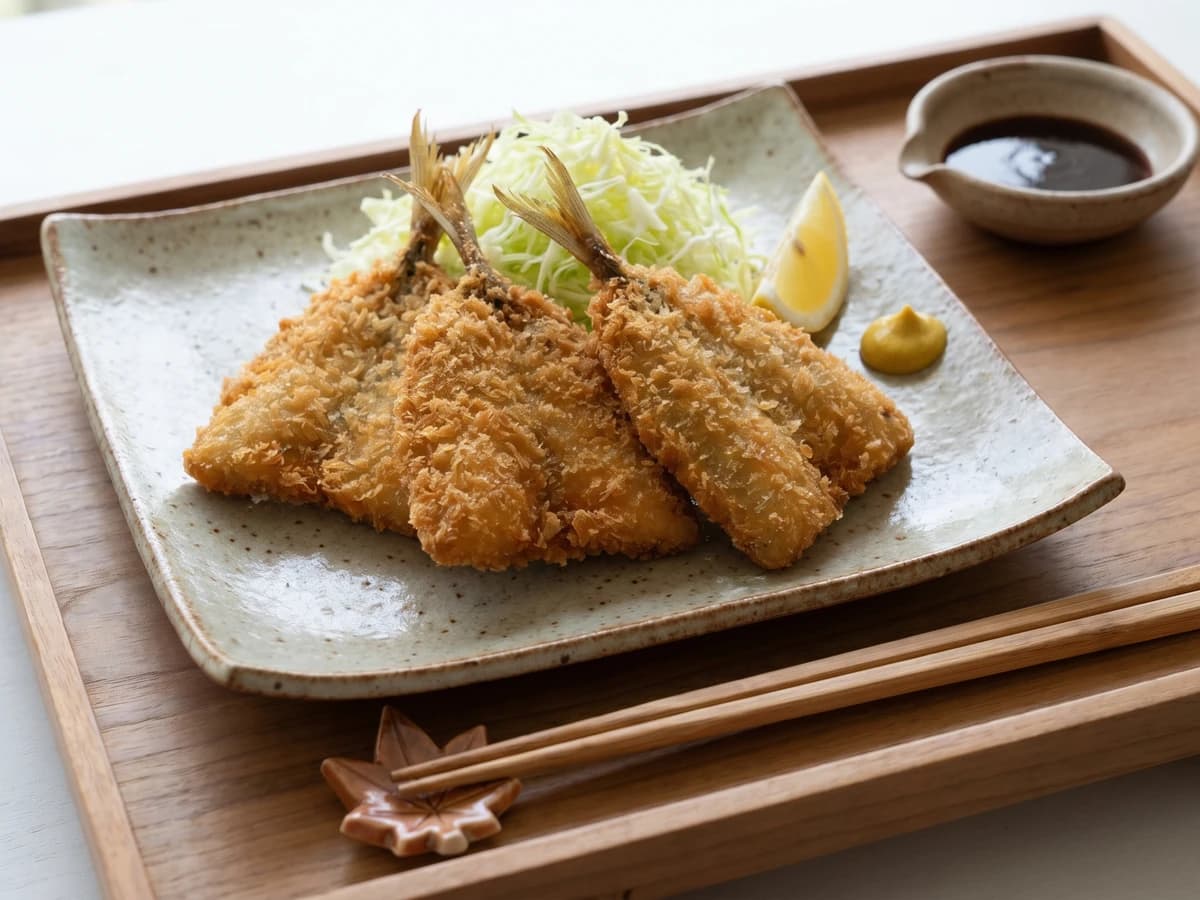
Aji fry is weeknight fish with no mystery: fresh horse mackerel opened cleanly, breaded lightly, and fried until the panko crackles while the flesh stays sweet.
A cooking platform built around craft, culture, and the stories behind what we eat.

Created by
Cold minced pork, softened onion, and a sure panko coat make the butcher-shop cutlet a home dish: juicy inside, crisp outside, with sauce on the side and nothing to hide.
Menchi-katsu looks like a small risk in the frying pan: browned panko outside, minced meat inside, and everyone worrying whether the center is cooked before the crust goes too dark. Good. Worry makes you pay attention. But this is not a difficult cutlet. It is only a small piece of yōshoku, Japanese Western-style cooking, made honest by cold meat, softened onion, and a steady oil temperature.
The first secret is the bind. Salt the pork and knead it until the mince turns sticky and pale, then fold in the cooled onion. That tackiness is not fussiness; it makes a net that holds the juice while the panko crust protects the outside. If the mixture is loose, the cutlet leaks. If it is chilled and tight, it behaves.
At the table it sits plainly with rice, miso soup, shredded cabbage, and tonkatsu sauce. The sauce is a companion, not camouflage. Fry at a moderate heat, not a heroic one, and cook the pork through until the juices run clear. This is 本物 (honmono, the real thing) in its butcher-shop clothes: inexpensive, unhidden, and very pleased with itself.
Menchi-katsu belongs to yōshoku, the Japanese adaptation of Western dishes that expanded quickly after the Meiji Restoration of 1868. The name comes from the English 'minced meat cutlet,' shaped by Japanese pronunciation, and the dish became familiar as sōzai, prepared food sold by butcher shops, department-store food halls, and neighborhood counters. In parts of Kansai, especially around Osaka and Kobe, the same dish is often called minchi-katsu, preserving a different rendering of 'mince'.
Quantity
1 tablespoon
for cooking the onion
Quantity
1 medium (about 200g)
very finely minced
Quantity
500g
about 20% fat
Quantity
1 teaspoon
Quantity
1/4 teaspoon
Quantity
1/8 teaspoon
Quantity
1
Quantity
1/2 cup (about 25g)
for the meat mixture
Quantity
3 tablespoons
Quantity
1 teaspoon
Quantity
1/3 cup
Quantity
2
beaten with 1 tablespoon water
Quantity
2 cups (about 100g)
for coating
Quantity
4 cups, or enough for 2 inches in the pot
Quantity
1/4 small head
very finely shredded
Quantity
to serve
Quantity
to serve
Quantity
to serve
| Ingredient | Quantity |
|---|---|
| neutral oilfor cooking the onion | 1 tablespoon |
| yellow onionvery finely minced | 1 medium (about 200g) |
| ground pork shoulderabout 20% fat | 500g |
| fine sea salt | 1 teaspoon |
| freshly ground black pepper | 1/4 teaspoon |
| ground nutmeg | 1/8 teaspoon |
| large egg | 1 |
| pankofor the meat mixture | 1/2 cup (about 25g) |
| whole milk | 3 tablespoons |
| Japanese Worcestershire sauce | 1 teaspoon |
| all-purpose flour | 1/3 cup |
| large eggsbeaten with 1 tablespoon water | 2 |
| pankofor coating | 2 cups (about 100g) |
| neutral frying oil | 4 cups, or enough for 2 inches in the pot |
| cabbagevery finely shredded | 1/4 small head |
| tonkatsu sauce | to serve |
| karashi (Japanese hot mustard) (optional) | to serve |
| lemon wedges (optional) | to serve |
Warm 1 tablespoon oil in a small pan over medium-low heat. Add the minced onion and a pinch of the measured salt, then cook 7 to 9 minutes until translucent, sweet-smelling, and reduced, with no browning. Spread it on a plate and cool completely. Raw onion sheds water inside the patty and leaves sharp little pockets; hot onion warms the pork fat and weakens the bind.
Stir the 1/2 cup panko with the milk and leave it for 5 minutes. The crumbs soften into a quiet binder, keeping the cutlet juicy without making it heavy. If dry crumbs go straight in, they steal moisture from the pork as it cooks.
Put the ground pork and the remaining salt in a cold bowl. Mix and knead with your hand until the meat turns sticky and pale and clings to the side of the bowl, 1 to 2 minutes. Add the soaked panko, egg, cooled onion, pepper, nutmeg, and Worcestershire sauce, then mix only until even. Salt first because it draws out the proteins that bind the mince; everything after that is seasoning and tenderness.
Divide the mixture into 8 portions. Lightly oil your hands, toss each portion between your palms a few times to drive out trapped air, then shape into ovals about 3/4 inch thick. Press a shallow dimple in the center of each one and chill for 20 minutes. Air pockets split in the oil, cold patties hold their shape, and the dimple lets the center swell flat instead of rising into a dome.
Set the flour, beaten eggs with water, and coating panko in three shallow trays. Coat each patty thinly with flour and shake off the extra, dip it in egg, then press panko all over. Rest the breaded cutlets on a rack for 10 minutes while the oil heats. The order is not ceremony: flour gives the egg a dry surface, egg glues the crumbs, and the rest lets the koromo, the coating, settle.
Heat the frying oil to 165 to 170 C, or 330 to 340 F, in a deep heavy pot. Fry 3 or 4 cutlets at a time for 4 to 5 minutes, turning every minute, until the panko is deep gold and the center reaches 71 C, or 160 F. Keep the bubbling lively but controlled. If the oil is too hot, the crust darkens before the pork is cooked through; if it is too cool, the panko drinks oil.
Lift the cutlets to a wire rack and rest them for 3 minutes. Cut one open if you are not using a thermometer: the meat should show no pink and the juices should run clear. Serve with shredded cabbage, tonkatsu sauce, karashi, and lemon if you like it. Put the sauce beside the cutlet or in a small dish, not over everything. The cabbage cuts the richness, and the sauce should sharpen the cutlet, not do its work for it.
1 serving (about 250g)
Culinary guides, cultural storytelling, and the editorial depth that makes cooking meaningful.
Discover Culinary ExplorerChef Takumi
Aji fry is weeknight fish with no mystery: fresh horse mackerel opened cleanly, breaded lightly, and fried until the panko crackles while the flesh stays sweet.
Chef Takumi
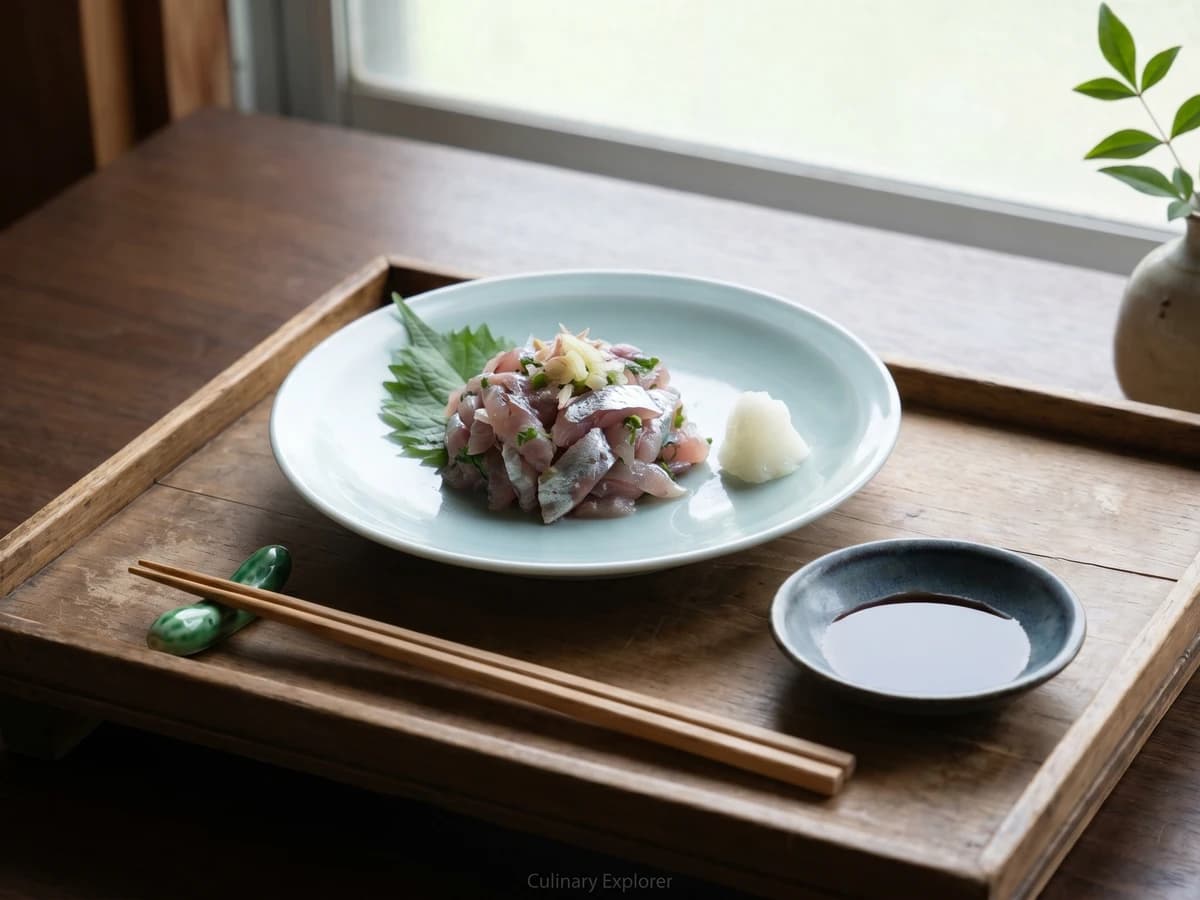
Summer horse mackerel, chopped just enough to catch ginger and scallion, becomes a cool, clean main dish with rice. The secret is fresh fish and a knife that does not bruise it.

Chef Takumi
Akashi-yaki is not sauced takoyaki. It is egg-rich batter, tender octopus, and clear dashi, cooked pale and soft so each ball can be dipped like a small custard dumpling.
Chef Takumi
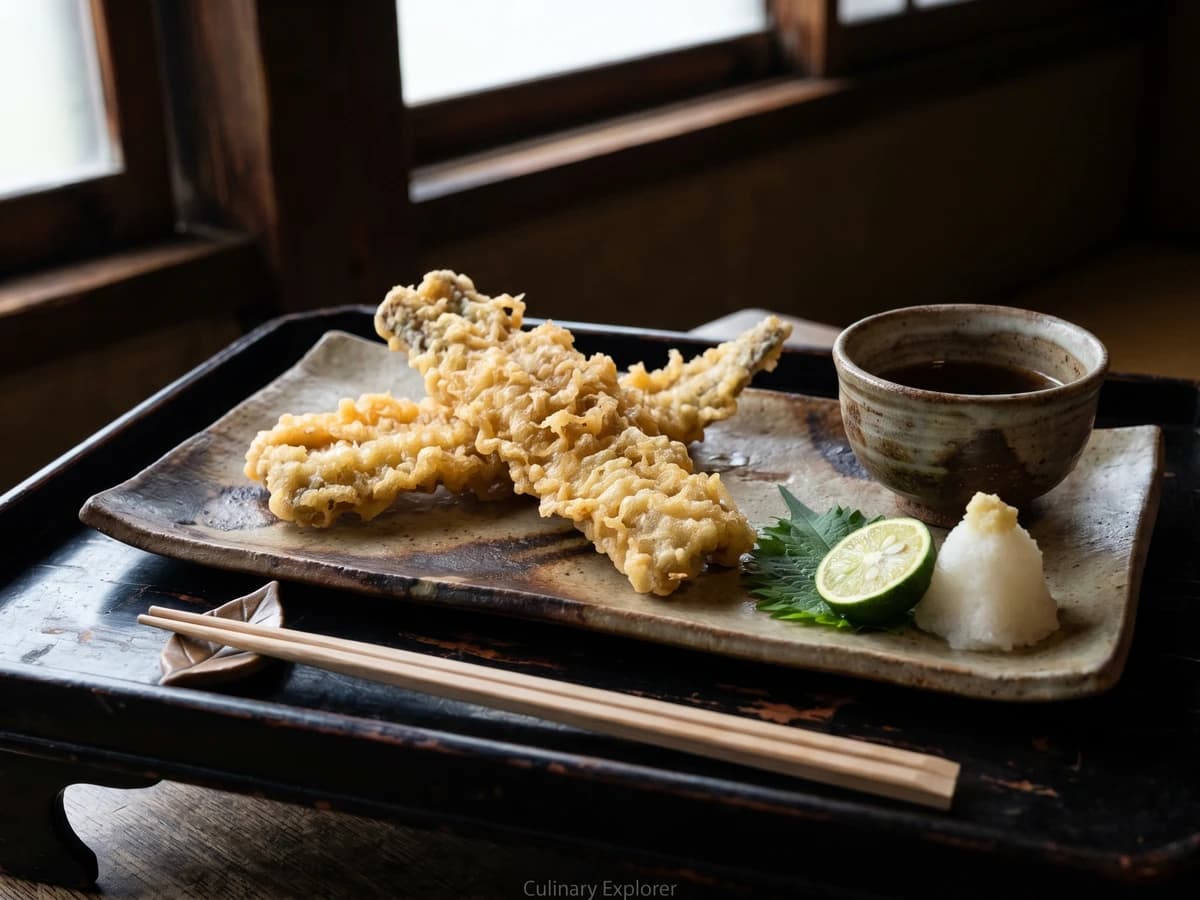
A whole anago looks like a test of nerve. It is mostly good sourcing, a dry skin, cold batter, and oil hot enough to leave the eel sweet under its lace.