Chef Lupita
Aceite de Chiltepin Bajacaliforniano
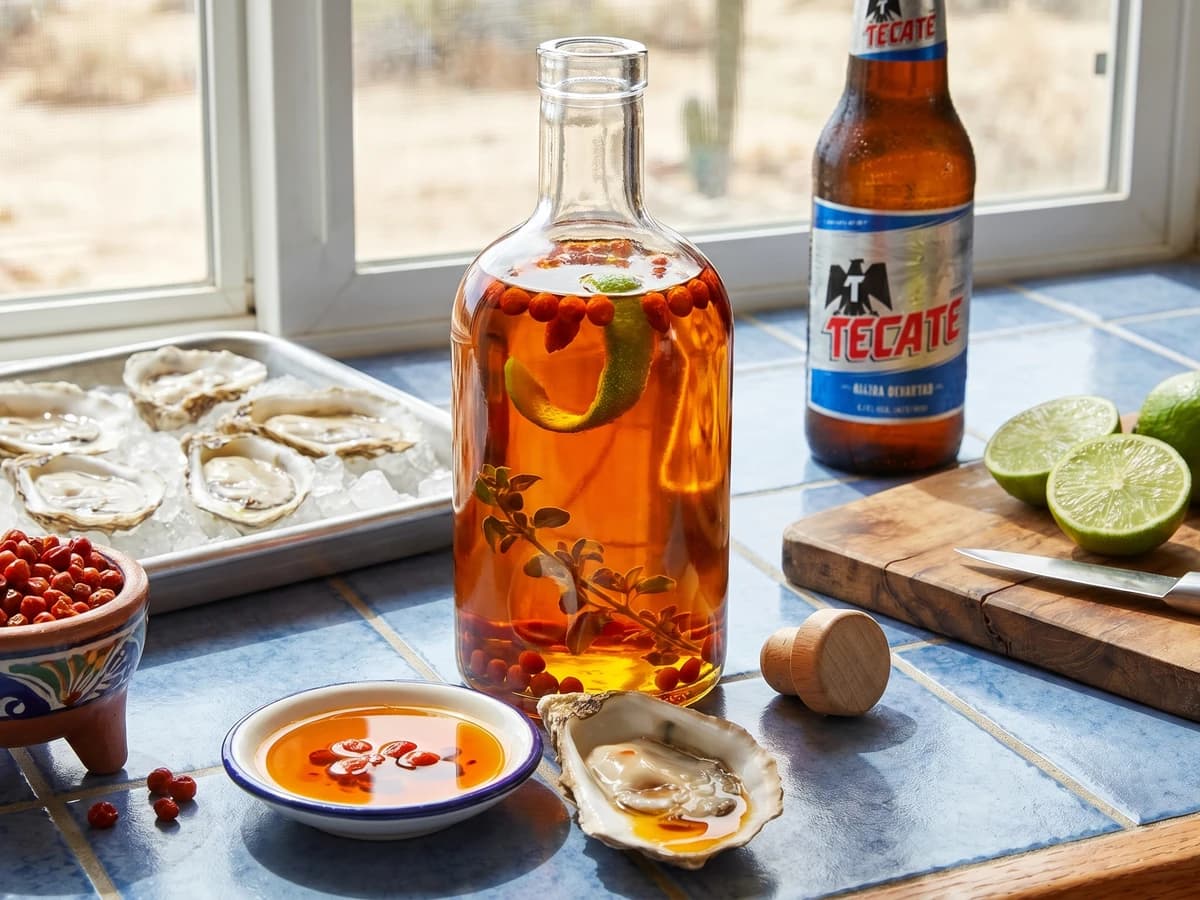
Baja California's wild chiltepin steeped in olive oil with garlic, orejon, and lime peel, until the oil turns ruby-amber and carries the slow, sneaky burn of the desert coast.
A cooking platform built around craft, culture, and the stories behind what we eat.

Created by
Oaxaca's late-autumn quince, poached slowly in piloncillo syrup with canela and clove until the flesh turns rose-colored. Served cold with queso fresco from Etla or spooned over pan de yema.
This is from Oaxaca, from the Sierra Norte where quince trees grow in the cool valleys above the city and the fruit comes down to Mercado 20 de Noviembre and Mercado de la Merced in baskets every October. The yellow skin still wearing its gray fuzz, the fruit so hard you can knock two together and they sound like wood. That is when membrillo en almíbar belongs on the stove. Not in July. Not in March. October and November, when the mercado tells you it is time.
The almíbar is built on piloncillo, the unrefined cane sugar pressed into cones in the trapiches of the Sierra. Piloncillo is not brown sugar. It is cane juice cooked down until it crystallizes, full of molasses and minerals, and it carries a smoky depth that white sugar will never give you. Together with canela, real canela, the soft stick from Sri Lanka that you can crumble between your fingers, not the hard cassia bark that most US markets sell as cinnamon, and a few cloves, the syrup turns into something that smells like Oaxacan Christmas.
The quince does the rest. You poach it slowly. Slowly. Quince does not give up its color the way an apple does. It starts pale yellow and over an hour and a half it deepens into the rose-pink that every senora in the Central de Abastos will tell you is the only correct color. Pull it too early and you have undercooked fruit. Let it go and the magic happens.
My mother had a recipe for membrillo in her notebook, but she had it as ate, the paste, not en almíbar. The almíbar version I learned from Senora Felicitas in Tlacolula, who served it to me on a Sunday afternoon with a slab of queso fresco from Etla on the side. She said her mother made it the same way and her grandmother before that. The combination of the sweet poached fruit and the cool salty cheese is one of those Oaxacan inventions that sounds wrong on paper and works completely on the plate. Saber cocinar es saber vivir.
Quince (membrillo, Cydonia oblonga) is not native to Mexico. It was carried from southern Spain to New Spain by the Franciscans and Dominicans in the 16th century and planted in the convent gardens of Puebla, Oaxaca, and Michoacan, where the cool highland climates suited it. The fruit took particular root in the Sierra Norte de Oaxaca, where it became a staple of late-autumn preserving alongside tejocote, pera de San Juan, and durazno criollo. Membrillo en almíbar and its denser cousin, ate de membrillo, both descend from the medieval Iberian tradition of preserving fruit in honey and later in cane sugar; the Mexican adaptation substituted piloncillo for refined sugar, which gave the almíbar its characteristic darker color and molasses depth and made it distinctly criollo rather than Spanish.
Quantity
3 pounds (about 5 to 6 medium fruits)
firm and fragrant
Quantity
10 cups
Quantity
1 pound (2 cones)
or substitute dark muscovado sugar
Quantity
1 cup
Quantity
2 sticks, about 4 inches each
Quantity
6
Quantity
1
traditional in some Sierra Norte versions
Quantity
1 strip, about 3 inches long
no white pith
Quantity
1 strip, about 2 inches long
no white pith
Quantity
1
juiced
Quantity
for serving
sliced
Quantity
for serving
sliced
| Ingredient | Quantity |
|---|---|
| ripe quincefirm and fragrant | 3 pounds (about 5 to 6 medium fruits) |
| water | 10 cups |
| piloncilloor substitute dark muscovado sugar | 1 pound (2 cones) |
| granulated sugar | 1 cup |
| canela (true Mexican cinnamon, Cinnamomum verum) | 2 sticks, about 4 inches each |
| whole cloves | 6 |
| star anise pod (optional)traditional in some Sierra Norte versions | 1 |
| orange peelno white pith | 1 strip, about 3 inches long |
| lime peelno white pith | 1 strip, about 2 inches long |
| limejuiced | 1 |
| queso fresco (optional)sliced | for serving |
| pan de yema (optional)sliced | for serving |
Buy quince that is yellow, firm, and heavy in the hand. The fruit should smell like a cross between an apple and a rose. If it still has the gray fuzz on the skin, even better. That fuzz is the sign it has not been over-handled. Quince ripens in October and November in the Sierra Norte de Oaxaca, and that is when this dish belongs on the stove. Out of season, do not bother. Cook what the mercado is selling today.
Quince is hard. This is not an apple. Use a heavy peeler and a sharp paring knife. Peel each fruit, then quarter it lengthwise. Cut out the core and the seeds. Save the peels and cores. Wrap them in a square of cheesecloth and tie it with kitchen string. The pectin in the peels and seeds is what gives the syrup its body and its rose color. Throw them out and you have flavored water.
As you work, drop the cut quince into a bowl of cold water with the lime juice. Quince oxidizes and turns brown the moment it hits air. The acidulated water keeps the flesh pale until you are ready to cook it. Do not skip this. The color of the finished fruit depends on it.
In a wide heavy pot, large enough to hold the quince in two layers at most, combine the 10 cups of water, the piloncillo broken into chunks, the granulated sugar, the canela, the cloves, the star anise if using, and both citrus peels. Bring to a simmer over medium heat, stirring until the piloncillo dissolves completely. Piloncillo is the soul of this almíbar. Refined white sugar alone gives you a flat, one-note syrup. The piloncillo brings molasses, the deep brown of cane that has been cooked down in copper kettles in the mountains. La piloncillo es el sabor.
Drain the quince and add it to the syrup along with the cheesecloth bundle of peels and cores. The fruit should be just submerged. If it is not, add a little more hot water until it is. Bring back to a bare simmer. Lazy bubbles only. A hard boil will break the fruit before it has time to take on color and the syrup will scorch on the bottom.
Cover partially and simmer for one hour and fifteen minutes to one hour and forty-five minutes. Do not rush this. Quince does not give up its color quickly. The flesh starts pale yellow, turns amber around the forty-minute mark, and slowly deepens into the rose-pink color the senoras at Mercado 20 de Noviembre will tell you is the only correct color for membrillo en almíbar. The fruit is ready when a knife slides through it without resistance and the flesh has turned a deep coral or rose. The transformation is the recipe. Pull it before it happens and you have undercooked quince. Asi se hace y punto.
Lift the quince out gently with a slotted spoon and arrange it in a clean glass or ceramic bowl. Remove the cheesecloth bundle and squeeze it firmly over the pot to extract the pectin-rich juice. Discard the bundle. Raise the heat under the syrup to medium-high and reduce until it coats the back of a spoon and the surface looks glossy, about 10 to 15 minutes. The syrup should be thick enough that a drop holds its shape on a cold plate. Pour the hot syrup over the quince. The cinnamon and cloves go in the bowl with it.
Let the membrillo cool to room temperature, then cover and refrigerate overnight. This is not optional. The fruit needs the long rest to absorb the syrup and finish developing color and depth. Eat it cold or at room temperature, with a thick slice of queso fresco from Etla and, if you have it, a slice of pan de yema from any Oaxacan panaderia. Recetas probadas y garantizadas.
1 serving (about 155g)
Culinary guides, cultural storytelling, and the editorial depth that makes cooking meaningful.
Discover Culinary ExplorerChef Lupita
Baja California's wild chiltepin steeped in olive oil with garlic, orejon, and lime peel, until the oil turns ruby-amber and carries the slow, sneaky burn of the desert coast.

Chef Lupita
Puebla's Lenten convent adobo, a brick-red vinegar chile paste of ancho, guajillo, garlic, oregano, and comino made to dress fish for the meatless calendar.
Chef Lupita
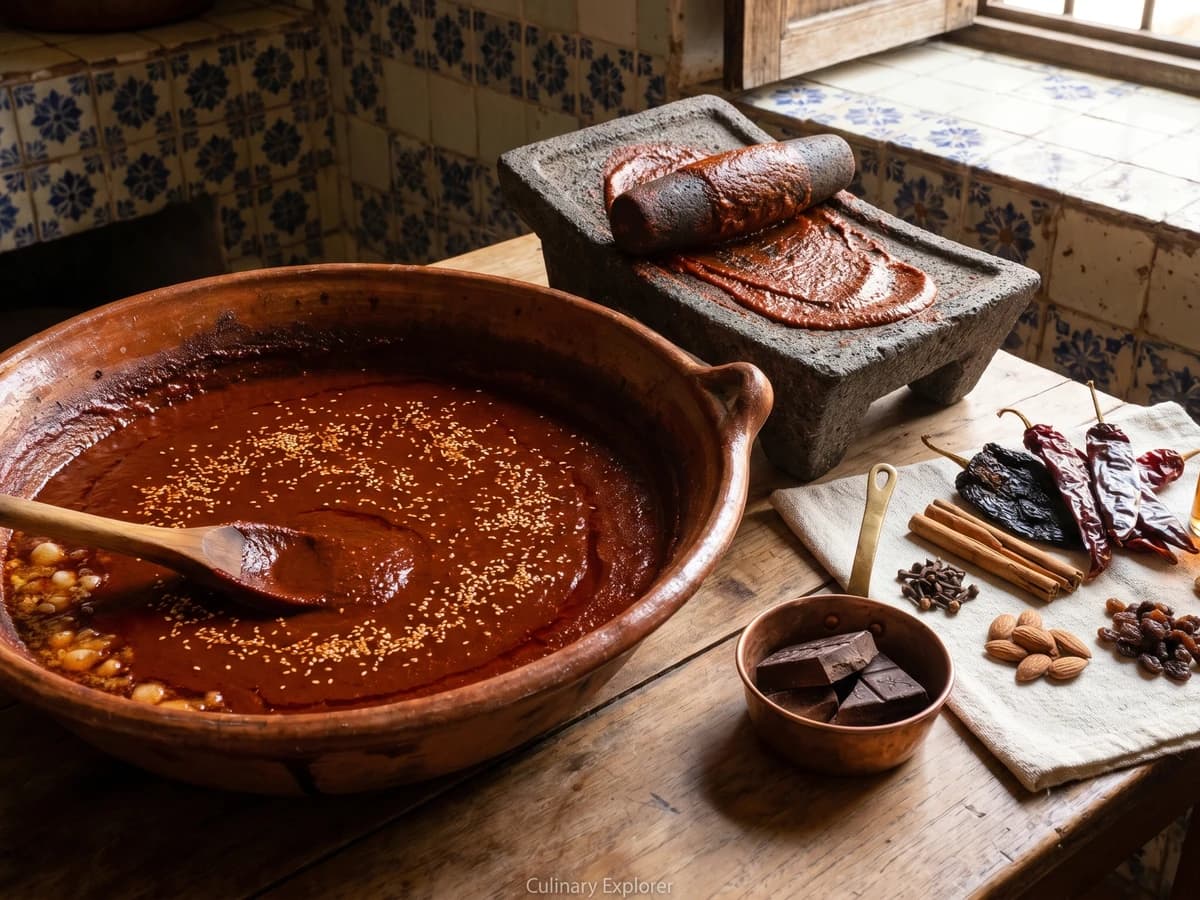
Zacatecas' wedding-table adobo, built from toasted guajillo and ancho, piloncillo, sour orange, chocolate, canela, clavo, almonds, sesame, and lard.

Chef Lupita
Puebla's convent kitchens built this adobo with ancho, guajillo, jerez, almonds, raisins, clove, and lard, a baroque marinade that stains pork loin and finishes as the sauce.