Culinary Explorer
A cooking platform built around craft, culture, and the stories behind what we eat.
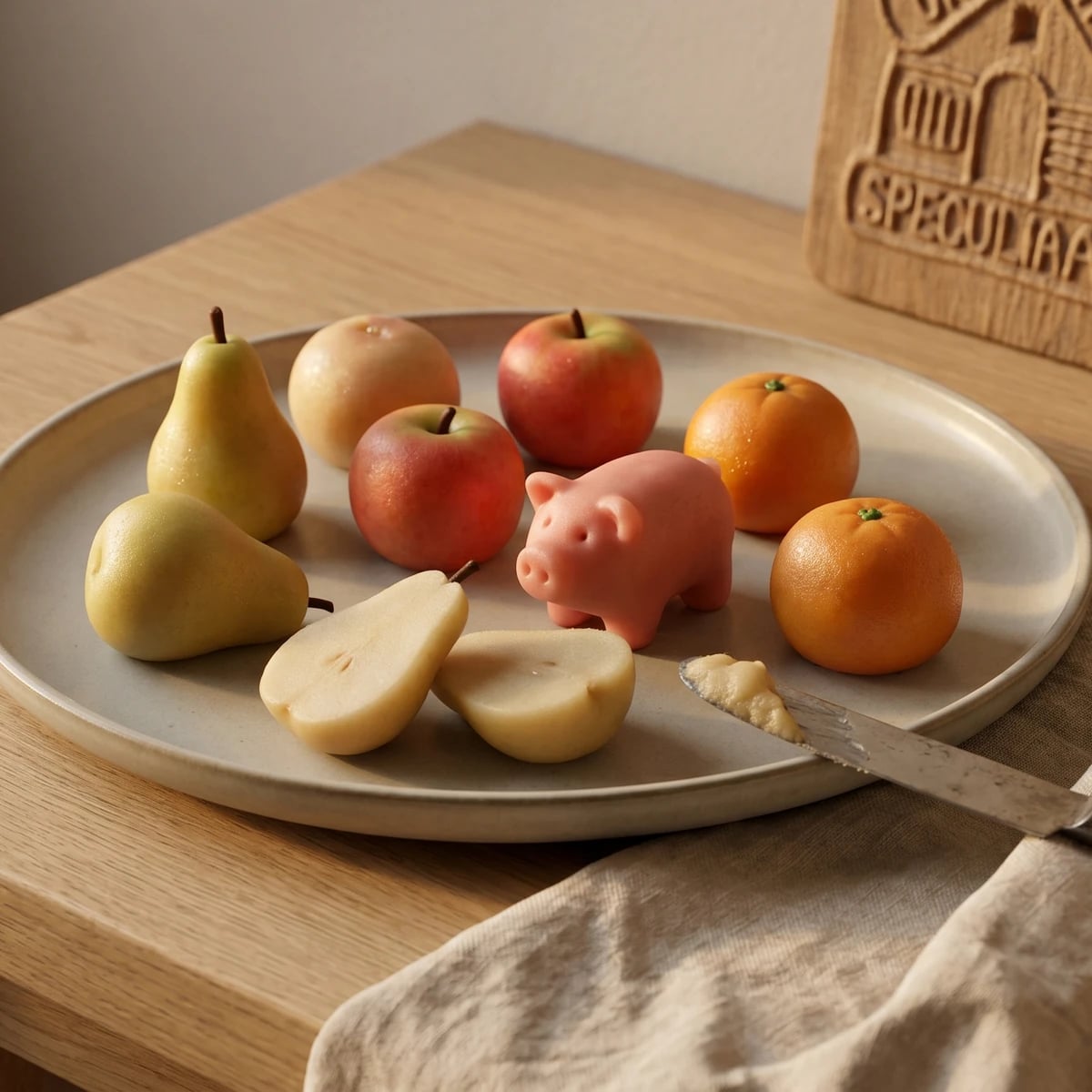
Marsepein (Dutch Marzipan)
Created by Chef Joost
Marsepein is December made edible: almonds, sugar, and patience kneaded into the little fruits and figures that Dutch children inspect before they dare to eat.
The first marsepein I remember was not eaten. It was studied. On my grandmother's table sat a small painted pig, pink as a seaside sunset and far too grand, I thought, to be bitten. Beside it were pears, carrots, potatoes, and tiny oranges, all made from almonds and sugar, because Dutch December has always had a weakness for food pretending to be other food. For obvious reasons, children understand this better than adults.
But let me tell you a secret. Marsepein looks like a luxury, and historically it was one, yet the recipe is almost stubbornly plain: almonds, sugar, a little binding, and time. The name came into Dutch through the old European trade of sweets and apothecaries, from forms such as Italian marzapane and French massepain; its deeper origin is argued over, so we won't pretend certainty where the documents do not give it. A forced etymology is worse than silence.
What matters in the kitchen is the grind. Almonds must be fine enough to drink the sugar into themselves, and the paste must rest so it loses its grit and becomes smooth under the thumb. Hou het altijd simpel, always keep it simple. Knead it well, let it sleep, shape it with a light hand, and don't bury it under colour. Good marsepein should taste first of almond, then of December.
Ingredients
blanched almonds or very fine almond flour
Quantity
250g
powdered sugar
Quantity
250g
sifted
rosewater or orange blossom water
Quantity
1 tablespoon
| Ingredient | Quantity |
|---|---|
| blanched almonds or very fine almond flour | 250g |
| powdered sugarsifted | 250g |
| rosewater or orange blossom water | 1 tablespoon |
Where cooking meets culture.
Culinary guides, cultural storytelling, and the editorial depth that makes cooking meaningful.
Discover Culinary Explorer