
Chef Lupita
Agua de Alfalfa
Ciudad de México's highland market agua fresca, fresh alfalfa blended with pineapple and lime until bright green, strained clean, and poured cold from the vitrolero.
A cooking platform built around craft, culture, and the stories behind what we eat.
Created by
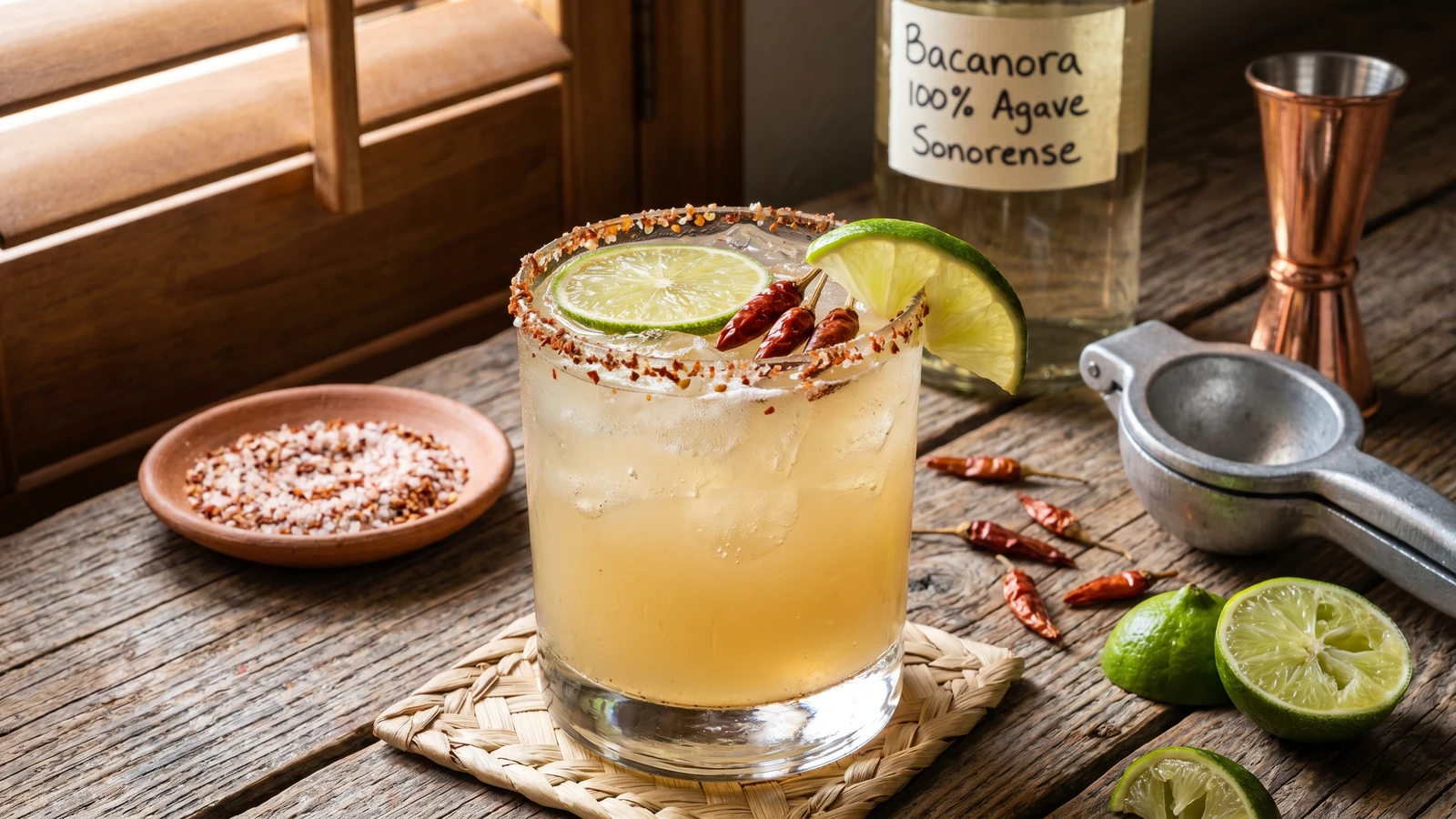
Sonora's margarita built on bacanora, the agave spirit prohibited for 77 years, with fresh lime, sour orange, agave nectar, and a salt rim crusted with wild chiltepin from the sierra.
This is from Sonora. Not the margarita that Cancun bartenders pour for cruise ship passengers, not the slushy lime-green thing they serve at chain restaurants in the north. This is a Sonoran cocktail built on bacanora, and the spirit is the entire point.
Bacanora is not mezcal. Let me say that again because the bartenders in Mexico City still get it wrong. Bacanora is made from agave Pacifica (Agave angustifolia variety Pacifica), grown wild in the sierra of eastern Sonora, roasted in earthen pits, fermented, and distilled in copper. It carries a Denomination of Origin that covers 35 municipalities in the state. From 1915 until 1992, it was illegal. Seventy-seven years underground. The men and women who kept distilling it through prohibition, in the ranches above Bacanora, Sahuaripa, and Arivechi, are the reason this spirit exists at all. Treat it that way.
The chiltepin on the rim is the wild chile of the Sonoran desert. Birds eat the berries from thorny bushes and spread the seeds across the sierra; harvesters pay for those chiles by the gram because nobody farms them. The salt comes from Bahia de Kino, where the Sea of Cortez evaporates in flat pans on the coast. The agave is the family of the spirit. The lime is the brightness that wakes everything up. Nothing in this drink is decorative. Cada estado, su propia cocina, and Sonora pours from the desert into the glass.
My mother never made this. She was from Jalisco and she drank tequila like a Jalisciense. I learned bacanora from a senora named Dona Rosario in Sahuaripa, who poured me a glass at three in the afternoon and told me to taste the smoke before I said anything stupid about it. I have not said anything stupid about bacanora since.
Bacanora takes its name from the town of Bacanora in eastern Sonora and has been distilled in the sierra since the Spanish brought copper stills in the 17th century, though the indigenous Opata people fermented agave Pacifica long before distillation arrived. In 1915, Sonoran governor Plutarco Elias Calles, later president of Mexico, prohibited the production and consumption of bacanora as part of a broader temperance campaign, and the ban remained in effect for 77 years until 1992; producers who continued distilling during that period faced fines, imprisonment, and the destruction of their stills, yet the practice never died in the mountain ranches. Bacanora received its Denomination of Origin from the Mexican government in 2000, restricting production to 35 specified municipalities in Sonora, and is recognized as legally and botanically distinct from mezcal despite both spirits sharing agave roasting traditions.
Quantity
4 ounces
from the Sonoran sierra (Cielo Rojo, Rancho Tepua, or Sunora)
Quantity
2 ounces
about 4 to 5 limes
Quantity
1 ounce
the same agave the bacanora is made from
Quantity
1/2 ounce
or equal parts fresh orange and lime juice
Quantity
2 tablespoons
Quantity
1 tablespoon
crushed coarsely between the fingers
Quantity
1
for rimming the glass
Quantity
plenty
Quantity
2
for garnish
Quantity
a few
for the surface of the drink
| Ingredient | Quantity |
|---|---|
| bacanora blancofrom the Sonoran sierra (Cielo Rojo, Rancho Tepua, or Sunora) | 4 ounces |
| fresh Mexican lime juiceabout 4 to 5 limes | 2 ounces |
| agave nectar from agave Pacificathe same agave the bacanora is made from | 1 ounce |
| naranja agria (sour orange) juiceor equal parts fresh orange and lime juice | 1/2 ounce |
| flaky sea salt from Bahia de Kino | 2 tablespoons |
| dried chiltepincrushed coarsely between the fingers | 1 tablespoon |
| lime wedgefor rimming the glass | 1 |
| ice cubes | plenty |
| thin slices of lime (optional)for garnish | 2 |
| whole chiltepines (optional)for the surface of the drink | a few |
Crush the dried chiltepines coarsely between your fingers onto a small plate. Do not grind them to powder. You want flakes you can see, pieces that bite when they meet your tongue. Combine with the flaky sea salt and rub the mixture together with your thumb to release the heat. The salt should turn the color of rusted tin. Chiltepin is the wild chile of the Sonoran sierra, harvested by hand from thorny bushes in the rainy season. It is not interchangeable with chile de arbol or cayenne. Use the chile that grew in the same desert as the agave.
Run the cut side of a lime wedge around the rim of two heavy rocks glasses or short tumblers. Press the wet rim into the chiltepin salt at an angle so the salt catches only the outer edge of the rim, not the inner wall. The salt should sit where your lips meet the glass, not where the drink meets your tongue. Set the glasses aside. No me vengas con atajos: a sloppy rim ruins a clean cocktail.
Fill a cocktail shaker two-thirds full with ice. Pour in the bacanora, lime juice, naranja agria juice, and agave nectar. The agave nectar is not optional and it is not sugar syrup. Bacanora is made from agave Pacifica grown wild in the sierra and the cocktail wants to be sweetened by its own family. If you cannot find naranja agria, the orange-and-lime mix is a compromise. It is not an upgrade. Sour orange grows in every Sonoran backyard for a reason.
Seal the shaker and shake hard for 15 seconds. Hard. You want the ice to break, the cocktail to chill below freezing, and a thin layer of crushed ice crystals to form on the surface when you strain it. A polite shake gives you a polite cocktail. Bacanora is not a polite spirit. It carries smoke and earth and the heat of the desert, and the drink should feel like that on the tongue.
Strain through a fine mesh into the prepared glasses over a single large ice cube or fresh cubes. The surface should hold a thin scrim of ice crystals when it lands. Float a thin slice of lime on top and drop two or three whole chiltepines onto the surface. They will sit there like punctuation. Serve immediately. The cocktail does not wait, and bacanora is not a sipper that gets better as it warms. Drink it cold or do not drink it. Asi se hace y punto.
1 serving (about 110g)
Culinary guides, cultural storytelling, and the editorial depth that makes cooking meaningful.
Discover Culinary ExplorerChef Lupita
Ciudad de México's highland market agua fresca, fresh alfalfa blended with pineapple and lime until bright green, strained clean, and poured cold from the vitrolero.
Chef Lupita
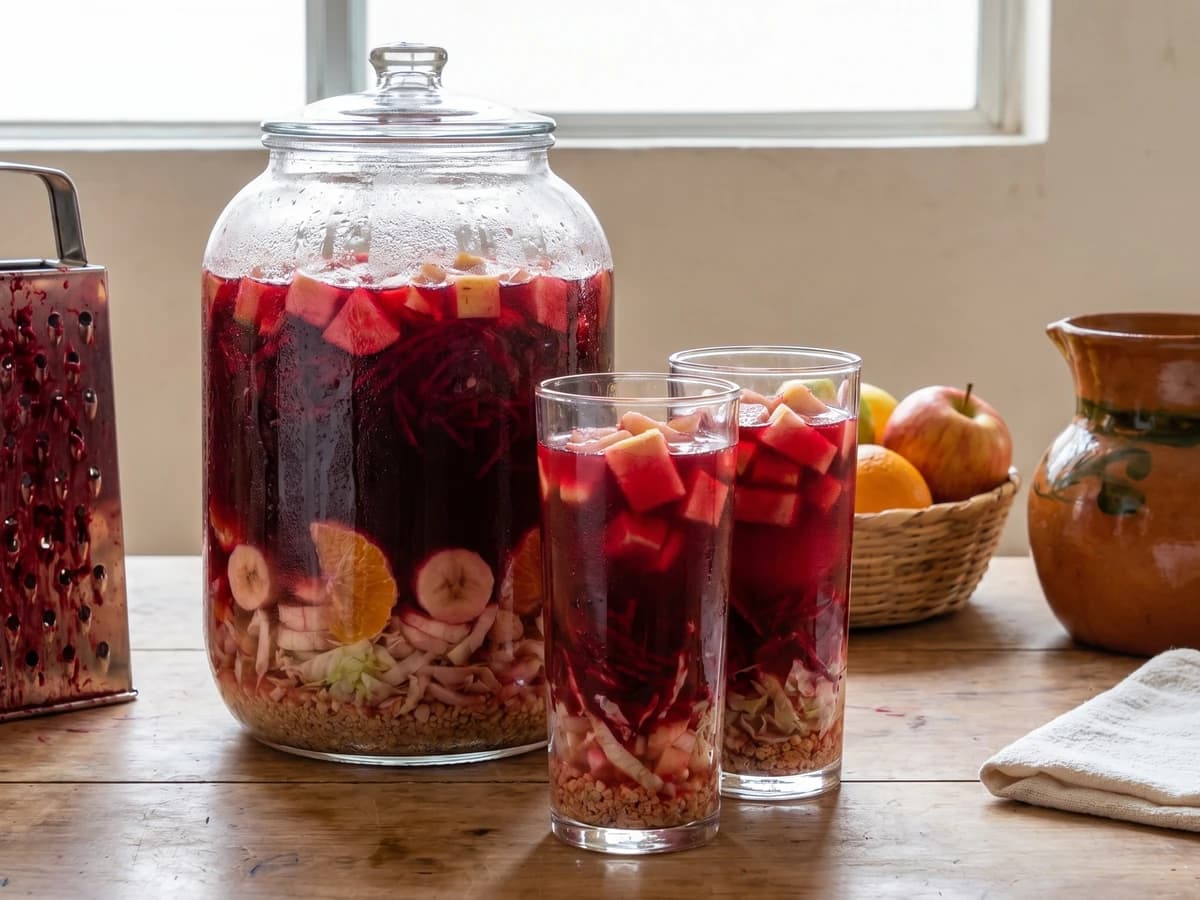
Aguascalientes' Lenten agua fresca, jewel-red from cooked beet and full of apple, banana, orange, lettuce, and ground peanuts, served cold when Holy Week meets the Feria de San Marcos.

Chef Lupita
Sonora and Sinaloa's creamy malted barley water, built on toasted cebada perla, Mexican canela, vanilla from Papantla, and evaporated milk. Pink-beige, rich, and served cold over heavy ice in a heavy glass tumbler. Liquid cookie comfort the northwest way.

Chef Lupita
Yucatán's everyday tonic of boiled chaya leaves blended with lima agria, sugar, and ice. The bright green jarra that sits on every Peninsula table from Mérida to Valladolid.