Chef Lupita
Aceite de Chiltepin Bajacaliforniano
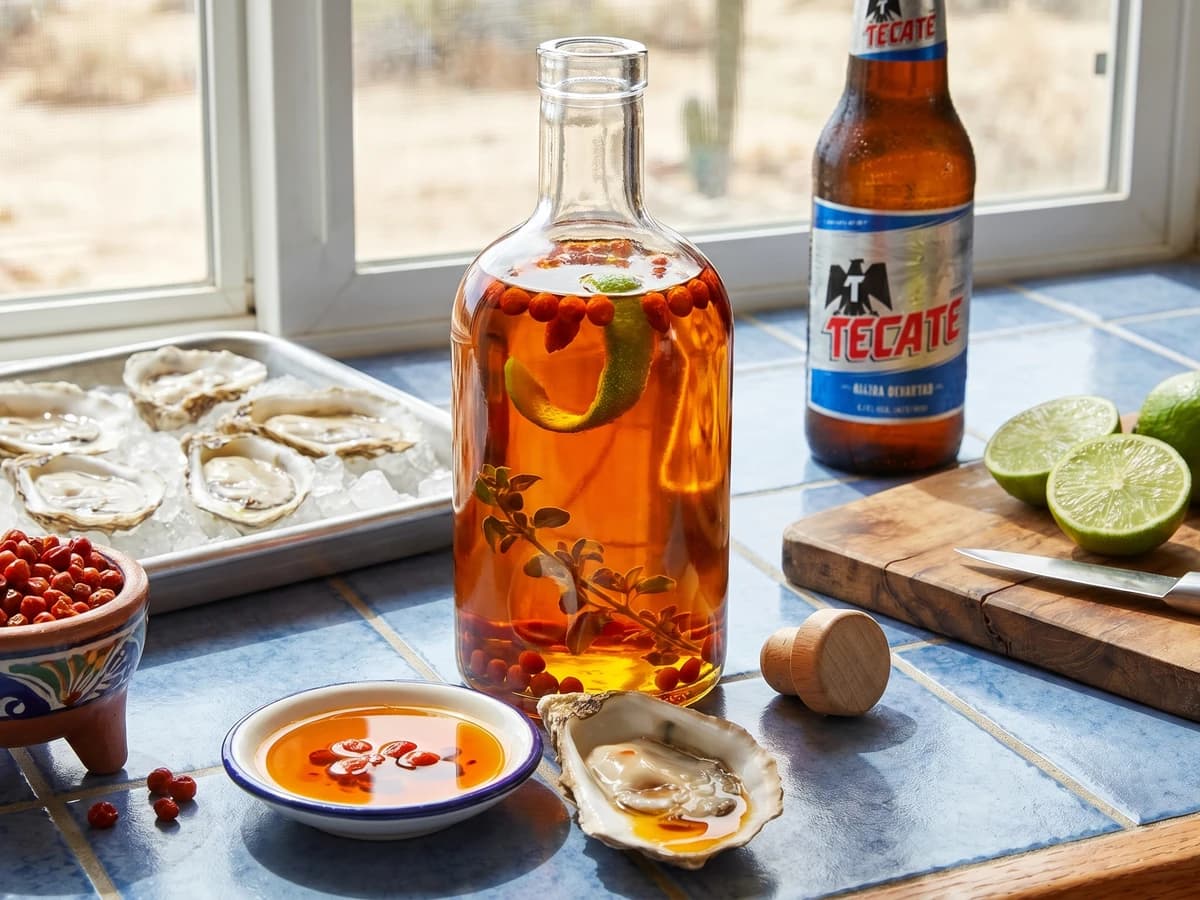
Baja California's wild chiltepin steeped in olive oil with garlic, orejon, and lime peel, until the oil turns ruby-amber and carries the slow, sneaky burn of the desert coast.
A cooking platform built around craft, culture, and the stories behind what we eat.

Created by
Sonora's compound butter built on toasted chiltepín, manteca, and Mexican lime. The desert chile bound into the fat that finishes a steak off the mesquite parrilla.
This is from Sonora. From the desert and the coast, from the cattle country of Cananea down to the Sea of Cortez, where the chiltepín grows wild on shrubs the size of a child and the parrilla is built into the side of the house.
The chile is the dish. Chile chiltepín, the small round pea-sized chile that ripens red on wild bushes in the Sierra Madre Occidental, hand-harvested in the fall by families who have done this work for generations. It is the oldest chile in Mexico, the mother of all the cultivated chiles that came after. Sonorenses keep a jar of dried chiltepines on the table the way other states keep a salt shaker. They keep another jar of chiltepines en vinagre in the refrigerator. And the ones who know what they are doing keep a third jar: a small glass jar of mantequilla de chiltepín, ready to spoon onto whatever just came off the parrilla.
The butter is not complicated. Toasted chiltepín, lime, garlic, manteca de cerdo folded into butter. But the ingredients are non-negotiable. The chiltepín has to be Sonoran or Chihuahuense, hand-picked. The lime has to be Mexican lime, the small green ones, not Persian. The manteca has to be real pork lard. La manteca es el sabor. Sonoran cooking is built around beef and fat and chile, and this butter is that whole pantry compressed into a spoonful.
My mother was not Sonorense. She was from Jalisco. But she had a friend from Hermosillo who sent her a jar of chiltepines every December, wrapped in a paper bag inside a coffee tin. The page in her notebook for this butter is in her friend's handwriting, not hers, and at the bottom it says: 'No le pongas mas que esto. El chiltepín no se discute.' Do not add anything else. The chiltepín is not up for debate. Cada estado, su propia cocina.
Chile chiltepín (Capsicum annuum var. glabriusculum) is the wild ancestor of every cultivated chile in the Americas and one of the few chiles still harvested almost entirely from wild plants rather than cultivated farms, with the largest annual harvest taking place in the Sierra de Sonora and Chihuahua. The Sonoran Mexican government granted chiltepín official Denomination of Origin protection in 2019, recognizing it as a regional heritage product alongside bacanora and the state's Pima and Yaqui agricultural traditions. The chile's name derives from the Nahuatl 'chiltecpintl,' meaning 'flea chile,' a reference to its small size and the jumping sting of its heat, and indigenous Sonoran cooks were preserving chiltepines in fat and vinegar centuries before the Spanish introduced cattle and dairy butter to the region.
Quantity
2 tablespoons
stems removed
Quantity
1 cup (2 sticks)
softened to room temperature
Quantity
2 tablespoons
softened
Quantity
3
very finely minced
Quantity
1 tablespoon (about 2 limes)
finely grated
Quantity
2 teaspoons
Quantity
1 teaspoon
Quantity
1/2 teaspoon
crumbled fine
Quantity
2 tablespoons
finely chopped
Quantity
1 teaspoon
| Ingredient | Quantity |
|---|---|
| whole dried chiltepines (chile chiltepín)stems removed | 2 tablespoons |
| unsalted buttersoftened to room temperature | 1 cup (2 sticks) |
| manteca de cerdo (pork lard)softened | 2 tablespoons |
| garlic clovesvery finely minced | 3 |
| Mexican lime zestfinely grated | 1 tablespoon (about 2 limes) |
| fresh lime juice | 2 teaspoons |
| flaky sea salt from the Sea of Cortez or kosher salt | 1 teaspoon |
| dried Mexican oregano (oregano sonorense)crumbled fine | 1/2 teaspoon |
| fresh cilantrofinely chopped | 2 tablespoons |
| naranja agria juice (or equal parts orange and lime) | 1 teaspoon |
Heat a dry comal or small cast iron skillet over medium-low. Add the whole chiltepines and toast them for 30 to 45 seconds, sliding the pan back and forth so they roll. They are tiny and they burn in the time it takes to answer a phone call. The kitchen will smell sharp and grassy, almost like dried tomato leaf. That smell is the volatile oils waking up. Pull them off the heat the second they darken a shade. Burned chiltepín is bitter chiltepín and there is no fixing it later.
Tip the toasted chiltepines into a molcajete. Add a pinch of the salt to give the stone something to grind against. Crush in small circles until the chiles break down into a coarse, brick-colored dust with a few whole flakes still visible. You want texture, not powder. The flakes are what you will see in the finished butter and what your guests will bite into. If you do not have a molcajete, crush them between two sheets of paper under the bottom of a heavy pan. Asi se hace y punto.
In a wide bowl, combine the softened butter and the manteca de cerdo. Work them together with the back of a wooden spoon until they are completely uniform and pale. The lard is not optional. La manteca es el sabor. Pure butter alone tastes flat against the chiltepín; the lard carries the chile heat the way it carries it in every other Sonoran dish, from machaca to frijoles puercos.
Add the crushed chiltepín, the minced garlic, the lime zest, the lime juice, the remaining salt, the crumbled oregano, the chopped cilantro, and the naranja agria juice. Fold everything together with the wooden spoon until the butter is streaked with red chile flakes and green herbs throughout. Do not over-beat it. You are not making frosting. You want a rough, rustic compound, not a whipped one.
Cover the bowl and let the butter sit at room temperature for one hour. This is the step most recipes skip and it is the one that matters most. The chiltepín needs time to bloom into the fat. The garlic needs time to lose its raw edge. The lime needs time to perfume the whole thing. Taste it after an hour. If it tastes shy, add a pinch more salt. If you want more heat, crush a few more chiltepines and fold them in.
Scrape the butter onto a sheet of parchment. Roll it into a log about an inch and a half thick, twisting the ends like a candy wrapper. Refrigerate for at least two hours before using, or up to two weeks. For longer storage, freeze the log whole and slice off coins as you need them. The way my mother stored compound butter, and the way every abuela in Hermosillo keeps her chiltepín butter, is in a small glass jar in the door of the refrigerator, scooped onto the meat with a spoon. Either works.
Pull a steak off the mesquite parrilla and let it rest for five minutes. Slide a thick coin of the butter onto the hot meat. It will melt slowly, running red into the cutting board juices. The chiltepín flakes will bloom in the fat. This is also good on grilled cabrilla, on a baked potato, on machaca con huevo at breakfast, on hot flour tortillas the size of dinner plates. Recetas probadas y garantizadas.
1 serving (about 33g)
Culinary guides, cultural storytelling, and the editorial depth that makes cooking meaningful.
Discover Culinary ExplorerChef Lupita
Baja California's wild chiltepin steeped in olive oil with garlic, orejon, and lime peel, until the oil turns ruby-amber and carries the slow, sneaky burn of the desert coast.

Chef Lupita
Puebla's Lenten convent adobo, a brick-red vinegar chile paste of ancho, guajillo, garlic, oregano, and comino made to dress fish for the meatless calendar.
Chef Lupita
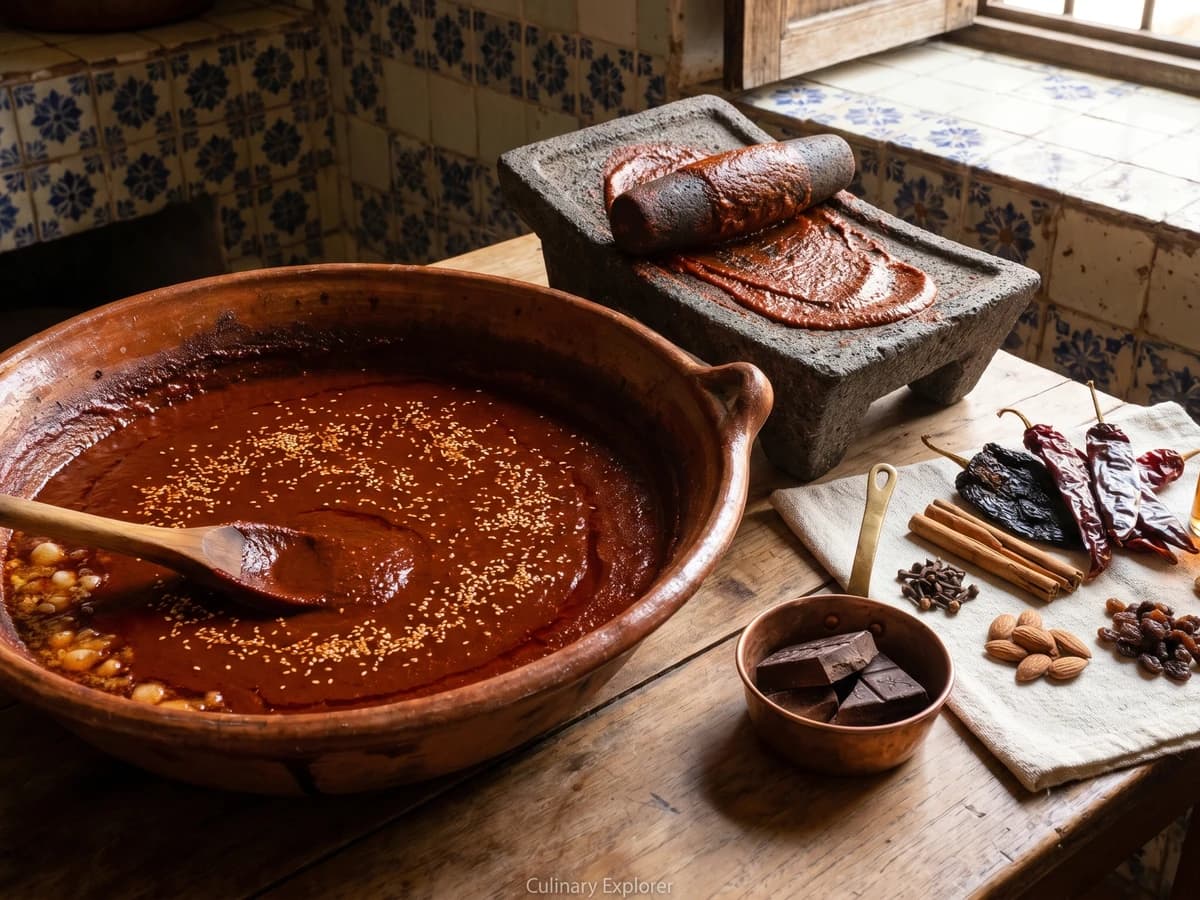
Zacatecas' wedding-table adobo, built from toasted guajillo and ancho, piloncillo, sour orange, chocolate, canela, clavo, almonds, sesame, and lard.

Chef Lupita
Puebla's convent kitchens built this adobo with ancho, guajillo, jerez, almonds, raisins, clove, and lard, a baroque marinade that stains pork loin and finishes as the sauce.