
Chef Lupita
Acitrón de Cidra Conventual
Puebla's convent-style acitrón, made from cidra peel instead of endangered biznaga, built through repeated syrup soakings until the cubes turn firm, translucent, and ready for rosca or chiles en nogada.
A cooking platform built around craft, culture, and the stories behind what we eat.
Created by
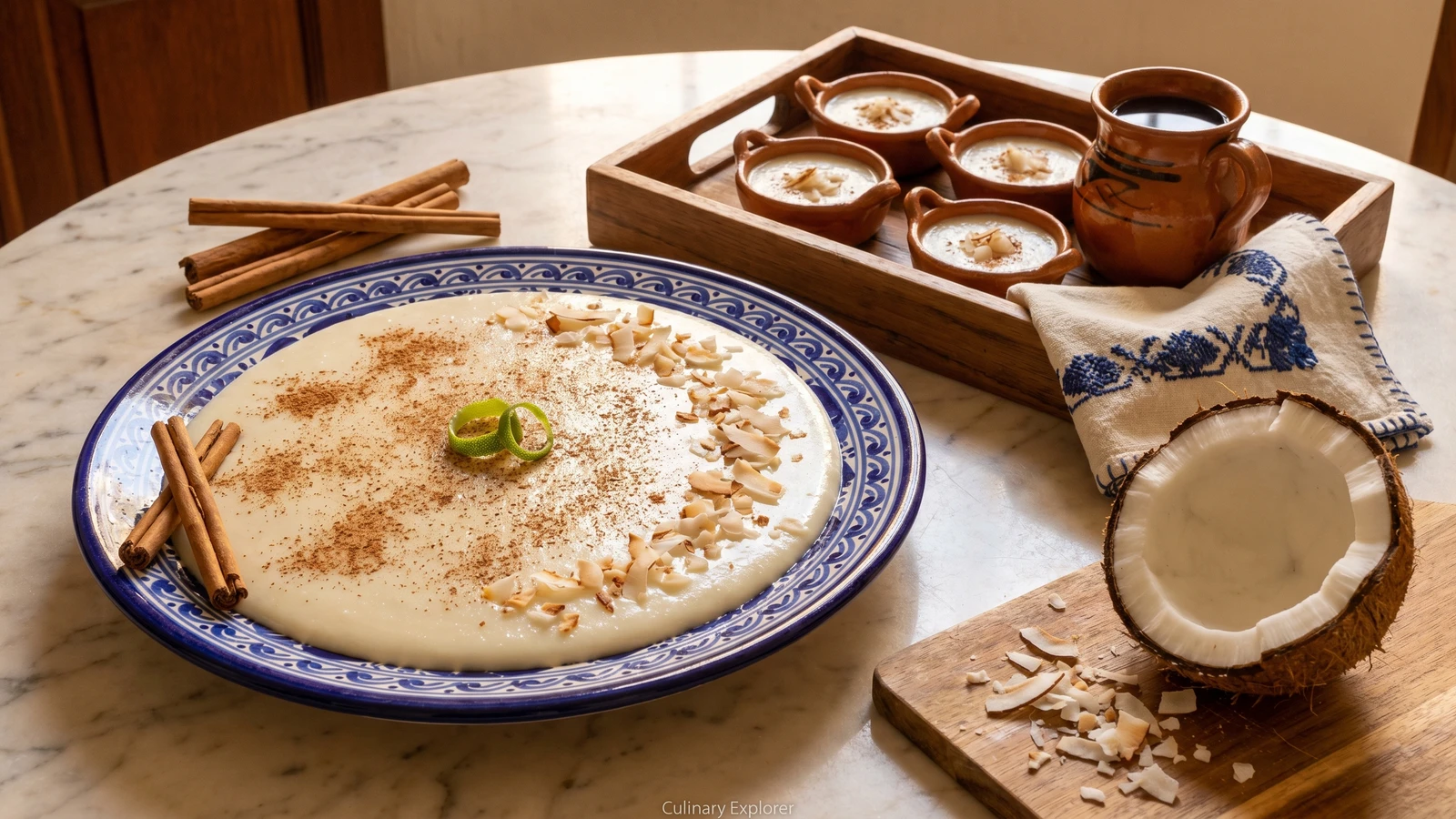
The Conceptionist nuns' white pudding from colonial Merida. Ground rice, fresh coconut, Ceylon cinnamon, and a whisper of orange flower water, set silken-soft on a Talavera plate.
This is a Yucatecan dulce de convento, made in Merida since the 17th century by the Conceptionist nuns who ran the convent kitchens. Manjar blanco belongs to a small family of white puddings that traveled from medieval Spain through the colonial Americas, but the Yucatan version is the one that earned its place at the table. The coconut and the orange flower water are what make it Yucateco. Without them, you have a generic Spanish manjar. With them, you have something only Merida makes this way.
The rice is ground from raw, soaked grain. Not cornstarch. Not cream of rice. Soaked long-grain rice, blended into a white slurry, cooked slowly into milk until the starch sets the pudding. The Conceptionist nuns wrote it that way and the senoras who still make it at home in the Centro Historico of Merida write it that way too. And the cinnamon is Ceylon, canela de Ceylan, the soft papery bark that broke into pieces when you pressed it. Cassia is not a substitute. The dulces yucatecos were built on the trade route between the peninsula and the Caribbean, and Ceylon cinnamon came through that route. You can taste the difference. The dish depends on it.
My mother did not make manjar blanco. She was from Jalisco and Jalisco has its own dulces. But I learned this one from a senora in the Lucas de Galvez market in Merida who sold it in small clay cazuelitas wrapped in waxed paper. She wrote nothing down. She corrected me four times before I made it the way she wanted. The orange flower water goes in last, off the heat. The yolks set the texture. The coconut pulp gets folded back at the end. La cocina no es decoracion, es trabajo, and a dulce de convento is no exception. Cada estado, su propia cocina.
Manjar blanco descends from the medieval Spanish 'manjar blanco,' itself adapted from the Arab-Andalusian 'al-manjar,' a savory chicken-and-almond preparation that turned sweet during the 15th and 16th centuries. The dish arrived in colonial Mexico through the convent kitchens of Puebla, Oaxaca, and Yucatan, where cloistered nuns of orders such as the Conceptionists and the Clarisas refined it with New World ingredients including coconut, vanilla, and cacao. The Yucatan version distinguished itself by incorporating fresh coconut from the peninsula's Caribbean coast and orange flower water imported through the colonial port of Sisal, ingredients that arrived via the same trade routes that brought Ceylon cinnamon and that defined the distinct dulceria tradition of Merida's convents through the 18th and 19th centuries.
Quantity
1/2 cup
Quantity
2 cups
for soaking the rice
Quantity
1
cracked, meat removed and finely grated (about 2 cups grated)
Quantity
1 cup
for steeping the coconut
Quantity
1 quart
Quantity
1 cup
Quantity
1 cup
Quantity
2
broken in half
Quantity
1 strip, about 2 inches long
Quantity
1/4 teaspoon
Quantity
2
lightly beaten
Quantity
1 teaspoon
Quantity
for dusting
Quantity
for serving
Quantity
as needed
| Ingredient | Quantity |
|---|---|
| long-grain white rice | 1/2 cup |
| cold waterfor soaking the rice | 2 cups |
| fresh coconutcracked, meat removed and finely grated (about 2 cups grated) | 1 |
| hot waterfor steeping the coconut | 1 cup |
| whole milk | 1 quart |
| heavy cream | 1 cup |
| granulated sugar | 1 cup |
| Ceylon cinnamon sticks (canela de Ceylan)broken in half | 2 |
| lime zest from a Persian lime | 1 strip, about 2 inches long |
| fine sea salt | 1/4 teaspoon |
| large egg yolkslightly beaten | 2 |
| orange flower water | 1 teaspoon |
| ground Ceylon cinnamon (optional) | for dusting |
| toasted coconut shavings (optional) | for serving |
| Ceylon cinnamon sticks (for the platter) (optional) | as needed |
Rinse the rice under cold water until the water runs clear. Cover with two cups of cold water and soak for at least two hours, or overnight on the counter. Drain. Transfer to a blender with one cup of fresh cold water and grind on high until you have a smooth white slurry with no visible grains. This is the body of manjar blanco. Cornstarch is a shortcut. No me vengas con atajos. The ground rice gives a different texture and the dulces de convento were made with rice.
Place the finely grated fresh coconut in a heatproof bowl. Pour the hot water over it and let it steep for ten minutes. Press the coconut through a fine-mesh sieve set over a measuring cup, squeezing hard with your hands to extract every drop of the cloudy white liquid. You should have about one cup of fresh coconut milk. Reserve the squeezed coconut pulp. You will fold a little of it back in at the end for texture.
In a heavy-bottomed pot, combine the whole milk, heavy cream, sugar, Ceylon cinnamon sticks, lime zest, and salt. Heat over medium-low, stirring occasionally, until the sugar dissolves and the mixture is hot but not yet simmering. Lower the heat and let everything steep for ten minutes. The Ceylon cinnamon is not the same as cassia. Cassia is harsh and tastes like a candle. Canela de Ceylan is delicate, papery, and floral. The dulces yucatecos depend on this distinction.
Strain the infused milk back into the pot, discarding the cinnamon and zest. Return to medium-low heat. Slowly whisk in the rice slurry in a steady stream, then add the fresh coconut milk. Stir constantly with a wooden spoon, scraping the bottom and the corners of the pot. Cook for 25 to 30 minutes. The mixture will thicken gradually, then suddenly. You are looking for the moment it coats the spoon and a line drawn across the back stays clean. If it tastes raw and starchy, keep cooking. The rice needs to be fully cooked or the pudding will taste like wet flour.
Pull the pot off the heat. Place the beaten egg yolks in a small bowl. Ladle a half cup of the hot manjar slowly into the yolks while whisking constantly. This warms them without scrambling. Return the tempered yolks to the pot and whisk to combine. Put the pot back on the lowest heat for one minute, stirring the whole time. The yolks set the pudding silken and give it the pale ivory color the Conceptionist nuns wrote about.
Off the heat, stir in the orange flower water and two tablespoons of the reserved coconut pulp. The orange flower is a colonial Yucatecan signature, brought through the trade routes that ran from the peninsula through the Caribbean. Taste for sugar. It should be sweet but not cloying. The coconut and cinnamon should both be present. Pour the manjar into a shallow Talavera platter or eight individual cazuelitas. Let cool to room temperature, then refrigerate for at least four hours, until fully set. Asi se hace y punto.
Just before serving, dust the top with ground Ceylon cinnamon through a fine sieve. Scatter the toasted coconut shavings across the surface. Lay a few whole cinnamon sticks alongside on the platter. Serve cold, with a spoon. The texture should be silken-soft, somewhere between a flan and a thick crema. If it is rubbery, you cooked it too long. If it weeps, you did not cook it long enough. Recetas probadas y garantizadas.
1 serving (about 200g)
Culinary guides, cultural storytelling, and the editorial depth that makes cooking meaningful.
Discover Culinary ExplorerChef Lupita
Puebla's convent-style acitrón, made from cidra peel instead of endangered biznaga, built through repeated syrup soakings until the cubes turn firm, translucent, and ready for rosca or chiles en nogada.

Chef Lupita
Ciudad de México's Tulyehualco alegría is popped huautli folded into piloncillo honey, pressed with peanuts, pepitas, and raisins, then cut into the rectangular bars that built a pueblo's identity.

Chef Lupita
Oaxaca's pre-Columbian amaranth bar, popped on a hot comal and bound with piloncillo, honey, and the sacred Zapotec grain that the Spanish tried, and failed, to outlaw.

Chef Lupita
Querétaro's mercado candy of popped amaranto pressed with dark piloncillo syrup, pepitas, pecans, and cacahuate, a Bajío sweet that respects the seed before it decorates the table.